
 Jia Lissa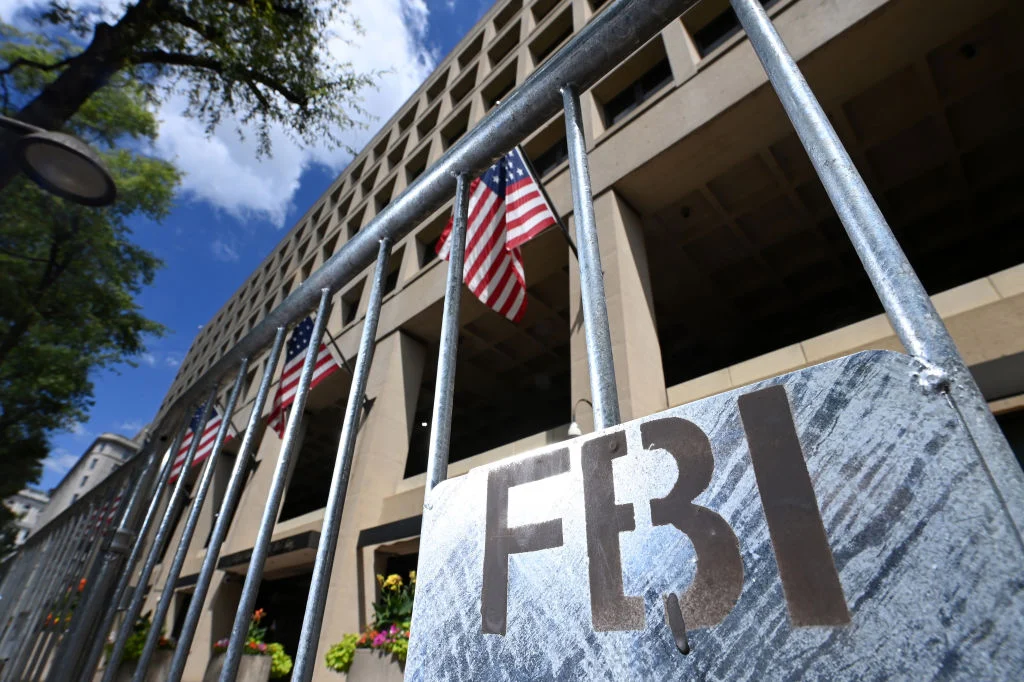
In a significant escalation of digital espionage tactics, the Federal Bureau of Investigation (FBI) issued a formal public service announcement (PSA) this week, warning of a persistent and highly effective social engineering campaign. Since late 2025, a sophisticated cadre of threat actors has been targeting high-profile individuals, their families, and close associates, utilizing deceptive tactics to gain long-term, unauthorized access to sensitive cloud-based accounts.
Unlike traditional credential-harvesting attacks, this campaign bypasses the need for stolen passwords entirely. Instead, it weaponizes the OAuth (Open Authorization) protocol—a standard mechanism used to allow applications to interact with user data—to secure persistent, high-level access to sensitive environments like Google Workspace and Microsoft 365.
The Anatomy of the Threat: How OAuth Consent Phishing Works
At the core of this operation is "OAuth consent phishing." Most users are accustomed to seeing "Sign in with Google" or "Authorize this app to access your contacts" prompts. These requests are standard practice for modern digital workflows. However, in this campaign, threat actors have learned to exploit the trust users place in these legitimate authorization windows.
The attack typically begins with a high-stakes social engineering lure. Depending on the target’s professional sphere, the attackers impersonate journalists, government officials, or event coordinators. They approach the victim with a pretext—such as a request to review a draft article, verify an identity for a conference, or collaborate on a high-level document.
Once a rapport is established, the victim is sent a link that appears to originate from a legitimate cloud service provider. When clicked, the link triggers an OAuth consent request. By clicking "Accept" or "Authorize," the victim unwittingly grants a malicious, attacker-controlled application permission to access their emails, files, calendars, and other sensitive metadata.
Crucially, because the authorization is granted via a token rather than a password, changing a password provides no security. The malicious application retains its access permissions until the user manually navigates to their account settings and explicitly revokes the token.
A Chronology of the Campaign: From Late 2025 to the Present
The FBI’s investigation into this activity traces its roots back to the final quarter of 2025. What began as a series of isolated incidents targeting event planners and coordinators quickly evolved into a more broad-reaching campaign of influence and intelligence gathering.
- Late 2025: Initial reports surfaced of attackers impersonating conference and event organizers. These actors utilized forged identity verification requests to gain initial access to the private accounts of industry leaders and public figures.
- Early 2026: The campaign shifted in sophistication. Threat actors began diversifying their personas, moving beyond event planning to assume the roles of journalists, political aides, and government officials. This shift allowed them to exploit the professional networks of their targets more effectively, increasing the success rate of their phishing lures.
- Mid-2026: The FBI identified a consistent pattern in the technical infrastructure used to register these malicious applications. The actors were successfully navigating legitimate authorization protocols to "verify" their malicious apps, effectively laundering their reputation to appear as trusted third-party software.
- September 2026: The formal FBI alert was released, signaling that the threat had reached a level of prevalence that necessitated a public warning to protect high-profile individuals from further compromise.
Supporting Data: Why OAuth Remains a Vulnerability
OAuth is designed to be convenient, but its convenience is its greatest security weakness. When a user authorizes an application, they are often presented with a dialog box that is vague regarding the scope of the data being requested.
"If the user approves the request, they unwittingly grant high-level access to a malicious application controlled by the cyber actor," the FBI stated in their announcement. "By registering malicious applications through legitimate authorization protocols and using social engineering tactics, cyber actors can bypass both passwords and multi-factor authentication, which makes consent phishing especially dangerous."
The danger is amplified by the fact that many modern Multi-Factor Authentication (MFA) systems protect the login process but do not necessarily flag the authorization of a new application. Once the OAuth token is issued, the attacker acts as a legitimate, authenticated user from the perspective of the cloud provider’s security logs. This makes detection exceptionally difficult, as there is no "unauthorized login" event to alert the security operations center (SOC).
Official Responses and Strategic Implications
The FBI’s response has been to focus on awareness and administrative hygiene. In their advisory, officials urged high-profile users to adopt a "zero-trust" mentality regarding third-party application permissions.
Recommended Defensive Measures:
- Strict Scrutiny of Requests: Users must independently verify the identity of any person requesting document review or access to sensitive files, especially if the request comes via a commercial messaging app rather than a professional email domain.
- Regular Audits: Users and IT departments should periodically review the "Connected Apps" or "Third-Party Access" sections of their cloud environment security settings. Any application that is not recognized or no longer needed should be immediately revoked.
- Principle of Least Privilege: Organizations should implement policies that restrict the ability of standard users to grant OAuth permissions to third-party applications without prior approval from the IT or security department.
While the FBI has not publicly disclosed the exact number of victims, the deliberate nature of the targeting—focusing on individuals with high-value intelligence or public influence—suggests that this is not a campaign of mass-market theft, but rather a surgical effort to compromise specific decision-makers and influencers.
The Broader Implications for Cybersecurity
The emergence of this campaign highlights a critical gap in the current security landscape: the reliance on "consent" as a security boundary. As digital transformation continues to push sensitive data into the cloud, the traditional "walled garden" approach to security is failing.
The Erosion of MFA Effectiveness
For years, Multi-Factor Authentication was touted as the silver bullet against account takeover. This campaign proves that MFA is not an impenetrable shield. When attackers use social engineering to convince a user to authorize an app, they effectively turn the user into an accomplice in their own breach.
The Evolution of Social Engineering
The attackers’ ability to impersonate journalists and government officials suggests a high level of research into their targets. This is not a "spray and pray" phishing campaign; it is a "whaling" operation. The attackers understand the context of their targets’ lives, making the lures significantly more difficult to distinguish from legitimate professional communication.
Future Outlook
As we look toward the end of 2026 and into 2027, the challenge for both individual users and enterprises will be to reconcile the need for seamless application integration with the reality of advanced social engineering. The FBI’s alert serves as a stark reminder that as our tools become more interconnected, the attack surface expands in ways that standard security protocols cannot always address.
For the average high-profile user, the message is clear: the password is no longer the primary key to your digital life. The permissions you grant to the applications you use are the new frontline of your personal and professional security. Moving forward, the ability to discern a malicious consent request from a legitimate one will be the defining skill of a secure digital identity.

 Basiran
 Iffa Jayyana
 Raul Delapena Setiawan
 Reynand Wu
 Sagoh
Sagoh

 Azzam Bilal Chamdy
 Ali Ikhwan