
 Asep Darmawan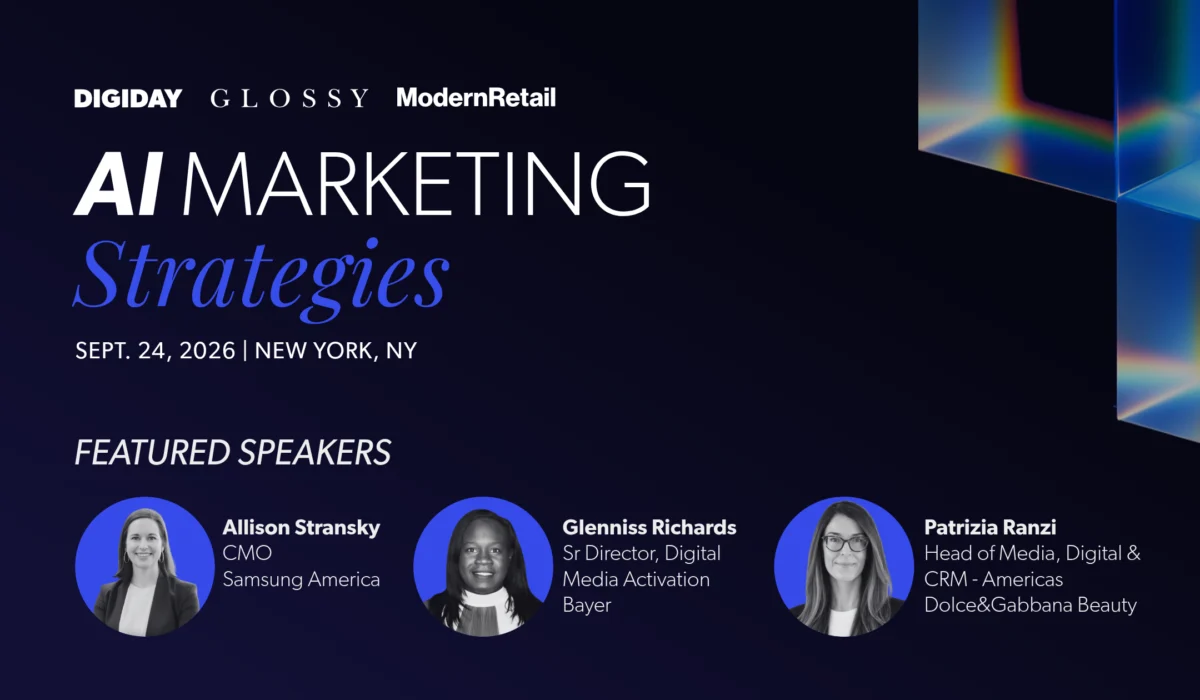
By Digiday Events | August 24, 2026
The era of AI curiosity has officially concluded. As of mid-2026, the marketing landscape has undergone a seismic shift: the "wait-and-see" approach that defined the previous two years has been replaced by an urgent, enterprise-wide push toward operationalizing artificial intelligence. No longer a peripheral experiment, AI is increasingly occupying the "agentic driver’s seat" of modern marketing, influencing everything from high-level creative strategy to granular, real-time media buying.
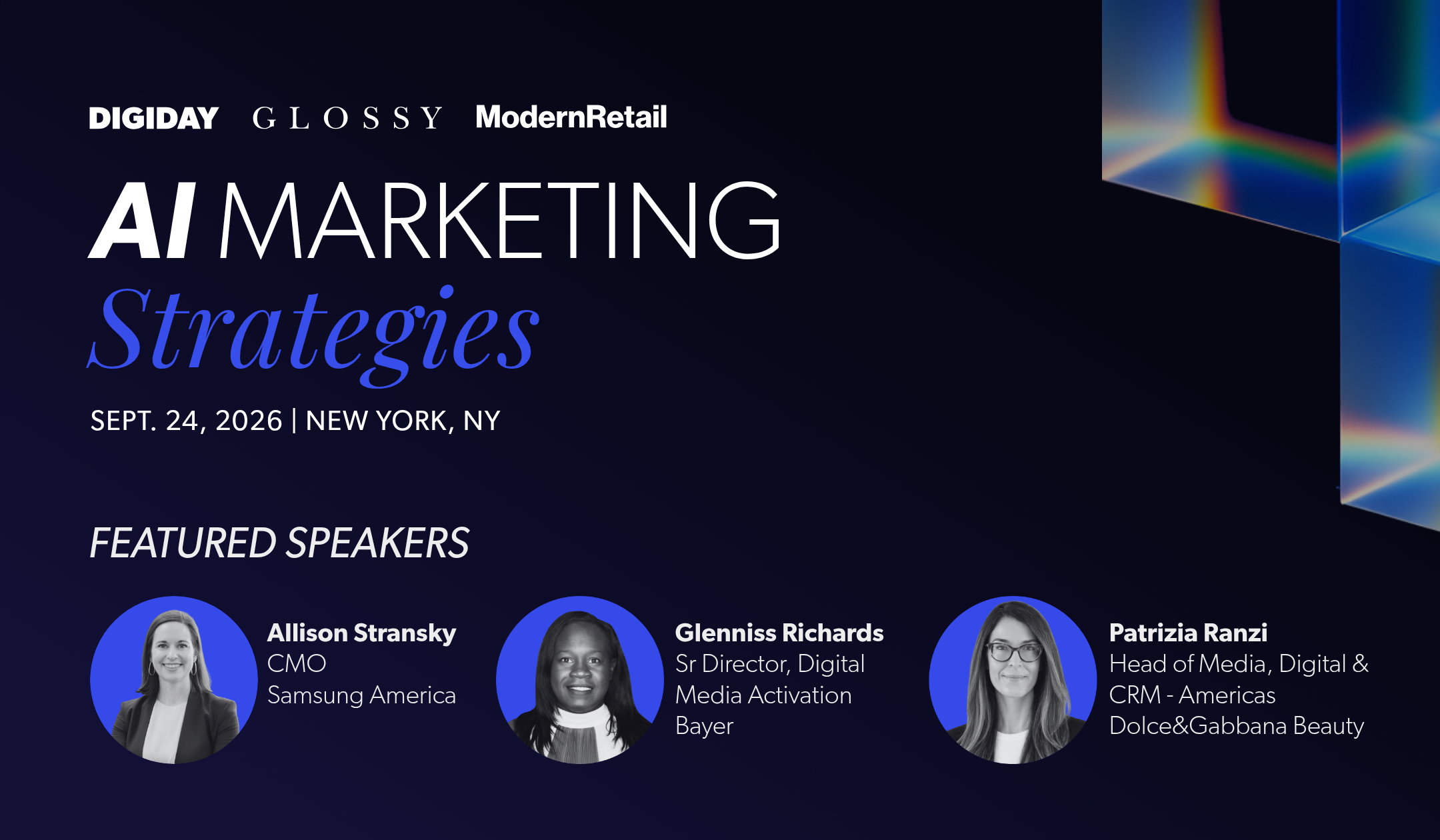
On September 24, 2026, in New York City, Digiday, Glossy, and Modern Retail will convene for the second iteration of AI Marketing Strategies. This summit arrives at a critical juncture, serving as a clearinghouse for brand leaders, agency visionaries, and technology architects to distinguish between the noise of speculative tech and the signal of scalable, performance-driven AI implementation.
The Evolution of the AI Paradigm: From Nascent to Necessary
When marketing leaders gathered in February, the mood was one of cautious optimism and early-stage testing. AI tools were often siloed within R&D departments or relegated to small-scale pilot programs. Today, that framework is obsolete. The risk of being a "first-mover" has been superseded by the far greater risk of being a "last-mover."
"Many brands have been a bit laggard, letting their agency partners take the early positions—and arrows—on AI adoption," says Jim Cooper, editor-in-chief of Digiday. "But now, brand marketers no longer really have a choice. Their customers are already interacting with AI-powered experiences at every touchpoint. If brands want to remain top-of-mind, they must meet their customers where they are."
This shift has moved AI from a "nice-to-have" productivity booster to a fundamental business requirement. The pressure is mounting as brands like Samsung, Bayer, and David’s Bridal demonstrate that AI integration is no longer optional for maintaining relevance in product discovery, hyper-personalization, and creative generation.
Chronology of Adoption: A Rapid Transformation
To understand where the industry is going, one must look at the compressed timeline of the last eighteen months:
- Early 2025 (The Exploratory Phase): Marketing teams focused on generative text tools and simple image synthesis. The primary goal was efficiency—reducing the time spent on copywriting and basic design assets.
- Late 2025 (The Integration Phase): Agencies began building proprietary AI wrappers around existing platforms. The focus shifted toward data privacy, prompt engineering, and the training of custom models on brand-specific datasets.
- Early 2026 (The Agentic Shift): We entered the era of autonomous agents. AI began moving beyond "assistance" to "execution," managing bidding strategies, optimizing media spend in real-time, and conducting multivariate testing without constant human intervention.
- Present Day (The Optimization Phase): The current focus is on ROI, measurement, and the ethical governance of AI. Brands are now auditing their AI stacks to ensure performance metrics are not just "outputs," but measurable improvements in customer lifetime value (CLV) and conversion rates.
Supporting Data: Where AI is Delivering Value
While industry hype remains high, the AI Marketing Strategies event aims to cut through the buzzwords by focusing on tangible outcomes. Current industry benchmarks indicate three primary areas where AI is providing the highest return on investment:
1. Predictive Personalization
Instead of relying on historical segments, brands are using AI to predict individual customer needs before they are explicitly stated. By analyzing behavioral signals across omnichannel touchpoints, AI models are now facilitating "segment-of-one" marketing at scale, a feat previously impossible with human-only teams.
2. The Creative-to-Performance Loop
The most successful organizations are creating a closed-loop system where AI-generated creative is immediately fed back into performance analytics. When a specific visual or headline underperforms, the model self-corrects, generates a new variant, and re-tests in a continuous cycle of optimization.
3. Search and Discovery
With the rise of AI-driven search engines and voice assistants, product discovery has changed. Brands are re-indexing their content and product information to ensure that they remain visible in a landscape where traditional SEO is being augmented (or replaced) by AI answer engines.
Official Responses and Expert Insights
The consensus among industry leaders is that the human element has not been removed; it has been elevated. "In a blink, the brand conversation around AI has shifted from exploration to execution," notes Jill Manoff, editor-in-chief of Glossy and Modern Retail. "Seeing its value and potential, today’s brands are racing to harness the technology while, at the same time, managing its risks. With AI transforming the workplace in real time, it’s the right time to master that balance and learn from those leading the charge."
The upcoming event will feature a town hall format—an "off-the-record" environment where leaders can compare notes on the difficulties of AI implementation. The conversation will not ignore the hurdles, such as:
- Data Integrity: The ongoing challenge of ensuring that the data fueling AI models is clean, representative, and compliant with evolving privacy regulations.
- The Talent Gap: The scramble to hire or upskill staff who understand both the creative nuance of brand building and the technical requirements of AI infrastructure.
- Workflow Integration: The friction caused when trying to integrate modern, agile AI tools with legacy enterprise systems.
Implications for the Future of Marketing
The most significant implication of this transition is the blurring of lines between departments. When an AI tool can handle media buying, creative generation, and data analysis, the traditional silos between creative agencies, media buyers, and tech vendors begin to collapse.
For Brands
The mandate is to build an "AI-first" internal culture. This involves moving beyond vendor relationships toward strategic partnerships with tech providers who understand the specific regulatory and brand-safety needs of the organization. VIP attendees at the upcoming summit will be provided with frameworks for evaluating these partnerships and measuring long-term impact rather than short-term experiments.
For Agencies
The agency model is undergoing a radical reassessment. The value proposition is shifting from "volume of output" to "strategic oversight of intelligence." Agencies that succeed will be those that can guide their clients through the complexities of model selection, ethical AI usage, and the synthesis of human intuition with machine-led insights.
For Tech Providers
For those building the tools, the message is clear: Stop selling "AI" as a feature and start solving for specific, high-friction marketing pain points. The market is saturated with generic LLM wrappers; the demand is now for specialized, secure, and highly integrated solutions that function seamlessly within an existing marketing tech stack.
Join the Conversation
The AI Marketing Strategies event is designed for those who have moved past the hype and are now dealing with the practicalities of implementation. It is for the marketing leaders who need to know not just "what is AI," but "how do I apply it to my P&L today?"
Attendees will walk away with:
- Concrete Case Studies: Real-world examples from major brands on how they transitioned from testing to deployment.
- Governance Frameworks: How to manage risk, intellectual property, and brand voice in an automated world.
- Peer-to-Peer Networking: Direct access to the executives who are currently rewriting the rules of the industry.
As we look toward the remainder of 2026 and into 2027, the gap between those who effectively utilize AI and those who do not will only continue to widen. The time to map out the strategy is now.
Join us on September 24 in New York City as we navigate the transformation of the marketing industry. Learn more and secure your place at the summit here.


 Ammar Sabilarrohman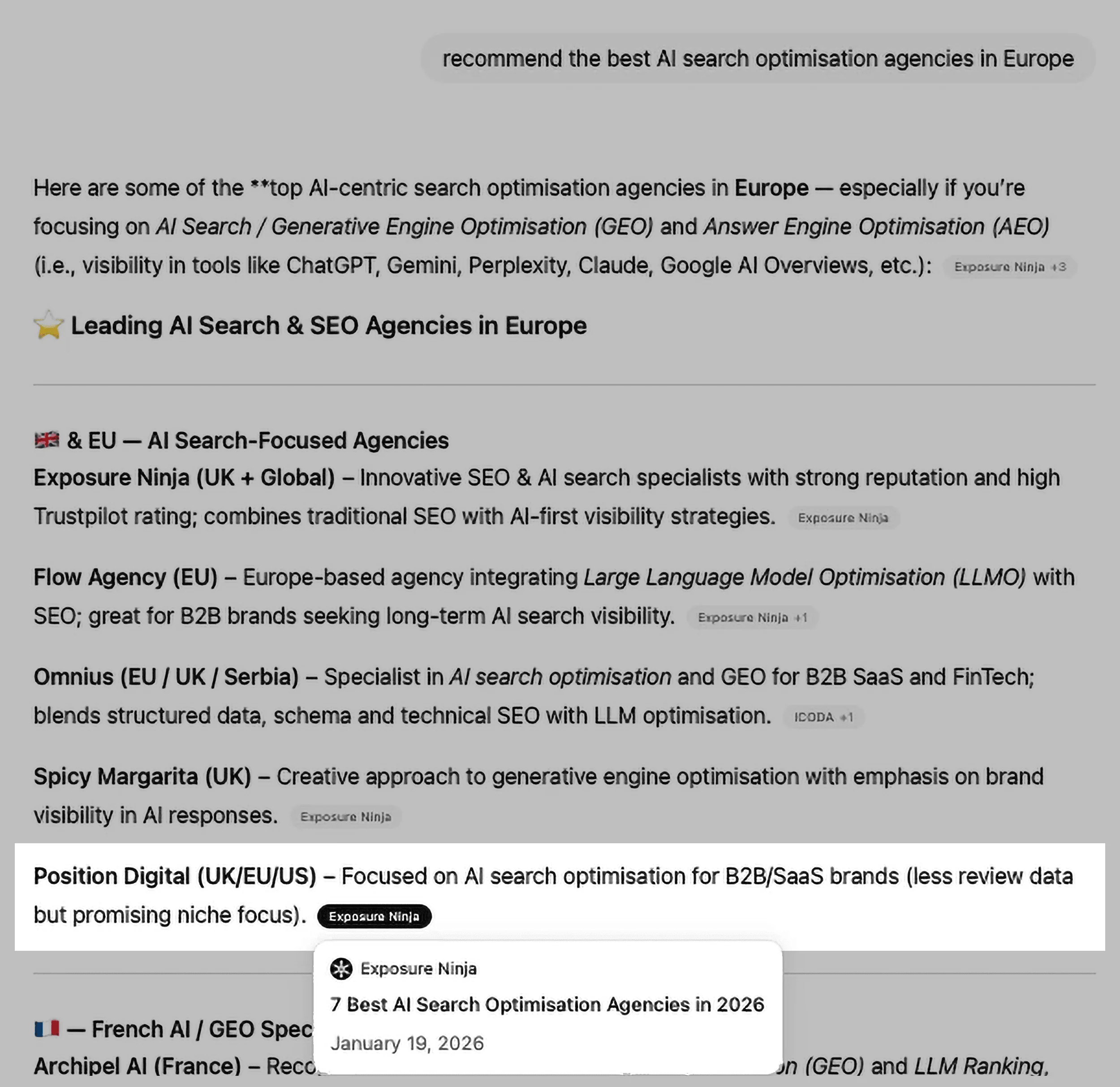
 Sagoh
Sagoh
 Raul Delapena Setiawan
 Reynand Wu


 Azzam Bilal Chamdy
 Ali Ikhwan