
 Nana Muazin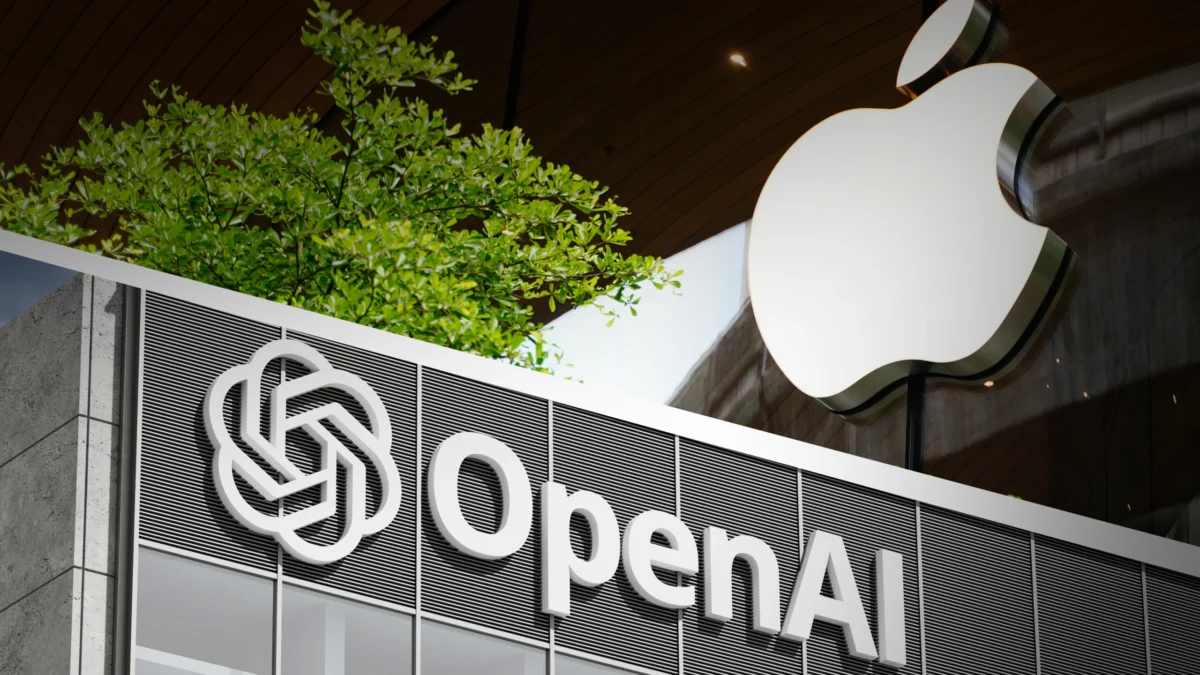
In a move that underscores the rapidly evolving friction between artificial intelligence utility and personal data security, OpenAI has introduced a powerful new plugin for the ChatGPT desktop application on macOS. This integration allows the AI to interface directly with Apple’s Messages app, effectively granting a third-party model the ability to read, search, draft, and transmit iMessages, SMS, and RCS communications. While OpenAI positions this as a leap in personal productivity, privacy advocates and security experts are raising alarms about the implications of granting AI such intimate access to our digital lives.
Main Facts: What Can the Plugin Actually Do?
The new ChatGPT macOS plugin is not merely a conversational partner; it is an automation tool with deep system-level permissions. According to official documentation from OpenAI, the integration is available across all desktop plans and functions as a bridge between the user’s intent and the Mac’s native messaging ecosystem.
The core capabilities of this tool include:
- Data Retrieval: The AI can scan your existing message history to extract specific information, summarize lengthy threads, or pull up details from past conversations.
- Active Communication: Users can task ChatGPT with drafting, formatting, and sending messages on their behalf.
- Management: The system is capable of searching through threads to organize information or facilitate message cleanup.
Crucially, OpenAI has implemented a consent-based architecture. The system requires explicit user approval before performing actions. However, the company has explicitly cautioned users against enabling "persistent approval" settings, noting that doing so removes the final human-in-the-loop review process, which serves as the last line of defense against the AI sending messages that may be out of character or factually inaccurate.
A Chronology of Integration
The rollout of this feature is the latest in a series of aggressive moves by OpenAI to position ChatGPT as an "operating system for your life," rather than a simple chatbot.
- The Foundation (Early 2025): Apple issued public warnings regarding the Digital Markets Act (DMA), cautioning that forcing access to private device data for third-party competitors could compromise user security.
- The "Computer History" Precedent: Preceding the current messaging integration, OpenAI introduced a "Computer History" feature, which monitors user activities on macOS to provide context-aware assistance.
- The Messaging Integration (September 2026): OpenAI officially launched the Messages plugin, signaling a move from passive observation to active participation in the user’s private communication channels.
- The Current Backlash: Following the release, tech industry analysts and privacy researchers began highlighting the security risks, particularly the requirement for "Full Disk Access" in macOS system settings, which grants the app broad permissions that go beyond simple messaging.
Supporting Data and Technical Requirements
For the integration to function, the ChatGPT desktop app requires significant privileges. Users must grant "Full Disk Access" within the macOS System Settings. This is a high-level permission that allows an application to access files in protected areas of the disk—including mail, messages, and photos—even if those files aren’t directly linked to the application’s core functionality.
OpenAI has stated that the plugin runs locally on the user’s machine and does not create a permanent, centralized index of the user’s messages in the cloud. However, the lack of complete technical transparency has left many industry experts unconvinced. If the AI is parsing the content of these messages, it is by definition "processing" that data, and the trail of that analysis remains an open question.
Furthermore, the integration requires access to contact lists and automation tools. By combining these, ChatGPT essentially gains a map of the user’s social graph, creating a high-value target for any potential malware or unauthorized exploit.
Official Responses and Perspectives
OpenAI maintains that the utility provided by the tool outweighs the theoretical risks. By offering contextual insights—such as pulling a meeting time from an old text or drafting a response based on previous sentiment—the company claims to be solving the "information fragmentation" problem that plagues modern digital workflows.
Apple has remained relatively tight-lipped regarding this specific integration, though its broader stance on third-party access is well-documented. Apple’s executives have historically argued that the "walled garden" approach is necessary for security. The company is currently navigating the complex requirements of the European Union’s Digital Markets Act, which mandates that Apple provide third-party developers with access to the same system-level APIs that its own "SiriAI" uses.
The tension between these two giants is palpable. Apple views the device as a private fortress; OpenAI views it as a canvas for intelligence. As Apple prepares to roll out its own deeply integrated AI features in Europe, the question of whether it will be forced to allow OpenAI similar levels of deep-system hooks remains a point of intense legal and technical debate.
Implications: The Security and Privacy Frontier
The introduction of this tool has significant, long-term implications for both individual privacy and cybersecurity.
1. The "Always-On" Surveillance Risk
Critics, including noted AI researcher Gary Marcus, have pointed out that we are transitioning toward an "always-on" surveillance model. When an AI has the ability to read every message you send and receive, it effectively becomes an omniscient observer. The risk is that this data could eventually be used for more than just personal productivity—it could, in theory, inform advertising models, training sets, or be subject to subpoena, even if OpenAI currently claims that data is handled locally.
2. The New Target for Hackers
Security analysts are particularly worried about the "attack surface" expansion. Previously, if a hacker wanted to access a user’s messages, they had to compromise the operating system or the messaging app itself. Now, they only need to compromise the ChatGPT application. Because ChatGPT is a complex, cloud-connected app with AI-driven code generation capabilities, it is inherently more complex and arguably more vulnerable than a standard messaging client. Hackers could potentially use "prompt injection" or other adversarial AI techniques to trick the plugin into leaking sensitive information or sending malicious messages to a user’s contacts.
3. Corporate and Legal Liability
For the average professional, this tool presents a significant HR and legal risk. If an employee uses ChatGPT to summarize sensitive corporate communications or sensitive client data, they may be in violation of corporate data protection policies. Businesses are already scrambling to issue guidance on the use of such plugins, with many legal departments likely to issue outright bans on the integration until more robust enterprise-grade controls are implemented.
4. The European Regulatory Clash
The most significant battleground will likely be Europe. The DMA was designed to break down the silos of big tech, but the unintended consequence may be the lowering of security standards. If European regulators force Apple to grant OpenAI the same level of access as its own native tools, Apple will lose the ability to guarantee the "security-by-design" that has been its primary selling point for years.
Conclusion: A Cautionary Path Forward
The convenience of having an AI that can manage your messages is undeniable. In an era of information overload, the ability to summarize, search, and draft communications via a natural language interface is a powerful productivity enhancer. However, convenience is rarely free.
The path forward requires a shift in how we approach consent. "Per-use" consent is a start, but it is insufficient if the user does not fully understand what the AI is capable of doing once it gains access to the system. As these tools continue to evolve, the burden falls on both the developers to provide radical transparency and on the users to exercise extreme caution.
Until the technical architecture behind these integrations is open to independent auditing and the security implications are fully mitigated, the "AI-driven life" looks increasingly like a double-edged sword. We are trading the friction of manual communication for the potential of a silent, digital observer—a trade that should give every user pause before they click "Allow Access."

 Neng Nana
 Evan Lee Salim
 Raul Delapena Setiawan
 Reynand Wu
 Sagoh
Sagoh

 Azzam Bilal Chamdy
 Ali Ikhwan