
 Raul Delapena Setiawan
July 2026 marked a pivotal chapter in the history of artificial intelligence, as Google unveiled a comprehensive suite of updates that transitioned AI from a creative novelty to an essential, agentic utility. From the release of high-efficiency Gemini models to groundbreaking advancements in physical robotics and environmental protection, the announcements of July reflect a strategic shift: building AI that is not just smarter, but more practical, reliable, and deeply integrated into the fabric of daily life and industry.
The Core Transformation: Efficiency and Agency
At the heart of Google’s July announcements was the realization that the next phase of AI is defined by "agents"—autonomous systems capable of executing multi-step workflows. To support this, Google introduced three new iterations of the Gemini model family: Gemini 3.6 Flash, 3.5 Flash-Lite, and 3.5 Flash Cyber.
These models were engineered with a singular focus: the "sweet spot" of token efficiency, low latency, and high reliability. For developers building production-grade agents, these models represent a significant reduction in computational overhead, allowing businesses to scale their agentic workflows without the prohibitive costs associated with earlier, more bloated architectures.
Bridging the Digital and Physical: Gemini Robotics ER 2
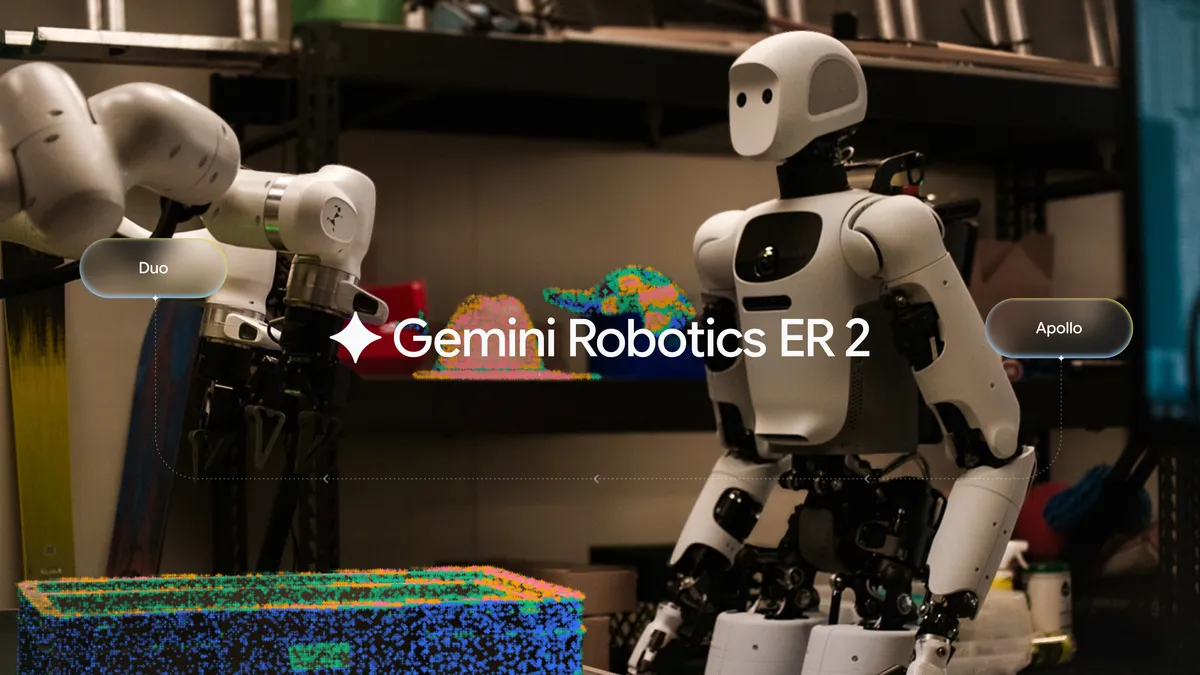
Perhaps the most ambitious technical leap this month was the introduction of Gemini Robotics ER 2. As the company’s most capable "embodied reasoning" model to date, ER 2 represents a major milestone in robotics. Historically, robots have struggled to reconcile digital instructions with the chaotic, unpredictable nature of the physical world. ER 2 effectively closes this gap, enabling robots to interpret natural language commands, perceive their physical surroundings with high fidelity, and navigate complex, multi-stage problem-solving tasks without constant human intervention.

Chronology of Innovation: A Month in Review
July 2026 was characterized by a rapid, cascading series of product launches that touched nearly every aspect of the Google ecosystem.
- Early July: Hardware and Integration. The month began with the Galaxy Unpacked 2026 event, showcasing the Samsung Galaxy Z Fold8 series. These devices marked the first widespread implementation of "Gemini Intelligence" on consumer hardware. Concurrently, Google introduced a native migration tool within Android 17, enabling seamless, wireless data transfers from iOS to Android—a direct attempt to lower the barrier for users to adopt the new AI-centric ecosystem.
- Mid-July: Productivity and Research. The launch of the expanded Gemini Notebook (evolving from the popular NotebookLM) signaled a move toward a more centralized research environment. By integrating these tools into the primary Gemini app and Search, Google effectively turned the web into a personal, searchable database for every user.
- Late July: Creative and Global Impact. The month concluded with the release of Lyria 3.5 for advanced music generation and the debut of the AI & Economy ATLAS, a massive, de-identified study designed to provide empirical data on how AI is actually reshaping labor and productivity in real-time.
Supporting Data and Technical Context
The scale of these updates is supported by significant infrastructure improvements. For example, the integration of AlphaEvolve into the Gemini Enterprise Agent Platform offers a tangible look at the future of software development. By providing a baseline algorithm, enterprise customers can now allow the AI to iterate, test, and optimize code automatically.

The collaboration with the National Oceanic and Atmospheric Administration (NOAA) serves as a case study for the raw power of these tools. By utilizing Google Cloud’s H4D virtual machines to run atmospheric simulations, NOAA has significantly reduced the time required to issue early weather warnings. This is not merely an incremental improvement; it is a fundamental shift in how large-scale, high-stakes data is processed for public safety.
Official Perspectives: The "Frontier" Vision
In a widely circulated editorial, Google DeepMind Co-Founder and CEO Demis Hassabis articulated the philosophical framework governing these advancements. He framed this moment as a "dawning of a new age," emphasizing the need for "Frontier AI" to be developed with a rigorous sense of responsibility.
This perspective is echoed in the company’s new bioresilience program, a joint effort between Google DeepMind and Isomorphic Labs. The program aims to create a "double-shield" approach: preventing bad actors from exploiting powerful AI models while simultaneously equipping the global scientific community with tools to combat biological threats. This marks a significant pivot toward AI governance as a core business competency rather than an afterthought.
Implications: The New AI Economy
The implications of the July 2026 announcements are far-reaching, particularly concerning the labor market and digital privacy.

The Rise of the "Web Errand"
The update to Gemini Spark—which now allows users to authorize the AI to manage logged-in accounts and handle tasks like flight bookings or apartment viewing schedules—is a bold step toward total automation of "web errands." While this provides unparalleled convenience, it places the burden of security on Google’s infrastructure. The company has responded by emphasizing that these permissions are highly granular and controlled by the user, yet the shift toward allowing AI to act on one’s behalf signifies a new era of digital trust.
Strengthening the Skilled Trades
Google’s partnership in the Alliance for America’s Skilled Trades, alongside heavyweights like BlackRock, Ford, and Carhartt, highlights an awareness that the AI transition is not just a digital phenomenon. It is a societal one. By investing in a pipeline for skilled labor, Google is signaling that the future economy will require a hybrid workforce—one that combines AI-driven optimization with traditional, physical expertise.

Preserving History and Culture
In a move that captured the public imagination, Google used its AI technology to reconstruct Pelé’s "lost" goal from 1959. By analyzing match reports and applying kinematic modeling, the team recreated a moment of history that had never been filmed. This demonstrates that the utility of generative AI extends beyond corporate efficiency—it has the potential to act as an archival tool, restoring cultural artifacts that were previously thought lost to time.
Conclusion
July 2026 will likely be remembered as the month Google solidified its "agentic" strategy. By shifting the focus from simple text generation to autonomous, cross-platform agents and high-fidelity robotics, the company has set a new standard for what AI can achieve. Whether through the early detection of wildfires via FireSat satellites or the streamlining of global supply chains via cloud-based optimization, the common thread is clear: AI is moving out of the laboratory and into the physical and operational realities of the modern world. As the technology continues to evolve, the challenge will remain in balancing this immense utility with the security, privacy, and economic considerations of a global, digital society.


 Nana
Nana
 Siti Muinah

 Reynand Wu
 Sagoh
Sagoh

 Azzam Bilal Chamdy
 Ali Ikhwan