
 Siti Muinah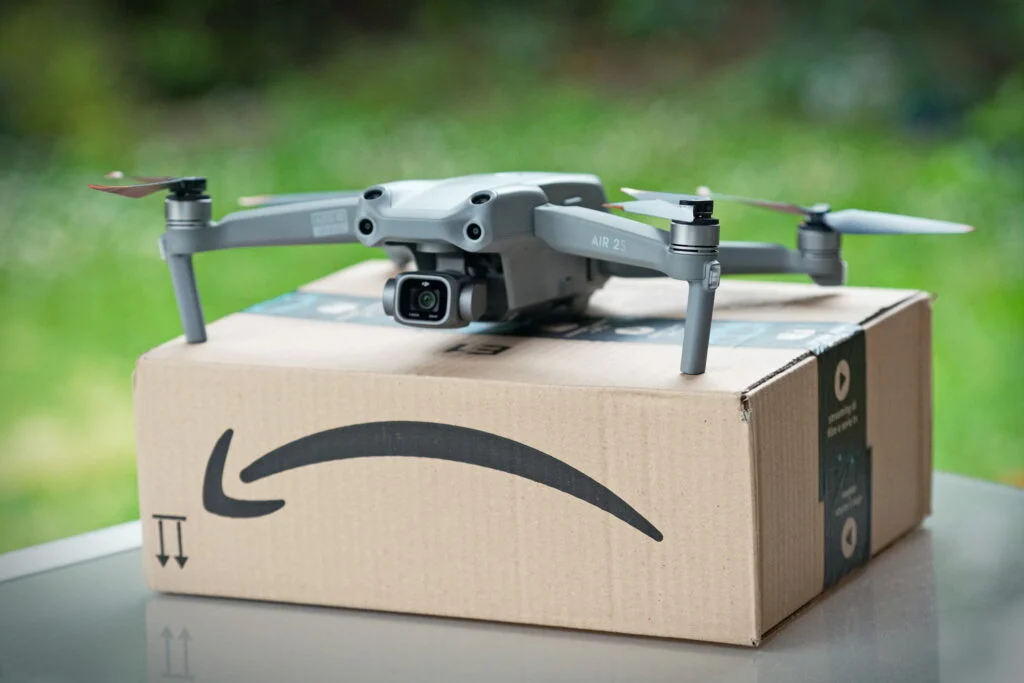
In a significant push to reshape the landscape of last-mile delivery, Amazon.com Inc. announced on August 19 that it is aggressively expanding its Prime Air drone delivery service into five new U.S. metropolitan markets. The move signals a transition from experimental, small-scale testing to a broad, integrated logistical strategy, as the retail titan aims to scale its automated aerial fleet to cover nearly 500 U.S. cities and towns by the end of 2026.
This expansion, which will soon bring drone-based logistics to Chicago, Syracuse, Cleveland, Atlanta, and Boise, represents a six-fold increase in the company’s current operational footprint. For Amazon, which holds the top position in Digital Commerce 360’s Top 1000 Database, the scaling of Prime Air is more than a convenience feature—it is a critical component of its strategy to maintain dominance in an increasingly fast-paced e-commerce market.
The Chronology of an Aerial Ambition
The path to widespread drone delivery has been long and marked by both technological hurdles and regulatory scrutiny. When Jeff Bezos first unveiled the concept of Prime Air in 2013, he famously projected that the technology would be operational within five years. However, the complexity of integrating autonomous aircraft into civilian airspace proved more challenging than initially anticipated.
It took until late 2022 for the company to launch its first commercial deliveries in Lockeford, California, and College Station, Texas. The program faced a series of "fits and starts," including a temporary suspension of U.S. operations in early 2025 following the discovery that environmental dust could compromise the altitude sensors on its MK30 drones. A subsequent software update and FAA certification allowed the company to resume operations, but not before the program faced intense scrutiny in October 2025, when two MK30 drones were involved in a collision with a crane in Tolleson, Arizona.
Despite these setbacks, the company has made significant strides. In May 2024, the Federal Aviation Administration (FAA) granted Amazon permission to fly drones beyond a remote operator’s visual line of sight—a landmark victory that paved the way for the current rapid deployment phase. Most recently, the company extended its reach beyond U.S. borders, launching its first international market in Darlington, England.
Operational Mechanics: The Logistics of Flight
Amazon’s Prime Air service is designed for speed and precision. A typical delivery site serves a 175-square-mile radius, utilizing the MK30 drone—a platform the company describes as lighter, quieter, and capable of twice the range of its predecessors. These drones are engineered to operate in adverse weather conditions, including light rain, which was a primary limitation of earlier models.
The economics and utility of the service are finely tuned to consumer behavior. Amazon reports that the service can handle over 60% of its most frequently purchased items. To qualify for drone delivery, products must weigh 5 pounds or less and fit within the dimensions of a large shoebox. This covers a wide array of essential goods, including groceries, medications, electronics, and cosmetics.
From a user experience perspective, the process is seamless. For customers in covered regions, the "drone delivery" option appears automatically at checkout. Pricing is tiered: Prime members face no additional fees for orders over $50, while smaller Prime orders incur a $2.99 charge. Non-Prime customers pay a flat $4.99 fee.
Safety remains the cornerstone of the operation. Each drone is equipped with an advanced "detect-and-avoid" system that uses onboard cameras and sensors to navigate around obstacles such as trees, power lines, and moving vehicles. The company emphasizes that its privacy protocols are rigorous: camera data is processed locally on the drone, no live video feeds are monitored by employees, and the systems are not designed to track or record individuals.
Official Projections and Strategic Data
David Carbon, vice president of Amazon Prime Air, revealed in a recent company blog post that the service has already completed "hundreds of thousands of packages" to date. The company currently reports thousands of daily deliveries, boasting some of the highest volume-per-site figures in the domestic drone industry.
The long-term vision is staggering. CEO Andy Jassy, in his April 2025 letter to shareholders, outlined a goal of serving 30 million customers through the drone network by the end of 2026. Looking toward the end of the decade, the company aims to scale its capacity to 500 million drone deliveries annually.
The integration of AI into these logistics networks is becoming increasingly vital. While Amazon holds the top spot in the Top 1000 Database, it is currently ranked No. 158 in Digital Commerce 360’s AI Rankings, a list that highlights companies effectively leveraging artificial intelligence to optimize supply chains and customer experiences. As the drone program scales, the reliance on AI for flight path optimization, inventory management, and "gentle delivery" tethering systems will likely move Amazon higher in those rankings.
Implications for the Competitive Landscape
Amazon’s aggressive expansion is happening against a backdrop of intense competition from other retail and logistics giants. The drone delivery market is no longer a sandbox for innovation; it is a battleground for market share.
Walmart, ranked No. 2 in the Top 1000 Database, has emerged as a formidable rival. Leveraging partnerships with industry leaders like Wing and Zipline, Walmart celebrated the milestone of 1 million drone deliveries earlier this year. Together with Alphabet-owned Wing, Walmart is constructing a network of 270 delivery hubs intended to reach over 40 million Americans by 2027.
Meanwhile, the landscape is diversifying with the entry of platform-based services. Zipline, a company with deep experience in medical supply logistics, has partnered with Uber Technologies to integrate drone drops into the Uber Eats ecosystem. This partnership aims to hit one million daily drone deliveries by 2029. Additionally, DoorDash has entered the fray with "DoorDash Air," its in-house robotics unit that recently secured FAA air carrier certification.
The implications for the broader retail industry are profound. As drone delivery becomes standard, the "30-minute delivery" window—once a luxury—is shifting toward a commodity expectation. This puts pressure on traditional brick-and-mortar retailers to either invest in similar logistical infrastructure or risk losing their connection to the convenience-focused consumer.
Looking Ahead: The Future of the Last Mile
The transition toward an automated, aerial delivery infrastructure represents one of the most significant shifts in commerce since the invention of the internet. Amazon’s ability to navigate the complex regulatory environments of the FAA and NTSB has provided it with a "first-mover" advantage in terms of sheer scale. However, the path forward is not without challenges.
Technical reliability, community acceptance, and the economic sustainability of low-cost, small-package delivery will dictate whether drone delivery becomes a ubiquitous service or remains a niche offering for dense, affluent suburbs. The company’s focus on the "gentle delivery" system, which uses a tether to lower packages safely to the ground, suggests that Amazon is listening to consumer feedback regarding the potential for damage to goods or property.
As the company prepares to enter the Chicago, Syracuse, Cleveland, Atlanta, and Boise markets, the eyes of the retail world will be fixed on the operational efficiency of these new sites. If Amazon can successfully maintain its safety record while scaling to its 500-city goal, the retail giant will have effectively cemented the "skyway" as the next great frontier of logistics.
For businesses looking to understand where they fit in this shifting ecosystem, the data is clear: the integration of AI, robotics, and high-speed delivery is no longer optional. As Amazon continues to push the boundaries of what is possible in the last mile, the gap between those who adopt these technologies and those who do not will only continue to widen.
Do you rank in our databases? Submit your data to Digital Commerce 360 to see where your organization fits in the next ranking update. Stay informed on the latest trends in online retail by subscribing to Digital Commerce 360 Retail News.


 Reynand Wu
 Iffa Jayyana
 Raul Delapena Setiawan

 Sagoh
Sagoh
 Azzam Bilal Chamdy
 Ali Ikhwan