
 Siti Muinah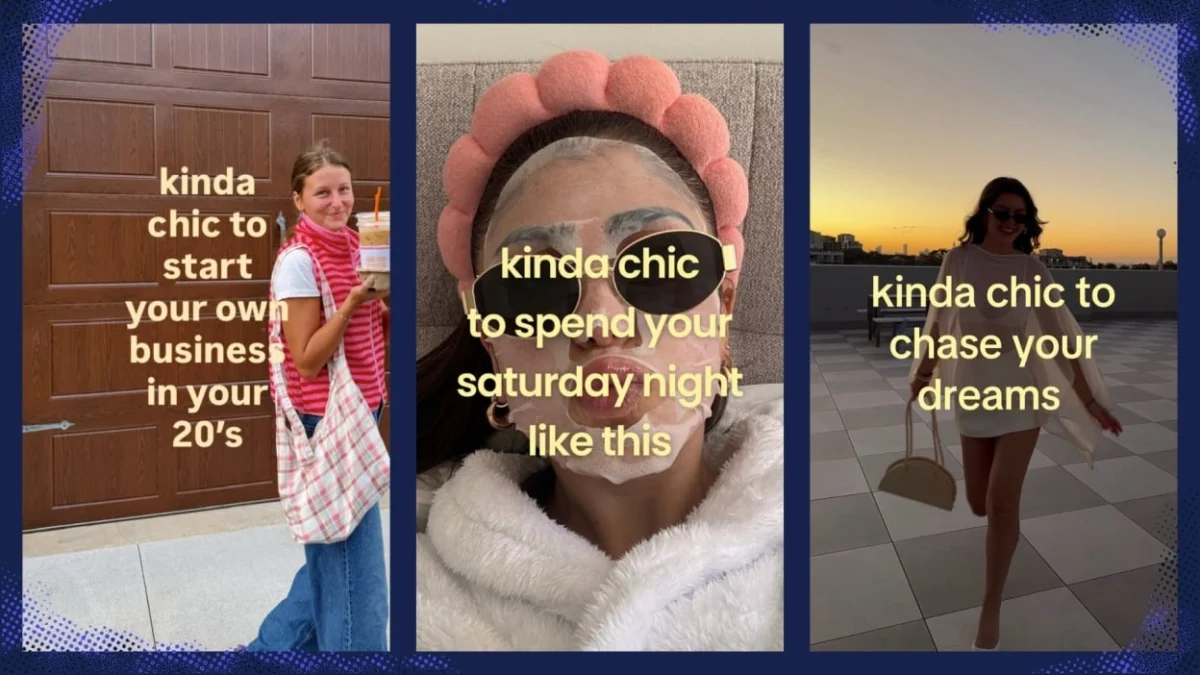
If you have scrolled through your Instagram Explore page or TikTok “For You” feed over the past few months, you have undoubtedly been informed that—well, just about everything—is “kinda chic.”
Whether it’s the quiet act of taking a coffee walk, the radical vulnerability of setting boundaries, or the simple, unpretentious joy of eating a slice of pizza, the phrase has become the internet’s latest linguistic catch-all. It is a digital Swiss Army knife of an aesthetic, applied with equal fervor to major life decisions and mundane daily habits. However, as the trend saturates every corner of social media, it has sparked a growing backlash, revealing a deeper fatigue surrounding the “template-ification” of online culture.
The Anatomy of a Digital Phenomenon
The "kinda chic" trend is deceptively simple. It typically involves a short-form video or a carousel of static images overlaid with text—often rendered in a distinctive, soft, pale-yellow font—that completes the sentence: “It’s kinda chic to…”
At its core, the trend functions as a form of “aspirational relatability.” It takes the word “chic,” which historically denoted high-fashion elegance, exclusivity, and expensive taste, and democratizes it. By placing it in front of everyday, often low-stakes actions, users are effectively reframing their own lives. When a user posts that it is “kinda chic to be a beginner at something” or “kinda chic to let people be wrong about you,” they are performing a subtle act of validation. They are asserting that their choices, struggles, and personal quirks possess a certain inherent value or style, even if they aren’t "glamorous" in the traditional sense.
A Brief History: From Niche to Ubiquity
While the exact origins of the trend are difficult to pinpoint in the fast-moving currents of social media, digital historians and analysts point to a slow, steady climb throughout the spring and summer of 2026.

According to tracking by Know Your Meme, early instances began appearing in late April. One of the primary catalysts is widely considered to be an April 27 post by plus-size creator Maria Castellanos (known online as @MariaBegins). Her post, which encouraged followers to identify their own "kinda chic" traits, served as an early blueprint for the format.
By July, the trend had officially crossed the chasm from niche creator circles into the mainstream. It was no longer just about personal affirmations; it had become a branding strategy. A-list celebrities like Reese Witherspoon, Drew Barrymore, and Ashley Graham began posting their own iterations. Witherspoon championed the act of cheering on other women, while Barrymore leaned into the empowerment of aging, declaring it “kinda chic to be in your 50s.”
Predictably, corporate marketing departments were quick to follow. From skincare giants like Laneige and Simple to retail chains like Aldi and travel brands like Virgin, the trend was cannibalized for brand engagement. It wasn’t long before a foldable sock hanger at a discount grocery store was being framed as the height of "chic."
Supporting Data: The Devaluation of a Word
The sheer velocity of this trend’s spread is reflected in the metrics. Google search interest for “kinda chic” skyrocketed by 5,000 percent between early summer and August 2026. On Instagram, the hashtag has accumulated over 60,000 posts, a number that grows by the hour.
However, this statistical success masks a brewing crisis of sentiment. Madé Lapuerta, the fashion data analyst and founder of the research platform Data, But Make It Fashion, conducted a sentiment analysis of online discourse surrounding the word "chic." Her findings were striking: the positive sentiment associated with the word has declined by an average of 14 percent per month since March.

This presents a paradox. While the frequency of the word’s usage is at an all-time high, its cultural currency is crashing. As the word is applied to everything from high-end couture to a pack of gum, it has lost its descriptive power, effectively becoming "linguistic noise."
The "Template Slop" Crisis: Why Users Are Tuning Out
The growing resentment toward the "kinda chic" trend is not necessarily a rejection of the sentiments being shared. Most users aren’t opposed to self-care, boundary-setting, or the joy of a good book—these are, by all accounts, positive things. The irritation lies in the format.
Digital culture commentator and fashion editor Brenda Weischer has coined the term “template slop” to describe this phenomenon. The critique suggests that social media platforms are no longer encouraging individual expression, but rather rewarding users for filling in the blanks of pre-approved formats. When every creator uses the same pale-yellow font, the same music, and the same "kinda chic" hook, the content becomes indistinguishable.
“Everyone is getting good. No one is getting better,” Weischer noted in her newsletter. The aesthetic has become a form of "algorithm-core"—content designed specifically to trigger the platform’s engagement metrics rather than to foster genuine human connection.
This has led to a palpable sense of “trend fatigue.” On platforms like Threads and Reddit, users have begun to openly vent their frustration. A popular sentiment on the r/petpeeves subreddit reads: “It’s chic to not be annoying as heck,” signaling that the very format designed to be "chic" is now perceived as the opposite.

Implications for the Future of Influencer Culture
The backlash against the "kinda chic" trend serves as a cautionary tale for content creators and brands alike. It highlights the diminishing returns of chasing virality through rigid formulas.
- The Death of Authenticity: When a trend becomes a "fill-in-the-blank" exercise, it ceases to be authentic. Audiences are becoming increasingly adept at spotting "content-factory" behavior, and as they do, they are disengaging from the creators who rely on it.
- The Search for Novelty: We are likely to see a shift toward more chaotic, less polished, and harder-to-replicate forms of content as a direct reaction to the "template era." The more standardized the internet becomes, the more the audience will crave anomalies.
- Brand Saturation: Brands that lean too heavily into these fleeting trends risk looking out of touch. When a major corporation attempts to frame a mundane product as "kinda chic," it often triggers a cynical response from consumers who are already tired of the format, leading to a net loss in brand equity.
Conclusion: The Chicest Move is to Stop
As of late August 2026, the consensus among cultural critics is clear: the "kinda chic" trend has reached its terminal velocity. Influencers are actively "revoking" the trend, and newsletters are calling for its retirement for the "sake of humanity."
Ultimately, the rise and fall of "kinda chic" is a microcosm of the modern internet. It is a place where a sincere idea can be transformed into a global meme in weeks, and where that same idea can be rendered obsolete by the sheer weight of its own repetition in a matter of months.
Perhaps the most important takeaway is the one suggested by the very people now avoiding the trend: if everything is “kinda chic,” then nothing is. In a landscape dominated by templates, the most radical and truly "chic" thing a creator can do today is to abandon the formula, delete the font, and post something that—for better or worse—is entirely their own.

 Reynand Wu
 Iffa Jayyana
 Raul Delapena Setiawan
 Sagoh
Sagoh
 Azzam Bilal Chamdy
 Ali Ikhwan