
 Muslim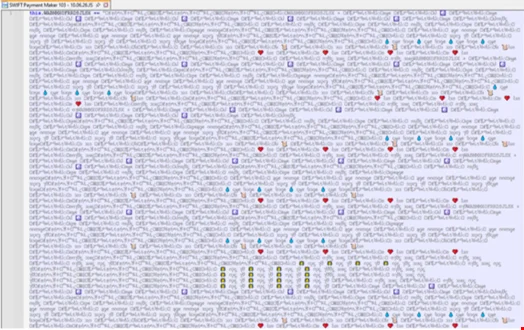
In the ever-shifting landscape of cyber-espionage and financial crime, few names have remained as persistently problematic as Agent Tesla. Long regarded as a staple of the "infostealer" ecosystem, the malware has once again evolved, demonstrating that even aging threats can be revitalized through creative obfuscation. Recent research from the security firm KnowBe4 has shed light on a sophisticated new version—Agent Tesla v4—which utilizes unconventional tactics, including the embedding of Unicode emojis, to bypass modern security defenses and exfiltrate sensitive corporate data.
As organizations grapple with the increasing sophistication of Business Email Compromise (BEC) attacks, this latest campaign serves as a stark reminder that threat actors are moving beyond simple phishing lures. By weaponizing visual "noise" and utilizing advanced memory-resident injection techniques, the operators behind Agent Tesla are setting a new standard for stealth in the infostealer market.
The Anatomy of the Campaign: A Sophisticated BEC Lure
The discovery began with an analysis of a highly targeted campaign aimed at corporate finance departments. The attack vector was a masterclass in social engineering, utilizing a forwarded email thread that mimicked legitimate internal correspondence.
The Lure: Spoofing Trust
The threat actors behind this campaign demonstrated a high level of operational security, opting to spoof a credible entity: the Philippines-based Metropolitan Bank and Trust Company. By framing the email as an "in-progress" conversation—a common tactic used to pressure victims into completing a "missing" step—the attackers effectively bypassed the natural suspicion employees might have regarding unsolicited attachments. The email instructed the recipient to review an attached document, creating a sense of urgency that is a hallmark of successful BEC attacks.
The Technical Delivery
Once the victim interacted with the attachment, the process initiated a Jscript dropper. This is where the campaign took a bizarre, yet technically astute, turn. The script body was heavily saturated with Unicode emoji characters—including hearts, water droplets, and various other symbols—interleaved directly within the functional code.
For a human observer, the code appears chaotic and nonsensical. For a security scanner relying on traditional string-based signature matching, the emojis act as a form of "visual noise" designed to disrupt analysis. By breaking up the malicious strings with non-executable Unicode characters, the attackers successfully prevented signature-based detection engines from identifying the underlying Jscript logic.
The Mechanics of Stealth: Memory-Resident Execution
Beyond the superficial distraction of the emoji-laden dropper, Agent Tesla v4 employs a robust, multi-stage execution chain designed to leave as little forensic footprint as possible.
Fileless Injection and DonutLoader
Upon execution, the Jscript dropper writes two files to the C:UsersPublicLibraries directory. One of these files serves as a decoy, while the other facilitates the loading of the malware payload. The process leverages the "DonutLoader" shellcode, which allows for the reflective injection of a Portable Executable (PE) directly into the system’s memory.

Because the final binary of Agent Tesla v4 never touches the physical hard drive, traditional file-based antivirus scanners are rendered largely ineffective. This "fileless" approach ensures that the malicious payload remains hidden within the memory space of legitimate processes, significantly complicating the work of incident responders who rely on disk-based forensic artifacts.
Advanced Defense Evasion
The developers of Agent Tesla v4 have clearly invested significant effort into thwarting reverse engineering. The malware is scrambled using "ConfuserEx," a powerful .NET obfuscator that renders the source code nearly unreadable to analysts. Furthermore, the malware uses sophisticated environmental checks:
- Metadata Spoofing: The assembly metadata falsely identifies the malware as a standard "Python installer," a common tactic to lull security teams into a false sense of security.
- Debugger Detection: The malware includes a first-line-of-defense check that scans for the presence of debuggers. If the malware detects that it is being analyzed in a sandbox or a controlled research environment, it immediately terminates its process to prevent its inner workings from being documented.
- Hardware Fingerprinting: Upon infection, the malware generates a persistent hardware fingerprint. This allows the threat actors to track specific victims across different environments, even if the user reinstalls their operating system or changes their IP address.
The Cost of Infection: Data Exfiltration and Persistence
The primary objective of Agent Tesla v4 is the wholesale theft of credentials and sensitive information. The malware is configured to sweep data from over 40 distinct applications, including web browsers, messaging platforms, and native Windows credential repositories.
The "Surgical" Exfiltration
What distinguishes this version from its predecessors is the speed and efficiency of its data exfiltration. The malware gathers a comprehensive set of system data—including the username, computer name, OS version, hardware specifications, and public IP address—and packages it with a hardware fingerprint header.
This data is then exfiltrated via an automated FTP transfer to a threat actor-controlled domain within seconds of execution. There is no delayed staging or batching of files; the exfiltration is nearly instantaneous, providing security teams with almost zero window of opportunity to intercept the data before it leaves the network.
Persistent Communication
To ensure long-term control, the malware modifies the system’s network configuration, disabling validation for outgoing connections. This ensures that the malware can communicate with its Command and Control (C2) infrastructure without triggering errors or alerts that might alert the user or network administrators to the breach.
Implications for Corporate Security
The emergence of Agent Tesla v4 underscores a dangerous trend: the professionalization of malware distribution. By combining high-level social engineering with complex, memory-resident payloads, threat actors are forcing security teams to rethink their defensive postures.
The Failure of Traditional Signatures
This campaign highlights the inherent limitations of signature-based detection. As long as attackers can use simple obfuscation techniques—like embedding emojis or using dynamic code generation—they will continue to slip past legacy antivirus solutions. Organizations that rely solely on "known bad" lists are at a significant disadvantage.

The Shift Toward Behavioral Analysis
Security experts are increasingly emphasizing the need for behavioral-based monitoring. Because the Jscript dropper behaves in a predictable, malicious way (e.g., spawning shellcode, making unauthorized network connections, and writing files to public directories), behavioral tools are far more likely to flag the activity than static scanners.
The Human Firewall
While the technical aspects of the attack are impressive, it remains a social engineering attack at its core. The reliance on a spoofed bank email confirms that employees remain the weakest link in the security chain. Comprehensive security awareness training, which includes simulated BEC scenarios, is essential to preparing staff to recognize the signs of a spoofed thread, such as irregularities in the conversation flow or unexpected requests for document verification.
Official Responses and Remediation Strategies
In the wake of the KnowBe4 report, security researchers have provided actionable intelligence for IT departments. The primary recommendation is the implementation of YARA rules—custom scripts designed to detect specific patterns of malicious activity.
Mitigating the Emoji-Obfuscation Tactic
Researchers have noted that while the emoji-obfuscation tactic is clever, it is not invincible. A YARA rule designed to detect the combination of specific emoji distributions alongside JScript-specific commands (such as WScript.Shell or CreateObject) is highly effective at identifying these droppers before they can execute.
Security teams should take the following steps to harden their environments:
- Update Email Filtering Rules: Configure gateways to flag emails that originate from external domains but attempt to mimic internal communication patterns.
- Monitor Script Execution: Implement strict policies on JScript and PowerShell execution, ensuring that these tools are restricted from running in unauthorized directories.
- Endpoint Detection and Response (EDR): Deploy EDR solutions that provide visibility into memory-resident processes. Focus on identifying the reflective injection patterns used by tools like DonutLoader.
- Strengthen Credential Management: Encourage the use of multi-factor authentication (MFA) across all corporate applications. Even if Agent Tesla successfully steals a password, MFA provides a critical layer of defense that prevents the attacker from gaining access to the account.
Conclusion: A Persistent Adversary
Agent Tesla v4 is more than just an update to a legacy piece of malware; it is a manifestation of the "cat-and-mouse" game that defines modern cybersecurity. By evolving to meet the defensive capabilities of the day—using everything from emojis to complex memory injection—the operators behind this threat continue to prove that they are both adaptive and persistent.
For organizations, the message is clear: security cannot be a static set-and-forget implementation. It must be a dynamic, layered approach that prioritizes visibility into both the human element of social engineering and the technical nuances of fileless execution. As the digital threat landscape continues to grow in complexity, the ability to adapt to these new "noisy" obfuscation tactics will be the deciding factor in whether an organization falls victim to an infostealer or successfully neutralizes the threat.


 Basiran
 Iffa Jayyana
 Raul Delapena Setiawan
 Reynand Wu
 Sagoh
Sagoh

 Azzam Bilal Chamdy
 Ali Ikhwan