
 Raul Delapena Setiawan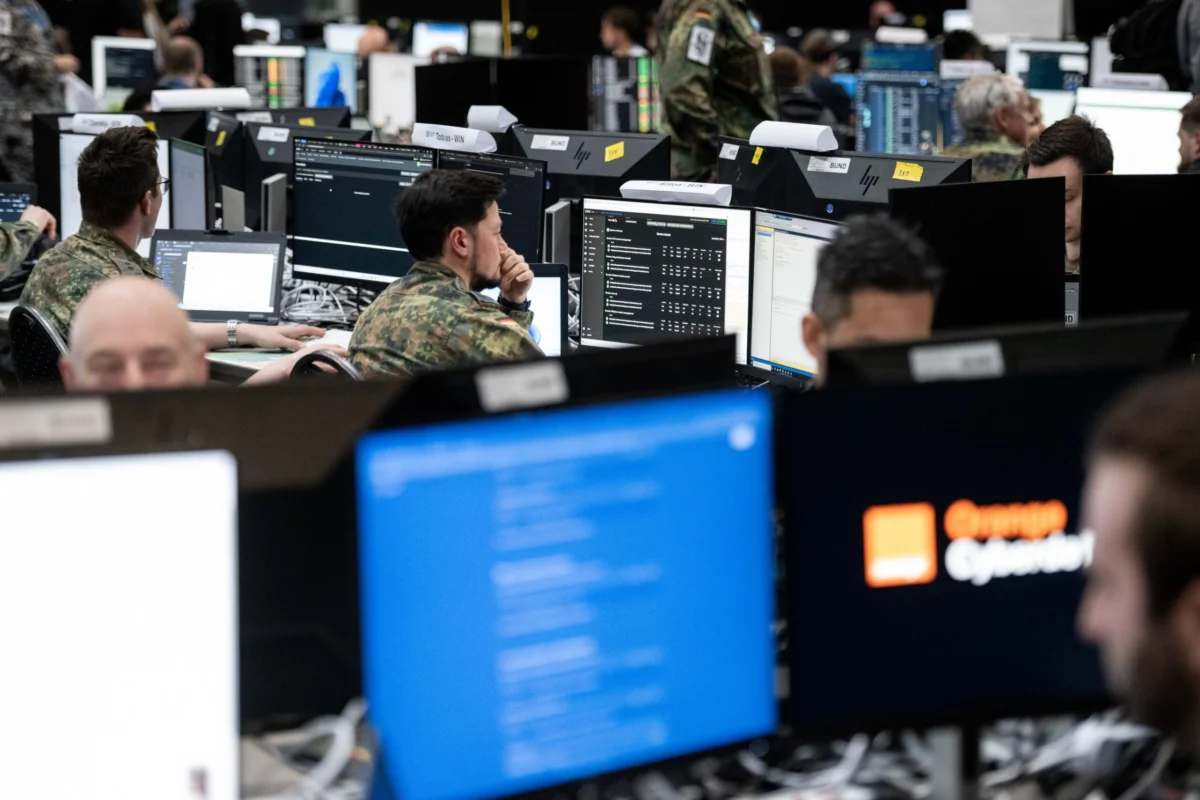
In a significant expansion of the global framework for tracking software vulnerabilities, the European Union Agency for Cybersecurity (ENISA) has announced the induction of two new entities into its Common Vulnerabilities and Exposures (CVE) Numbering Authority (CNA) program. The NATO Cyber Security Centre and the AI-focused cybersecurity startup AISLE have been officially authorized to issue CVE identifiers, marking a pivotal shift toward a more decentralized and agile vulnerability management landscape.
This development arrives at a critical juncture for the cybersecurity industry. As the proliferation of Frontier AI models accelerates the discovery—and potential exploitation—of software flaws, the need for a robust, standardized, and rapid identification system has never been more urgent.
The Evolution of the CVE Program
The CVE program, a cornerstone of global digital security, provides a standardized "common language" for identifying and documenting security vulnerabilities. By assigning a unique, trackable ID to each flaw, the program enables governments, vendors, and independent researchers to communicate effectively regarding security risks.
Historically, the program was managed almost exclusively by the MITRE Corporation under the oversight of the U.S. Cybersecurity and Infrastructure Security Agency (CISA). However, the system has undergone a period of intense transformation. Following a near-collapse of the program in early 2025—which was narrowly averted by a last-minute contract extension—the ecosystem has begun to diversify. Today, ENISA acts as a "Root" authority, hosting 20 distinct numbering authorities. Of these, 12 were brought in directly by ENISA, while eight transitioned from the legacy MITRE Root.
Chronology: A Shift Toward European and Decentralized Oversight
The inclusion of NATO and AISLE is not merely a bureaucratic update; it is part of a broader, ongoing evolution in how vulnerabilities are managed internationally.
- April 2025: The CVE program faces a severe existential threat as contract negotiations falter. A critical 11-month extension is finalized, preventing a total shutdown of the program.
- Post-April 2025: Realizing the risks associated with a centralized dependency, various international entities, including the Computer Incident Response Center Luxembourg (CIRCL), begin exploring alternatives. This leads to the creation of the Global CVE Allocation System (GCVE), an independent alternative designed to ensure continuity in vulnerability tracking.
- Late 2025 – Early 2026: ENISA accelerates its efforts to bolster the "ENISA Root" program, aiming to build a more resilient and geographically representative framework for vulnerability disclosure.
- August 2026: ENISA formally announces the integration of the NATO Cyber Security Centre and AISLE as CNAs, signaling a new phase of strategic cooperation between intergovernmental defense bodies and private-sector AI innovation.
Strategic Implications of New Authorities
The dual addition of a military alliance and a cutting-edge startup highlights the two-pronged approach now required to secure the global digital supply chain.
NATO’s Role in Collective Cyber Defense
The NATO Cyber Security Centre, a vital component of the NATO Communications and Information Agency, is now empowered to assign CVE IDs to vulnerabilities discovered across the entire NATO enterprise. By assuming this role, the alliance moves toward a more unified security posture.
Historically, information sharing within large-scale defense organizations can be hampered by procedural friction. By acting as its own CNA, the NATO Cyber Security Centre can streamline the disclosure process, allowing the alliance to track vulnerabilities internally with greater consistency and, crucially, share actionable threat intelligence with trusted partners in real-time. This is essential for maintaining the integrity of NATO’s expansive networks, which remain a primary target for sophisticated nation-state actors.
AISLE and the AI-Driven Future
Conversely, AISLE represents the emerging class of private-sector firms utilizing AI to reshape the vulnerability research landscape. AISLE’s authorization is narrower than NATO’s, focusing on the company’s own product line. However, the significance lies in the speed and autonomy this grants the startup.
By issuing its own CVEs, AISLE eliminates the bottleneck of waiting for third-party approval to publicize security flaws in its software. Jaya Baloo, co-founder of AISLE, noted that this move is "foundational" to the company’s mission. The firm has already made a name for itself by identifying and disclosing hundreds of vulnerabilities in high-profile open-source software, such as Linux, OpenSSL, and Apache. By setting a high standard for its own products, AISLE is attempting to lead by example, promoting a culture of radical transparency in the security community.
Expert Perspectives and Official Statements
Hans de Vries, ENISA’s chief cybersecurity and operations officer, emphasized that the recent expansion is a direct response to the "Frontier AI" era. In a recent statement, de Vries noted:
"Recent developments in the global cybersecurity landscape, coupled with the emergence of Frontier AI models and their impact on vulnerability discovery and exploitation, have underscored the need to build strong vulnerability management infrastructure and capabilities. Our role is to facilitate a more globally representative, resilient, and scalable vulnerability identification ecosystem."
The message is clear: the era of relying on a single, centralized database in the United States is ending. The future, as envisioned by ENISA, involves a federated model where multiple authorities—spanning military, public, and private sectors—collaborate to maintain the global security registry.
The Impact of AI on Vulnerability Discovery
The integration of AI into the CVE program is not coincidental. AI tools can now scan millions of lines of code in seconds, identifying complex bugs that would take human researchers weeks to find. While this is a massive boon for defensive security, it poses an asymmetric threat: malicious actors can use the same AI models to identify and weaponize these vulnerabilities faster than vendors can patch them.
This "race to patch" is the driving force behind the current push for more CNAs. When more organizations are empowered to issue CVEs, the speed of disclosure increases. This gives developers and infrastructure administrators the information they need to implement patches before exploit code becomes widely available.
Challenges and Future Outlook
Despite the optimism surrounding these developments, the transition is not without hurdles. The fragmentation of the CVE system—with multiple "Roots" and competing databases like GCVE—presents a challenge for researchers and developers who must now navigate a more complex landscape to verify vulnerability data.
Consistency remains the primary concern. Critics argue that as more entities gain the power to assign IDs, maintaining a uniform standard for what constitutes a "CVE-worthy" flaw could become difficult. ENISA and other oversight bodies will need to invest heavily in governance and interoperability to ensure that the "common language" of cybersecurity does not devolve into a collection of isolated dialects.
Furthermore, the funding crisis that nearly shuttered the program in 2025 serves as a lingering reminder of the fragility of these systems. The shift toward a more decentralized model is a necessary hedge against such risks, but it requires sustained political and financial commitment from the European Union, NATO, and the private sector.
Conclusion
The addition of the NATO Cyber Security Centre and AISLE to the ENISA-led CVE program marks a maturing of the global cybersecurity apparatus. By decentralizing authority and embracing the speed of AI-driven research, the community is building a more resilient framework capable of defending against the threats of the late 2020s.
As we move forward, the success of this model will depend on the ability of these diverse stakeholders to maintain high standards of transparency and coordination. The goal remains constant: a secure digital environment where vulnerabilities are identified, disclosed, and remediated with the precision and speed required by the modern, AI-augmented threat landscape.

 Basiran
 Iffa Jayyana

 Reynand Wu
 Sagoh
Sagoh

 Azzam Bilal Chamdy
 Ali Ikhwan