
 Rifan Muazin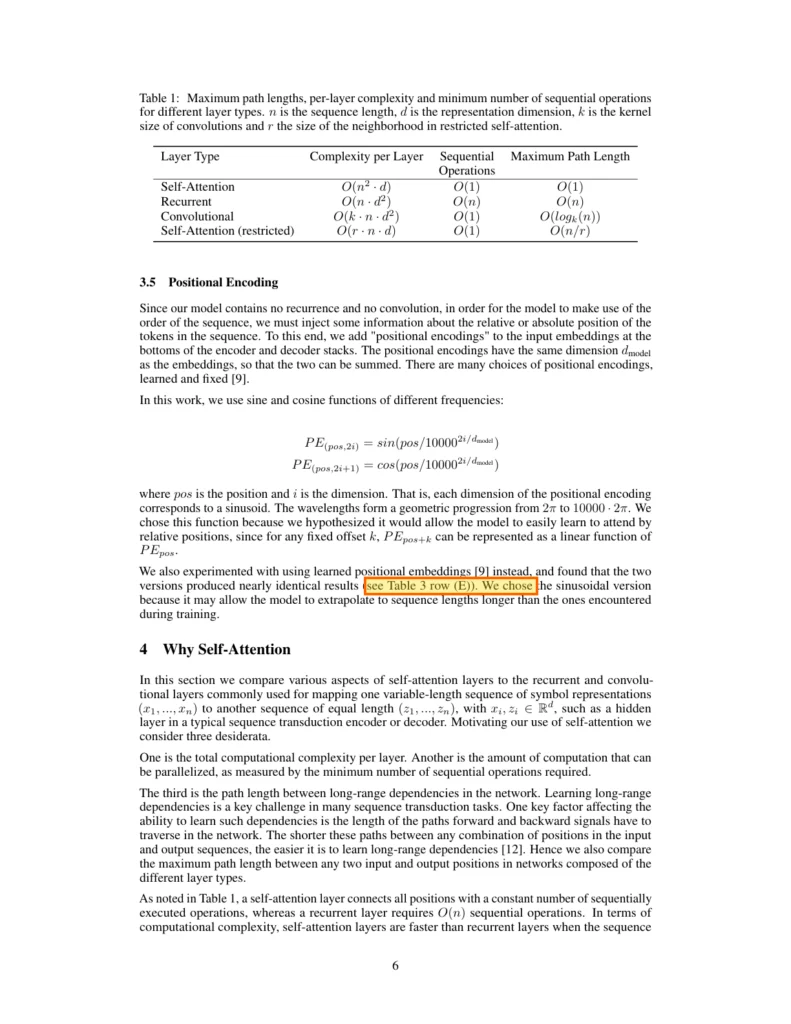
In the world of Retrieval-Augmented Generation (RAG), a common frustration for users is the "incomplete answer." A system might confidently state, "The applicable sublimit is defined in Section 7.2 of the policy," but stop there. The user is left hanging: What does Section 7.2 actually say? What is the specific dollar amount? The system’s answer isn’t technically wrong, but it is unfinished. It points toward the information rather than containing it, failing to execute the secondary retrieval required to bridge the gap between a pointer and the data it represents.
This article, part of the Enterprise Document Intelligence series, explores how to move beyond static, single-pass retrieval. By building a systematic architecture that treats document cross-references as actionable signals rather than static text, developers can create RAG systems that "follow" pointers just as a human reader would—reliably, systematically, and without the inefficiency of brute-force data processing.

1. Main Facts: The Architecture of Resolution
The core architectural breakthrough presented here is a shift in how we handle document pointers. Instead of attempting to parse every potential reference in a document at the time of ingestion—an expensive and often unnecessary task—this approach utilizes a "feedback-loop" methodology.
The system relies on four distinct bricks: document parsing, question parsing, retrieval, and generation. The innovation occurs at the intersection of generation and the orchestrator. When the LLM encounters a reference (such as "see Table 3 row (E)"), it is prompted to flag this as a pending_reference in its structured output. The orchestrator then catches this signal, consults the parsing brick’s relational tables to find the target, re-retrieves the necessary context, and re-runs the generation process.

This design avoids the common pitfalls of AI agents that rely on "confidence scores," which are notoriously unreliable. Instead, it relies on structured feedback signals defined in a Pydantic schema, ensuring that the loop is logical, deterministic, and bounded by a strict iteration budget.
2. Chronology: The Two-Pass Workflow
To understand how this system operates, consider the Attention Is All You Need paper (Vaswani et al., 2017). When asked, "Do learned positional embeddings give similar results to sinusoidal ones?", a standard RAG system might retrieve only the page containing the qualitative answer (Page 6).

The First Pass
- Parsing: The system runs a lightweight parse. It extracts native PDF links and structural anchors from the Table of Contents (TOC), but ignores the dozens of in-prose references like "see Section 4.2" or "see Table 3." This saves massive computational overhead.
- Retrieval: Using a "Top-1" policy, the system fetches the most relevant page (Page 6).
- Generation: The model answers the question but realizes it needs external context. It outputs a structured field,
answer_completeness: "references_unresolved", and lists the pointer to "Table 3 row (E)."
The Second Pass
- Orchestration: The orchestrator reads the
references_unresolvedflag. It confirms the loop budget allows for a second pass and initiates the resolution process. - Resolution: The resolver looks up "Table 3" in the
object_registrycreated during parsing. It identifies that the data exists on Page 9. - Re-Retrieval & Generation: The system pulls the data from Page 9 and feeds it back into the LLM. The final output provides the specific perplexity and BLEU scores, completing the answer with full provenance.
3. Supporting Data: Why "Cheap Defaults" Matter
A common misconception in RAG development is the need for "pre-extraction." Developers often feel compelled to use regex to find every mention of a section or table during the initial document ingestion. This is a strategic error for three reasons:
- Volume: In a 200-page contract, hundreds of references may exist. If the user only ever asks about the "indemnification clause," the hundreds of other references represent wasted computational cycles.
- Vocabulary Variance: References come in endless forms: "cf.", "see", "per", "as defined in," or "in accordance with the foregoing." A regex broad enough to capture these is brittle and prone to error. By deferring resolution to an LLM-assisted resolver that sees the context of the reference, the system achieves far higher accuracy.
- Maintenance: A static
cross_ref_dftable is an additional artifact that must be maintained. By relying on the existing, lightweight parsing tables (TOC and object registries), the system remains lean.
Furthermore, the "Top-1" retrieval policy is defended as a best practice for enterprise factual questions. Most enterprise queries have one "canonical" passage. Pulling top-3 or top-5 chunks, as many tutorials suggest, often introduces noise and wastes the LLM’s context window. If the top-1 page is a "stub" pointing elsewhere, the loop mechanism handles it automatically.

4. Official Responses: The Role of the Resolver
The resolver is the "brain" of the cross-reference loop. It operates in a hierarchy of intelligence:
- Deterministic Lookup: For numbered sections or tables, it uses simple joins against the
toc_dforobject_registry. This is effectively free and 100% accurate. - LLM-Assisted Resolution: For ambiguous phrases like "as discussed earlier," the system invokes a small, specialized LLM call. It provides the origin line and a few surrounding lines of context, allowing the LLM to map the vague pointer to a specific section.
- External Handling: If a reference points to a document outside the current corpus (e.g., "see ISO 27001"), the system flags it as an "external reference." It explicitly informs the user that the resource is external rather than hallucinating the content or falsely claiming the system has it.
This hierarchy ensures that we only use expensive LLM reasoning when absolutely necessary, keeping the system cost-effective and auditable.

5. Implications for Enterprise Intelligence
The implications of this "signal-driven" architecture extend far beyond cross-references. This pattern is the foundational logic for the entire Enterprise Document Intelligence series.
From Agents to Orchestrators
The industry is currently obsessed with "autonomous agents." However, for enterprise applications, autonomous agents are often too unpredictable. The orchestrator model—where the code determines the flow based on explicit, typed feedback from the generation step—is significantly more robust. It turns the RAG pipeline into a predictable state machine.

Scalability and Auditability
Because each step is recorded in the metadata (e.g., "this passage was pulled in because of the reference in Page 6"), the system is inherently auditable. An auditor can retrace the steps of the loop to see exactly why the system decided to pull in Page 9. This level of transparency is non-negotiable in sectors like law, finance, and insurance.
The Future of the Pipeline
As we move forward, the same architectural pattern—Cheap Default, Signal-Driven Expansion, Bounded Iteration—will be applied to more complex tasks, such as:

- Listing Completeness: Determining if a list of "all termination clauses" is complete.
- Conditional Logic: Explicitly stating conditions (e.g., "the rule applies only if the policy is renewed within 30 days") rather than assuming them.
- Definition Management: Pulling definitions from specific sections to ensure the LLM uses the document-specific meaning of a term rather than a generic, dictionary-based one.
By adopting this structure, organizations can transition from "chatty" AI tools that provide surface-level answers to "intelligent" systems capable of navigating complex, multi-layered documentation with the precision of a human expert. The era of the "unresolved pointer" is coming to an end; the era of the systematic, loop-based RAG architecture has begun.

 Suro Senen
 Azzam Bilal Chamdy

 Jia Lissa
 Evan Lee Salim
 Ali Ikhwan
 Lina Hope