
 Reynand Wu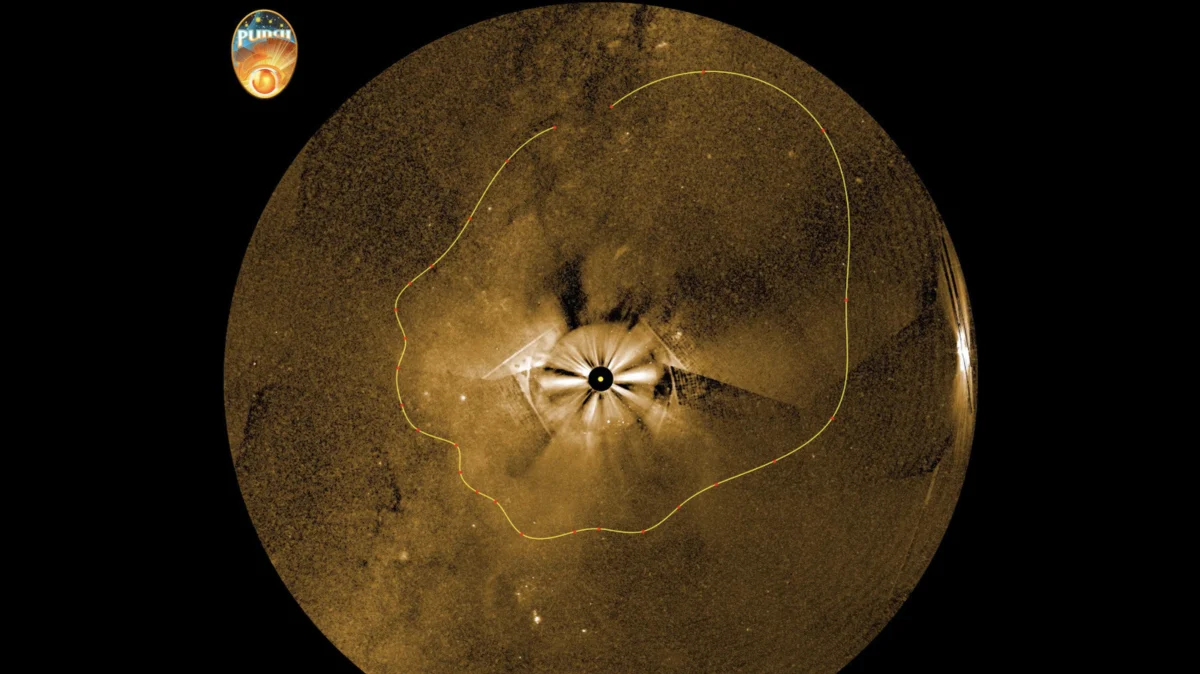
In the high-stakes theater of space exploration, few threats are as unpredictable and potentially disruptive as solar weather. For decades, our ability to forecast the arrival of a Coronal Mass Ejection (CME)—a massive burst of solar wind and magnetic fields—has been hampered by a significant "visibility gap." However, a breakthrough by NASA’s Polarimeter to Unify the Corona and Heliosphere (PUNCH) mission has fundamentally altered the landscape, promising to move humanity from the era of rough estimations to a new age of precision forecasting.
In a landmark test conducted in mid-2025, PUNCH successfully predicted the arrival of a solar storm with an accuracy margin of just 30 minutes. This achievement represents a massive leap forward from current industry standards, which often contend with an error margin of five hours or more. As our civilization becomes increasingly reliant on satellite infrastructure and interconnected global grids, the ability to "see" these storms coming with such clarity is not just a scientific triumph—it is a critical necessity for modern global security.
The Mechanics of the PUNCH Mission: A New Vantage Point
Launched in March 2025, the PUNCH mission consists of a sophisticated constellation of four microsatellites designed to provide continuous, 24/7 monitoring of the Sun. Unlike previous solar observatories that captured snapshots of solar activity at intermittent intervals, PUNCH is engineered to track the evolution of the solar corona and the heliosphere—the vast bubble of space dominated by the Sun—in unprecedented detail.
The core innovation of PUNCH lies in its polarimetric imaging capabilities. By capturing images of CMEs once every four minutes, the constellation provides a continuous "movie" of solar material as it propagates through space. Before PUNCH, our instrumentation was limited to tracking only about one-fifth of a CME’s journey from the Sun to Earth. Scientists were essentially forced to "guess" the behavior of the storm during the vast majority of its transit. PUNCH effectively bridges this observational chasm, allowing researchers to visualize the entire life cycle of a solar explosion from inception to arrival.
Chronology of a Breakthrough: The May 31, 2025 Test
The potential of the PUNCH mission was put to the test on May 31, 2025, when the satellites captured a significant CME event. This incident served as the primary case study for the mission’s efficacy.
- Initial Detection: As the CME erupted from the Sun, the PUNCH constellation began its high-frequency data collection, capturing the expansion of the plasma cloud in real-time.
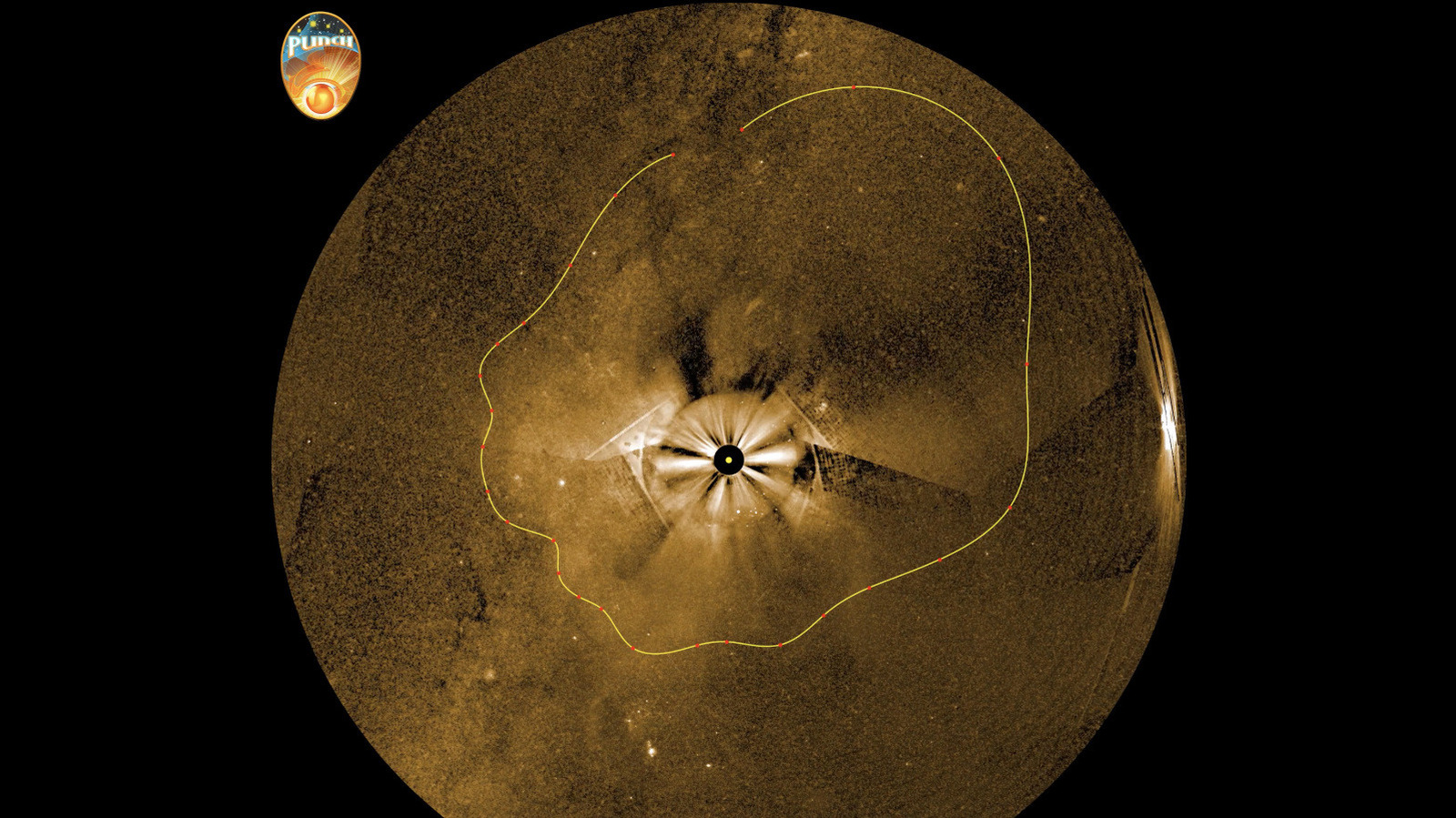
- Data Integration: The raw imagery and polarimetric data were fed into an advanced computer modeling system designed to analyze the morphology of the CME. The model tracked the "edges" of the ejection, calculating its speed, shape, and density as it traveled through the interplanetary medium.
- The Forecast: After processing just the first 12 hours of the CME’s journey, the model generated a prediction: the solar storm would strike Earth in exactly eight hours.
- Validation: As the solar material interacted with Earth’s magnetic field, scientists compared the arrival time against the model’s prediction. The result was a staggering 30-minute margin of error, a level of precision previously thought impossible with current technology.
This test was not merely a proof of concept; it was a demonstration that the bottleneck in space weather forecasting has historically been a lack of continuous, high-fidelity data, rather than a failure of physics or computing power.
Supporting Data: Why Precision Matters
To understand the significance of this 30-minute accuracy, one must consider the sheer magnitude of a solar storm’s impact. When a CME strikes the Earth’s magnetosphere, it can trigger a geomagnetic storm. These events are not merely academic concerns; they have tangible, destructive potential.
Current forecasting tools, while helpful, suffer from wide uncertainty windows. A five-hour margin of error can mean the difference between a grid operator successfully shielding a power transformer and a catastrophic failure that leaves millions without electricity. By reducing this window to half an hour, PUNCH provides grid operators and satellite managers with the "goldilocks" timeframe: enough warning to take protective action, but with enough certainty that they aren’t wasting resources by shutting down systems unnecessarily.
Furthermore, the data generated by PUNCH allows for more sophisticated modeling of the CME’s internal structure. By tracking the magnetic orientation of the plasma, scientists hope to eventually predict not just when a storm will hit, but how severe its impact will be on the power grid.
Official Perspectives: A "Steam Engine to Combustion Engine" Moment
The scientific community has reacted to the PUNCH results with a mixture of professional awe and cautious optimism. Dr. Craig DeForest, the principal investigator for the PUNCH mission at the Southwest Research Institute in Boulder, Colorado, did not mince words when describing the gravity of the breakthrough.
"We thought PUNCH would be good at this, but it’s a stunning result," Dr. DeForest noted. "To put it in perspective, this could be the space weather equivalent of going from a steam engine to a modern internal combustion engine."
The comparison is apt. Just as the internal combustion engine revolutionized transport by providing a more efficient, reliable, and powerful way to move, PUNCH is replacing the "chugging," fragmented data streams of the past with a high-performance, continuous stream of information. This shift changes the mission from a reactive endeavor—where we scramble to deal with a storm after it is already detected near Earth—to a proactive one, where we can track a threat from its very source.
NASA officials have emphasized that these findings are currently being presented as a proof-of-concept in the journal Space Weather. The peer-review process is expected to further refine the algorithms used, but the initial data points have already set a new baseline for the field of heliophysics.
Implications for the Modern World
The implications of this mission extend far beyond the realm of pure science. We live in a world that is fundamentally tethered to space-based infrastructure.
1. Grid Stability and Power Infrastructure
Geomagnetic storms induced by CMEs can induce currents in long-distance power lines, potentially overloading transformers. A more accurate forecast allows utility companies to balance loads or temporarily disconnect vulnerable sections of the grid.
2. Satellite and Aerospace Safety
Modern satellites, including the GPS constellations that underpin global finance and navigation, are vulnerable to the high-energy particles associated with CMEs. With PUNCH’s improved forecasting, operators can put sensitive satellites into "safe mode" hours before a strike, preventing permanent hardware degradation.
3. Global Internet Connectivity
Recent studies have highlighted the vulnerability of the global submarine internet cable network to extreme geomagnetic disturbances. By accurately predicting the intensity and timing of solar storms, telecommunications companies can implement mitigation strategies to protect international data flow.
4. Human Exploration
As NASA and other international agencies push toward lunar and Mars exploration, the health of astronauts becomes a primary concern. Solar radiation is a major health risk for crews outside the protection of Earth’s atmosphere. PUNCH-enabled forecasting provides a "weather report" for the solar system, ensuring that astronauts can seek shelter or postpone spacewalks during periods of high solar activity.
Future Outlook: Beyond the Horizon
The success of the May 31, 2025, test is only the beginning. The PUNCH team is already looking toward the next phase of the mission, which involves refining the data integration models. Scientists believe that as the team learns more about the Sun’s behavior through the continuous data stream, they will be able to extend the forecasting window even further into the future.
The ultimate goal is a "persistent watch" system—a global space weather early warning network that treats solar activity with the same level of routine monitoring as terrestrial meteorological systems. If the PUNCH mission continues to perform at this level, the fear of "surprise" solar storms may soon become a relic of the past.
In summary, the PUNCH mission has effectively opened the eyes of the global scientific community. By transforming how we observe the Sun, NASA has provided a masterclass in the value of persistent, high-cadence data. As we move deeper into the current solar cycle, the PUNCH satellites will remain on guard, serving as our most reliable sentinels in the silent, swirling chaos of the heliosphere. The "steam engine" days of solar weather forecasting are over; we have officially entered the age of high-precision solar defense.

 Suro Senen
 Jia Lissa
 Lina Irawan
 Ammar Sabilarrohman
 Nana Wu