
 Nana
Nana
In the modern digital landscape, most email service providers (ESPs) house databases filled with thousands of subscribers who, on paper, look identical. You likely have segments based on basic metrics: customers who purchased in the last 90 days, those who clicked a link, or those who abandoned a cart. Yet, beneath these surface-level metrics lies a vast, untapped diversity.
Within that single "recent purchaser" segment, you have the customer who bought a moisturizer for dry skin, the one who purchased it as a thoughtful gift for a friend, and the one who has been battling a specific skin condition for years. Treating these three individuals with the same generic email broadcast is the primary reason for declining open rates and customer fatigue.
The remedy for this disconnect is zero-party data. Unlike behavioral data, which relies on the "guessing game" of observing clicks and page views to infer intent, zero-party data is information that a subscriber intentionally shares with you. It is the gold standard of modern marketing, turning guesswork into a direct, honest conversation.
The Core Facts: Defining Zero-Party Data
Coined by Forrester Research, zero-party data represents the next evolution of customer intelligence. It is defined as data that a customer provides intentionally and proactively in exchange for something they value—be it a discount, a personalized recommendation, or curated content.
The Hierarchy of Data
To understand why zero-party data is currently the most valuable currency in e-commerce, one must distinguish it from its predecessors:
- Third-Party Data: Effectively a relic of the past, this data was scraped from browsing habits across the web. With the death of the third-party cookie and the rise of Apple’s App Tracking Transparency (ATT), this data is increasingly unreliable and ethically contentious.
- First-Party Data: This includes your purchase history, browse activity, and email clicks. While useful, it is purely behavioral. It tells you what happened, but it doesn’t explain why.
- Zero-Party Data: This skips the inference step entirely. When a customer tells you, "I have oily skin and a budget of $50," you no longer need to speculate. You have the answer, and you can act on it immediately.
In a climate where privacy regulations like GDPR and CCPA are tightening, building your marketing strategy on data that subscribers choose to share is not just effective—it is a defensive business strategy that future-proofs your brand.
Chronology of the Shift: From Broadcasting to Personalization
The trajectory of email marketing has moved through three distinct phases:
- The Era of the Blast (2000–2010): Marketing was a megaphone. One email went to the entire list, regardless of individual needs.
- The Era of Behavioral Tracking (2010–2020): Brands began using cookies to "watch" users. While this allowed for rudimentary segments, it often felt invasive and lacked the context of the user’s true motivations.
- The Era of Intent (2020–Present): The current shift is defined by transparency. Brands now realize that trust is a higher conversion driver than tracking. By providing value upfront—through quizzes, preference centers, and interactive surveys—brands are creating a two-way dialogue.
Supporting Data: Why Engagement Metrics are Failing
The reliance on behavioral data alone is leading to a crisis of relevance. Research indicates that consumers are increasingly likely to mark emails as spam or unsubscribe if the content feels irrelevant.
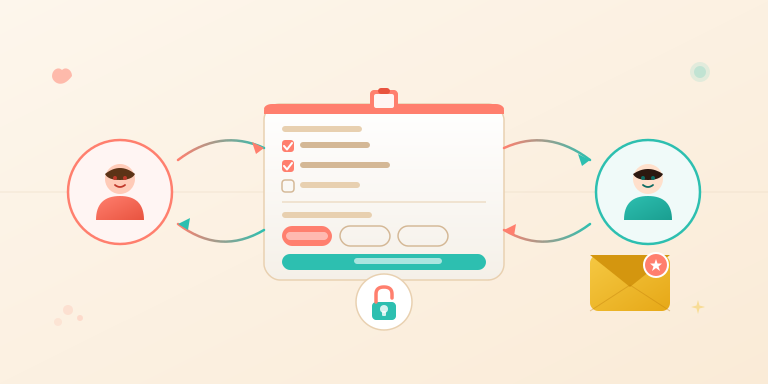
When you use a quiz to collect data, you aren’t just gathering information; you are providing a service. A high-performing quiz does three things simultaneously:
- Structured Data Collection: It feeds your CRM with actionable attributes.
- The "Value Exchange": It provides the customer with a personalized result, making the interaction feel helpful rather than extractive.
- Early Segmentation: It allows you to personalize the welcome flow before the first purchase has even occurred.
Most email personalization strategies only kick in after the first transaction. By using zero-party data at the point of lead capture, you are effectively segmenting your audience from the moment they join your list.
Tactical Implementation: Tools for Success
To move beyond the "spreadsheet" phase of data collection, you must integrate your tools. Platforms like Omnisend have become industry leaders by allowing brands to pass quiz and survey data directly into subscriber profiles.
The Power of the Quiz
A successful quiz shouldn’t just be a barrier to entry. If it exceeds eight questions, abandonment rates spike. Each question must feel like it is leading the user toward a "better" version of themselves or a more accurate solution. If the recommendation on the results page is generic, the entire exercise is a wasted opportunity.
The Art of the Post-Purchase Survey
If quizzes are for the top of the funnel, surveys are for the bottom. Sending a survey 24 to 48 hours after product delivery is a masterclass in retention. Ask questions that analytics cannot answer:
- "Was this a gift?"
- "What was the primary problem you were trying to solve with this product?"
- "How would you rate your experience with our packaging?"
The "single-question email" is another underrated tactic. By asking one simple question with two or three clickable options, you can achieve response rates far higher than standard surveys. The answer, once clicked, updates the user’s profile in real-time.
Implications: The Preference Center as a Trust Asset
Most brands treat the "Unsubscribe" button as the final destination. However, this is a missed opportunity for relationship management. By implementing a robust Preference Center, you allow subscribers to curate their own experience.
Instead of a binary "Stay or Go" choice, offer the "Middle Ground":
- Frequency Control: Do they want daily updates or a monthly digest?
- Content Preferences: Do they want tutorials, product drops, or educational content?
When a subscriber takes the time to update their preferences, they are signaling a desire to stay. They are no longer "tolerating" your emails; they are curating them. This is the highest form of brand loyalty.
Strategic Synthesis: Turning Data into Revenue
Collecting data is merely the first step. The true challenge—and the true competitive advantage—lies in the "mapping."
Every data point you collect must trigger a specific outcome. If you know a subscriber is a "beginner" vs. an "advanced user," your onboarding flow should look fundamentally different for each.
- Dynamic Segmentation: Using custom properties to bucket users allows for hyper-personalized messaging at scale.
- The Hybrid Approach: The most successful brands combine zero-party data (what they told you) with first-party signals (what they actually bought). This combination is exponentially more powerful than either data set in isolation.
Final Thoughts: The Future of Email
The brands that dominate the next decade will not be the ones with the largest mailing lists; they will be the ones with the most accurate, intent-driven data.
In a world where paid acquisition costs are skyrocketing and tracking is becoming increasingly difficult, your email list is your most precious asset. By treating your subscribers as partners in a conversation rather than targets in a campaign, you earn the right to their attention.
Platforms like Omnisend are built to facilitate this. By enabling custom properties, seamless quiz integrations, and automated workflows that react to individual subscriber data, they provide the necessary infrastructure to scale human-centric marketing.
For founders looking to optimize their costs, the migration path is simpler than ever. With free migration services that move all your existing flows and lists in five days, and SMS pricing structures that are significantly lower than industry incumbents, the barrier to upgrading your marketing infrastructure is lower than ever. As you build your future-proof email program, remember: the goal isn’t just to be seen—it’s to be heard.
Start today by auditing your current data collection. Ask yourself: "What do I know about my customers that they explicitly told me?" If the answer is "not enough," it’s time to change the game.


 Reynand Wu
 Lina Irawan

 Ammar Sabilarrohman
 Nana Wu

 Suro Senen
 Jia Lissa