
 Ali Ikhwan
In the polished, glass-walled boardrooms of venture capital and investment banking, the conversation usually revolves around SaaS platforms, AI disruption, or high-frequency trading. Rarely does it turn to the humble, unglamorous world of residential pest control. Yet, David Royce, the founder and chairman of Aptive Environmental, has quietly cemented his status as one of the most successful, if stealthy, wealth builders in modern American business.
Royce’s journey is not a story of Ivy League pedigrees or Silicon Valley networking. It is a masterclass in the power of "doing the thing nobody else wants to do." Today, Aptive stands as the third-largest residential pest control service in North America, a testament to a philosophy that values grit, operational excellence, and the ability to find "sexy margins" in what many consider to be a boring, blue-collar industry.
The Formative Years: From Self-Doubt to Sales Mastery
The narrative of David Royce begins not in a boardroom, but in a classroom where a young boy grappled with the stinging feeling of inadequacy. Struggling with undiagnosed ADHD, Royce spent his early years believing he simply wasn’t "smart." It took a dedicated sixth-grade teacher, Mrs. Luft, to change that trajectory. Her belief in him provided the catalyst for a transformation that would define his professional life: the realization that when he was deeply engaged with a task, his brain functioned not as a liability, but as a superpower.
This lesson was further reinforced during his teenage years. After being let go from a local pizza parlor, Royce took a job at McDonald’s. While he viewed the role as embarrassing at the time, it was there that he internalized the value of standardized systems and best practices. He learned that every operation, no matter how small, relies on a repeatable formula.
Chronology of a Billion-Dollar Climb
The Door-to-Door Crucible
Royce’s entry into the pest control industry was entirely accidental. While in college, a friend mentioned he had earned $25,000 in a single summer selling pest control services door-to-door. Intrigued, Royce headed to Sacramento. The reality was a harsh awakening: he spent his first five days on the job making zero sales. While his peers were closing deals, Royce was doing "free cardio."
Instead of quitting, he turned to the local bookstore, devouring sales literature and committing to 90 minutes of study every single day. By the end of that summer, he was the top sales rookie in a company of 200. He had discovered a fundamental truth: persistence is genius in disguise.
The Entrepreneurial Pivot
During his final year of college, Royce was prepared to enter the high-stakes world of investment banking. His mentor, however, posed a life-altering question: "Why go work 80-to-100-hour weeks for someone else when you can start your own company?"
Despite his initial hesitation—fearing that "pest control" lacked the prestige of a corner office—Royce swallowed his ego. He used $300,000 in savings, originally intended for an MBA, to fund his first venture. He didn’t reinvent the wheel; he simply took the 30 pain points his former boss had identified and built a business model to solve them.
Scaling the Machine
The growth was meteoric, but it came with a near-death experience. In his first year, Royce targeted 5,000 new customers but landed 7,500. While the revenue was record-breaking, the commission-heavy business model created a cash-flow crisis. He narrowly avoided bankruptcy by negotiating directly with his sales leaders, offering interest-heavy incentives to delay commission payouts. This crisis taught him the ultimate business axiom: "Revenues are vanity, profits are sanity, but cash flow is reality."
Supporting Data and Strategic Innovation
Royce’s success is built on three distinct pillars that allowed him to outperform 20,000 competitors:
- The Sales Machine: Royce codified his sales training into a system centered on "Option Closes" (asking which time works better rather than yes-or-no questions), "RAC" (Resolve doubt, Add an ace, Close), and the importance of body language. Under his training, reps who defected from competitors saw their productivity jump by 70%.
- Technological Integration: Seventeen years ago, deploying software in a blue-collar industry was revolutionary. Royce built a custom sales app that gamified performance, boosting productivity by 30% on tournament days.
- The Asset Deal Structure: Unlike many founders who sell their entire entity, Royce perfected a strategy of selling only the recurring revenue streams (customers and technicians) to strategic buyers. He retained his leadership team and core operations, effectively "re-starting" the company with fresh capital, seasoned veterans, and zero equity dilution.
Official Insights: Culture as Design
When asked about the extravagant culture at Aptive—which includes everything from skydiving trips and golf simulators to swimming with sharks—Royce is quick to clarify: "Perks are sugar, not protein."
The true driver of his culture was ownership. Royce famously distributed 25% of the company to his employees. At the time of Aptive’s massive scale, this resulted in life-changing payouts for team members, many of whom used the funds to pay off mortgages and student loans. "Ownership," Royce notes, "is a far better retention tool than ping-pong tables."

The "Hero" Dilemma and Leadership Transition
A critical turning point in any founder’s career is the transition from "hero" to "architect." Royce spent a decade grooming a protégé to take over as CEO of Aptive. The process was not without friction. A painful lesson occurred when he hired a high-profile CFO from a billion-dollar tech firm. The executive’s lack of experience with the granular expenses of a service-based company, combined with a failed sales process, served as a stark warning: resumes do not run companies; people do.
Royce eventually learned that true leadership means allowing others to succeed—even if they choose a path different from your own. By stepping back from the daily grind, he transitioned from the person who saved the day to the architect who built the system.
Implications for Future Entrepreneurs
David Royce’s story offers several key takeaways for the modern business landscape:
- The "Unsexy" Advantage: The wealthiest entrepreneurs often operate in industries that others overlook. As the baby boomer generation retires, there is a massive opportunity to acquire and modernize "boring" but essential service businesses.
- AI vs. Human Utility: While AI can automate complex office tasks, it cannot replicate the physical necessity of home services. Industries involving "climbing on a roof" or "treating termites" remain remarkably resilient to technological disruption.
- The Power of Mentorship: Royce’s legacy is defined not by his valuation, but by the number of leaders he has developed. By giving his employees a stake in the outcome, he ensured that his success was shared, fostering a level of loyalty that money alone cannot buy.
As Royce reflects on his career, he rejects the idea of a final "number" or a destination. Instead, he views entrepreneurship as a path of developing discipline, character, and expertise. "If you don’t enjoy the climb," he warns, "the summit is going to disappoint you."
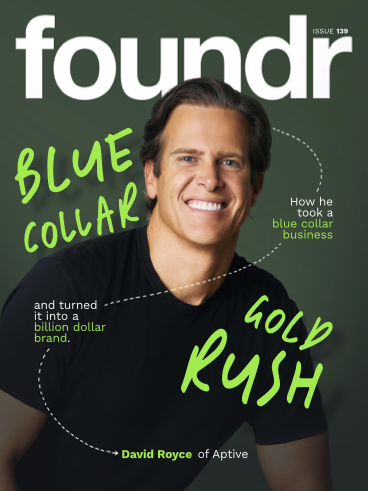
In an era where many chase the ephemeral glory of the next viral app, David Royce stands as a reminder that the most durable empires are often built on the most foundational of needs—and that the greatest opportunity is often the one that nobody else wants.


 Reynand Wu
 Lina Irawan
 Suro Senen
 Jia Lissa
 Evan Lee Salim


 Lina Hope