
 Reynand Wu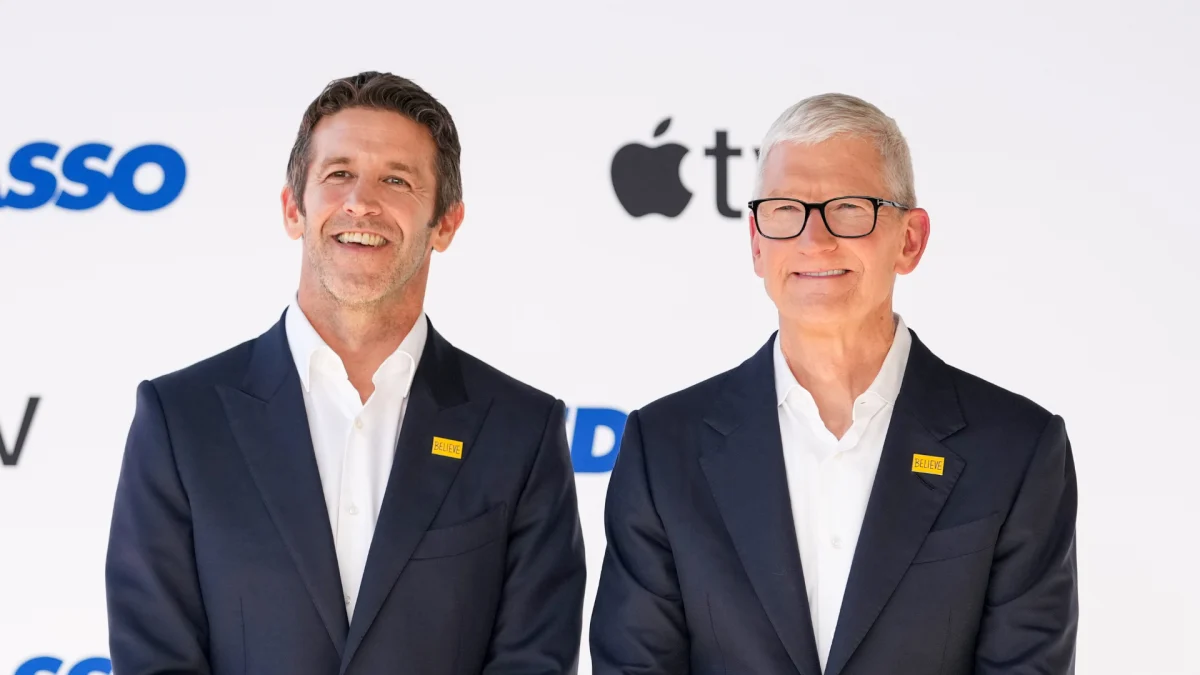
The technology landscape reached a historic inflection point this Thursday as Tim Cook presided over his final quarterly earnings call as the Chief Executive Officer of Apple Inc. The event, which served as a swan song for one of the most successful tenures in corporate history, marked the beginning of a formal handover to John Ternus, the company’s current Senior Vice President of Hardware Engineering. As Cook prepares to transition into his new role as Executive Chairman on September 1, 2026, the tech giant stands at a crossroads of immense financial strength and profound strategic transformation.
A Legacy of Stability: The Final Call
The atmosphere of the Q3 2026 earnings call was one of professional transition rather than radical departure. Cook, who has helmed Apple since 2011, used his final moments on the quarterly stage to reiterate his unwavering confidence in his successor.
"This will be my final earnings call, and John will lead these calls going forward," Cook announced during the closing remarks. "The transition is going seamlessly, and I am beyond excited for John to step into his new role and lead Apple into its next era."
Cook’s rhetoric throughout the call was consistent with his decade-and-a-half leadership style: emphasizing organizational health, the brilliance of Apple’s workforce, and a focus on long-term value. His parting message was one of extreme optimism, framing the transition as a natural evolution rather than a disruption.
Chronology: The Road to Succession
The seeds for this transition were sown earlier this year, when Apple formally announced that Cook would be stepping down. Since that announcement, the company has meticulously managed public perception to ensure that shareholders, employees, and consumers feel secure in the continuity of Apple’s vision.
- Early 2026: Apple confirms the impending leadership transition, naming John Ternus as the CEO-designate.
- July 2026 (The "Ted Lasso" Appearance): In a move designed to showcase the camaraderie and alignment between the outgoing and incoming leaders, Cook and Ternus appeared at the Ted Lasso Season 4 premiere. The optics were deliberate; both men wore identical navy suits, accessorized with the show’s signature "Believe" lapel pins.
- August 2026: The final Q3 earnings call occurs, signaling the end of the Cook era in public fiscal reporting.
- September 1, 2026: The official transition date.
- Late September 2026 (Anticipated): The global launch of the iPhone 18, which will serve as the first major product debut of the Ternus era.
Financial Powerhouse: Data from the Q3 Report
Despite the shadow of leadership change, Apple’s underlying business remains a juggernaut. The Q3 2026 report provided a strong final mandate for the current management team, showcasing a company firing on all cylinders.
Apple reported a quarterly revenue of $109.4 billion, representing a staggering 16 percent increase year-over-year. The bedrock of this performance remains the iPhone, which generated $54.3 billion in revenue alone. When accounting for expenses and taxes, the company posted a net quarterly profit of $29.8 billion.
These figures demonstrate that Ternus is inheriting a company that is not in need of a "turnaround," but rather one that requires careful navigation of the next phase of consumer technology. The 16 percent growth trajectory provides a comfortable buffer for the new CEO as he settles into the responsibilities of the office.
Official Responses and Strategic Alignment
A critical element of the transition has been the effort to present Ternus not as a disruptor, but as an inheritor of the "Apple Way." In interviews, including a notable discussion with Deadline at the Ted Lasso premiere, Cook was effusive in his praise for his successor.
"John is the perfect person for this role, and the whole thing has just been great," Cook stated. "We really wanted this transition to be the best because Apple deserves the best."
For his part, John Ternus has adopted a posture of humility and deliberate silence. When pressed during the earnings call regarding his first major act as CEO, Ternus demurred, suggesting that stakeholders would "have to wait and see." This strategy serves two purposes: it prevents the market from overreacting to premature speculation and keeps the focus on the current fiscal performance.
When faced with questions regarding the competitive landscape—specifically the rise of AI-integrated hardware from rivals like OpenAI and SpaceX—Ternus remained guarded. He deferred to the established strategy, stating, "I would just reiterate what Tim said. There is so much opportunity for us with everything that’s happening in this space, and we’re just really focused on our plans."
Implications: The Ternus Era and the iPhone 18
The most immediate challenge for John Ternus will be the release of the iPhone 18 this September. As the company’s most significant annual event, the launch serves as a public "test by fire." Because the hardware design and supply chain logistics for the iPhone 18 were largely locked in during the final months of Cook’s tenure, the success of the launch will be a reflection of the team’s operational excellence—an area where Ternus, as the former SVP of Hardware Engineering, excels.
The Continuity Strategy
Industry analysts note that Ternus is an "Apple insider" in every sense of the term. His deep roots in hardware engineering suggest that Apple will continue to prioritize vertical integration. Unlike CEOs brought in from external tech giants who often seek to put their own "stamp" on the corporate culture, Ternus is expected to maintain the status quo.
The messaging, from the matching suits at public events to the synchronized responses in earnings calls, is clear: the goal is "business as usual." For investors, this is likely the most comforting message possible. The market dislikes uncertainty, and by presenting a seamless, almost choreographed transition, Apple is insulating its stock price from the volatility often associated with CEO changes.
Navigating the AI Frontier
While Ternus is not expected to pivot the company’s core strategy, he will face a vastly different market than the one Cook inherited in 2011. The rise of generative AI and ambient computing requires Apple to prove that its ecosystem can remain the default choice for the next generation of users.
Ternus’s background in engineering will likely be tested as Apple balances its traditional privacy-first, "walled garden" approach with the demands of an AI-driven market. His ability to integrate these technologies into the iPhone, iPad, and Vision Pro line without sacrificing the user experience will define the first few years of his tenure.
Conclusion: A Future Built on "Belief"
As Tim Cook moves to his role as Executive Chairman, he leaves behind a company that has moved from being a niche hardware manufacturer to a global cultural and financial institution. The use of "Believe" pins at the recent film premiere was perhaps a meta-commentary on the state of the company: Apple, under its new leadership, is asking its stakeholders to believe in the stability of the transition and the endurance of the corporate philosophy.
John Ternus enters the corner office at Apple Park not as a revolutionary, but as a guardian of a massive legacy. With record-breaking earnings, a highly efficient supply chain, and the unwavering public support of his predecessor, Ternus is uniquely positioned to steer the ship. Whether he will eventually deviate from the established course remains the great unknown, but for now, the message from the top is one of unwavering, steady-handed continuity. The Apple era of Tim Cook has ended, but the "Apple" that he helped build seems poised to continue its trajectory well into the next decade.

 Suro Senen
 Jia Lissa
 Ammar Sabilarrohman
 Evan Lee Salim

 Ali Ikhwan