
 Asro
Asro
In the evolution of computing, few shifts have been as foundational as the transition from monolithic systems to disaggregated cloud architectures. For decades, the industry operated on a "server-in-a-box" model, where compute and storage were tethered together by necessity. Today, that paradigm is rapidly eroding. As modern data centers transform into "giant computers," the decoupling of compute from storage has emerged as the defining economic and technical strategy for cloud providers worldwide.
The Economic Imperative: Why Decoupling Matters
At the heart of the disaggregation movement lies a simple economic realization: compute and storage have different lifecycles and different requirements. Compute resources are costly, stateless, and prone to rapid, unpredictable fluctuations in demand. Storage, by contrast, is relatively cheap, stateful, and follows a stable, linear growth trajectory.
When these two components are bound together in a single chassis, the result is an "impedance mismatch." Scaling storage requires the unnecessary purchase of compute, and vice versa. This lack of flexibility violates the separation of concerns principle, leading to inefficiencies that cloud providers, driven by the aggressive margins demanded by the market, can no longer ignore. By disaggregating these tiers, organizations can scale compute elastically—even down to zero—while maintaining a persistent, highly available storage layer.
A Chronology of Architectural Shifts
The transition to disaggregated systems has unfolded in three distinct phases over the last fifty years:
1. The Monolithic Era (1970s–2000s)
The traditional database architecture (Postgres, MySQL) was built for a world of local I/O. One process, one disk, and tightly coupled resources defined the standard. While robust for their time, these systems lacked the horizontal elasticity required for the modern web.
2. The Replication Era (Early Cloud Period)
As databases migrated to the cloud, the first attempt to introduce high availability involved "slapping" consensus protocols like Paxos or Raft onto monolithic engines. While this provided durability, it was essentially a "hack." These systems created redundant replication—the cloud already replicated storage via block-level services like EBS, yet the database layer insisted on an additional three-way transaction replication. This resulted in significant overhead and cost inefficiencies.
3. The Disaggregated Era (2015–Present)
Starting with Amazon Aurora in 2015, the industry shifted toward architectures where the network serves as the system backplane. This era is defined by the "log-is-the-database" philosophy, where compute nodes are stateless, and storage nodes are intelligent, specialized components that materialize pages from redo logs. Following Aurora, a wave of innovations—including Alibaba’s PolarDB, Microsoft’s Socrates, Google’s AlloyDB, and Amazon’s DSQL—have cemented this model as the new industry standard.
Supporting Data and Technical Foundations
The feasibility of this transition rests on the drastic improvements in data center networking. High-speed fabrics now routinely provide hundreds of gigabytes per second of bandwidth, an order of magnitude increase from fifteen years ago. Technologies such as Remote Direct Memory Access (RDMA), SmartNICs, and Compute Express Link (CXL) have reduced the performance penalty of moving I/O over the network.
The Role of Consensus: Lessons from Paxos
Contrary to popular belief, the principles of disaggregation were embedded in the original design of Paxos, as described by Leslie Lamport. Lamport defined distinct roles:
- Proposers: Compute-like nodes that order values.
- Acceptors: Durability nodes that persist the log.
- Learners: Availability nodes that materialize the state.
While early distributed systems collapsed these roles into a single unit for simplicity, modern architectures are rediscovering the efficiency of these distinct roles. By "specializing" components—using proxy leaders to manage I/O fan-out or dedicated learners to serve read-only traffic—developers can achieve throughput gains of up to 8x compared to traditional monolithic designs.
Implications for Future Operations
The shift toward disaggregation is not merely about cost; it is about building self-assembling, intelligent systems that treat the data center as a unified resource pool.
Metastable Failures and Complexity
While disaggregation offers fault isolation—if a node crashes, you lose only the compute or the storage, not both—it introduces new challenges. Increased complexity leads to "metastable failures," where delays in information propagation between layers can cause systemic instabilities. As systems become more dynamic, the "science of metastability" has become a critical area of research.
Memory and Compute Disaggregation
The next frontier is memory. Currently, 50% of DRAM in typical data centers remains stranded or wasted due to static provisioning. Future architectures aim to decouple memory from the compute unit, utilizing CXL fabrics to allow compute nodes to treat remote memory as if it were local. This promises lower latency and higher utilization, though it remains a burgeoning field of study.
Agentic Workloads and Auto-Tuning
The rise of AI-driven "agentic" workloads presents a new test for database systems. These agents can trigger bursts of traffic thirty times greater than traditional user patterns. The future of database management lies in "self-assembling" systems capable of auto-tuning compute, memory, and storage in real-time to meet these extreme demand spikes.
Expert Perspectives and Industry Direction
The consensus among researchers and practitioners is clear: the era of the "heavy" stateful box is over. Databases are evolving into lightweight, elastic services running over shared storage. Whether through the "log-as-database" approach of Aurora or the LSM-tree optimizations seen in Rockset and modern RocksDB implementations, the goal remains the same: shifting the bottleneck from local disk I/O to the network fabric.
As Murat Demirbas, a researcher in distributed systems, notes: "There are many methods but few principles. If you master the principles, you can pick and choose your methods." The principle of disaggregation—treating the data center as a programmable, elastic fabric—is now the foundation upon which all future database innovation will be built.
The Bottom Line
For engineers and architects, the path forward involves embracing the network as the primary bottleneck and optimizing for "fabric-aware" designs. By prioritizing log traffic over page I/O, leveraging custom distributed coordination protocols, and pushing computation closer to the data (Near Data Processing), the industry is moving toward a more resilient, cost-effective, and scalable future. The infrastructure of the next decade will not be defined by the strength of a single server, but by the efficiency of the network that connects its disparate, specialized parts.


 Lina Hope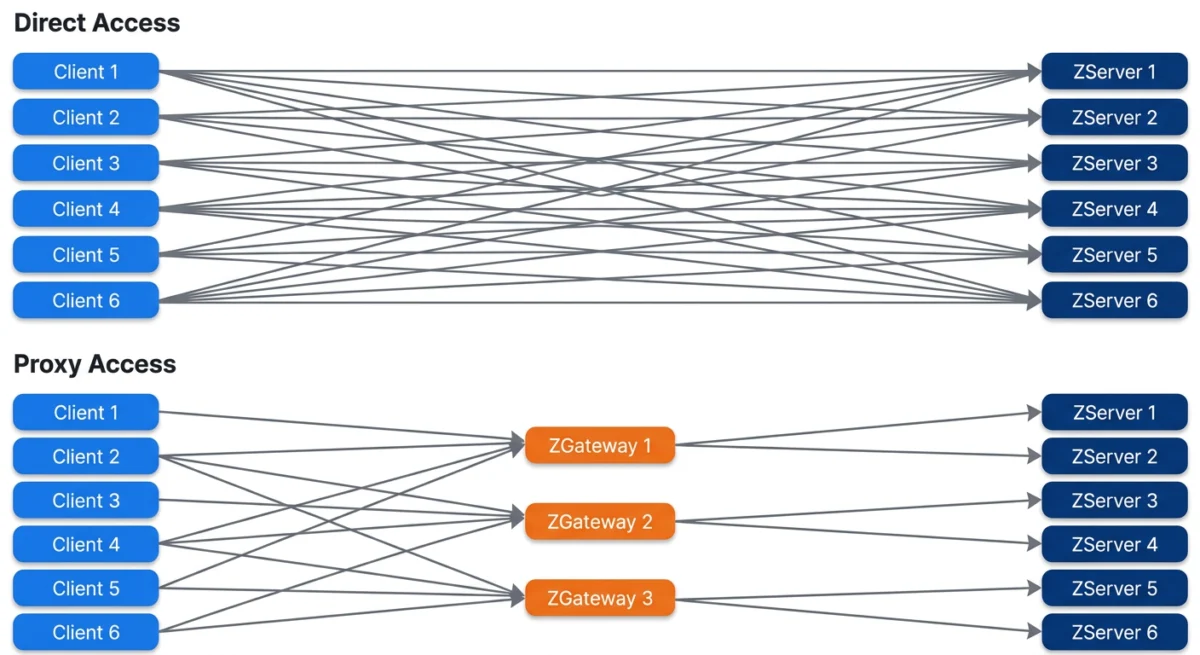
 Nila Kartika Wati
 Suro Senen
 Jia Lissa
 Evan Lee Salim

 Ali Ikhwan