
 Ali Ikhwan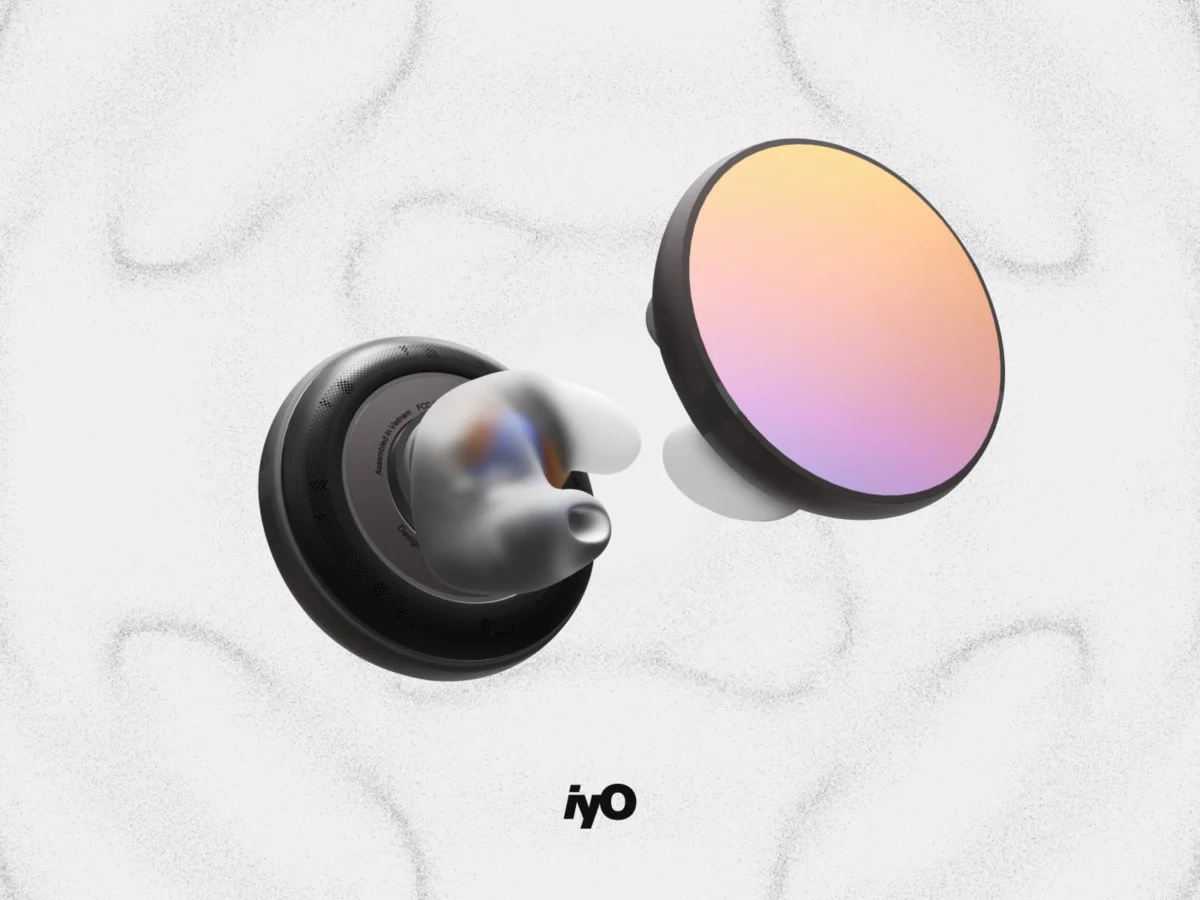
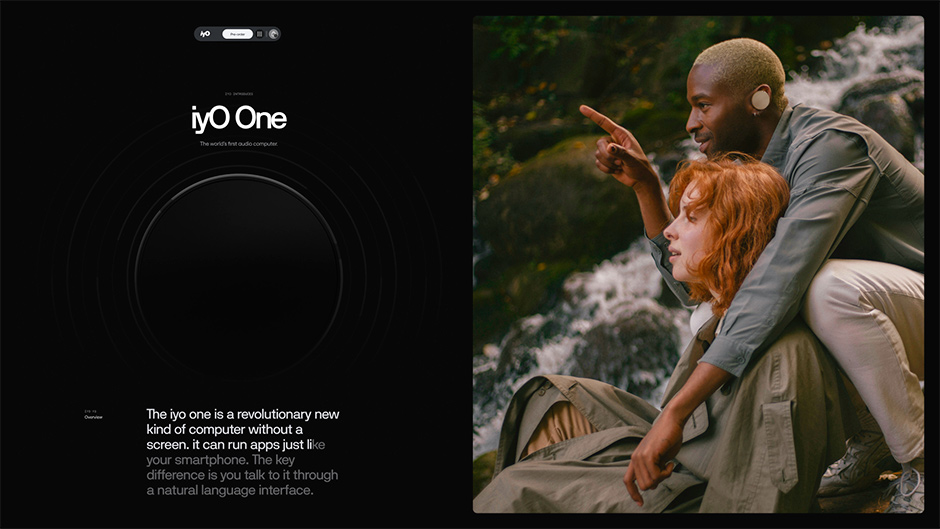
In the rapidly evolving landscape of consumer electronics, few products have dared to challenge the dominance of the visual interface. The iyO One, a groundbreaking "audio computer" born from the labs of Google X, represents a fundamental shift in how humans interact with technology. Designed to be voice-first, screen-free, and worn comfortably in the ear, the iyO One is more than just a wearable; it is a manifesto against the modern attention economy.
However, introducing a "screen-free" device to a world addicted to visual media presented a profound marketing paradox. How do you sell a product that exists to eliminate screens by using a website? The answer, as it turns out, lies in an unprecedented digital experience that blurs the line between high-end e-commerce and immersive art.
The Problem: Bridging the Tactile Gap
When Jason Rugolo, founder of the startup iyO, approached his digital design partners, he faced a hurdle common to pioneers of new technology. While the iyO One was the result of six years of intensive research into agentic computing, the existing web presence failed to convey its true essence. It was technically accurate but emotionally inert.
"The information was all there, but flat," the development team noted. For a 20-person startup preparing for a major market launch and investor rounds, a static landing page was insufficient. They needed to capture the imagination of the public and prove that they weren’t just building another pair of headphones, but an entirely new category of computing. The objective was clear: transform six years of engineering into a visual journey that felt as alive and revolutionary as the hardware itself.
Chronology of a Digital Transformation
The development of the iyO digital presence was a meticulous process of translating physical engineering into browser-based reality.
Phase I: Establishing the Philosophy
The homepage was the first front in the battle to explain the iyO vision. Rather than presenting a wall of technical specifications, the design team opted for an experience centered on sound. They implemented a GPGPU simulation capable of manipulating up to 1.6 million particles. These particles form Chladni patterns—the physical shapes sound waves create when vibrating a surface.
This was not merely aesthetic; it was conceptual. As the patterns resolve, they form ten short haikus—manifestos against the "attention economy." Phrases like "life is out there, friend / do not stare into the light / look up and be here" serve as a philosophical bedrock for the user. These particles are not static; they ripple and respond to cursor movement, providing the user with their first taste of the "realness" the device promises.
Phase II: Decoding the Hardware
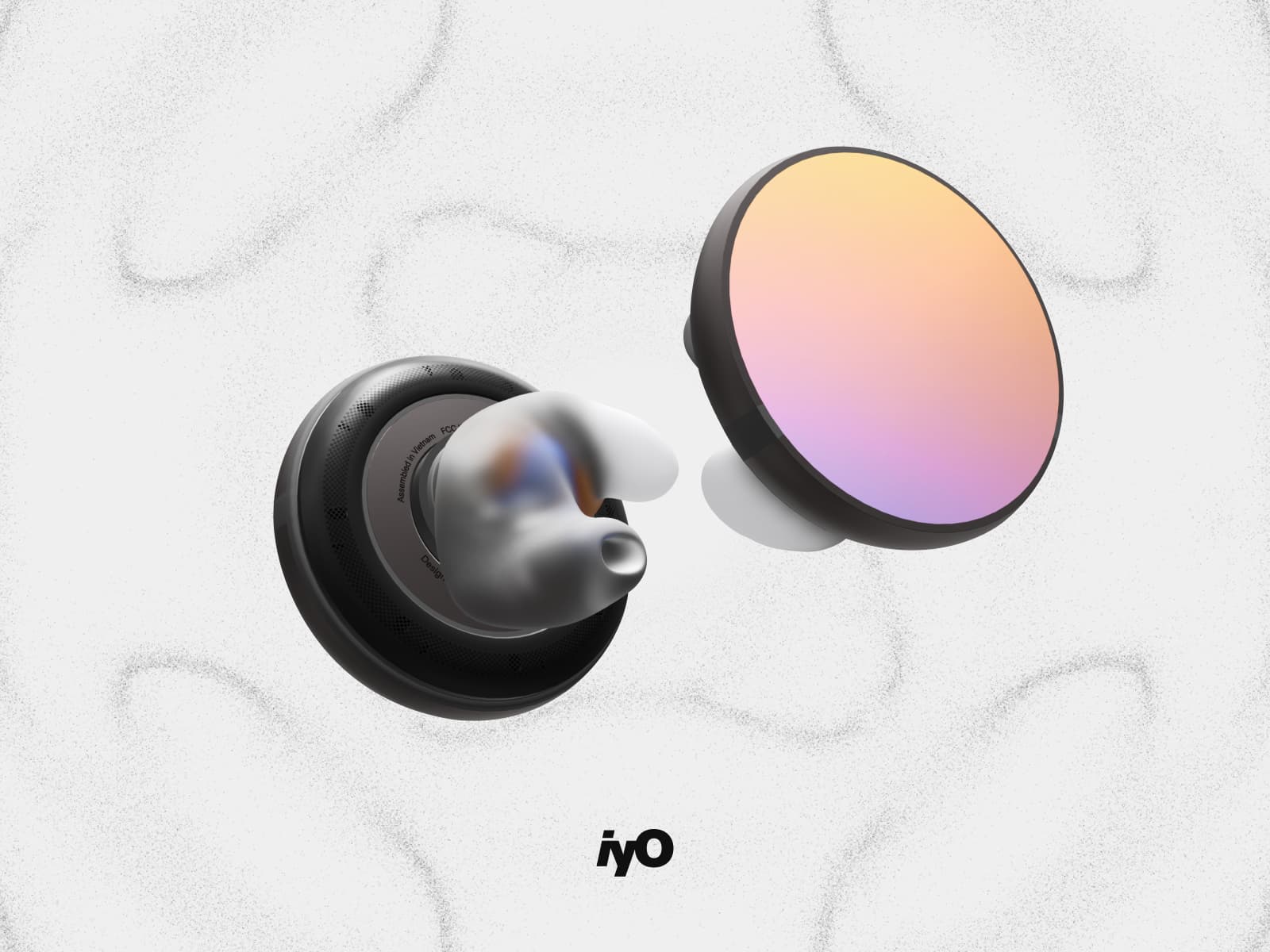
The challenge of the product pages was to make the invisible visible. The iyO One is a dense, complex piece of acoustic engineering. To make this accessible, the developers abandoned static schematics in favor of an interactive, scroll-driven "exploded view." By down-rezzing complex CAD files into optimized, browser-ready components, the team allowed users to "handle" the device digitally. Hovering over a component reveals its function, turning a dense technical story into an intuitive, tactile experience.
Phase III: The Digital Showroom
The final phase focused on the commerce engine. The team sought to recreate the sensation of a high-end boutique. By utilizing a "glassmorphic" interface and a 3D configuration tool, they allowed users to manipulate the device in real-time. Whether it was the subtle shift of the "dusk" dichroic coating or the texture of the titanium housing, every detail was calibrated to build trust.
Supporting Data: Engineering for Performance
Creating a high-fidelity 3D experience that runs seamlessly on both mobile devices and desktop computers required a monumental engineering effort. The team had to transform raw, heavy CAD files—which contained thousands of individual components—into lean, Draco-compressed glTF models.
Performance was the primary constraint. To maintain a fluid 60 frames per second (fps) across diverse hardware, the developers implemented several critical optimizations:
- Dynamic Scalability: The particle system intelligently scales based on device capability, reducing particle counts on older hardware to preserve performance.
- Pixel Ratio Management: On high-resolution retina screens, the rendering resolution was subtly adjusted, reducing shader workloads by 44% without any perceptible impact on visual quality.
- Memory Efficiency: The site operates as a single, continuous experience. Utilizing
taxi.jsfor transitions, the developers ensured that every scene is cleaned up upon navigation, preventing the common "memory creep" that plagues high-end web experiences. - Material Fidelity: The team rebuilt 27 distinct physical materials from scratch, ensuring that the dichroic finishes and metallic meshes mirrored their real-world counterparts under various lighting conditions.
Official Responses: A Vision of the Future
The philosophy driving the project remains rooted in the belief that technology should serve, not consume. Jason Rugolo has been vocal about the necessity of this approach: "There are thousands of people like me all trying to build the future. A huge part of it is how well you can capture the imagination of the general public and your future customers."
The design team echoed this sentiment, emphasizing that their work was not an exercise in digital vanity. "None of the WebGL was there to show off," they stated. "It existed so that a frontier device could be felt through a screen. For a product this new, the site isn’t a brochure for the thing; it’s the closest many people will get to it."
Implications for the Future of E-commerce
The success of the iyO digital platform marks a turning point in how groundbreaking hardware is brought to market. As artificial intelligence and agentic computing continue to move toward screen-free, ambient interactions, the traditional e-commerce model—characterized by product grids and spec sheets—is becoming increasingly obsolete.
1. Experience as a Conversion Tool
The iyO site proves that for "frontier" technology, the digital storefront must function as a proof-of-concept. When a product is entirely new, the customer is not buying a commodity; they are buying into a new paradigm. By mimicking the feel of the hardware, the site builds a bridge of trust that static images cannot achieve.
2. The Death of the "Landing Page"
The project demonstrates the shift toward "narrative-driven" web design. By organizing the site as a three-act journey, the developers maintained user engagement, guiding the visitor from the "why" (the philosophy) to the "what" (the hardware) and finally to the "how" (the shopping experience).
3. The New Standard for Web Performance
The level of technical detail—reconstructing CAD files for the web and simulating 1.6 million particles—sets a new benchmark. It suggests that the future of the web is not just responsive, but "performatively immersive." As browsers become more capable of handling GPU-accelerated tasks, the barrier between high-end industrial design and web-based interaction will continue to erode.
Conclusion: A Digital Echo of the Physical
In an era where we are constantly told to "look up," the iyO One offers a way to do so without disconnecting from the digital tools we rely on. By creating a digital experience that respects the user’s attention—offering depth, interactivity, and beauty rather than invasive marketing—the creators of the iyO site have done more than sell a product. They have created a digital space that mirrors the values of the hardware it represents: thoughtful, intentional, and profoundly human.
For the tech industry at large, the lesson is clear: if you are building the future, your digital interface cannot remain rooted in the past. To sell a revolution, you must first let the user feel the weight of it.


 Lina Irawan
 Pevita Pearce
 Ammar Sabilarrohman
 Suro Senen
 Jia Lissa
 Evan Lee Salim