
 Nana Wu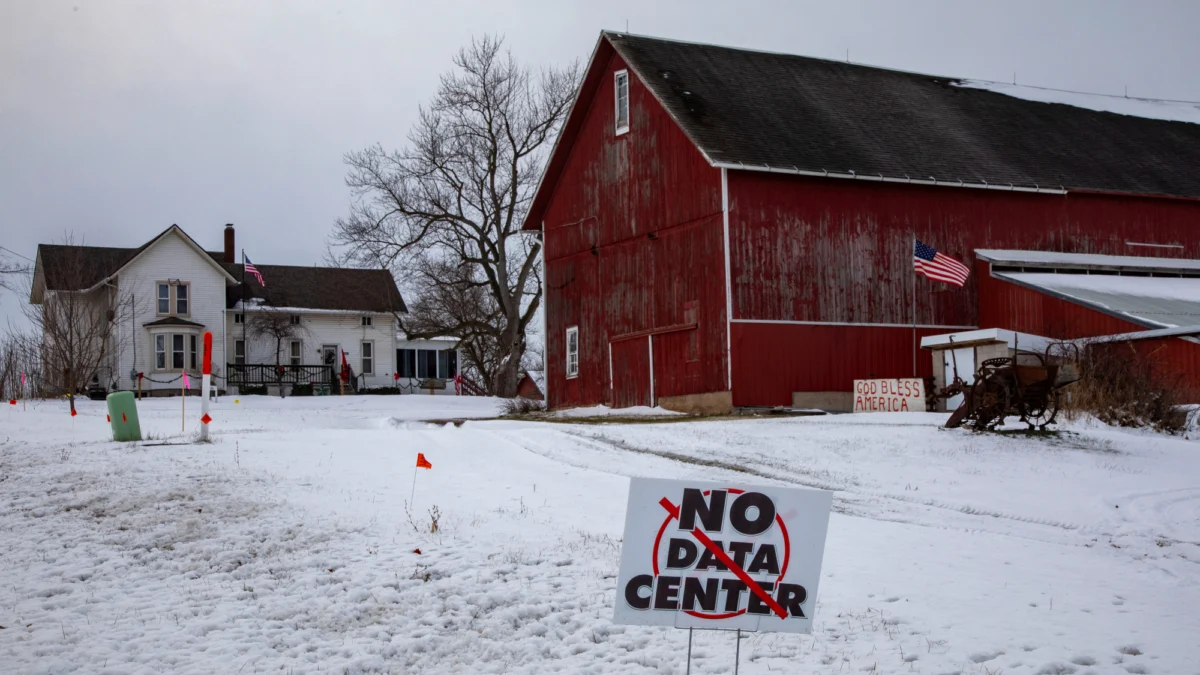
In the quiet, sprawling townships of Michigan and beyond, a new, unlikely political alliance is taking shape. It is a coalition that ignores traditional party lines, uniting blue-collar MAGA supporters and progressive climate activists under a single, urgent banner: "Stop the Data Centers." What began as localized concerns about rural zoning and property values has metastasized into a national movement, transforming the hyper-growth of artificial intelligence into a defining wedge issue for the 2026 election cycle.
As the demand for energy-hungry hyperscale data centers surges to support the AI arms race, the physical footprint of the digital age is crashing into the backyards of everyday Americans. From the industrial heartland of Michigan to the high-plains of Colorado and the urban corridors of Tennessee, candidates are discovering that the most effective way to win over a frustrated electorate is to stand in the path of the tech titans.
The Michigan Crucible: A Microcosm of National Discontent
The friction between the promise of an AI-driven future and the reality of rural infrastructure was on full display last week in Michigan. When Donald Trump arrived at a General Motors vehicle-testing facility to tout the state’s industrial prospects, he was met with a chorus of boos and chants from protesters. They were not there to debate trade policy or social issues; they were there to demand an end to the rapid proliferation of massive, power-hungry data centers that have begun to dot their landscape.
For Will Lawrence, a progressive Democratic congressional candidate in Michigan’s seventh district, the disruption was not a nuisance—it was a political bellwether. "That’s what we’re tapping into," Lawrence noted on social media. His campaign has become a focal point for this "cross-partisan rebellion," as he frames the expansion of these facilities not as economic progress, but as an existential threat to community stability and energy affordability.
Lawrence’s candidacy represents a broader trend: the weaponization of "tech-skepticism" by grassroots politicians. By framing the issue as a fight against "tech oligarchs," he has managed to attract voters who might otherwise disagree on every other issue, yet find common ground in their opposition to the "secretive" permitting processes that have allowed multi-billion dollar projects to bypass local public input.
A Chronology of the Backlash
The current crisis did not emerge in a vacuum; it is the culmination of a rapid, often opaque legislative push to capture the AI boom.
- Late 2024: Michigan’s state legislature, with bipartisan support and the signature of Governor Gretchen Whitmer, enacted a package of tax incentives designed to lure hyperscale data center developers. At the time, the move was touted as a strategic win for the state’s high-tech future.
- Late 2025: The first wave of applications for massive data center complexes hit local planning boards in Lansing, Mason, Howell, and Lyon Townships. Residents began to organize as they realized the scale of the power demands involved.
- December 2025: Anti-data center sentiment crystallized. Images of rural farmhouses adorned with "No Data Center" signs became the defining aesthetic of the local resistance.
- Early 2026: The movement hit the national stage. Governor Whitmer’s high-profile appearance with OpenAI’s Sam Altman triggered widespread backlash, signaling that even centrist political figures were now vulnerable to the "data center penalty."
- Mid-2026: The issue officially entered the congressional and gubernatorial race cycle. In Denver, Melat Kiros won a Democratic primary on a platform centered on transparency in infrastructure development. Meanwhile, in Memphis, Representative Justin J. Pearson elevated his opposition to Elon Musk’s xAI facility to a national security and environmental justice platform.
The Mechanics of Resistance: Why Data Centers?
The primary driver of this backlash is the unprecedented strain on local infrastructure. Hyperscale data centers require immense amounts of electricity and water for cooling—resources that often come at the expense of residential stability.
The Secrecy Problem
Central to the anger is the use of Non-Disclosure Agreements (NDAs). In many jurisdictions, tech companies demand that municipal decision-makers sign NDAs during the early stages of project vetting. This prevents residents from learning about the facility until the permitting process is largely a formality. This "top-down" approach has fueled a deep sense of betrayal among voters who feel their communities are being sold out by their own representatives.
The Economic Reality
Candidates like Lawrence are effectively connecting the dots between corporate tax breaks and residential utility bills. The argument is simple: when tech giants are granted tax exemptions and subsidized energy rates, the cost of grid upgrades and maintenance is often shifted to the average homeowner. The prospect of "jacked up" energy bills has proven to be a potent mobilizing force that transcends the typical left-right divide.
Supporting Data and Legislative Trends
The data suggests this is not a fringe movement. A recent report by Newsweek indicates that candidates for governor in at least 12 states are now running on platforms that include a formal moratorium on new data center construction. This trend is further supported by the shifting rhetoric of political action committees (PACs), which are beginning to pour money into campaigns that emphasize "local control" and "energy sovereignty."
In Colorado, the success of candidates like Melat Kiros highlights a shift in the Democratic party’s base. Where once the tech industry was viewed as an untouchable engine of growth, it is now being scrutinized for its environmental and social impact. The ability to mobilize voters around the "right to know" regarding local construction has become a cornerstone of successful modern campaigning.
Official Responses and the "Grok" Conflict
The federal government has struggled to find a coherent response to this localized unrest. The most contentious example currently unfolding is in Memphis, where the Department of Justice has intervened in a lawsuit against Elon Musk’s xAI.
The DOJ’s argument—that the data center should be exempt from certain Clean Air Act regulations because it powers the "Grok" AI, which is purportedly being used for national security initiatives—has become a lightning rod for criticism. Representative Justin J. Pearson has used this intervention to paint a picture of a "ruling class" that prioritizes the needs of tech billionaires over the public health of citizens.
"Violate the Clean Air Act, allow the pollution to kill American citizens because we’re killing people overseas with this technology," Pearson remarked, characterizing the government’s logic. This framing is increasingly resonating, as it positions the fight against data centers as a battle for basic human rights and accountability.
Implications for the 2026 Election
As the 2026 midterm elections approach, the "Data Center Question" is poised to reshape the political landscape in three distinct ways:
1. The Death of the "Tech-Friendly" Consensus
The days of bipartisan agreement on tech-heavy economic development appear to be ending. Politicians who are perceived as being "too close" to figures like Sam Altman or Elon Musk are finding themselves on the defensive. The "Whitmer-Altman" incident serves as a cautionary tale for establishment politicians: appearing alongside tech leaders is no longer a political asset, but a potential liability.
2. The Rise of "Energy Populism"
The next phase of American populism may be rooted in energy. By framing energy consumption as a battle between the elite (who want to power their AI models) and the working class (who want to keep the lights on at an affordable price), candidates are finding a message that sticks. This "energy populism" has the potential to realign voting patterns in crucial battleground states like Michigan, Pennsylvania, and Wisconsin.
3. Institutionalizing the "Stop" Movement
With 12 states currently seeing active campaigns for data center moratoria, we are witnessing the institutionalization of this backlash. It is no longer just about stopping one building; it is about rewriting the rules of municipal zoning and corporate accountability. If these candidates continue to win, the tech industry will face a regulatory environment in 2027 that is vastly more restrictive and transparent than the one that enabled the current boom.
Conclusion: A Shift in Power
The "cross-partisan rebellion" described by Will Lawrence is a clear signal that the American public is no longer willing to accept the expansion of the digital economy at the expense of their local environments. Whether this movement will result in a national policy shift or a fragmented series of local victories remains to be seen. However, one thing is certain: the era of unchecked, "black-box" data center expansion is drawing to a close.
As voters head to the polls, they are asking a fundamental question that Silicon Valley has yet to answer: "Is this growth for us, or is it for you?" In the townships of Michigan and the city halls of Colorado, the answer from the electorate is becoming increasingly, and loudly, clear.

 Ammar Sabilarrohman

 Lina Irawan

 Suro Senen
 Jia Lissa