 Ammar Sabilarrohman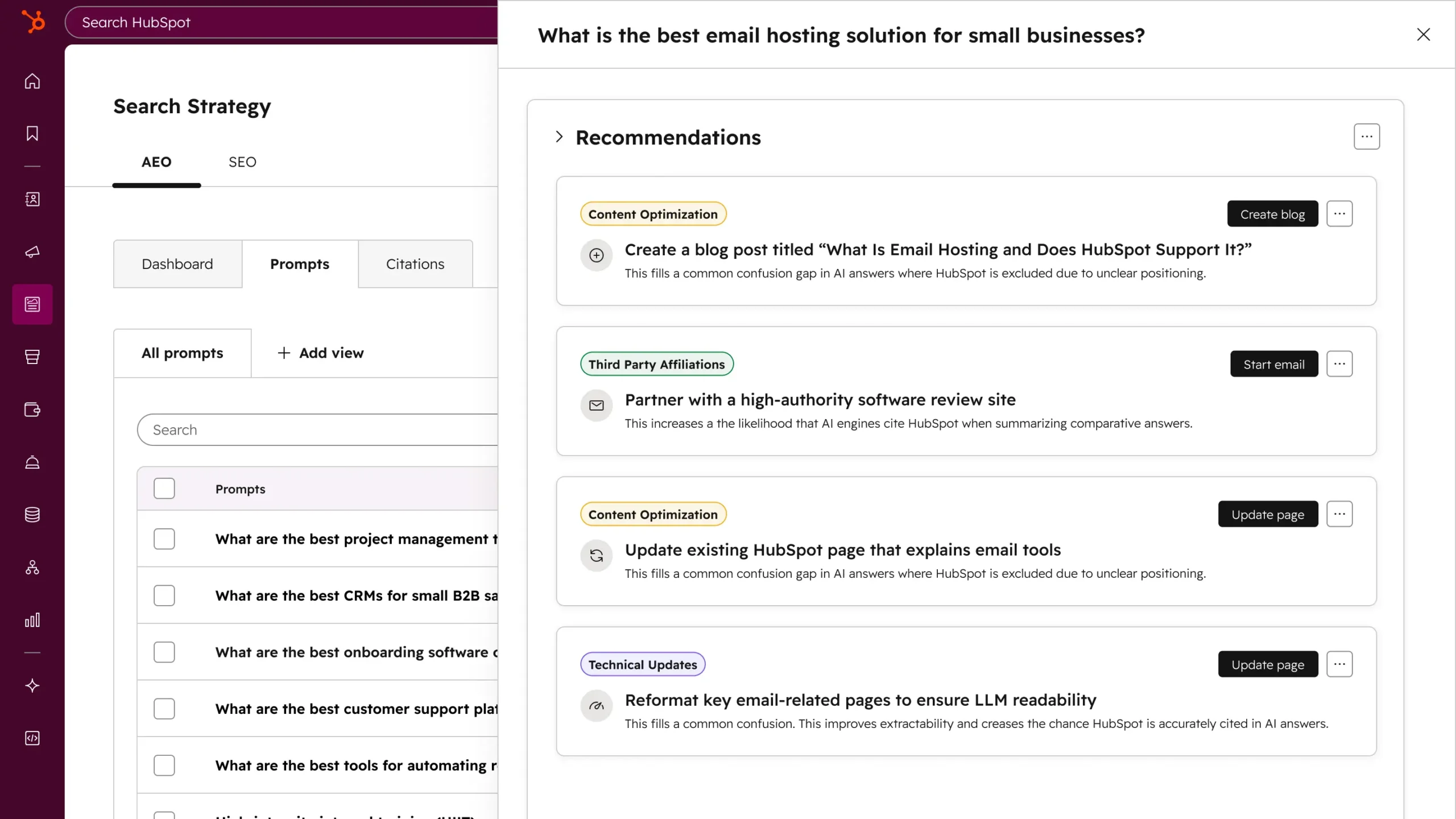
In the rapidly shifting world of digital marketing, a new frontier has emerged: Answer Engine Optimization (AEO). As users increasingly turn to AI-driven search interfaces like ChatGPT, Perplexity, and Google’s AI Overviews to conduct research, the traditional “ten blue links” model of SEO is being fundamentally challenged. Brands are no longer just fighting for a position on a search results page; they are fighting to be the primary source of truth cited by generative AI.
This shift has created a market for specialized tools designed to help marketers track, measure, and improve their brand’s visibility within these AI ecosystems. Two of the most discussed solutions in this space, HubSpot AEO and Otterly, offer distinct approaches to this challenge. While both provide the necessary monitoring capabilities, they represent two different philosophies: the "All-in-One" workflow versus the "Best-of-Breed" diagnostic approach.
The Core Conflict: Monitoring vs. Execution
The primary question for modern marketing teams is no longer just "How do we see where we rank in AI?" but rather, "How do we act on that data efficiently?"
HubSpot AEO: The CRM-Centric Approach
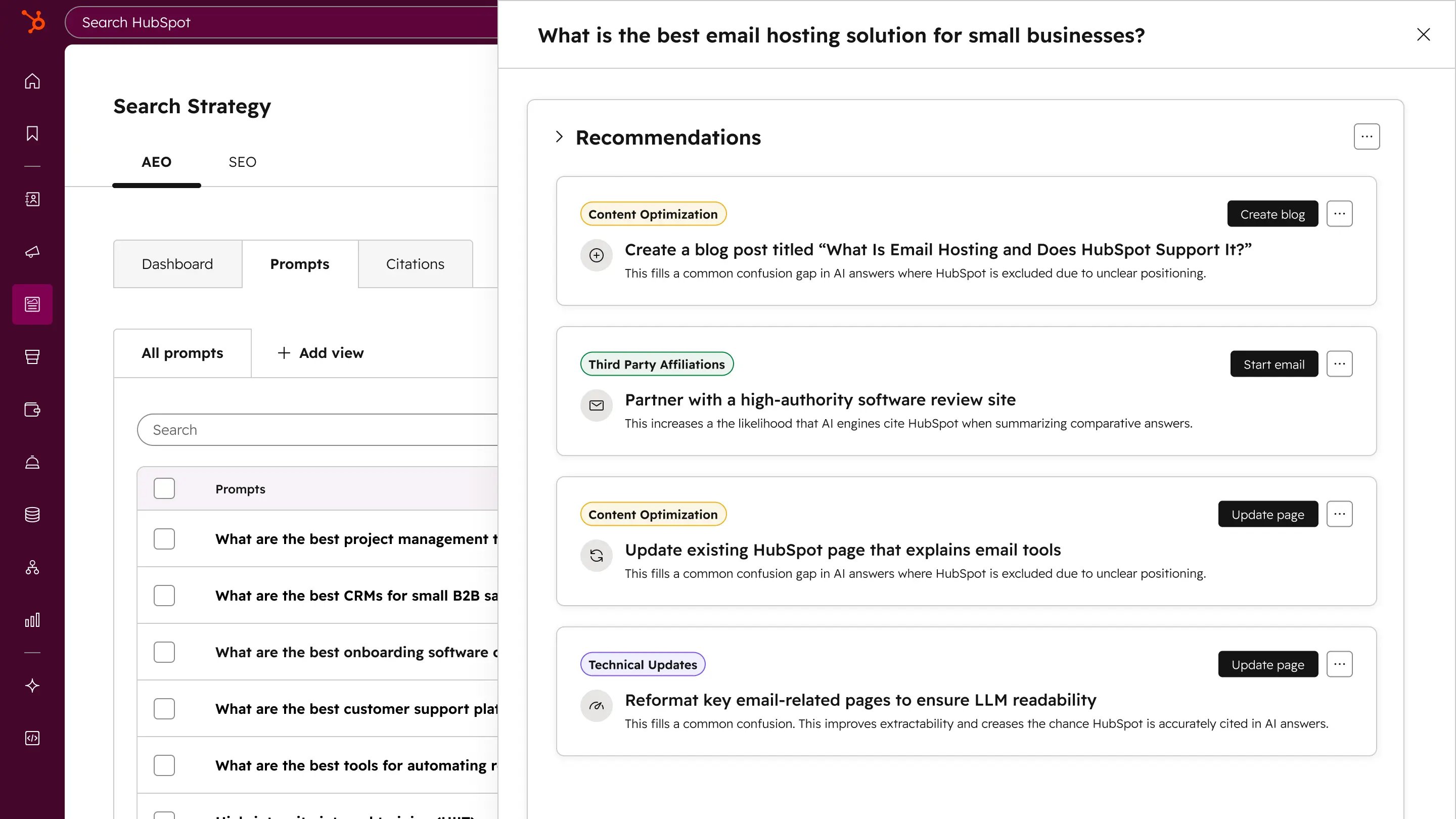
HubSpot AEO is built on the premise that visibility data is only as valuable as the action it triggers. By integrating directly into the HubSpot Marketing and Content Hubs, the tool creates a closed-loop system. When the tool identifies a visibility gap—such as a competitor being cited for a high-intent query where your brand is absent—it doesn’t just present a report. It suggests specific content updates, social media posts, or campaign pivots that can be executed within the same platform.
Otterly: The Diagnostic Powerhouse
Otterly positions itself as a neutral, purpose-built intelligence layer. It is designed for teams that prioritize depth of data and technical transparency. By providing robust reporting, API access, and integrations with tools like Looker Studio, Otterly allows data-driven organizations to pull AI visibility metrics into their existing BI stacks. Its "Query Fan Out" tool and predictive GEO (Generative Engine Optimization) scores offer granular diagnostic insights that allow teams to understand the mechanics of AI search at a deeper level.

Chronology and Evolution of the AI Search Market
The emergence of these tools follows the rapid evolution of Generative AI.
- 2022-2023: The "Wild West" era. Marketers began noticing that AI chatbots were citing sources, but there was no standardized way to track these citations. Visibility was anecdotal.
- Early 2024: The rise of dedicated AEO tools. Early adopters began building custom scrapers and manual tracking sheets to understand their brand’s share of voice in LLM responses.
- Late 2024 – Early 2025: Professionalization. Tools like Otterly emerged to provide systematic, API-backed monitoring. Simultaneously, platforms like HubSpot integrated AEO directly into the CRM to solve the "context-switching" problem.
- Today: We are in the "Integration Era," where the focus has shifted from merely observing AI behavior to optimizing content workflows to align with how these models synthesize information.
Supporting Data: Feature Comparison
To understand which tool fits your organization, it is necessary to compare their technical capabilities side-by-side.
| Feature | HubSpot AEO | Otterly |
|---|---|---|
| Primary Focus | CRM-connected workflow | Diagnostic intelligence |
| AI Engines | ChatGPT, Gemini, Perplexity | ChatGPT, Gemini, Perplexity, Copilot |
| CRM Integration | Native | Via API/Manual |
| Content Creation | Built-in | None (Export-only) |
| Looker Studio | No | Yes (Standard+) |
| Free Trial | 28 days | 7 days |
| Pricing Entry | $50/mo | $29/mo |
The data highlights a clear trade-off. Otterly offers more "technical" surface area—such as crawlability checkers and predictive scoring—making it ideal for SEO agencies or technical marketing teams. Conversely, HubSpot offers "operational" velocity, making it superior for marketing managers who need to move from insight to output in minutes rather than hours.
The Implications for Content Strategy
The rise of AEO does not mean the death of SEO. Rather, it means that the two disciplines must now exist in a symbiotic relationship.
Why SEO and AEO Are Not Mutually Exclusive
Traditional SEO optimizes for the search engine’s crawler. AEO optimizes for the AI’s synthesis engine. A well-structured, authoritative article that ranks on Google often contains the exact type of clear, data-backed answers that LLMs prefer to cite.

However, the "implication" for teams is that content must now be written with two audiences in mind: the human reader looking for a quick answer and the AI model looking for verifiable data points.
The Power of CRM-Connected Insights
The most significant implication of HubSpot’s approach is the alignment of AI visibility with revenue. By knowing that a lead arrived because they found your brand through an AI answer, teams can measure the actual ROI of their AEO efforts. Otterly, while powerful, requires a manual bridge—often involving data scientists or engineers—to connect visibility metrics back to lead conversion data in a CRM.
Official Perspectives and Strategic Advice
Industry experts suggest that the choice between these tools should be based on your current "stack maturity."
When to choose HubSpot AEO:
- You are already deeply embedded in the HubSpot ecosystem.
- Your team struggles with "tool fatigue" and context-switching.
- You want to bridge the gap between AI visibility and sales pipeline reporting without custom integration work.
When to choose Otterly:
- You are an agency managing multiple clients with disparate tech stacks.
- You require deep technical data, such as crawlability scores and ad-tracking (ChatGPT/Shopping ads).
- You want to pipe your AI visibility data into custom BI dashboards like Looker Studio or internal proprietary systems.
Future-Proofing Your Brand in the AI Era
As we look toward the future, the "answer engine" will only become more central to the customer journey. A brand that is invisible to an AI is, for all intents and purposes, invisible to a growing segment of high-intent searchers.
The "First-Step" Checklist for Newcomers
- Baseline Your Visibility: Before upgrading your strategy, run a 28-day audit using a tool like HubSpot’s free trial or Otterly’s entry tier.
- Define Your "Prompt Library": Do not track generic keywords. Track the questions your customers ask your sales team during discovery calls. If you aren’t showing up for "How does [your product] compare to [competitor]?" you are missing the most valuable traffic.
- Audit Your Content: Use diagnostic tools to check if your site is "AI-friendly." Are your answers concise? Do you use clear, structured data?
- Close the Loop: Ensure that whatever tool you choose, the output is being used to update your actual content strategy. Data without action is simply noise.
Final Thoughts
The decision between HubSpot AEO and Otterly is a decision about the nature of your marketing team’s output. If your goal is to integrate AI visibility into a holistic, revenue-driving machine, the CRM-native route is the path of least resistance. If your goal is to conduct deep-dive research, optimize technical crawlability, and build custom data visualizations, the standalone diagnostic power of Otterly remains unmatched.
Regardless of the tool, the strategy remains constant: become the authoritative source. In the age of AI, the brands that provide the most accurate, concise, and helpful answers are the ones that will win the trust of both the algorithms and the humans they serve.


 Ali Ikhwan
 Layla Zulfa

 Suro Senen
 Jia Lissa
 Evan Lee Salim