
 Pevita Pearce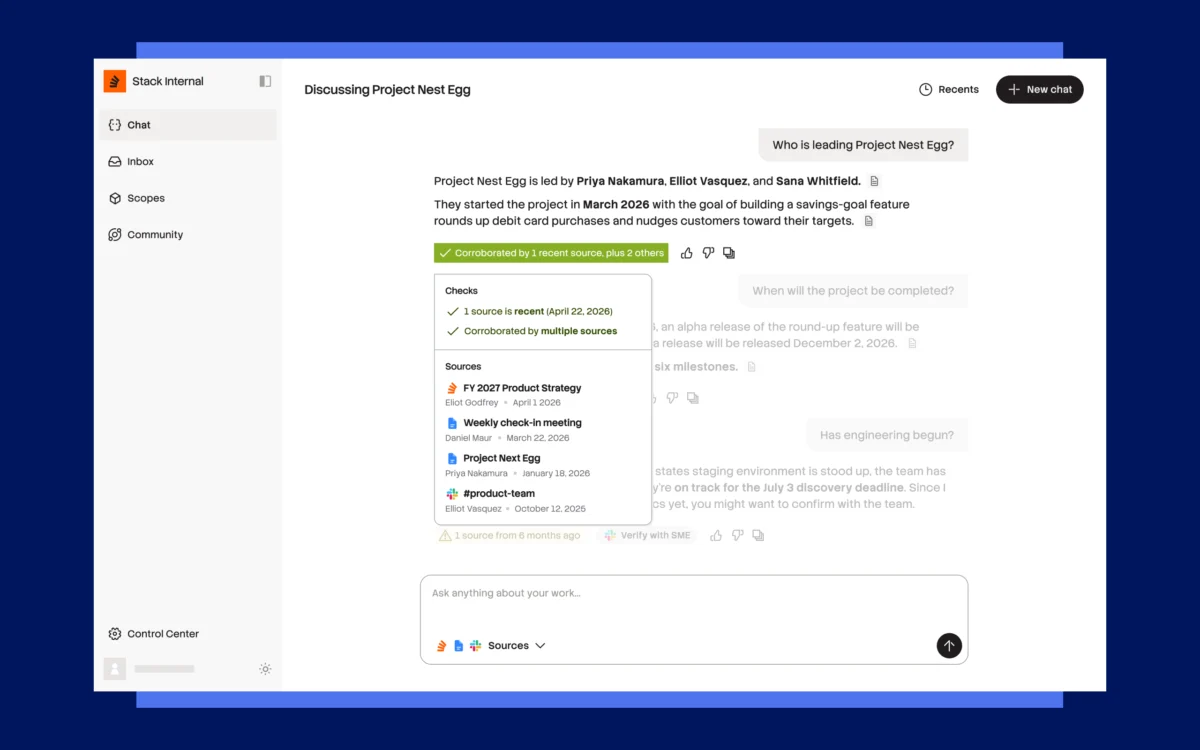
In the modern enterprise, information is simultaneously the most abundant and the most fragile asset. For decades, organizations have painstakingly built knowledge bases, document repositories, and communication channels, hoping to create a singular, coherent record of "how we do things." Today, that dream is being tested by the very technology intended to accelerate it: Generative AI.
As organizations move at unprecedented speeds—integrating LLMs, deploying autonomous agents, and digitizing every workflow—they are inadvertently fragmenting their own knowledge. Data is no longer just static; it is scattered across Slack threads, ephemeral coding environments, and fragmented documentation. The result is a "context crisis" where AI agents, tasked with driving productivity, are instead executing historical mistakes with high confidence and at speeds that leave human oversight in the dust.
To address this, Stack Internal has officially unveiled a suite of new, AI-native knowledge management capabilities. By shifting from passive storage to an active, validated "knowledge layer," Stack Internal aims to turn institutional chaos into a virtuous cycle of reliable, decision-grade data.
The Anatomy of an AI-Driven Knowledge Crisis
The primary challenge facing the contemporary enterprise is the misalignment between the speed of AI deployment and the quality of the underlying data. When an organization feeds raw, unverified data into an AI agent, it creates a recipe for failure.
The "Stale Information" Trap
Many organizations treat knowledge management as a secondary chore. Documents are written once and then forgotten, collecting digital dust while the organization shifts its processes. When AI agents ingest these outdated files, they provide "correct" answers based on obsolete protocols. This creates a dangerous feedback loop where employees are misled by the very tools designed to assist them.
The Cost of Human-in-the-Loop Overload
The current industry standard for mitigating AI hallucinations is the "human-in-the-loop" model. While necessary, it is fundamentally inefficient. When employees must double-check every output generated by an agent, the productivity gains of AI are eroded by the costs of oversight, token consumption, and cognitive load. The goal of an intelligent organization should be "autonomous reliability"—where the agent’s output is inherently trustworthy, removing the need for constant human policing.
A New Philosophy: The Living Knowledge Layer
Stack Internal’s new platform experience is designed to function as an "AI-native" foundation that fits seamlessly into existing infrastructure. Unlike legacy knowledge management systems, which act as static libraries, Stack Internal is built to function as a living, breathing component of the work itself.
From Retrieval to Validation
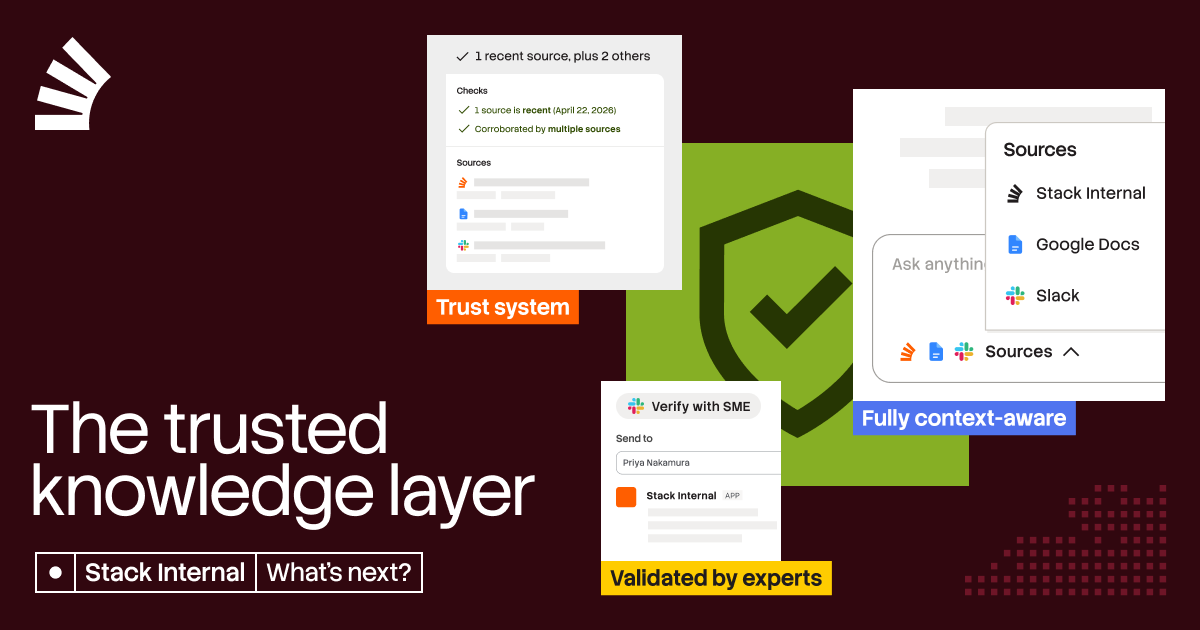
Traditional search tools provide results that might be relevant. Stack Internal shifts the paradigm by determining if information is authoritative, current, and safe. By automatically ingesting knowledge from distributed sources—such as Google Docs, Slack, and internal coding environments—the platform slices, stores, and evaluates data for trust.
Persistence in an Evolving Ecosystem
Enterprise technology is in a state of constant flux. Underlying AI models, application architectures, and security protocols change quarterly, if not monthly. Stack Internal provides a persistent, durable layer of context that remains consistent even as the peripheral tools change. This ensures that when a new model is integrated into the stack, it isn’t learning from scratch; it is inheriting a validated, structured history of the organization.
Chronology of the Release: Building the Source of Truth
The rollout of these capabilities marks a significant milestone in Stack Internal’s roadmap. The company has structured its release to address both the ingestion of data and the delivery of actionable intelligence.
- July 2026 (Phase 1): The launch of the new platform experience introduces automatic ingestion, starting with connectors for Stack Internal community, Google Docs, and Slack. This phase focuses on breaking raw data into "durable stored knowledge."
- The Immediate Future (Phase 2): Upcoming updates will include "Human-in-the-Loop" verification routing. If the system detects a knowledge gap, it will automatically flag a domain expert to fill the void, ensuring the AI is always learning from human expertise rather than guessing.
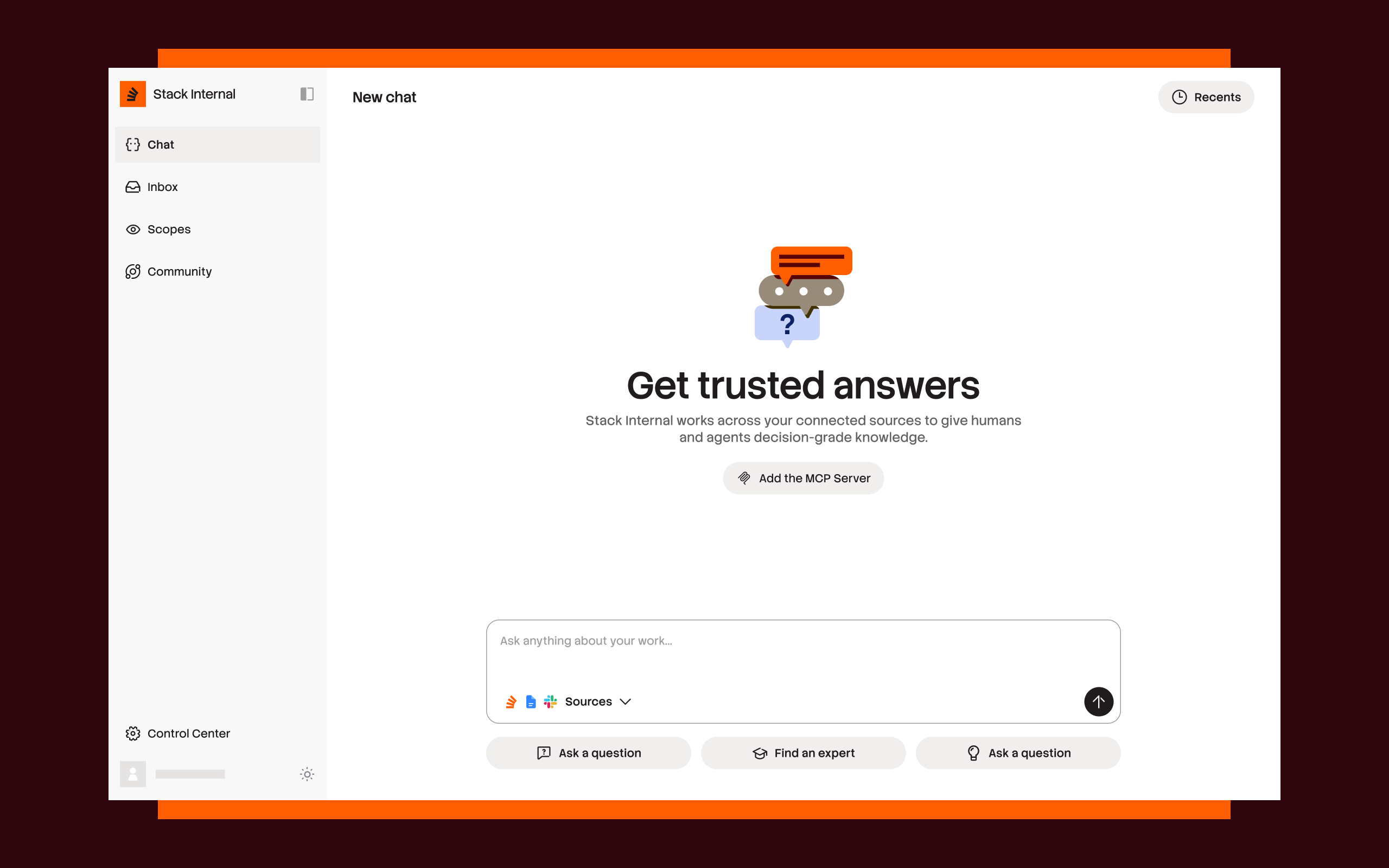
- Ongoing Integration: The platform is rolling out API and MCP (Model Context Protocol) server integrations, allowing agents to retrieve context in-flow, exactly where the work is happening.
Supporting Data and Technical Architecture
The efficacy of the new Stack Internal is rooted in its ability to quantify trust. The platform introduces two critical features: Response-Level Confidence Labels and Provenance Cards.
Transparency in AI Output
Every response generated by the system now includes clear metadata regarding its origin. Users can see exactly which document or discussion thread informed the answer. This is not merely a "citation"—it is an audit trail. If a user questions the validity of an agent’s output, the provenance card provides the necessary context to verify the source instantly.
Permission-Aware Knowledge
One of the most significant risks in enterprise AI is unauthorized data access. Stack Internal treats AI agents as "first-class citizens" within the security architecture. Agents are subject to the same identity-aware data boundaries as human employees, ensuring that sensitive or proprietary information is never leaked or accessed by unauthorized agents.
Engineering Visibility
For engineering leaders, the platform provides deeper insights into how knowledge is consumed. The new Swagger API (v3) endpoints allow for granular metrics on internal API usage. Leaders can now:
- Break down call volumes by specific internal applications.
- Monitor high-traffic dependencies.
- Compare the adoption rates of API versions (v2 vs. v3).
- Map the consumption of "community knowledge" across the entire organization.
Official Perspective: The Virtuous Cycle
The core philosophy behind these updates is the creation of a "virtuous cycle." In traditional organizations, knowledge management is a tax on time. In the new Stack Internal model, knowledge management becomes a byproduct of the work.
"When you build knowledge into the workflow," a company representative noted during the launch, "you stop treating it as a chore. The more your teams contribute, validate, and reuse, the more your organizational memory compounds."
By maximizing the value of existing intellectual property, organizations can significantly increase the ROI of their AI investments. Instead of training models on "dirty" data, they are providing a refined, validated data set. This reduces token waste—because the AI is more accurate on the first attempt—and accelerates project timelines.
Implications for the Enterprise
The shift toward a unified, trusted knowledge layer has broad implications for how businesses will operate over the next decade.
- Reduced Technical Debt: By automating the ingestion and validation of data, companies can reduce the "knowledge debt" that accumulates when employees leave or projects are abandoned.
- Autonomous Scalability: As agents become more reliable, the ratio of agents to human managers will increase. This allows small, agile teams to handle the workloads that previously required much larger, more expensive departments.
- Standardization of "Truth": Perhaps most importantly, it solves the problem of "conflicting information." When an agent provides a definitive, source-verified answer, it eliminates the debate between departments regarding which policy or code documentation is current.
Getting Started: The Path to Adoption
Stack Internal is positioning this launch as a pivotal moment for existing users. Starting July 30, 2026, current customers are granted early access to these capabilities before the wide-market release.
For administrators, the process is streamlined. The company has published comprehensive documentation on the migration and setup process, emphasizing a low-friction transition. For non-customers, the company is positioning the platform as a necessary evolution for any business serious about scaling its AI infrastructure without sacrificing security or accuracy.
Looking Ahead
The roadmap for the remainder of the year is aggressive. The development team has signaled that users can expect:
- Machine-facing trust scores: Quantitative metrics that tell an agent how much to trust a piece of data before using it.
- Conflict and decay detection: AI-driven alerts that flag when two pieces of internal knowledge contradict one another or when a document has not been updated in a significant timeframe.
- Expanded Ecosystem: Additional connectors for a wider range of enterprise-grade software and specialized workspace tools.
As the corporate landscape becomes increasingly automated, the winners will not necessarily be those with the most data, but those with the most validated data. Stack Internal is betting that by building a bridge between the chaotic reality of modern work and the precision required by AI, they can provide the structural integrity that today’s organizations so desperately need.


 Lina Hope
 Nila Kartika Wati
 Suro Senen
 Jia Lissa
 Evan Lee Salim

 Ali Ikhwan