
 Reynand Wu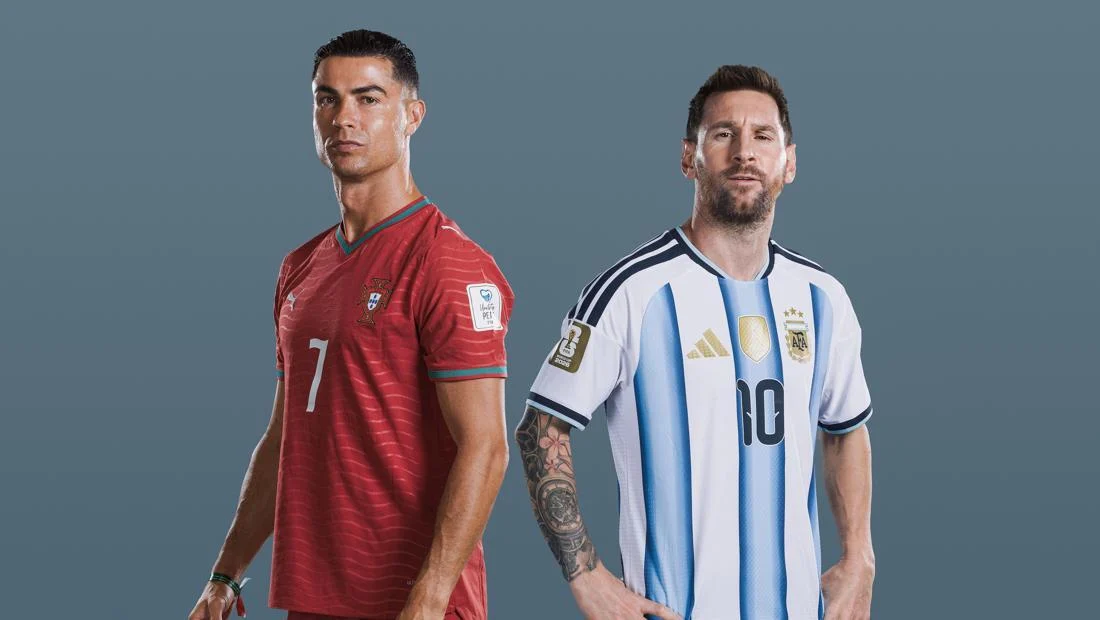
Jakarta, Indonesia – The enduring rivalry between Lionel Messi and Cristiano Ronaldo, two titans of modern football, transcends mere sporting preference. A groundbreaking international study, spearheaded by Nanyang Technological University (NTU) in Singapore, reveals that an individual’s choice between these footballing giants might offer profound insights into their political leanings and core values. This extensive research suggests that identifying with either Messi or Ronaldo could, in fact, be a subtle indicator of one’s political ideology, ranging from liberal to conservative, and even shed light on personal characteristics like self-esteem and media consumption habits.
The findings, drawn from a comprehensive online survey involving over 10,000 respondents across 26 diverse countries, including Indonesia, Australia, Argentina, Brazil, Canada, China, Egypt, Finland, France, Germany, India, Japan, Malaysia, Mexico, Netherlands, Nigeria, Norway, Philippines, Portugal, Singapore, Spain, South Africa, South Korea, Turkey, United Kingdom, and the United States, paint a fascinating picture of how seemingly unrelated cultural preferences can intertwine with deeper societal constructs. These nations were meticulously selected to represent six continents, encompassing a wide array of football cultures, political systems, and stages of economic development, ensuring the study’s global relevance and robustness.
A Global Survey of Idols and Ideologies
The genesis of this ambitious project lies in the long-held curiosity about the underlying factors that drive cultural allegiances. While it’s widely accepted that sports fandom can be influenced by geographical proximity, team loyalty, or aesthetic appreciation of a player’s style, the NTU study delves into a more nuanced territory: the psychological and ideological underpinnings of such preferences. By focusing on the two most iconic and often contrasted figures in contemporary football, the researchers aimed to tap into a universal cultural phenomenon to explore its less obvious implications.
The methodology involved a large-scale online questionnaire distributed to a geographically and demographically diverse sample. Respondents were asked to rate their preference for Messi or Ronaldo, alongside questions designed to gauge their political self-identification (liberal, conservative, moderate), media consumption habits, and self-esteem levels. The sheer scale of the survey, encompassing thousands of participants from nations spanning from highly developed Western democracies to emerging economies in Asia, Africa, and South America, provides an unprecedented dataset for cross-cultural analysis. This broad representation allowed the researchers to identify patterns that might be universal, as well as those that are specific to certain regions or demographics.
The inclusion of Indonesia as one of the respondent countries is particularly significant. As a nation with an immense passion for football and a rapidly evolving socio-political landscape, the insights gleaned from Indonesian respondents contribute to a more holistic understanding of how global football fandom resonates within diverse cultural contexts. The research team’s careful selection of countries aimed to mitigate any potential biases arising from specific national loyalties or local media narratives, thereby strengthening the generalizability of their conclusions.
Unpacking the Preferences: Messi, Ronaldo, and the Ideological Spectrum
The core revelation from the NTU study is the discernible link between an individual’s political ideology and their preferred football icon. This finding opens a novel avenue for understanding the subtle ways in which our broader worldview can manifest in seemingly innocuous cultural choices.
Liberal vs. Conservative: A Tale of Two Superstars
The study’s most striking finding posits a statistically significant correlation: individuals who self-identify with more liberal political views tend to favor Lionel Messi, while those leaning towards conservative ideologies more frequently express a preference for Cristiano Ronaldo. This association, while perhaps surprising at first glance, invites a deeper exploration of the public personas cultivated by these two athletes and how these resonate with differing political philosophies.
Liberal thought is often associated with values such as collectivism, social justice, humility, and a focus on community well-being. Messi, with his often understated demeanor, reputation as a team player, and less flamboyant celebrations, aligns with many of these perceptions. His public image frequently emphasizes his contribution to the team’s success over individual glory, a narrative that can appeal to those who prioritize collective achievement and modesty.
Conversely, conservative ideologies frequently champion individualism, ambition, self-reliance, and the celebration of personal achievement. Cristiano Ronaldo, known for his relentless pursuit of individual records, his overt expressions of ambition, and his iconic, often theatrical, goal celebrations, embodies many of these traits. His brand is built on pushing boundaries, striving for excellence, and openly acknowledging his own prowess, characteristics that might resonate more strongly with those holding conservative values. The study suggests that fans aren’t just choosing a player based on skill, but on a subconscious alignment with the values projected by these global figures.
The Generational Shift: Age and Ideological Alignment
While the link between political ideology and player preference was clearly established, the study further uncovered an interesting nuance related to age. The association between political views and a favorite player was found to be strongest among younger respondents. As the age demographic shifted towards older adults, this correlation substantially weakened.
Several factors could contribute to this generational disparity. Younger individuals, often more immersed in social media and popular culture, might be more susceptible to forming strong identity-based connections with public figures whose personas are carefully curated and widely disseminated online. Their political identities might also be less rigidly defined than those of older generations, making them more open to aligning their cultural preferences with evolving ideological standpoints. Moreover, older adults might have established their football loyalties earlier in life, based on factors such as traditional team allegiance, family influence, or simply the pure appreciation of footballing talent, before political identities became as intertwined with popular culture as they are today. This suggests a dynamic interplay between socio-cultural trends, media consumption, and the formation of identity in younger demographics.
Public Persona: Reflecting Core Values
Professor Saifuddin Ahmed from NTU’s Wee Kim Wee School of Communication and Information, who led the study, emphasized the significance of these findings beyond the realm of football. "Messi and Ronaldo present very different public images," he noted. "Messi is generally associated with a quieter, team-oriented image, while Ronaldo is known for openly expressing his ambition and celebrating individual achievements. People may be more drawn to a player whose public image aligns with their broader values."
This insight underscores the power of public figures to become cultural touchstones, embodying and reflecting the values of their admirers. The choice between Messi and Ronaldo, therefore, becomes less about statistical performance and more about an aspirational identification with a particular set of virtues. For liberals, Messi’s humility and collaborative spirit might represent an ideal. For conservatives, Ronaldo’s drive and self-belief could be seen as a mirror to their own aspirations and principles. This phenomenon is not entirely new; the relationship between political identity and cultural preferences has been extensively studied, particularly in the United States. However, Professor Ahmed points out that this survey demonstrates such patterns are not confined to the American context, but are a global phenomenon. "These findings offer a starting point for examining how political identity increasingly intersects with popular culture and everyday choices across diverse societies," he added.
Beyond Politics: Other Factors Shaping Fandom
The NTU study was not limited to exploring political ideology. Researchers also delved into other personal characteristics and media habits, revealing additional correlations that further enrich our understanding of player preference.
The Digital Echo Chamber: Short Video Platforms and Ronaldo’s Appeal
In an age dominated by digital media, the study investigated how specific media consumption habits might influence fandom. A notable finding was that respondents who primarily sourced their news from short video platforms, such as TikTok and Instagram, showed a stronger propensity to favor Cristiano Ronaldo.
This correlation offers a compelling hypothesis: Ronaldo’s formidable and meticulously curated presence on visually-driven social media platforms might be a key factor. His brand is heavily invested in high-quality visual content, showcasing his physique, luxurious lifestyle, training regimens, and, crucially, his dramatic goal celebrations. These elements are perfectly suited for the quick, engaging, and often aspirational content prevalent on short video platforms. Users of these platforms are therefore more likely to encounter and be influenced by Ronaldo’s carefully cultivated public image, which emphasizes success, aspiration, and individual prowess. In contrast, while Messi also has a significant social media presence, his content often leans more towards family life or on-field action, which may not translate with the same immediate, aspirational impact on short-form video as Ronaldo’s more personal brand-focused content. This highlights the powerful role of platform-specific content strategies in shaping public perception and allegiance in the digital age.
Self-Perception and Aspirational Figures: The Self-Esteem Connection
Another intriguing discovery was the link between a respondent’s self-esteem and their player preference. Individuals reporting higher levels of self-esteem were more likely to express a preference for Cristiano Ronaldo. The researchers suggest that this finding aligns with existing research on self-affirmation and identification with aspirational figures.
One possible explanation is that people with higher self-esteem might be more inclined to identify with public figures who embody dominance, excellence, and unwavering confidence—qualities that Ronaldo frequently projects. These individuals might see Ronaldo’s achievements and self-assured persona as a reflection or reinforcement of their own positive self-views. "People may want to present themselves as humble, but that doesn’t mean they most strongly identify with humble public figures," Professor Ahmed elucidated. "Those with higher self-esteem may instead be drawn to someone who embodies excellence, confidence, and achievement – qualities they might see reflected in themselves." This suggests a psychological resonance, where fans are drawn to players who mirror or amplify their own perceived strengths and aspirations.
A World Divided: Geographical Nuances in Fandom
While broad patterns emerged, the study also meticulously detailed country-specific preferences, revealing a diverse global landscape of Messi and Ronaldo supporters.
Diverse Preferences Across Continents
The survey results indicated a clear geographical divide in preferences. Messi received higher average ratings in his home country of Argentina, several Western European nations, the United States, Canada, and notably, South Korea. Ronaldo, on the other hand, garnered higher average ratings in several countries across North Africa, the Middle East, and Southeast Asia. Overall, respondents from 11 countries, including Singapore, on average rated Ronaldo more favorably, while 8 countries leaned towards Messi. In 7 countries, no statistically clear preference between the two players was observed.
This geographical distribution underscores the complex interplay of cultural ties, historical connections, and regional media influences. For instance, the strong preference for Messi in Western countries might be linked to a long-standing appreciation for a more "artistic" or "pure" footballing style often associated with him, or perhaps a cultural resonance with his more reserved persona. Conversely, Ronaldo’s appeal in North Africa, the Middle East, and Southeast Asia could be influenced by a stronger cultural emphasis on individual ambition, or simply the widespread popularity of his brand and high-profile endorsements in these regions.
The Curious Case of South Korea: A Lingering Grudge?
South Korea presented a particularly interesting anomaly. While Messi generally received higher ratings in several countries, South Korea recorded the strongest relative preference for Messi, even surpassing Argentina. However, this was not primarily due to an exceptionally high rating for Messi, but rather a remarkably low rating for Ronaldo. South Korea was the sole surveyed nation where Ronaldo received an average rating below four on a seven-point scale.
Researchers attribute this peculiar finding, in part, to lingering public dissatisfaction over a 2019 exhibition match in Seoul. During the event, Ronaldo, despite being the primary draw, did not play, sparking widespread anger and legal action from disappointed fans. This incident appears to have had a lasting negative impact on Ronaldo’s public image in South Korea, demonstrating how specific historical events and perceived slights can profoundly influence national sentiment towards global figures.
Unrelated Factors: FIFA Rankings and National Loyalty
Significantly, the study found no discernible correlation between a country’s FIFA ranking and its overall player preference. This suggests that national football prowess does not necessarily translate into a preference for one superstar over the other. Furthermore, country-level results could not be solely explained by loyalty towards players from respondents’ own nations, reinforcing the idea that these preferences transcend mere nationalistic biases. These exclusions highlight that the observed correlations are indeed linked to the players’ personas and the values they represent, rather than simpler, more direct factors.
Implications and Future Horizons: The Intersecting Worlds of Culture and Politics
The NTU study offers far more than just intriguing statistics about football fans; it provides a potent lens through which to examine the intricate connections between popular culture, individual psychology, and broader societal trends.
A New Lens for Understanding Societal Trends
The findings signify that political identity is not an isolated construct but is increasingly intertwined with seemingly apolitical cultural choices. From the music we listen to, the movies we watch, to the sports figures we admire, these preferences can inadvertently reflect deeper ideological leanings. This understanding is crucial for political scientists, sociologists, and marketers alike, as it suggests new pathways for understanding voter behavior, consumer choices, and the formation of social groups. In an increasingly polarized world, recognizing these subtle cultural indicators could provide valuable insights into the underlying values that drive societal divisions and convergences. The study serves as a compelling reminder that culture is not merely entertainment but a powerful arena where values are expressed, contested, and reinforced.
Charting the Future: Unanswered Questions and Research Pathways
The researchers are not stopping here. Building on these foundational insights, they plan to delve deeper into several areas for future investigation. A key focus will be to further explore why the link between political ideology and player preference varies so significantly with age. Understanding the developmental trajectory of political identity and its interaction with cultural consumption across different life stages could yield profound insights into generational shifts in values and allegiances.
Furthermore, the discovery concerning the influence of short video news consumption raises broader questions about the pervasive impact of social media on public perception. How does constant exposure to carefully curated images and narratives on platforms like TikTok and Instagram shape people’s relationships with public figures? And how do these media-driven associations, in turn, intersect with and potentially influence political values and ideologies? These questions are particularly pertinent in an era where social media platforms increasingly dictate the flow of information and the formation of public opinion.
In conclusion, the NTU study on Messi and Ronaldo fandom illuminates a fascinating nexus between global sports, personal values, political identity, and media consumption. It underscores that our choices, even those as seemingly trivial as preferring one football superstar over another, can be deeply revealing reflections of who we are, what we believe, and how we navigate the complex tapestry of modern society. As the world continues to grapple with ideological divides, understanding these subtle cultural indicators might just offer a new perspective on the forces that shape our collective consciousness.


 Muslim
 Pevita Pearce
 Ammar Sabilarrohman
 Suro Senen
 Jia Lissa
 Evan Lee Salim

 Ali Ikhwan