
 Rifan Muazin
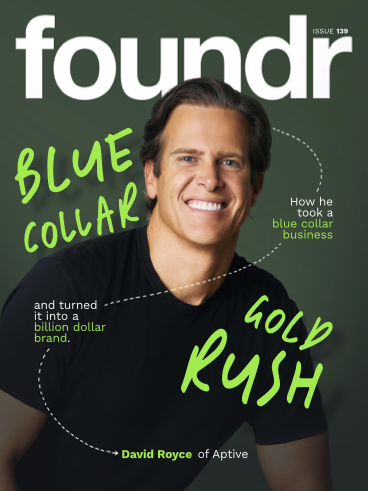
In the high-stakes world of venture capital and tech startups, success is often measured by the sleekness of a software interface or the disruption of a high-growth sector. But for David Royce, the founder and chairman of Aptive Environmental, the path to a billion-dollar valuation wasn’t paved with code or venture-backed disruption. It was paved with door-to-door persistence and an unwavering focus on an industry most finance-degree graduates wouldn’t touch with a ten-foot pole: residential pest control.
Today, Aptive stands as the third-largest residential pest control service in North America. Royce’s journey—from a student who struggled in the classroom to a stealthy wealth-builder—offers a masterclass in operational discipline, the power of "unsexy" business models, and the true meaning of leadership.
The Foundations of a Reluctant Entrepreneur
David Royce’s early life was marked by a profound sense of academic inadequacy. "I struggled in school because I couldn’t focus unless I cared deeply," Royce recalls. It wasn’t until his adult years that he understood this as a byproduct of undiagnosed ADHD. As a child, however, the inability to conform to traditional classroom structures left him feeling like he simply wasn’t smart.
That narrative shifted in the sixth grade thanks to a teacher named Mrs. Luft, who recognized his potential before he did. This external validation served as a catalyst, sparking a drive for achievement that would later define his business career. Royce eventually learned to harness his ADHD, viewing it as a "double-edged sword." In mundane environments, it was a hindrance; in the high-intensity world of sales and entrepreneurship, it became his greatest asset.

Chronology of a Rise: From Door-to-Door to Boardroom
Royce’s entry into the pest control industry was entirely accidental. While in college, a friend boasted of making $25,000 in a single summer through door-to-door sales. Motivated by the potential income, Royce traveled to Sacramento to try his hand.
The First Summer: The Power of Persistence
His debut was a catastrophe. For the first five days, he failed to close a single sale. While his peers were closing four deals a day, Royce was essentially performing "free cardio" for his employer. Faced with the embarrassment of failure, he had a choice: pack his bags or change his approach.
Royce chose the latter. He spent his weekends devouring sales literature and committing to 90 minutes of daily study. By the end of the summer, he was the top rookie sales representative in a company of 200. This experience codified his belief that "persistence is genius in disguise."
The Strategic Pivot
As he approached the end of his degree, Royce’s mentors encouraged him to move beyond working for others. Despite his initial reservations—he admits he once thought "success had to wear a suit and have a skyline"—he recognized that the pest control industry offered something most corporate jobs didn’t: a proven, high-margin, recession-proof model. With $300,000 in savings earned from those college summers, he launched his first venture.
Supporting Data: Why "Boring" Businesses Win
Royce’s strategy relies on a fundamental truth of the American economy: the "stealthy wealthy" are often found in industries that don’t make headlines.
- The Blue-Collar Advantage: Among the top 0.1% of U.S. income earners—those making upwards of $2.3 million annually—roughly 43% operate in what many would deem "boring" blue-collar sectors.
- Recurring Revenue: Unlike retail or one-off service models, pest control is an essential, recurring service. As Royce famously notes, "Recessions come and go, but bugs don’t read The Wall Street Journal."
- The AI Limit: While artificial intelligence is rapidly automating office work, it cannot physically service a home. This provides a "moat" around the industry that high-tech startups often lack.
Operational Excellence: The Aptive Blueprint
To scale to the size of Aptive, Royce had to move beyond individual sales talent and create a repeatable machine.
The Sales Engine
Royce built a training program centered on three pillars:
- Option Closes: Replacing yes-or-no questions with binary choices (e.g., "We’ll be in your area at three or five, which works better?") that both lead to a positive outcome.
- The RAC Method: Resolve the customer’s doubt, provide an "ace" (a new piece of information), and close again from a different angle.
- Body Language: Royce taught his reps that they weren’t losing because of a bad script, but because their posture and facial expressions were projecting fear.
The Cash Flow Crisis
In his first year in Los Angeles, Royce nearly went bankrupt—not because of a lack of sales, but because of a surplus of success. The business model required paying commissions before the recurring revenue had fully manifested. By closing 7,500 accounts when he had only planned for 5,000, he faced a massive liquidity crunch. He learned the hard way: "Revenues are vanity. Profits are sanity. But cash flow is reality." This lesson led to a structural shift in how he financed growth across his subsequent companies.

Culture as Design, Not Vibes
Royce’s approach to culture is perhaps his most distinct contribution to his company’s longevity. While Aptive is known for high-end perks like golf simulators and trips to Thailand, Royce is quick to clarify: "Perks are sugar. They are not the protein."
The true driver of his culture was ownership. By gifting 25% of the company to employees, Royce ensured that when the business was sold, the team shared in the windfall. "Ownership is a far better retention tool than ping-pong tables," he says. This alignment of interests turned employees into partners, resulting in many team members paying off mortgages and student loans upon the company’s exit.
Implications for Modern Leadership
Royce’s transition from a hands-on CEO to an architect of his own succession offers a final, vital lesson. After a decade of grooming a protégé, he stepped down as CEO of Aptive.
The "Hero" Trap
Royce acknowledges that the hardest part of letting go is resisting the temptation to "save the day." He realized that if he remained the hero, he was building a dependency rather than a company. He had to learn to let others lead, even if they executed differently than he would have.
Lessons from a Failed Sale
Royce also learned that "resumes don’t run companies—people do." After hiring a high-profile CFO from a billion-dollar tech company, the business struggled. The hire was accustomed to large-scale infrastructure and didn’t understand the granular cash-flow realities of a service business. The subsequent miss on financial forecasts caused potential buyers to withdraw during a sale process.
The lesson was threefold:
- Trust but verify.
- Never miss a forecast during a sale process.
- Use failed processes as intelligence-gathering tools.
Conclusion: The Summit is the Climb
Looking back at twenty years and four companies, Royce rejects the idea that entrepreneurship is solely about the exit. "If you don’t enjoy the climb, the summit is going to disappoint you," he says.
His legacy, he believes, is not found in the $500 million in annual revenue or the valuation of his firms, but in the leaders he developed along the way. David Royce’s story serves as a reminder to the next generation of builders: true success isn’t found in chasing the "sexy" opportunity. It is found in doing the work nobody else wants to do, building a team that shares the vision, and—above all—having the stubbornness to keep going when the rest of the world has already moved on to the next trend.


 Azzam Bilal Chamdy
 Ali Ikhwan
 Raul Delapena Setiawan
 Reynand Wu
 Sagoh
Sagoh
