
 Raul Delapena Setiawan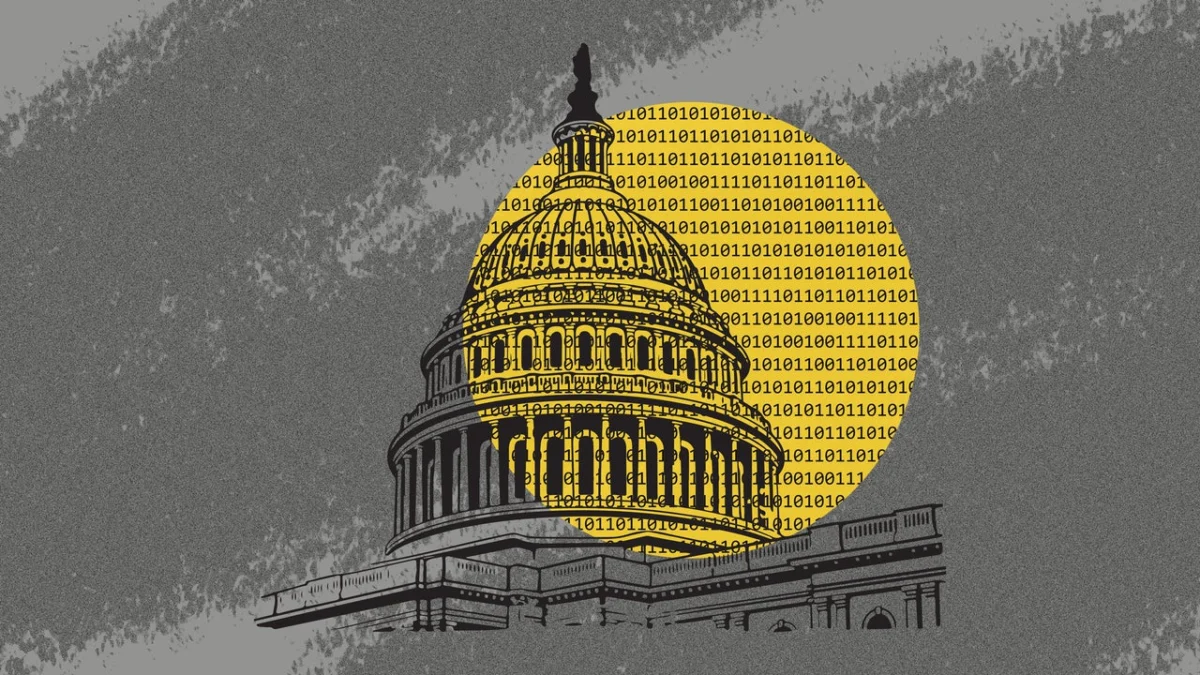
In a definitive pivot toward "technological nationalism," the United States government is aggressively asserting its authority over the artificial intelligence sector. What began as a debate over ethical guardrails and safety testing has transformed into a high-stakes geopolitical strategy aimed at preventing the world’s most powerful AI models from falling into the hands of foreign adversaries. As Washington tightens its grip on the domestic AI industry, the line between national security and state-sanctioned market control is becoming increasingly blurred.
The Cloud Security Act: A New Regulatory Frontier
On June 26, the legislative landscape shifted significantly with the introduction of the bipartisan Cloud Security Act. Spearheaded by Representative Josh Gottheimer (D-NJ) and Representative John Moolenaar (R-MI), the bill seeks to address what lawmakers characterize as a gaping vulnerability in current export controls.
While current federal regulations focus heavily on the physical export of high-end semiconductor chips—such as Nvidia’s H100 and Blackwell series—lawmakers argue these rules are insufficient. The Cloud Security Act aims to close this loophole by mandating that domestic AI companies report any suspected "misuse" of their platforms by foreign entities to the federal government.
The core logic of the bill is that hardware restrictions are no longer enough to stop a determined rival state, such as China, from achieving AI parity. If a foreign actor cannot purchase the physical hardware, they might attempt to rent cloud-based compute or access advanced foundation models through API endpoints. By forcing AI firms to act as the "eyes and ears" of the national security apparatus, the government intends to create a real-time surveillance network that spans the entire AI stack.
Chronology of Escalation: From Oversight to Intervention
The introduction of the Cloud Security Act is merely the latest chapter in a broader, accelerated effort by the federal government to micromanage the release of advanced AI.
- Mid-May 2026: The Department of Commerce signals a new, more aggressive stance on "pre-release vetting," warning AI labs that their most powerful models are now effectively treated as dual-use assets—similar to nuclear technology or advanced weaponry.
- Early June 2026: The Commerce Department intervenes in the development cycle of Anthropic’s "Mythos" ecosystem. Citing unnamed security concerns, officials effectively ordered the company to roll back the release of Fable 5, the latest iteration of its flagship model. Anthropic, complying with the directive, pulled the model from the public domain, a move that sent shockwaves through the tech industry.
- Late June 2026: Federal officials engage in direct negotiations with OpenAI. Reports indicate that the government has cautioned the company against a wide release of the upcoming ChatGPT 5.6 model, instead demanding a gated, government-approved access list that would restrict the model’s availability to pre-vetted customers.
- June 26, 2026: The formal introduction of the Cloud Security Act, signaling that the legislative branch is ready to codify the executive branch’s ad-hoc interventions into permanent law.
Supporting Data and the "Security vs. Innovation" Dilemma
The primary driver behind this regulatory wave is the intelligence community’s assessment that advanced foundation models could significantly accelerate the development of biological weapons, enhance cyber warfare capabilities, and provide an asymmetric advantage to hostile states.
According to a recent, non-public briefing cited by Congressional aides, the ability of large language models to assist in autonomous coding and molecular biology represents a "force multiplier" for state-sponsored espionage. However, the data on the impact of these restrictions remains contested.
Industry analysts point out that while limiting access to models like Mythos or ChatGPT 5.6 might temporarily delay a foreign rival, it also creates an "innovation drought" within the United States. If domestic researchers, defense contractors, and private enterprises are barred from using the most capable tools, the U.S. may inadvertently handicap its own defensive capabilities. Critics argue that a "blunt instrument" approach—where models are pulled offline entirely—fails to account for the potential of these models to identify vulnerabilities in our own infrastructure or to help develop superior defensive cybersecurity protocols.
Official Responses and Political Stances
The political appetite for this intervention appears strong across the aisle, as the "China threat" remains one of the few points of genuine bipartisan consensus in a polarized Washington.
Representative Gottheimer, a proponent of the Cloud Security Act, has framed the legislation as a common-sense measure to protect American intellectual property. "We cannot allow our most sophisticated innovations to be weaponized against us," a spokesperson for the Congressman stated, emphasizing that the bill provides clarity to firms that are otherwise navigating an opaque regulatory environment.
Conversely, the silence from the major AI labs—OpenAI, Anthropic, and others—is deafening. While these companies have publicly committed to "AI safety," the reality of government-mandated rollbacks and access restrictions creates a precarious business environment. The companies are caught between their fiduciary duties to shareholders—who demand the rapid release of cutting-edge products—and the existential threat of federal regulatory retaliation.
Implications: The Government as Market Arbiter
The shift from voluntary safety guidelines to government-enforced market restrictions has profound implications for the future of the AI industry.
1. The Death of the "Open" Model
If the current trend continues, the era of open-source or widely available frontier models is effectively over. The government is signaling that it will choose which models are "safe" enough for public consumption, essentially acting as a gatekeeper for the entire sector.
2. Market Consolidation
These regulations favor the largest players. Startups and smaller labs are unlikely to have the legal and compliance resources to navigate federal security reviews. By imposing heavy reporting requirements and pre-release vetting, the government may inadvertently create an "AI oligarchy" where only companies with the deepest pockets can afford the cost of compliance.
3. The Geopolitical Arms Race
While Washington seeks to restrain the growth of AI in rival nations, these moves may accelerate the development of localized AI ecosystems in other parts of the world. If the U.S. restricts access to its best models, nations like China or members of the BRICS bloc may double down on domestic development, leading to a fragmented "splinternet" of AI models that are not interoperable and potentially more dangerous due to a lack of global safety standards.
4. The Threat to Civil Liberties
The requirement for companies to monitor and report "suspected misuse" effectively transforms private sector platforms into domestic intelligence nodes. This raises significant questions regarding privacy and the potential for these reporting channels to be used for surveillance beyond the scope of national security, potentially chilling the use of AI for legitimate research, academic inquiry, or journalistic purposes.
Conclusion: A New Era of State-Directed Tech
The push to rein in powerful AI models is being presented as a necessary sacrifice for the sake of national survival. Yet, as the federal government moves to dictate who gets access to the next generation of intelligence, the industry is entering an era of state-directed technological development.
The question is no longer just about whether AI is safe; it is about who gets to decide the trajectory of human progress. As Washington continues to pull the levers of control, it risks turning the very engines of American innovation into tools of statecraft—a strategy that may provide short-term security, but one that could ultimately cost the United States its position as the global leader in an open, competitive, and creative digital future.
The coming months will be critical as the Cloud Security Act moves through Congress and the first batch of "government-approved" models hits the market. Whether this represents a measured response to a legitimate threat or a fundamental overreach that will stagnate American ingenuity remains to be seen. For now, the tech industry must brace itself for a new reality: in the age of AI, the government is no longer just a regulator—it is a partner, a censor, and a judge.


 Reynand Wu
 Sagoh
Sagoh

 Azzam Bilal Chamdy
 Ali Ikhwan