
 Jia Lissa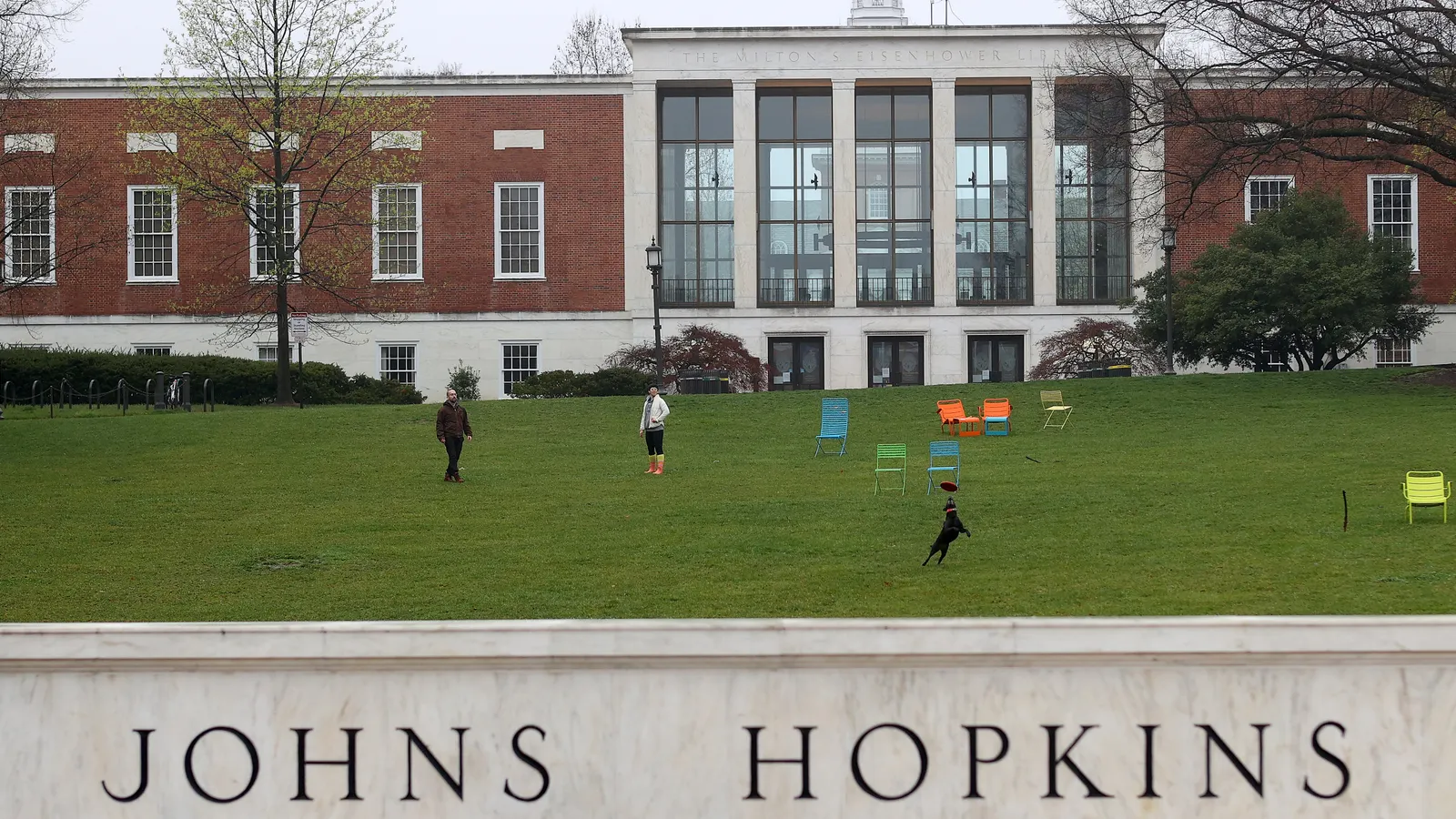
By Ben Unglesbee
Published June 26, 2026
In a move that underscores the growing instability within the American higher education research ecosystem, Johns Hopkins University has initiated a significant structural reorganization and workforce reduction program. As the institution grapples with a contraction in federal research support, university leadership is aggressively pivoting toward a leaner, more diversified financial model.
The decision to scale back operations reflects a broader anxiety rippling through the academy. Johns Hopkins, historically a titan of federally funded research, is now finding itself at the epicenter of a shifting national policy climate, one defined by the rapid reengineering of government spending priorities and a palpable slowdown in the distribution of critical scientific grants.
The Impetus: A Changing Federal Landscape
For decades, the symbiotic relationship between major research universities and the federal government was considered the bedrock of American innovation. However, that foundation has shown visible cracks over the past two years. Johns Hopkins, which reported a staggering 43% decline in federal research funding during the 2025 calendar year, is now forced to adapt its infrastructure to a reality where federal largesse is no longer a guaranteed constant.
"As our federal research portfolio shrinks, the infrastructure around it must change in parallel," a spokesperson for the university stated. This acknowledgement marks a departure from previous eras, where research universities could largely rely on predictable federal grant cycles to sustain administrative overhead and sprawling research operations.
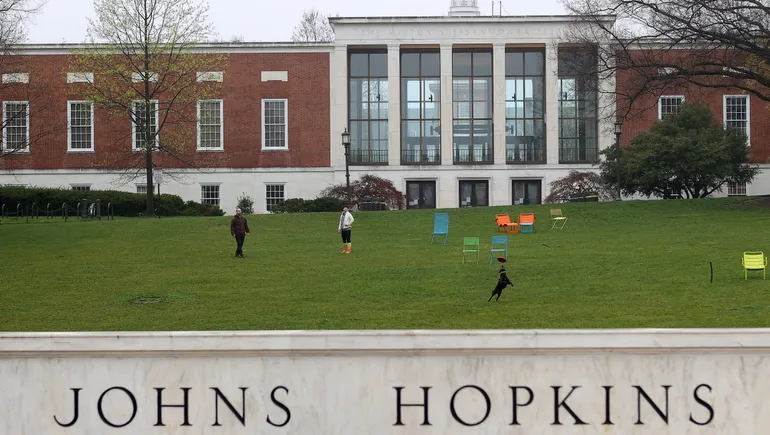
The decline is not merely a budgetary inconvenience; it is an existential challenge. With the total federal research funding for the institution plummeting, the university has reached a tipping point where it can no longer support its existing administrative framework without jeopardizing its long-term solvency.
Chronology of the Crisis
The road to the current austerity measures has been marked by a series of cascading policy shifts and internal reactions:
- March 2025: Johns Hopkins made the difficult announcement that it would lay off 2,200 workers. The move was a direct, localized consequence of the Trump administration’s decision to disrupt funding streams for the U.S. Agency for International Development (USAID), which had previously supported vast swaths of the university’s international research efforts.
- Mid-2025: Recognizing that the USAID cuts were a harbinger of a broader trend, the university instituted a series of "austerity measures." These included a total hiring freeze, the permanent elimination of vacant positions, a cap on salary increases for staff earning over $80,000, and a significant deceleration in capital spending.
- Late 2025: As federal grant timelines became increasingly erratic, the university leadership realized that short-term freezes were insufficient. Internal task forces began identifying areas for permanent structural consolidation.
- June 2026: President Ron Daniels formally announced a plan to cut the administrative budget by 10%. This latest phase focuses on eliminating duplication and fragmentation across research departments, signaling a permanent downsizing of the university’s administrative footprint.
Supporting Data: The Financial Snapshot
Despite the headlines regarding layoffs and budget cuts, Johns Hopkins remains a financial powerhouse. The university’s fiscal 2025 annual report revealed an operating surplus of $491.6 million, with a total surplus reaching $2.2 billion.
However, administrators caution against viewing these numbers as a buffer against long-term decline. The volatility in research revenue is masked by the university’s diversified revenue streams, but the core engine—sponsored research—is under duress.
| Metric | Status |
|---|---|
| Federal Research Funding Decline | 43% (Calendar Year 2025) |
| Total Sponsored Research Revenue | $5.1 Billion (Fiscal 2025, up 5.4%) |
| Research Resilience Fund | $60 Million (Over 2 years) |
| Administrative Budget Cut | 10% (Proposed) |
The increase in total sponsored research revenue (up 5.4% to $5.1 billion) suggests that while federal funding is contracting, the university has been successful in securing non-federal partnerships. This shift is intentional; the university is actively courting corporate research partnerships and launching new academic offerings designed to attract private-sector investment to replace the evaporated federal dollars.

Official Responses and Administrative Strategy
The frustration within the university’s leadership is both palpable and public. President Ron Daniels has been vocal about the logistical nightmare created by the current federal climate.
"Colleagues have expressed confusion, uncertainty, and frustration with the pace and character of decisions from federal granting agencies, especially in the natural and life sciences," Daniels said in a recent memo to faculty. "Though our colleagues continue to submit strong research proposals, the sluggish or stalled pace of awards is debilitating."
To mitigate the damage to individual researchers, the university has established a $60 million Research Resilience Fund. This capital is intended to provide a bridge for scientists whose work has been stalled by federal disruptions, ensuring that key projects do not collapse entirely while waiting for grant statuses to be clarified.
The university’s spokesperson emphasized that these actions were not taken lightly. "These efforts ensured that employment actions would be a last resort," the representative noted, pointing to the hiring freezes and salary caps as evidence of a multi-tiered approach designed to protect the core mission of the university before resorting to layoffs.
Broader Implications for Higher Education
The situation at Johns Hopkins is a canary in the coal mine for the broader higher education sector. While the university is uniquely positioned as a premier research hub, the underlying issues—administrative bloat, reliance on federal grants, and the need for revenue diversification—are universal.

The "Proactive Cutting" Trend
Many universities are watching the situation in Baltimore with bated breath. There is a growing consensus that institutions which fail to proactively trim their budgets will face even steeper, more chaotic cuts in the future. By moving now, Johns Hopkins is attempting to dictate the terms of its own transformation rather than having those terms dictated by a sudden, catastrophic loss of funding.
The Shift Toward Corporate Integration
As federal funding becomes a less reliable pillar, the "Corporate Research University" model is likely to accelerate. Universities are increasingly looking toward industrial partnerships—where private companies fund specific, applied research—as a more stable alternative to the bureaucratic hurdles of federal grant agencies. This, however, raises questions about the future of basic, "blue-sky" research, which rarely provides the immediate ROI sought by corporate partners.
The Human Cost
Beyond the spreadsheets and the multi-billion dollar surpluses, the human toll remains significant. The loss of 2,200 staff members, many of whom were instrumental in international research and development, represents a massive loss of institutional knowledge and global reach. As the university moves to streamline operations through technology and reduced fragmentation, the culture of the institution is inevitably changing from one of expansive growth to one of optimized efficiency.
Conclusion: A New Era of Uncertainty
The outlook for the remainder of 2026 and beyond remains clouded. Whether Johns Hopkins—or any other major research university—will need to implement further cuts depends heavily on whether federal funding stabilizes.
Currently, the scientific community is trapped in a state of suspended animation. With granting agencies moving at a glacial pace and the political climate prioritizing, at best, a status quo of austerity, the "Research University" of 2030 will likely look vastly different from its 2020 predecessor. Johns Hopkins is not merely reacting to a bad year; it is attempting to build a new architecture for a world where the federal government is no longer the primary architect of scientific progress.


 Nana Muazin
 Layla Zulfa
 Raul Delapena Setiawan
 Reynand Wu
 Sagoh
Sagoh

 Azzam Bilal Chamdy
 Ali Ikhwan