
 Muslim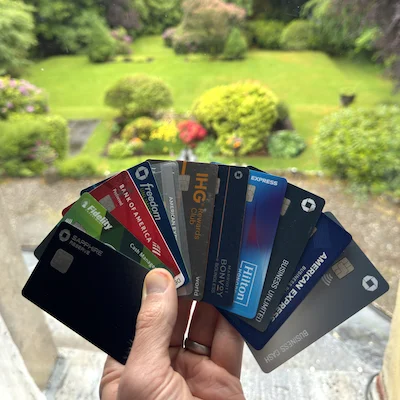
For those pursuing Financial Independence (FI), the conversation usually revolves around index funds, tax-advantaged accounts, and the “4% rule.” However, a secondary, often overlooked asset class exists that can significantly accelerate the journey to freedom: a strategic travel rewards portfolio. By treating miles and points as a liquid currency, savvy individuals are effectively creating an "additional portfolio" that reduces the burden on their primary investment accounts.
Over the past seven years, the cumulative value derived from this strategy has proven to be substantial. By consistently leveraging high-yield credit cards and optimizing everyday spending, it is possible to extract thousands of dollars in annual value—money that stays in your pocket rather than being withdrawn from your long-term retirement holdings.
The Quantitative Impact: A Multi-Year Performance Review
To understand the scale of this "hidden portfolio," one must look at the hard data. Tracking the annual value of points and miles earned through strategic spending reveals a compelling narrative.
Annual Rewards Valuation (2019–2026)
| Year | Annual Value | Year | Annual Value |
|---|---|---|---|
| 2019 | $2,614 | 2023 | $648 |
| 2020 | $4,401 | 2024 | $10,593 |
| 2021 | $6,080 | 2025 | $4,253 |
| 2022 | $6,192 | 2026 | $5,917 |
Total Cumulative Value: Averaging over $5,000 per year, this strategy provides a consistent windfall. Using standard FI math—specifically the 4% safe withdrawal rate—earning $5,000 in annual rewards is mathematically equivalent to having an extra $127,175 invested in a brokerage account. This is capital that does not need to be liquidated, providing a significant buffer for those seeking to reach their "FI number" faster.
The Strategy: Simplicity Over Optimization
While the "points and miles" community often obsesses over complex churns and micro-optimizations, the most sustainable long-term strategy is often built on simplicity. The goal is to maximize returns on everyday spending without turning personal finance into a part-time job.
The current approach focuses on a curated selection of cards that balance high-category bonuses with ease of use. This "wallet ecosystem" is designed to cover the major pillars of expenditure: travel, dining, business expenses, and groceries.
The Core: Chase Sapphire Reserve
The Chase Sapphire Reserve (CSR) remains the cornerstone of this strategy. Holding over 95% of total card transaction volume, the CSR serves as the primary engine for point accumulation.
- Valuation Logic: With points valued at approximately 2.05 cents per point (according to industry analysts like The Points Guy), the 4x multiplier on travel and 3x on dining effectively yields an 8% and 6% return on spending, respectively.
- The Annual Fee Calculus: While the $795 annual fee is objectively high, it is mitigated by a $300 annual travel credit, bringing the "effective" cost to $495. When factoring in the qualitative benefits—such as premium airport lounge access, which saves an average of $100 per visit, and the peace of mind during travel—the card pays for itself several times over.
Essential Utility: The Fidelity Cash Management Debit Card
Financial independence requires more than just points; it requires liquidity. The Fidelity Cash Management Debit Card is the most essential non-rewards card in the wallet. Its primary function is the total reimbursement of ATM fees worldwide. This eliminates the need for currency exchange kiosks or bank-specific ATM hunting, ensuring that cash access is frictionless, whether at home or abroad.
Supporting Infrastructure: The Specialized Wallet
Beyond the primary cards, a collection of specialized tools ensures that every dollar spent is earning its maximum potential:
- Everyday Spending: The Chase Freedom Unlimited is utilized for non-category purchases in the U.S. By earning 1.5 points per dollar on all spend, it functions as a baseline "3% cashback" card.
- Grocery and Supermarkets: The Amex Everyday card provides a focused 2x return on supermarket spending, ensuring that the necessary cost of living is also working to build the rewards portfolio.
- Business Operations: For professional expenses, the Chase Ink Business Unlimited and Amex Business Blue are the workhorses. The former offers 1.5 points on all spend, while the latter provides 2 points per dollar (up to a $50k cap), effectively diversifying the point currency between Chase and American Express.
- Legacy Hotels: Cards like the IHG Select, Chase Marriott Bonvoy Boundless, and Amex Hilton Honors are kept for their annual free-night certificates. These cards offer a clear return on investment; paying a modest annual fee (e.g., $49 or $95) in exchange for a hotel stay that typically exceeds the cost of the fee is a classic arbitrage move.
Implications: The Psychology of "Responsible Spending"
A common critique of credit card rewards is that they encourage overspending. However, for those who have mastered the art of budgeting, these perks can actually enhance one’s quality of life.
The latest iteration of the Chase Sapphire Reserve perks illustrates this point. By providing targeted statement credits for hotels, dining, and lifestyle experiences, the card forces the user to engage with premium services they might otherwise skip. In 2024–2025, the utilization of these credits—ranging from luxury hotel stays in Denver to concert tickets and elite airline status benefits—resulted in over $3,000 in saved value.
This creates a "virtuous cycle." Because the user is already pursuing FI, they are inherently cautious with their capital. When they do spend, they are doing so with cards that provide outsized returns, effectively subsidizing their lifestyle without compromising their long-term wealth trajectory.
Conclusion: Is Your Wallet Working for You?
The "Other Portfolio" is not just about free flights or hotel upgrades; it is about recognizing that every financial transaction is a potential investment. By carefully selecting a few high-performing cards and adhering to a disciplined spending strategy, anyone can generate significant, non-correlated value that acts as a hedge against the volatility of the stock market.
As you look at your own wallet, ask yourself: Are you simply using cards to pay for life, or are you using them to build an asset that accelerates your freedom? The math is clear—the difference is worth thousands of dollars per year.
Disclaimer: This analysis is for informational purposes and does not constitute financial advice. Credit card rewards strategies require responsible management and the ability to pay balances in full each month to avoid interest charges, which would negate all benefits discussed.


 Nana Wu
 Sagoh
Sagoh
 Raul Delapena Setiawan
 Reynand Wu


 Azzam Bilal Chamdy
 Ali Ikhwan