
 Muslim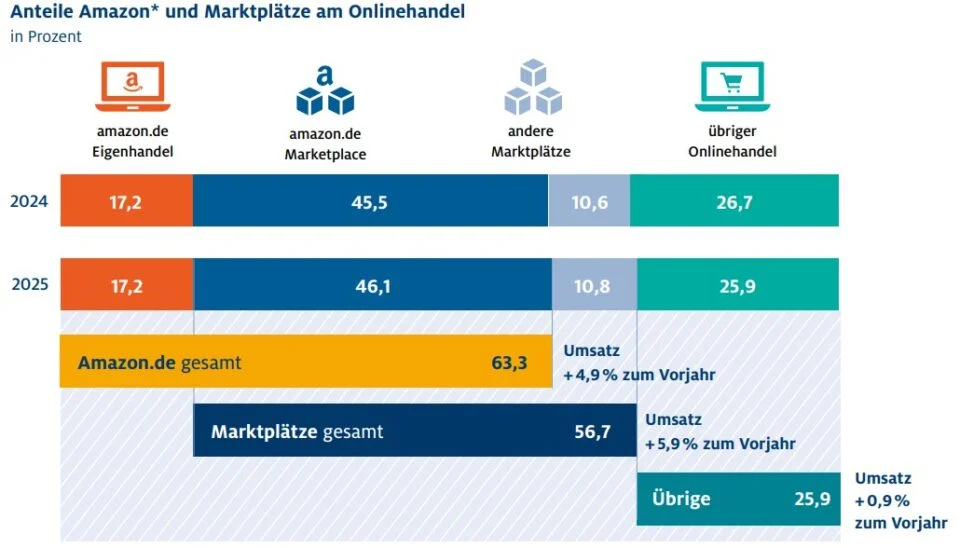
Germany, Europe’s largest economy, is witnessing a profound transformation in its retail landscape. While brick-and-mortar storefronts continue to struggle for relevance in a post-pandemic world, the digital marketplace has solidified its position as the primary engine of consumer growth. However, this shift toward online commerce is not a rising tide that lifts all boats. Instead, it is fueling a complex struggle between domestic retailers, global marketplace titans, and the rise of low-cost Chinese platforms that are actively reshaping the German economy.
According to the latest forecasts from the German Retail Federation (HDE), the nation’s e-commerce sector is set for a robust 4.3 percent nominal growth this year, projecting total revenues to hit a staggering 96.3 billion euros. In sharp contrast, physical retail is limping along, with an expected growth rate of just 1.6 percent. This divergence underscores a critical inflection point for the German retail sector, raising urgent questions about market equity, regulatory oversight, and the sustainability of domestic businesses.
The Growth Engine: Why E-commerce Dominates
The HDE has explicitly labeled e-commerce as the "growth engine" of modern retail. This moniker is well-deserved; consumer habits have shifted decisively toward the convenience, price transparency, and infinite shelf space provided by digital platforms.
The Rise of the Marketplace Model
At the heart of this growth are online marketplaces, which accounted for a commanding 56.7 percent of all online sales last year. These platforms act as digital malls, aggregating thousands of vendors under one interface. While their share of the market is expected to climb even higher this year, the rate of expansion is showing signs of cooling—a natural evolution as the market reaches a state of relative maturity.
Chronology of a Shift: From Local High Streets to Global Platforms
To understand the current crisis, one must look at the evolution of German consumer habits over the last decade.
- 2015–2019: The Digital Transition. German consumers began moving away from traditional catalog and brick-and-mortar shopping, favoring platforms like Amazon and Otto. This period saw the "Amazonification" of the German market, where prime delivery and seamless returns became the gold standard.
- 2020–2022: The Pandemic Catalyst. COVID-19 acted as an accelerant, forcing even the most traditional German demographics to adopt online shopping. This created a massive influx of capital into the e-commerce sector.
- 2023–Present: The Rise of the Disrupters. The emergence of aggressive pricing models from Chinese platforms like Shein and Temu has fundamentally altered the landscape. These platforms have bypassed traditional supply chains, offering ultra-low-cost goods directly to consumers, which has disrupted the market equilibrium that once favored established Western retailers.
Supporting Data: The Concentration of Wealth
The data provided by the HDE Online Monitor 2026 paints a picture of stark market concentration. The "winner-takes-all" dynamic is becoming increasingly pronounced.
The Amazon Hegemony
Amazon remains the undisputed hegemon of the German market. As the company’s largest European market, Germany continues to be a vital revenue stream for the American giant. Last year, Amazon reported a 12.3 percent growth in German sales, reaching record levels. This growth, however, comes at a cost to the rest of the ecosystem.
The "Drain" on the Economy
The influx of capital into Chinese platforms is a point of major concern for the HDE. Recent findings suggest:
- 4.7 Billion Euros: The combined annual sales generated by Shein and Temu within Germany.
- 65 Percent: The proportion of German consumers who have purchased from a foreign online store at least once.
- 3 in 10 Germans: The segment of the population that now regularly engages with Chinese platforms.
This outflow of capital is not merely a competitive nuisance; the HDE has commissioned studies suggesting that these platforms "drain" roughly 2.4 billion euros from the German economy annually, money that would otherwise circulate through local businesses, tax coffers, and domestic employment.
Official Responses: The Call for "Fair Competition"
The rapid expansion of foreign platforms has triggered a strong response from industry leaders. Stephan Tromp, Deputy Managing Director of the HDE, has been vocal about the systemic inequalities currently favoring these international players.

The Regulatory Gap
Tromp argues that the current environment is inherently unfair. "Unfortunately, this is still not the case for companies such as Shein and Temu," he stated regarding the current state of fair competition. The HDE’s position is that these companies benefit from a regulatory environment that has not yet caught up to their business models.
The HDE is calling for three specific pillars of policy change:
- Enforcement of Existing Rules: Closing loopholes that allow foreign goods to circumvent EU safety and environmental standards.
- Meaningful Penalties: Moving beyond token fines to penalties that actually reflect the scale of the revenue these platforms generate in Germany.
- Cross-Border Harmonization: Creating a framework where, regardless of where a product originates, the same tax, environmental, and labor regulations apply to all participants.
Implications: The Future of German Retail
The implications of these trends are far-reaching, affecting everything from local employment to the fiscal health of German municipalities.
The Decline of the Small Retailer
While major platforms flourish, the "middle class" of the German retail sector—smaller online shops—is struggling. Many have seen revenue declines over the past few years as they find themselves unable to compete with the massive marketing budgets, logistics efficiencies, and bottom-of-the-barrel pricing offered by global conglomerates.
Economic Sovereignty and Tax Revenue
When consumers shift their spending to platforms that are not headquartered in Germany or the EU, the loss of tax revenue becomes a major policy issue. VAT, corporate taxes, and social security contributions from local retail employees are all at risk if the current trend toward foreign platforms continues unchecked.
The Path Forward: Innovation or Regulation?
The question for German policymakers is whether they can protect the domestic retail sector without stifling the convenience that German consumers have come to expect. Some economists argue that the solution lies in digitizing the "Mittelstand" (small and medium-sized enterprises) more effectively, encouraging them to form cooperative platforms that can compete with the giants.
Others argue that the primary path forward must be defensive. By strengthening the Digital Services Act (DSA) and other European regulations, Germany and the EU have the potential to set a global standard for online commerce, forcing global players to play by the same rules as their local counterparts.
Conclusion: A Critical Crossroads
Germany stands at a critical juncture in the history of its retail sector. The growth of e-commerce is undeniable and permanent, but the current trajectory is creating a market where domestic retailers are increasingly marginalized.
The HDE’s message is clear: without a robust regulatory framework that mandates fair competition, the "growth engine" of e-commerce may ultimately drive the local German retail sector into a state of permanent decline. The challenge for the coming years will be to ensure that the transition to a digital-first economy does not come at the expense of the economic vitality and fair-play standards that have defined Germany’s market for decades.
As we look toward 2026 and beyond, the focus will undoubtedly shift from simply "getting online" to "staying in the game"—a task that will require not just innovation from retailers, but firm, decisive action from the halls of power in Berlin and Brussels. The battle for the German consumer is no longer just about who has the best price; it is about who has the right to participate in the market, and under what terms that participation is permitted.


 Jia Lissa
 Basiran
 Nila Kartika Wati
 Sagoh
Sagoh

 Lina Hope