Laily UPN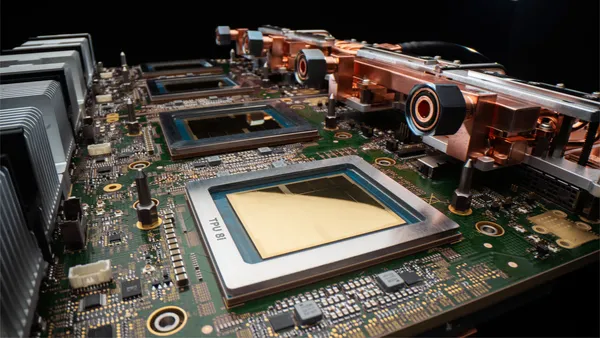
At the 2026 Google I/O developer conference, CEO Sundar Pichai officially declared that the tech giant has moved beyond the initial "generative" phase of artificial intelligence into the "agentic" era. This shift represents a fundamental pivot from models that simply generate text or images to intelligent systems capable of taking autonomous, proactive action across the user’s digital life. With a staggering $180 to $190 billion in annual capital expenditure planned for this year, Google is betting its future on a full-stack integration of custom silicon, frontier models, and autonomous agents.
The New Frontier: From Generation to Action
The core message from the keynote was clear: users are no longer satisfied with static AI chatbots. They want tools that "do" things. This is the hallmark of the "agentic" era. Google is defining this transition through a suite of new tools that aim to turn AI from a passive assistant into a persistent, 24/7 operator.
The most notable development is the introduction of Gemini Spark, a personal AI agent embedded within the Gemini app. Unlike previous iterations that required specific, manual prompts to function, Spark is designed to operate in the background, managing digital workflows, scheduling, and information retrieval based on a user’s long-term goals and habits.
This agentic capability is being extended to Google Search. New "information agents" will allow users to set up persistent, 24/7 trackers for complex research or personal tasks. When a user needs to monitor a niche topic or manage a long-running project, the AI will build custom, dynamic dashboards—effectively creating "mini-apps" on the fly—to ensure the user remains updated without manual intervention.

Chronology of Development: A Decade of AI-First Strategy
The road to 2026 began ten years ago when Google famously pivoted to an "AI-first" company. According to Pichai, this decade-long commitment to a full-stack approach—encompassing custom silicon, research, and platform integration—has finally hit a tipping point.
- 2024: The company processed approximately 9.7 trillion tokens monthly.
- 2025: Usage scaled dramatically to roughly 480 trillion tokens per month.
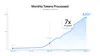
- 2026: The scale has exploded, with Google now processing over 3.2 quadrillion tokens per month—a sevenfold increase over the previous year.
This rapid adoption reflects the integration of Gemini into 13 distinct products, each with over a billion users. The company has focused on reducing latency and increasing reasoning capabilities, culminating in the release of the Gemini 3.5 series, which combines "frontier-level intelligence" with rapid execution speeds.
Supporting Infrastructure: The $190 Billion Bet
Innovation at this scale is expensive. Google revealed that its annual capital expenditure has surged from $31 billion in 2022 to an estimated $180–$190 billion for 2026. This spending is primarily focused on custom silicon, specifically the company’s 8th generation of Tensor Processing Units (TPUs).
For the first time, Google has adopted a dual-chip architecture:

- TPU 8t: Optimized specifically for training massive models.
- TPU 8i: Engineered specifically for real-time inference.
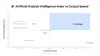
By separating these workloads, Google claims to have achieved a twofold improvement in performance-per-watt, a critical milestone for sustainable scaling. This hardware efficiency is the backbone of the new Gemini 3.5 Flash model, which is being marketed as a cost-effective alternative to other frontier models. Internal data shows that if large enterprises shifted 80% of their existing workloads to 3.5 Flash, they could realize over $1 billion in annual savings.
Gemini 3.5 Flash and the Antigravity Platform
The introduction of Gemini 3.5 Flash marks a turning point in model efficiency. It is designed for "agentic coding" and long-horizon tasks—complex operations that require the model to remember steps and maintain context over extended periods.

Coupled with this is Antigravity 2.0, an evolution of Google’s developer platform. Previously restricted to coding environments, Antigravity has been transformed into a standalone desktop application. It acts as a central hub for orchestrating "cohorts" of autonomous agents. By integrating 3.5 Flash into Antigravity, Google claims the system is now 12 times faster than competing models, allowing developers to manage multiple AI agents that can collaborate on complex technical workflows.
Safety and Transparency: The SynthID Expansion
As the capabilities of AI-generated media grow, the potential for misinformation has become a central concern for the company. To address this, Google is doubling down on SynthID, its invisible watermarking technology.
Since its launch, SynthID has been applied to over 100 billion images and videos and 60,000 years of audio. In a major move toward industry standardization, Google announced that OpenAI, Kakao, and Eleven Labs have joined the effort to adopt SynthID. Furthermore, Google is integrating "Content Credentials" verification into Chrome and Search, which will allow users to immediately see whether content was created by a camera, edited by AI, or entirely generated by a model.
User-Facing Innovations: Ask YouTube and Docs Live
Beyond the heavy infrastructure, Google announced several consumer-facing features aimed at natural, voice-driven interaction:
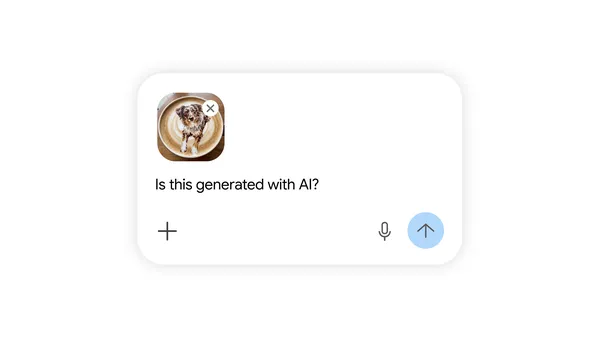
- Ask YouTube: This feature allows users to query video content directly. Instead of scanning through a long video to find a specific answer, the AI parses the video’s transcript and visual data, jumping the user to the exact moment the information is discussed.
- Docs Live: Representing a leap in audio processing, this feature allows users to "brain dump" complex ideas verbally into a document. The AI then organizes, structures, and edits the text in real-time, removing the friction of manual typing and prompt engineering.
Implications: A New Era of Productivity
The implications of these announcements are profound. By moving toward agentic systems, Google is effectively repositioning itself from a search company to an orchestration company. If successful, the "agentic Gemini era" will mean that users spend less time navigating software interfaces and more time defining outcomes, while the AI manages the "how" of execution.
However, this shift also brings new challenges. The reliance on AI to manage, create, and track information requires a high degree of trust. Google’s emphasis on transparency (via SynthID) and the massive investment in custom, energy-efficient silicon suggest the company is preparing for a world where AI is not just an occasional assistant, but the primary interface for human-computer interaction.
As these tools roll out throughout the summer of 2026, the tech industry will be watching closely to see if Gemini’s agentic capabilities can truly scale to meet the demands of billions of users. The transition is no longer theoretical; the infrastructure is built, the models are trained, and the agents are ready to work.
Summary of Key Announcements
- Gemini 3.5 Flash: A high-speed, cost-efficient model optimized for agentic tasks.
- Gemini Spark: A 24/7 personal assistant that operates proactively on behalf of the user.
- Antigravity 2.0: A new desktop platform for managing and orchestrating autonomous AI agents.
- Infrastructure: Introduction of the 8th-generation TPU (8t and 8i) with a $180B+ capital investment.
- Trust: Expansion of SynthID to include industry partners like OpenAI, ensuring AI-generated content is verifiable across the web.
- Consumer Features: "Ask YouTube" for instant video insights and "Docs Live" for voice-first document creation.

 Lina Hope
 Reynand Wu
 Nila Kartika Wati
 Jia Lissa
 Basiran
 Sagoh
Sagoh