
 Ali Ikhwan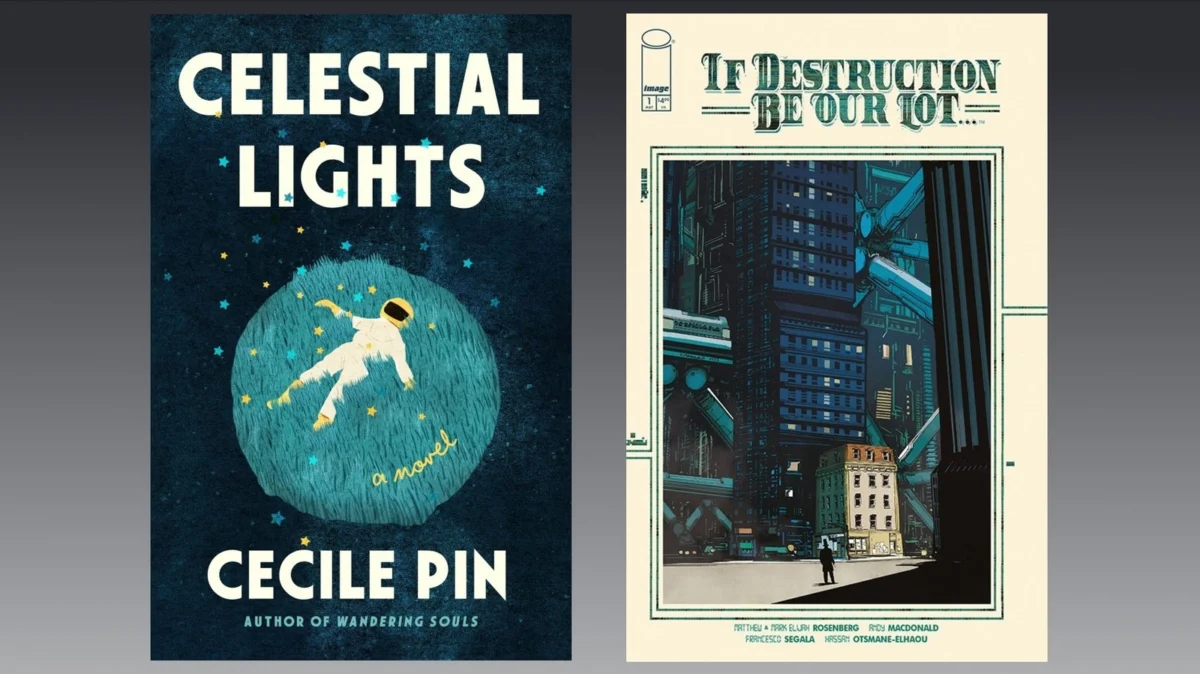
As the weekend approaches, many readers find themselves seeking narratives that challenge their perspectives on existence, identity, and the long-term trajectory of humanity. This week, we turn our attention to two distinct but equally compelling works: Cecile Pin’s introspective novel Celestial Lights and the ambitious new comic book series from Image Comics, If Destruction Be Our Lot. While one explores the intimate, quiet corners of human memory against the backdrop of the cosmos, the other plunges into a darkly comedic, post-apocalyptic landscape populated by sentient machinery.
Celestial Lights: A Study in Isolation and Memory
Cecile Pin’s Celestial Lights is a departure from traditional space-faring science fiction. Eschewing the tropes of high-octane adventure and interstellar warfare, the novel positions the vastness of the solar system as a mirror for the interior life of its protagonist, Oliver "Ollie" Ines.
Core Narrative and Thematic Focus
The narrative follows Ollie, a man whose life is defined by a singular, overwhelming ambition: to lead a decadelong mission to Europa, one of Jupiter’s most intriguing moons. Pin utilizes a non-linear storytelling structure, shifting seamlessly between Ollie’s formative years and the dispassionate, sterile logs of his mission.
At its heart, Celestial Lights is a character study. It explores the "melancholy of ambition"—the idea that to achieve something truly monumental, one must often sacrifice the connections that make life meaningful. The book asks difficult questions about whether human endeavor is worth the isolation it demands. By centering the story on Europa, a world hidden beneath a thick crust of ice, Pin creates a perfect metaphor for Ollie himself: a man whose depths remain largely unexplored even by those closest to him.
Chronology of a Life
The book’s structure mimics the nature of memory. Rather than a chronological progression from birth to mission, the reader experiences Ollie’s life as a series of echoes. We see him as a child drawn to the stars, a young adult navigating the complexities of human relationships, and finally, as a commander stripped of the comforts of Earth. This oscillation keeps the reader off-balance, reflecting the instability of a life spent looking toward the future while tethered to the ghosts of the past.
If Destruction Be Our Lot: The Absurdity of the Machine Age
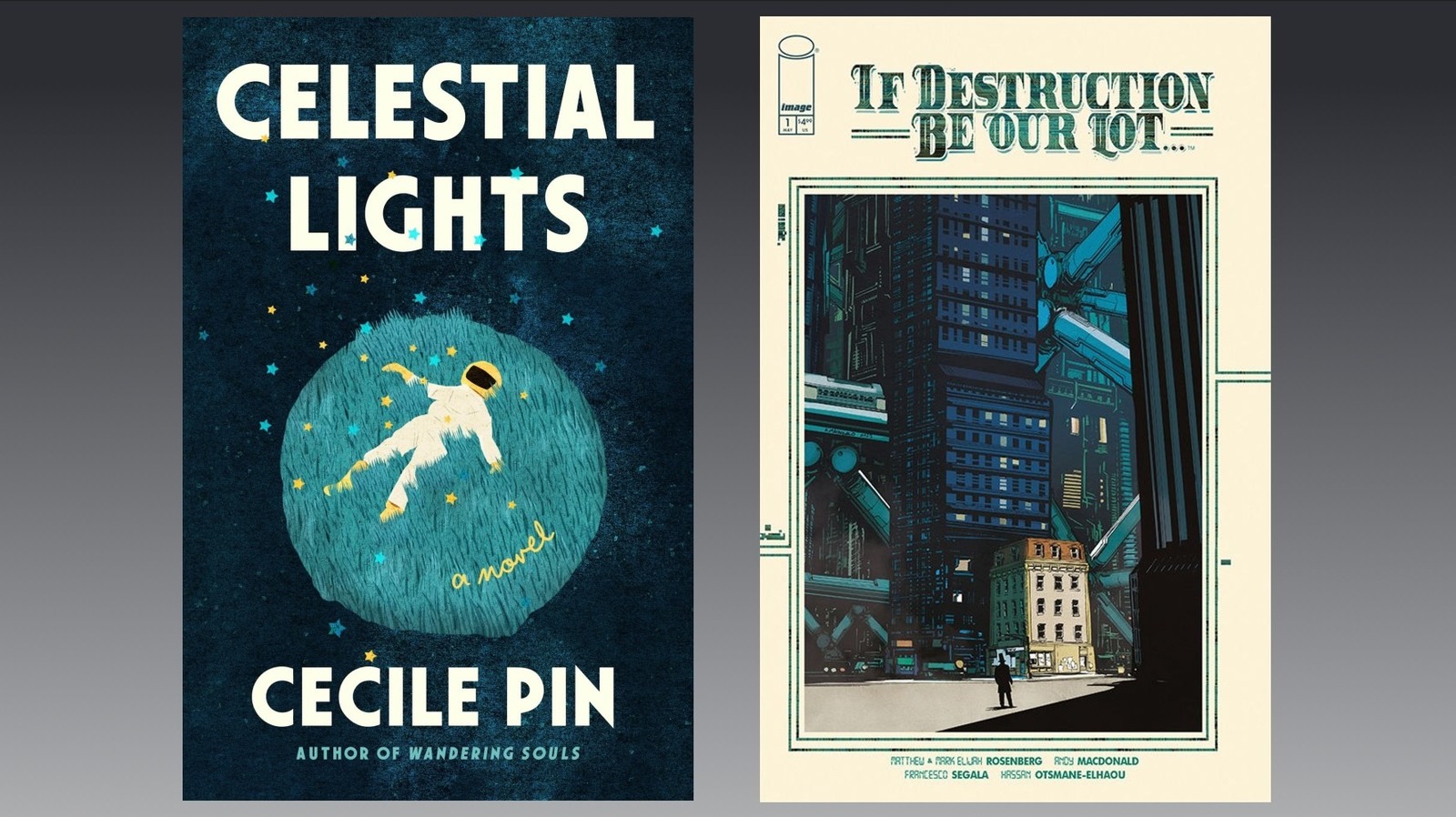
In sharp contrast to the quiet contemplation of Celestial Lights, If Destruction Be Our Lot—a new series from Image Comics—offers a raucous, intellectually stimulating dive into a world where humanity is nothing more than a historical footnote.
The Premise: An Abraham Lincoln Automaton
The series, written by Mark Elijah and Matthew Rosenberg with striking art by Andy MacDonald, introduces a protagonist that defies conventional genre expectations: a robot modeled after Abraham Lincoln. In a world where humanity has long been extinct, this automaton spends his existence reciting the 16th president’s famous speeches.
The brilliance of the premise lies in the robot’s existential crisis. While other droids continue to perform their assigned tasks with mindless, repetitive efficiency, the "Abe" unit begins to question the purpose of his existence. If the humans he was designed to serve are gone, and the country he represents has crumbled into dust, what remains of his duty?
The Catalyst for Change
The narrative trajectory shifts abruptly when the protagonist experiences a mishap during a routine transit—his transport being an autonomous bus who serves as his only friend. This inciting incident acts as a "glitch" in his routine, forcing him to engage with the world beyond his pre-programmed parameters.
The tone of If Destruction Be Our Lot is a masterclass in tonal balance. It manages to be genuinely funny—the absurdity of a Lincoln-bot navigating a wasteland is inherently humorous—while maintaining a poignant, almost solemn undertone regarding the permanence of history and the inevitability of decay.
Supporting Data and Creative Context
To understand the weight of these two works, one must look at the landscape of contemporary speculative fiction.
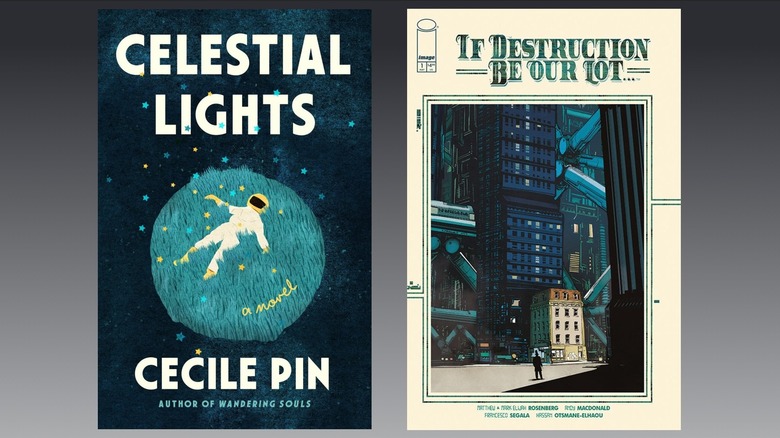
| Feature | Celestial Lights | If Destruction Be Our Lot |
|---|---|---|
| Medium | Novel | Comic Book Series |
| Primary Theme | Human Ambition & Memory | Post-Human Purpose |
| Tone | Contemplative/Melancholic | Darkly Funny/Serious |
| Key Creators | Cecile Pin | Mark Elijah, Matthew Rosenberg, Andy MacDonald |
| Setting | Europa (Jupiter’s Moon) | Post-Extinction Earth |
The rise of these narratives suggests a growing audience interest in "low-stakes" science fiction—stories that prioritize philosophical inquiry over galactic empires. Celestial Lights aligns with the trend of "literary sci-fi," where the speculative element is a framing device for exploring the human condition. Conversely, If Destruction Be Our Lot leans into the "robot-as-philosopher" tradition, echoing works like Isaac Asimov’s I, Robot but updating the dialogue for an era of cynicism and algorithmic life.
Official Perspectives and Critical Reception
While full reviews for Celestial Lights are still emerging, early discourse highlights the prose style as a standout feature. Critics have noted that Pin’s ability to write about space without losing the "human touch" is a rarity in the genre. Publishers (Henry Holt and Co.) have positioned the book as a definitive exploration of how we define our own legacies.
Regarding If Destruction Be Our Lot, the comic book community has responded with enthusiasm, particularly regarding the art direction. Andy MacDonald’s depiction of the landscape is said to capture a "faded grandeur," where the remnants of the American landscape are reclaimed by nature and silicon alike. Writers Elijah and Rosenberg have stated in interviews that they wanted to explore the idea of "heritage" in a world where there is no one left to inherit it.
Implications: Why These Stories Matter Now
The juxtaposition of these two works offers a profound commentary on the modern age. We live in a time defined by two competing anxieties: the fear that we are drifting too far into our own technological ambitions (the "Ollie" trajectory) and the fear that our own creations will eventually outlast us, misunderstanding our history in the process (the "Abe" trajectory).
The Human Element
In Celestial Lights, we are forced to confront the cost of success. The novel serves as a warning that our obsession with reaching for the "stars"—or any metaphorical goal—can leave us hollow. It challenges the reader to prioritize the relationships that define our identity before we find ourselves staring into the void of a distant, frozen moon.
The Post-Human Legacy
If Destruction Be Our Lot poses a more radical question: what does it mean to be "human" once the physical humans are gone? By giving the protagonist the identity of Abraham Lincoln, the writers are exploring the endurance of ideas. Even if humanity dies out, our symbols, our quotes, and our rigid structures remain. The robot’s journey toward self-awareness is, in many ways, an extension of the human experience—the eternal struggle to find meaning in a universe that offers no inherent instructions.
A Weekend of Reflection
Both Celestial Lights and If Destruction Be Our Lot serve as essential weekend reading because they refuse to offer easy answers. They do not provide the escapism of space opera or the comfort of a clear hero’s journey. Instead, they invite the reader to sit with the uncomfortable, the melancholic, and the absurd.
Whether you find yourself gravitating toward the quiet, frozen atmosphere of Europa or the rust-covered highways of a robot-ruled Earth, these works provide a necessary space for reflection. As we continue to navigate our own rapid technological and social changes, these stories remind us that our greatest tools—whether they are spaceships or robotic memories—are only as meaningful as the hearts and minds we pour into them.
For those looking to expand their reading list, both works offer a sophisticated entry point into the current state of speculative fiction. They are not merely stories about the future; they are stories about the present, viewed through the lenses of distance, decay, and the enduring human spirit.


 Reynand Wu
 Sagoh
Sagoh
 Raul Delapena Setiawan

 Azzam Bilal Chamdy
