
 Nana Muazin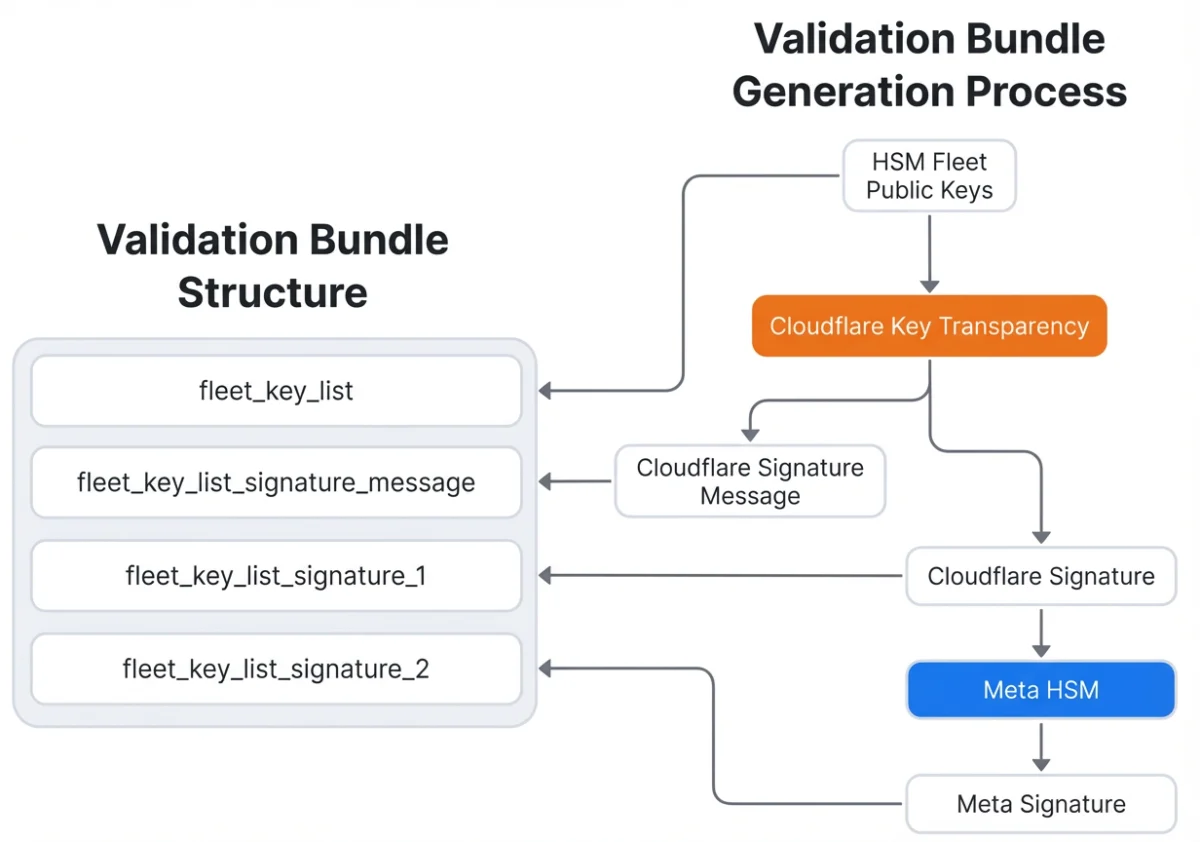
In an era where personal data serves as the primary currency of the digital economy, the sanctity of private communications has become a paramount concern for both regulators and the public. As users increasingly migrate their entire digital lives—from professional correspondence to intimate family memories—onto messaging platforms like WhatsApp and Messenger, the demand for robust, ironclad security has never been higher. Meta has recently announced a significant expansion of its Hardware Security Module (HSM) architecture, a move designed to cement its leadership in end-to-end encrypted (E2EE) backup security.
This technical leap, which introduces over-the-air (OTA) fleet key distribution and a new transparency protocol, represents more than just a software update; it is a fundamental restructuring of how trust is established between a service provider and its billions of users.
The Core Architecture: Understanding the HSM-Based Vault
At the heart of Meta’s security strategy lies the "HSM-based Backup Key Vault." When users enable E2EE backups, their message history is encrypted with a key that is then protected by a recovery code. Crucially, this code is not stored on Meta’s servers, nor is it accessible to cloud providers or third-party entities. Instead, it resides within tamper-resistant Hardware Security Modules—physical, hardened computing devices designed specifically to safeguard cryptographic keys.
The system is architected as a geographically distributed fleet of these HSMs, spread across multiple global data centers. To prevent any single point of failure or compromise, the system utilizes "majority-consensus replication." This means that no single HSM can unilaterally authorize or disclose a key; rather, the system requires a quorum of modules to agree on the legitimacy of a request before any decryption metadata is handled. This design ensures that even in the unlikely event of a physical or logical breach at one data center, the integrity of the entire vault remains intact.
A Chronology of Encrypted Backup Evolution
The journey toward universal E2EE backups has been a multi-year project for Meta, characterized by incremental security hardening.
- September 2021: Meta first unveiled the HSM-based Backup Key Vault for WhatsApp. This marked the initial deployment of the hardware-backed, tamper-resistant system that moved encryption keys out of the reach of Meta’s own engineers.
- Late 2023: Recognizing that complex recovery codes were a barrier to user adoption, Meta simplified the process by integrating passkeys. This allowed users to leverage biometric authentication (like FaceID or fingerprint scanning) and device-level security to unlock their backups, significantly improving user experience without sacrificing cryptographic strength.
- Mid-2024 (Current Phase): Meta has now extended the infrastructure capabilities beyond WhatsApp, bringing Messenger into the ecosystem. This phase is defined by the introduction of dynamic, over-the-air fleet key distribution, allowing the company to scale security without forcing constant application updates on the user base.
Technical Innovation: Over-the-Air Fleet Key Distribution
The most significant technical challenge in securing a massive messaging fleet is the "authenticity problem." How does a user’s phone know that the server it is talking to is the genuine HSM fleet and not a sophisticated interceptor?
Historically, WhatsApp solved this by hardcoding the public keys of the HSM fleet into the application code. However, hardcoding keys creates a maintenance nightmare: every time a fleet is updated or rotated, the app must be updated. For a platform as complex as Messenger, this is neither scalable nor practical.
Meta’s solution is a sophisticated, multi-layered validation protocol:
- Dynamic Delivery: When a client initiates a session, the HSM fleet sends its public keys "over the air."
- Dual-Signature Validation: To prevent tampering during transit, these keys are packaged in a validation bundle that is signed by Cloudflare (acting as a trusted third-party witness) and then counter-signed by Meta.
- Independent Verification: By requiring two distinct signatures, Meta creates a chain of trust. The client validates these signatures before proceeding. If the signature chain is broken, the connection is rejected.
- Auditability: Cloudflare maintains an immutable audit log of every validation bundle issued. This ensures that Meta cannot issue unauthorized keys to a specific user without leaving a verifiable, third-party record.
Strengthening Transparency: The New Disclosure Policy
Transparency is the antidote to skepticism in the cybersecurity space. Historically, large technology firms have operated as "black boxes," asking users to trust their security promises implicitly. Meta is now pivoting toward a model of "verifiable security."
By committing to publish evidence of secure fleet deployments on its engineering blog, Meta is inviting external scrutiny. New HSM fleets, which are rare and typically deployed only every few years, will now be accompanied by cryptographic proofs. These proofs allow independent researchers or security-conscious users to follow the steps outlined in the company’s whitepaper—Security of End-To-End Encrypted Backups—to verify that the deployment was conducted within the parameters of the established security model.
This move effectively shifts the burden of proof from "we say it is secure" to "here is the evidence you can verify yourself."
Implications for Global Privacy and Security
The implications of this architectural shift are profound, impacting several sectors of the digital landscape:
1. Neutralizing Metadata and Access Requests
By keeping the keys in hardware modules that are functionally inaccessible to the company, Meta is essentially stripping itself of the technical ability to comply with government requests for the content of user backups. Even if a legal warrant were served for a user’s encrypted backup, Meta simply lacks the "keys to the kingdom." This places the power of privacy back into the hands of the individual user.
2. Standardization of Security Expectations
As Meta rolls out these features across both WhatsApp and Messenger, it sets a new industry standard. Competitors in the messaging space, such as Signal or Telegram, now face increased pressure to provide similar levels of transparent, hardware-backed security. This raises the "floor" of privacy for the entire internet.
3. Resilience Against Sophisticated Threat Actors
The use of geographically distributed, majority-consensus HSMs provides a defense-in-depth strategy against state-sponsored actors. To breach the system, an attacker would need to compromise a majority of HSMs across multiple, physically separated jurisdictions simultaneously. This level of required coordination makes the cost of an attack prohibitively high, effectively shielding the average user from large-scale data breaches.
4. Balancing Usability and Security
The integration of passkeys and the removal of the need for frequent app updates (thanks to OTA distribution) prove that security does not have to be a friction-filled experience. By abstracting the complexity of HSM validation away from the user, Meta is ensuring that the most secure version of their app is also the most seamless to use.
Conclusion: The Road Ahead
Meta’s latest updates represent a mature, disciplined approach to cryptography at scale. By focusing on the infrastructure of trust—specifically, how fleet keys are distributed and how deployments are verified—Meta is attempting to reconcile the inherent tension between providing a global, high-availability service and maintaining the absolute privacy of individual communications.
While no system is entirely immune to the evolution of computational power or the emergence of future vulnerabilities, the transition toward a transparent, hardware-verified architecture is a significant victory for digital privacy. As these systems continue to evolve, the ability for users and third-party auditors to verify the integrity of these HSM fleets will be the true test of Meta’s commitment to its "privacy-first" narrative.
For those seeking a deeper dive into the mathematical and technical underpinnings of this system, the full technical specifications remain available in the Security of End-To-End Encrypted Backups whitepaper, a document that continues to serve as a roadmap for the future of secure messaging.


 Jia Lissa
 Nila Kartika Wati
 Raul Delapena Setiawan
 Reynand Wu
 Sagoh
Sagoh

 Azzam Bilal Chamdy
 Ali Ikhwan