
 Laily UPN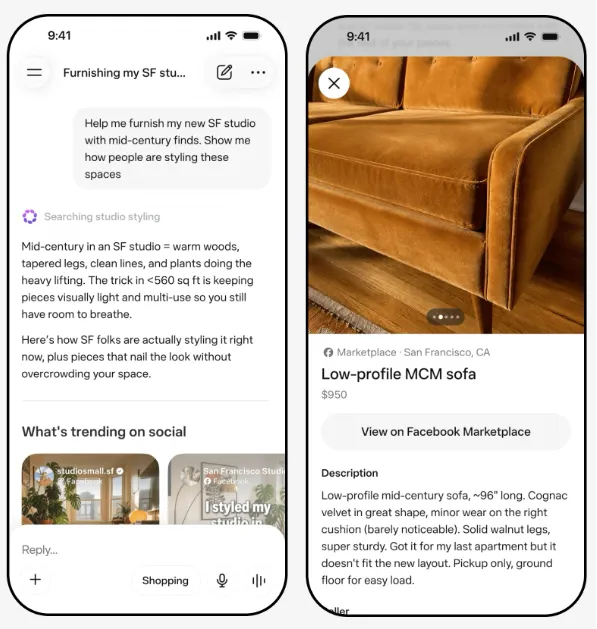
In a move that signals a seismic shift in how social platforms operate, Meta has announced a massive expansion of its latest artificial intelligence model, "Muse Spark." This initiative marks the most significant integration of advanced generative AI into the company’s flagship applications to date. By embedding its proprietary Superintelligence-class model directly into the fabric of daily social interaction, Meta is positioning itself at the vanguard of a technological evolution that seeks to transform AI from a standalone tool into an omnipresent digital assistant.
The rollout is comprehensive, touching everything from the text-heavy discourse of Threads to the hardware-integrated experience of smart eyewear. As the company doubles down on its massive investment in AI infrastructure, the industry is witnessing a clear attempt by Meta to redefine the "social" in social media, turning platforms into utility-driven ecosystems.
The Core of the Innovation: Understanding Muse Spark
Released just last month, Muse Spark is the inaugural project from Meta’s dedicated "AI Superintelligence" team. Unlike previous iterations of Meta AI that focused primarily on task completion and simple content generation, Muse Spark is built upon a foundation of expanded reasoning capabilities. This architecture allows the model to handle more complex, multi-layered queries, providing users with in-depth advice and contextual understanding that bridges the gap between basic chatbots and highly sophisticated personal assistants.
Meta’s strategy is clear: by embedding this high-utility model into the apps users already frequent, the company aims to drive unprecedented engagement. Rather than forcing users to switch tabs or open separate AI applications, Meta is bringing the intelligence to the conversation.

A Chronology of Integration
The path to this current expansion has been marked by rapid development cycles and a strategic focus on accessibility:
- Pre-Launch Phase: Meta established a specialized AI Superintelligence team, supported by hundreds of billions of dollars in infrastructure spending, tasked with creating models that could perform high-level reasoning for everyday tasks.
- Initial Launch (Last Month): Muse Spark was introduced, serving as the flagship model for Meta’s new era of generative intelligence.
- Threads Integration (Current): Meta began rolling out @meta.ai functionality on Threads in specific regions, including Argentina, Malaysia, Mexico, Saudi Arabia, and Singapore.
- Hardware Expansion: The company concurrently announced that Muse Spark will be arriving on Ray-Ban Meta and Oakley Meta glasses in the U.S. and Canada, with further updates for the Ray-Ban display models scheduled for this summer.
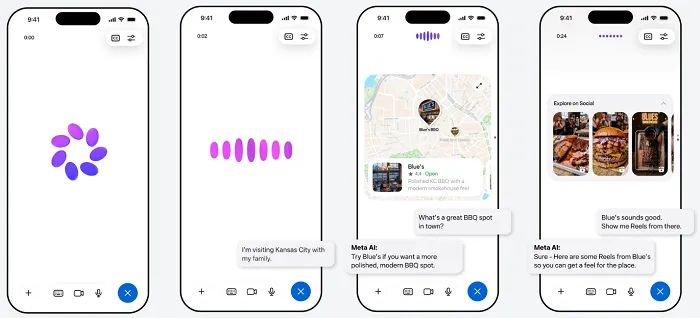
- Feature Expansion: Alongside the rollout, Meta introduced "Voice Chat" mode, live camera integration for real-time visual analysis, and a dedicated "Shopping Mode" for Facebook Marketplace.
Threads: The New Frontier for Conversational AI
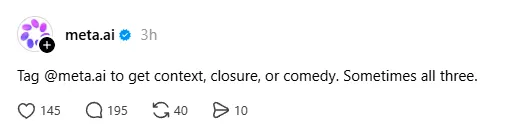
The most notable development in this rollout is the integration of Muse Spark into Threads. By simply tagging @meta.ai in a post or a reply, users can now summon the AI to provide real-time information.
Whether a user is looking for a movie recommendation, a specific recipe based on an ingredient mentioned in a thread, or a deep dive into a niche topic, the AI acts as a participant in the social stream. Crucially, this functionality is currently text-based. For the sake of transparency and user control, all responses generated by @meta.ai are public and viewable via the bot’s profile.
User Control and Opt-Out Mechanisms
Meta has preemptively addressed potential backlash regarding the saturation of AI-generated content in user feeds. Recognizing that not all users wish to interact with, or see, AI-generated responses, the company has implemented a "Not interested" mechanism. Users can easily mute the @meta.ai profile, effectively filtering out AI-generated content from their personal experience. This acknowledgment of user agency is a vital component of Meta’s deployment strategy, reflecting a growing industry trend where platform utility must be balanced with the user’s desire for human-centric feeds.
Supporting Data and Strategic Investments
Meta’s commitment to this project is not merely technical; it is financial on a scale rarely seen in the tech industry. With reports of hundreds of billions of dollars poured into AI infrastructure, the company is effectively betting its future on the success of these models.
The expansion into "Shopping Mode" and "Live AI" demonstrates the breadth of this investment. By allowing the AI to scan Facebook Marketplace and utilize camera-based visual recognition, Meta is attempting to create a "closed-loop" utility system. Users no longer need to leave the app to research a purchase or identify an object in the real world—the AI does the heavy lifting, keeping the user within the Meta ecosystem for longer periods.
Official Responses and Perspectives
In a recent post, Meta explained the philosophy behind the Threads integration: "If you’re using Threads there and your account is public, just tag @meta.ai in a post or reply and you’ll get an answer back. You can ask for anything from where to stream a movie to recipes for dishes you come across on Threads."
This stance underscores the company’s belief that AI should be a collaborative partner in human social interaction. Meta officials have framed these updates as steps toward a future where AI acts as a seamless extension of the user’s intent, whether they are in the physical world using smart glasses or in the digital world scrolling through their feeds.
The Broader Implications: Toward a "Star Trek" Reality
The implications of this rollout extend far beyond the convenience of a chatbot. We are observing the early stages of a fundamental shift in human-computer interaction. For decades, the digital experience was defined by navigation—clicking menus, searching databases, and visiting specific URLs. Meta is now attempting to transition this into a model defined by delegation.
The Shift in User Behavior
If Muse Spark succeeds in becoming a reliable, daily assistant, it could change how we perceive online information. Instead of searching for answers, users will expect answers to be provided by an intelligent layer embedded in their social environment. This "ambient intelligence" could potentially:
- Reduce Friction: By eliminating the need to toggle between apps, users can maintain their workflow or social interaction without distraction.
- Increase AI Literacy: As AI becomes a standard fixture in social replies, users will inevitably become more adept at prompt engineering and managing AI interactions.
- Redefine Advertising: The introduction of "Shopping Mode" suggests that Meta is already looking at how AI can facilitate commerce. If an AI can suggest products based on a conversation, the traditional advertising model may undergo a radical transformation.
The Challenges Ahead
Despite the optimism surrounding Muse Spark, several challenges remain. The integration of AI into public feeds risks the dilution of authentic human connection, a core tenet of the Threads platform. Furthermore, the reliance on AI for factual information raises questions about accuracy, hallucinations, and the potential for bias within the model’s reasoning.
Meta’s decision to allow users to opt-out is a defensive measure against these risks, but it remains to be seen whether the general public will embrace the presence of a "synthetic participant" in their social conversations.

Conclusion
Meta’s aggressive expansion of Muse Spark is a bold statement of intent. By weaving advanced reasoning capabilities into the very apps that define our digital lives, Meta is attempting to normalize the presence of superintelligent assistants. While the technology currently feels like an early, albeit powerful, iteration, the trajectory is unmistakable.
We are moving toward a future where the line between "using an app" and "interacting with an intelligence" becomes increasingly blurred. Whether this leads to the "Star Trek-like" utility Meta promises or a cluttered, over-automated digital environment remains to be seen. However, one thing is certain: with this move, Meta has ensured that AI is no longer a peripheral feature—it is the central nervous system of its entire product suite.


 Nana
Nana
 Dwi Wanna
 Nila Kartika Wati
 Jia Lissa
 Basiran
 Sagoh
Sagoh

 Lina Hope