
 Pevita Pearce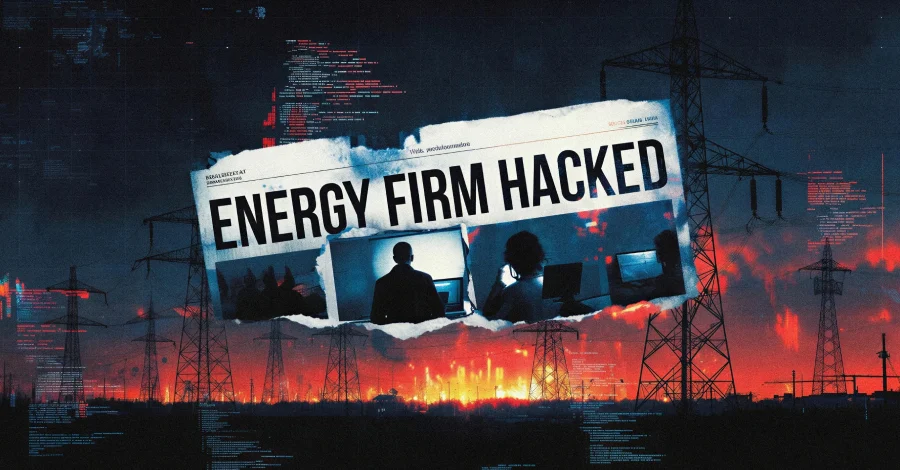
By Ravie Lakshmanan | May 13, 2026
The global energy landscape is currently navigating a period of unprecedented volatility. With the expiration of critical gas transit agreements and regional maritime disruptions in the Strait of Hormuz, Azerbaijan has emerged as a linchpin of European energy security. However, this strategic importance has cast a long shadow, drawing the attention of sophisticated state-sponsored cyber espionage actors.
New intelligence from cybersecurity firm Bitdefender reveals a sustained and multi-wave intrusion campaign targeting an unnamed Azerbaijani oil and gas entity. Conducted between late December 2025 and late February 2026, the operation has been attributed with moderate-to-high confidence to the hacking collective known as FamousSparrow (also tracked as UAT-9244). This campaign highlights a dangerous shift in tactical persistence, where attackers demonstrate a relentless willingness to re-exploit the same vulnerabilities until their objectives are fully realized.
The Core Facts: A Calculated Infiltration
The intrusion campaign was characterized by its iterative nature. Rather than a "smash-and-grab" operation, the threat actors engaged in a protracted struggle for control over the victim’s infrastructure. By leveraging a known vulnerability in Microsoft Exchange Server—specifically the ProxyNotShell exploit chain—the attackers secured initial access that they would exploit repeatedly over a three-month period.
Bitdefender’s analysis suggests that FamousSparrow shares tactical overlaps with other China-nexus clusters, including "Earth Estries" and "Salt Typhoon." The primary objective appears to be long-term espionage, aimed at gathering sensitive operational data from a critical infrastructure provider in a geopolitically sensitive region. The attackers’ ability to rotate backdoors and modify payloads in real-time reflects a high degree of operational discipline and a sophisticated understanding of the target’s internal security posture.
Chronology of the Campaign: A Three-Wave Offensive
The campaign unfolded in three distinct waves, each demonstrating an evolution in the adversary’s toolkit and their determination to maintain a foothold.

Wave 1: The Initial Breach (December 2025)
On December 25, 2025, the threat actors successfully exploited the ProxyNotShell vulnerability to gain initial access to the target’s network. Following the breach, they deployed web shells to establish a persistent foothold. The primary payload for this phase was Deed RAT (also known as Snappybee), a sophisticated successor to the infamous ShadowPad malware. Deed RAT is a hallmark of various China-linked espionage groups, serving as a modular, multi-functional tool for remote command and control.
Wave 2: Persistence and Pivot (January–February 2026)
Approximately one month after the initial intrusion, the attackers launched a second wave. Having faced resistance—likely from the company’s internal remediation efforts—the hackers attempted to deploy TernDoor, a backdoor recently identified in attacks against South American telecommunications firms. During this phase, the attackers utilized the Mofu Loader, a shellcode loader previously attributed to the threat actor "GroundPeony." While this specific attempt to deploy TernDoor via Mofu Loader was unsuccessful, it signaled the attackers’ intent to diversify their arsenal to bypass security detection.
Wave 3: Refinement and Evasion (Late February 2026)
By late February 2026, the attackers returned to the original access path, demonstrating that their previous presence had not been fully eradicated. This time, they deployed a modified version of Deed RAT. This iteration utilized a domain—sentinelonepro[.]com—for command-and-control communications, a clear attempt to blend in with legitimate security software traffic.
Technical Analysis: Advanced Evasion Tactics
What sets this campaign apart is the attackers’ refinement of DLL side-loading. While many threat actors use this technique, FamousSparrow has elevated it to a new standard of evasion.
The Hamachi Hijack
The attackers targeted the legitimate LogMeIn Hamachi binary, a common tool for VPN and virtual networking. By placing a rogue, malicious DLL alongside the legitimate binary, the attackers ensured that the malicious payload would execute whenever the application launched.
Bitdefender researchers noted that unlike standard side-loading, which often involves simple file replacement, this method:

- Overrides specific exported functions: The malicious library was crafted to intercept calls meant for the legitimate application.
- Two-stage triggering: The loader was designed to gate execution through the host application’s natural control flow.
This sophisticated "gating" mechanism ensures that the malware only activates when it detects the appropriate environment, significantly complicating efforts by traditional Endpoint Detection and Response (EDR) systems to flag the activity as suspicious.
Implications for Global Energy Security
The targeting of an Azerbaijani energy firm is not an isolated event; it is a symptom of a broader strategic competition. Since the 2024 expiration of the gas transit agreement between Russia and Ukraine, Azerbaijan has filled the void as a primary energy supplier for Europe. When combined with the 2026 maritime instabilities in the Strait of Hormuz, Azerbaijan’s energy infrastructure has become a high-value target for state-sponsored entities looking to gain leverage or strategic intelligence.
The "Re-exploitation" Threat
The most alarming takeaway from the Bitdefender report is the ease with which the attackers returned to the network. The victim attempted remediation multiple times, yet the hackers continued to successfully exploit the same Microsoft Exchange entry point. This illustrates a "blind spot" in many organizational security programs: remediation without comprehensive credential rotation and environmental hardening is often insufficient.
"The intrusion illustrates that actors will exploit and re-exploit the same access path until the original vulnerability is patched, compromised credentials are rotated, and the attacker’s ability to return is fully disrupted," Bitdefender stated.
Official Perspective and Defense Recommendations
While there has been no formal attribution from Western intelligence agencies as of May 2026, the technical indicators strongly point toward a state-aligned actor with the resources to support long-term, low-and-slow espionage.
For organizations operating in critical sectors, the FamousSparrow campaign serves as a stark reminder that modern threat actors are adaptive. To defend against such persistent campaigns, security teams should adopt the following strategies:

- Aggressive Vulnerability Management: Relying on simple patching is insufficient. Organizations must assume that if an entry point was once compromised, the attacker has likely established multiple "backdoor" accounts or persistent hooks that survive the initial patch.
- Credential Hygiene: Following any breach, a full rotation of administrative and service account credentials is mandatory. Attackers often harvest credentials during the initial phase of an attack to facilitate their return.
- Advanced Behavioral Monitoring: Static signatures for known malware are easily bypassed. Security operations centers (SOCs) should focus on detecting anomalous behaviors, such as unexpected DLL loading or unauthorized lateral movement between servers.
- Threat Hunting: Organizations in critical infrastructure sectors must engage in proactive threat hunting. By assuming a state-sponsored actor is already inside the network, defenders can identify the subtle artifacts—like the modified Deed RAT or the unusual use of Hamachi—that indicate a deeper compromise.
Conclusion
The campaign against the Azerbaijani oil and gas sector is a masterclass in the patience of modern cyber-espionage. By repeatedly returning to the same environment and consistently updating their malware to avoid detection, FamousSparrow has demonstrated that even with adequate security tools, a motivated and disciplined adversary can maintain a significant advantage.
As we look toward the remainder of 2026, the security of energy infrastructure will remain a top-tier geopolitical concern. This incident serves as a critical warning: the "cyber front" is just as significant as any physical border, and the defense of these assets requires not just technical prowess, but a strategic understanding of how state-sponsored actors view these vital resources.
For more information on the evolving threat landscape, follow the latest reporting on these developments via our dedicated cyber-intelligence channels on Google News, Twitter, and LinkedIn.


 Ali Ikhwan
 Asep Darmawan
 Nila Kartika Wati
 Jia Lissa
 Basiran
 Sagoh
Sagoh

 Lina Hope