
 Nana Wu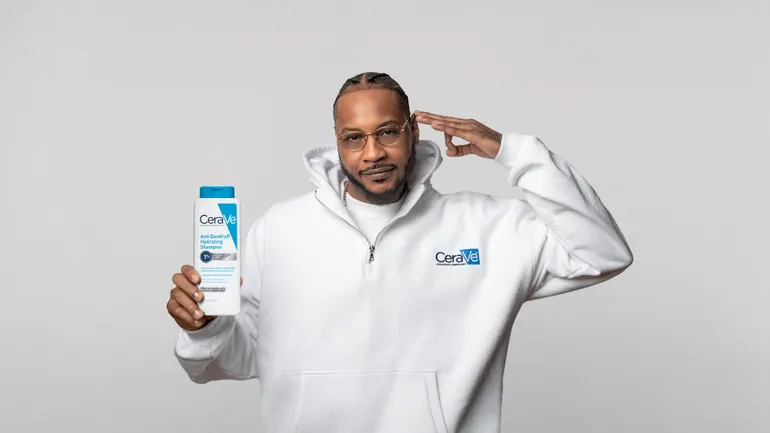
In a masterclass of modern marketing, CeraVe has once again blurred the lines between high-end dermatological skincare and pop-culture memeification. The L’Oréal-owned brand recently unveiled its latest “Head Coach” campaign, tapping NBA Hall of Famer Carmelo “Melo” Anthony to serve as the face of its anti-dandruff hair and scalp care line. By leaning into the internet’s deep-seated obsession with the “Hoodie Melo” era, CeraVe is demonstrating that the key to modern retail success isn’t just selling a product—it’s about inserting a brand into the existing cultural conversation.
The Core Concept: Decoding "Head Coach"
The premise of the “Head Coach” campaign is deceptively simple yet culturally sophisticated. It plays on a tongue-in-cheek conspiracy theory: what if the legendary “Hoodie Melo” era—a period where Anthony famously wore hoodies during offseason training, captivating fans with his intense focus—was actually a strategic maneuver to hide a scalp condition?
“In the NBA, when you’re going to make that shot, the spotlight is directly on that head… that scalp is closer than ever before, which means that your head needs to be quite clean and dandruff-free,” explained Cha Spruce, executive creative director of earned media for North America at Ogilvy New York. “With that insight, we wanted to drive speculation: Was the Hoodie Melo era because he actually had dandruff and was hiding flakes under that hoodie?”
By positioning Carmelo Anthony as the "Head Coach" of scalp health, CeraVe is tackling the stigma associated with dandruff. The campaign transforms a common, often embarrassing medical concern into a lighthearted, aspirational discussion about grooming and self-care, proving that dermatological solutions can be marketed with humor and celebrity cachet.
A Chronology of the Viral Build-Up
CeraVe’s strategy relies on what Spruce calls the “little fires everywhere” philosophy. Rather than launching with a single, expensive television spot, the brand orchestrated a slow-burn social media rollout designed to create organic curiosity before the official reveal.
Phase 1: The Tease (Social Seeding)
The campaign began with subtle, high-visibility placements. Rapper Fat Joe was spotted courtside at a playoff game wearing a custom “Hoodie Melo” graphic hoodie, sparking chatter among basketball superfans. Simultaneously, active NBA players like the Oklahoma City Thunder’s Isaiah Hartenstein and the New York Knicks’ Jose Alvarado were seen wearing the same merchandise during their signature tunnel walks, effectively creating a fashion statement that doubled as a marketing teaser.
Phase 2: The Narrative Infiltration
Carmelo Anthony himself leaned into the bit. He appeared on the popular street-interview series The People Gallery while sporting the hoodie, in a segment where he jokingly brushed off his shoulders—a clear, visual nod to the dandruff-prevention narrative. In another homage to his own internet history, Anthony recreated a 2016 viral moment where he was photographed wearing a monogrammed bathrobe at a bodega, this time swapping the robe for a hooded sweatshirt.
Phase 3: The Reveal
On Wednesday, the campaign reached its crescendo with a launch video that officially anointed Anthony as CeraVe’s “Head Coach.” The video concludes with the star performing his signature “three to the dome” celebration—a hand signal that, in this context, serves a dual purpose: referencing his career-long prowess on the court and highlighting the three essential ceramides found in CeraVe’s product formulations.
Supporting Data and Strategic Rationale
The “Head Coach” effort is not a standalone endeavor; it is a continuation of CeraVe’s highly successful, ongoing partnership with the NBA. Last year, the brand was named the official skin and hair care partner of the league, a move that has yielded significant dividends in terms of brand awareness and cultural relevance.
The Power of Niche Intersectionality
Spruce’s philosophy of “little fires everywhere” recognizes that the modern consumer is not a monolith. By targeting the intersection of NBA fandom, fashion, and music culture, CeraVe is able to penetrate multiple niche demographics simultaneously.
“Because attention is so fragmented… we need to be able to capture a few different niche audiences in order to break through,” Spruce noted. By utilizing creators and personalities that exist at the crossroads of these cultures, the brand ensures that the message reaches beyond the traditional "skincare enthusiast" and into the broader zeitgeist.
Proven Success Metrics
This isn’t the first time CeraVe has leveraged an NBA star to drive brand growth. The brand’s previous campaign featuring Kevin Durant, dubbed the "Face of Legs," successfully turned a meme about the basketball star’s famously ashy legs into an opportunity to promote CeraVe’s moisturizing lotions. Similarly, the “Head of CeraVe” campaign, which featured Anthony Davis, WNBA star Paige Bueckers, and TikTok sensation Charli D’Amelio, established the brand’s authority in the anti-dandruff category.
Official Responses and Corporate Vision
Esther Garcia, U.S. general manager for CeraVe, emphasized that the campaign serves a broader mission of education and normalization. “We’ve seen the cultural traction of our NBA partnership and our ‘Moisturize Like a Derm’ campaign with Kevin Durant, proving that by engaging authentic voices to address common skin concerns, we can drive meaningful and impactful conversations,” Garcia said.
She added that the collaboration with Anthony is a strategic move to destigmatize scalp health. By positioning the product within a high-performance, masculine, and culturally cool framework, CeraVe is successfully reaching a demographic that might otherwise be intimidated by traditional medical-grade skincare marketing.
Implications for the Future of Advertising
The “Head Coach” campaign is a definitive case study in the evolution of “social-first” marketing. While the term has become a buzzword, CeraVe, in partnership with WPP Onefluence and Ogilvy PR, is proving that true social-first execution requires more than just posting on TikTok.
The End of Traditional Campaigns?
The success of this strategy highlights a fundamental shift in how brands engage with consumers. Modern audiences are increasingly adept at identifying and ignoring traditional, top-down advertising. By contrast, CeraVe’s strategy involves:
- Cultural Literacy: Understanding the specific memes, lore, and aesthetic signifiers of their target audience (e.g., the “Hoodie Melo” meme).
- Collaborative Storytelling: Using the creator’s own persona to tell the story, rather than forcing the creator to act as a billboard for the brand.
- Sticky Insights: Identifying a small, relatable pain point (dandruff, ashy skin) and giving it a massive, celebrity-driven stage.
As Spruce noted, “The brand does not necessarily take a back seat, but how can we reposition a brand in a way that feels core to the way the consumer behaves and interacts and engages? It’s just not something that typically can start in an organic way without having a really sticky cultural insight.”
Sustaining the Momentum
The “Head Coach” campaign will continue to evolve throughout the coming week, with additional content activations planned, including a feature on Anthony’s popular 7pm in Brooklyn podcast. This multi-channel, long-tail approach ensures that the campaign remains in the public consciousness long after the initial launch, providing ample opportunity for the brand to convert curiosity into product trials.
In conclusion, CeraVe’s foray into the world of basketball culture is a masterstroke of contemporary advertising. By blending the clinical authority of a dermatologist-developed brand with the raw, chaotic energy of internet sports culture, CeraVe has successfully turned a bottle of anti-dandruff shampoo into the season’s must-have accessory. As the brand continues to scale its presence within the NBA ecosystem, it serves as a reminder to the industry at large: if you want to win, you have to be willing to play the game—even if that means wearing a hoodie.

 Jia Lissa
 Basiran
 Nila Kartika Wati
 Sagoh
Sagoh

 Lina Hope