Asro
Asro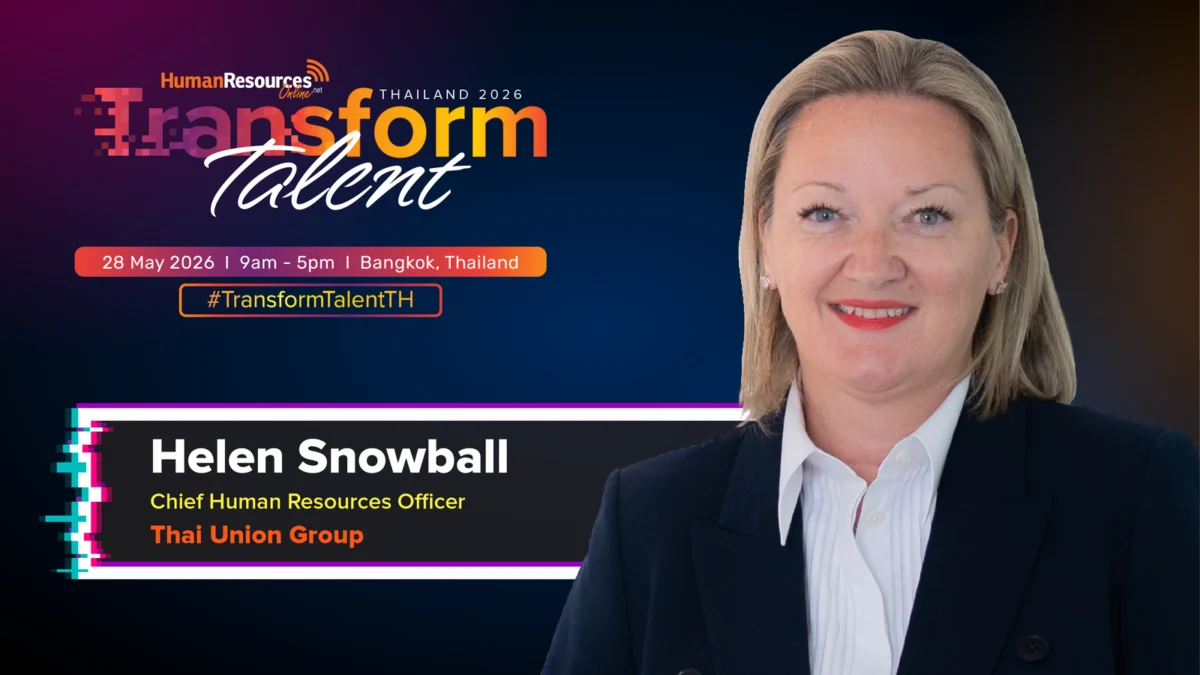
BANGKOK, THAILAND – As the global economy pivots toward an era of hyper-productivity and digital-first operations, the pressure on multinational corporations to scale rapidly has never been higher. Yet, for one of the world’s leading seafood producers, the secret to sustainable acceleration lies not in the machinery or the algorithms, but in the people.
Helen Snowball, the newly appointed Chief Human Resources Officer (CHRO) of Thai Union Group, is stepping into the spotlight to address the most pressing paradox of modern corporate leadership: How can a company move at the speed of the market without leaving its culture and capabilities in the dust?
In an exclusive dialogue ahead of the upcoming #TransformTalentTH 2026 conference, Snowball shares her insights on the evolving HR landscape in Thailand, the foundational role of trust in leadership, and why she believes human-centricity is the ultimate engine of productivity.
I. Main Facts: The Intersection of Global Strategy and Local Talent
Thai Union Group, a global powerhouse in the seafood industry with a portfolio including iconic brands like John West, Chicken of the Sea, and King Oscar, is currently navigating a period of significant transformation. As the company pushes for faster growth and a more diversified revenue stream, the role of HR has shifted from an administrative function to a strategic driver of business value.
For Helen Snowball, who joined the group in January 2026, the mandate is clear but complex. The primary challenge facing HR leaders today, particularly in a dynamic market like Thailand, is the synchronization of two different "speeds." On one hand, there is the "Business Speed"—the rapid-fire pace of market entry, product innovation, and financial targets. On the other, there is the "Human Speed"—the time required to build new capabilities, shift mindsets, and solidify a corporate culture that can withstand the pressures of change.
"The number one challenge for HR leaders today is balancing the speed of business growth with the pace of capability and culture change," Snowball notes. This friction is where most transformations fail. If the business moves too fast for its people to keep up, the result is burnout and attrition. If the culture changes too slowly, the business loses its competitive edge.
II. Chronology: A Global Career Path to the Heart of Bangkok
Helen Snowball’s journey to the C-suite of Thai Union is a testament to the value of diverse, international experience in the modern HR world. Her career trajectory spans several continents and industries, providing her with a unique "multi-lens" perspective on talent management.
- The Foundational Years: Snowball’s career began in the fast-moving consumer goods (FMCG) sector, holding pivotal roles at Kraft Foods and Coca-Cola Amatil. These roles ingrained in her the importance of operational efficiency and the direct link between frontline engagement and bottom-line results.
- The Real Estate and Professional Services Shift: She later transitioned to JLL (Jones Lang LaSalle), where she served as the Head of People Solutions for Asia Pacific. Here, she managed complex talent ecosystems across diverse regulatory and cultural landscapes, honing her skills in large-scale organizational design.
- The Tech and Digital Frontier: Prior to joining Thai Union, Snowball served as the Chief People Officer at PropertyGuru Group. In the high-growth tech sector, she experienced firsthand the "war for talent" and the necessity of building agile, digital-ready workforces.
- Arrival at Thai Union (January 2026): Relocating to Bangkok, Snowball took the helm of Thai Union’s HR division during a critical juncture. Despite holding three passports and being a newcomer to the Kingdom, she remarks that Thailand already "feels like home," a sentiment that reflects her adaptability and the welcoming nature of the local corporate culture.
III. Supporting Data: The Macro-Economic Context of Thailand’s Talent Market
To understand why Snowball’s focus on "capability and culture" is so critical, one must look at the data surrounding the Thai labor market in 2025–2026.
- The Skills Gap: Recent reports from the World Bank and local economic think tanks suggest that while Thailand is transitioning toward "Thailand 4.0"—an economy driven by innovation—there remains a significant gap in digital literacy and specialized technical skills. HR leaders are no longer just "hiring"; they are "building" talent through internal academies.
- The Demographic Shift: Thailand is one of the fastest-aging societies in Southeast Asia. This creates a dual pressure on HR: the need to retain and upskill older, experienced workers while simultaneously creating a culture that attracts the shrinking pool of younger Gen Z talent.
- Productivity Paradigms: According to productivity data from the Asian Productivity Organization (APO), Thailand’s labor productivity growth has seen fluctuations. For companies like Thai Union, which operate on global margins, increasing "output per person" through better management practices—rather than just longer hours—is the only path to sustainable growth.
Snowball’s emphasis on "keeping people at the center of growth" is a direct response to these pressures. It is an acknowledgment that in an era of AI and automation, human ingenuity remains the most scarce and valuable resource.
IV. Official Responses: A Deep Dive into Leadership and Trust
During her interview with Emily Chong-Gupta, Snowball was asked to distill the essence of effective leadership during times of rapid transformation. Her answer was singular: Trust.
"Trust is built through clear direction, honest communication, and consistent leadership behavior," Snowball explained.
In many organizations, transformation is treated as a top-down mandate. However, Snowball argues that for transformation to take root, there must be a psychological contract between the leadership and the workforce. This contract is fueled by:
- Clear Direction: Employees need to know not just what is changing, but why. Ambiguity is the enemy of productivity. When the "North Star" of the company is visible to everyone, teams can align their efforts without constant supervision.
- Honest Communication: This involves transparency about the challenges ahead. Snowball advocates for a "no-surprises" culture where setbacks are discussed as openly as successes.
- Consistent Leadership Behavior: Trust is fragile; it is built in drops and lost in buckets. Snowball emphasizes that leaders must model the behaviors they expect to see in their teams. If a company preaches "agility" but operates through rigid bureaucracy, the resulting "say-do" gap erodes trust and stalls progress.
V. Implications: The Future of HR and the #TransformTalentTH Vision
The implications of Snowball’s philosophy extend far beyond the walls of Thai Union. Her approach suggests a fundamental shift in the HR "operating system" for the late 2020s.
1. From HR as a Support Function to HR as a Growth Engine
Snowball’s upcoming session at the #TransformTalentTH conference will focus on practical ideas for driving productivity. This implies a shift where HR metrics are directly tied to business outcomes. HR is no longer just about "employee satisfaction scores"; it is about "capability readiness" and "transformation velocity."
2. The Localization of Global Leadership
Snowball’s personal anecdote—holding three passports but feeling at home in Thailand—highlights the rise of the "Global-Local" leader. In the future, the most successful CHROs will be those who can bring global best practices in talent management and adapt them to the unique cultural nuances of the local market. In Thailand, this often means balancing hierarchical respect with the need for modern, bottom-up innovation.
3. The Productivity-People Nexus
The most significant implication is the rejection of the idea that productivity and people-centricity are at odds. In the old industrial model, productivity often came at the expense of the worker. In Snowball’s model, productivity is a result of a well-supported, highly capable, and culturally aligned workforce.
VI. Conclusion: A Call to Action for HR Leaders
As Helen Snowball prepares to take the stage at #TransformTalentTH, her message to her peers is one of both urgency and optimism. The "race for productivity" is inevitable, but it does not have to be a race that leaves the human element behind.
By focusing on trust, capability building, and cultural alignment, HR leaders can ensure that their organizations do not just grow fast, but grow "well." For Thai Union, this human-centric approach is the key to maintaining its status as a global leader in a rapidly changing world.
For those looking to navigate these same waters, the conference promises to be a melting pot of strategies. As Snowball puts it, the goal is to walk away with "practical ideas on how HR can drive productivity and transformation while keeping people at the center of growth."
The transformation of Thailand’s talent landscape is well underway. With leaders like Helen Snowball at the helm of its largest enterprises, the focus is firmly on ensuring that the future of work remains, above all, human.
The #TransformTalentTH 2026 conference is a closed-door event designed for senior HR practitioners and business leaders. Interested parties are encouraged to register their interest or inquire about sponsorship opportunities to engage in these critical dialogues on the future of talent in the region.


 Lina Hope
 Reynand Wu
 Nila Kartika Wati
 Jia Lissa
 Basiran
 Sagoh
Sagoh