
 Neng Nana
In 2025, the voluntary carbon market (VCM) reached a significant milestone, with approximately 150 million metric tons of carbon credits officially retired. These credits—representing a diverse array of environmental initiatives ranging from methane capture at landfills to the preservation of tropical peatlands—serve as a critical, albeit controversial, mechanism for corporations seeking to address their residual climate impact.
However, the VCM is currently navigating a period of profound scrutiny. With no universally accepted definition of what constitutes a "high-quality" credit, buyers are often left to navigate a labyrinth of methodologies, independent ratings, and project-specific risks. To shed light on how industry leaders are approaching this complexity, Trellis partnered with Calyx Global, an independent climate project rater, to analyze the purchasing strategies of companies that consistently invest in top-tier credit sources.
The Quest for Quality: A New Benchmark for Corporate Strategy
Defining "quality" in the carbon market is an exercise in managing uncertainty. Project developers claim that each credit sold represents a ton of carbon dioxide equivalent (CO2e) removed or reduced; yet, the reality is rarely so binary. Factors such as over-crediting—where projects issue more credits than their actual climate impact justifies—and the risk of non-additionality threaten the integrity of these investments.
Calyx Global addresses this by assigning projects a rating from AAA to D based on rigorous risk assessments. To evaluate corporate buyers, Calyx cross-referenced retired credits from four major registries—Verra, Gold Standard, the American Carbon Registry (ACR), and the Climate Action Reserve—with their internal project ratings. The resulting analysis focused on large-scale buyers, defined as entities retiring at least 100,000 tons of CO2e in 2025.
The findings are striking: only three major companies—Salesforce, Autodesk, and EY—achieved an average credit rating of BBB or higher. While this does not serve as a "definitive list" of the best buyers, it offers a blueprint for organizations seeking to professionalize their carbon procurement processes, particularly those operating with limited internal due diligence budgets.
The Leaderboard: 2025 Performance Metrics
| Company | Average Credit Score | Approx. Credits Retired | Percentage Rated by Calyx |
|---|---|---|---|
| Salesforce | A | 1,740,000 | 80% |
| Autodesk | BBB to A | 170,000 | 67% |
| EY | BBB | 1,250,000 | 75% |
A Chronology of Market Maturity
The evolution of the VCM has been marked by a transition from speculative buying to data-driven procurement.
- Pre-2023: The market was largely characterized by a "volume-first" approach, where corporations prioritized low-cost credits, often leading to investment in projects with questionable climate additionality.
- 2023–2024: A wave of investigative reports highlighted widespread failures in forest-based offsets, forcing a market-wide "flight to quality." This period saw the rise of independent rating agencies like Calyx, which began to institutionalize the evaluation of project risks.
- January 2025: Regulatory pressure intensified as California implemented new disclosure requirements (SB 253/260) for large companies, mandating transparency regarding their carbon credit portfolios.
- Present Day: The market has entered a phase of "strategic procurement," where industry leaders are diversifying portfolios to include both high-impact, short-term solutions (like superpollutant mitigation) and long-term, high-risk conservation efforts.
Strategic Focus: From Carbon Dioxide to Superpollutants
A primary takeaway from the portfolios of Salesforce, Autodesk, and EY is the strategic pivot toward "superpollutants." These potent warming gases, including methane and hydrofluorocarbons (HFCs), are responsible for roughly 50% of current climate warming.
Projects targeting these gases often provide a more immediate atmospheric cooling effect than those focused exclusively on CO2 sequestration. For example, EY has invested in projects capturing methane at a landfill in Recife, Brazil, while Autodesk and Salesforce have supported initiatives to destroy stockpiles of unused refrigerant gases in Thailand and Chile.
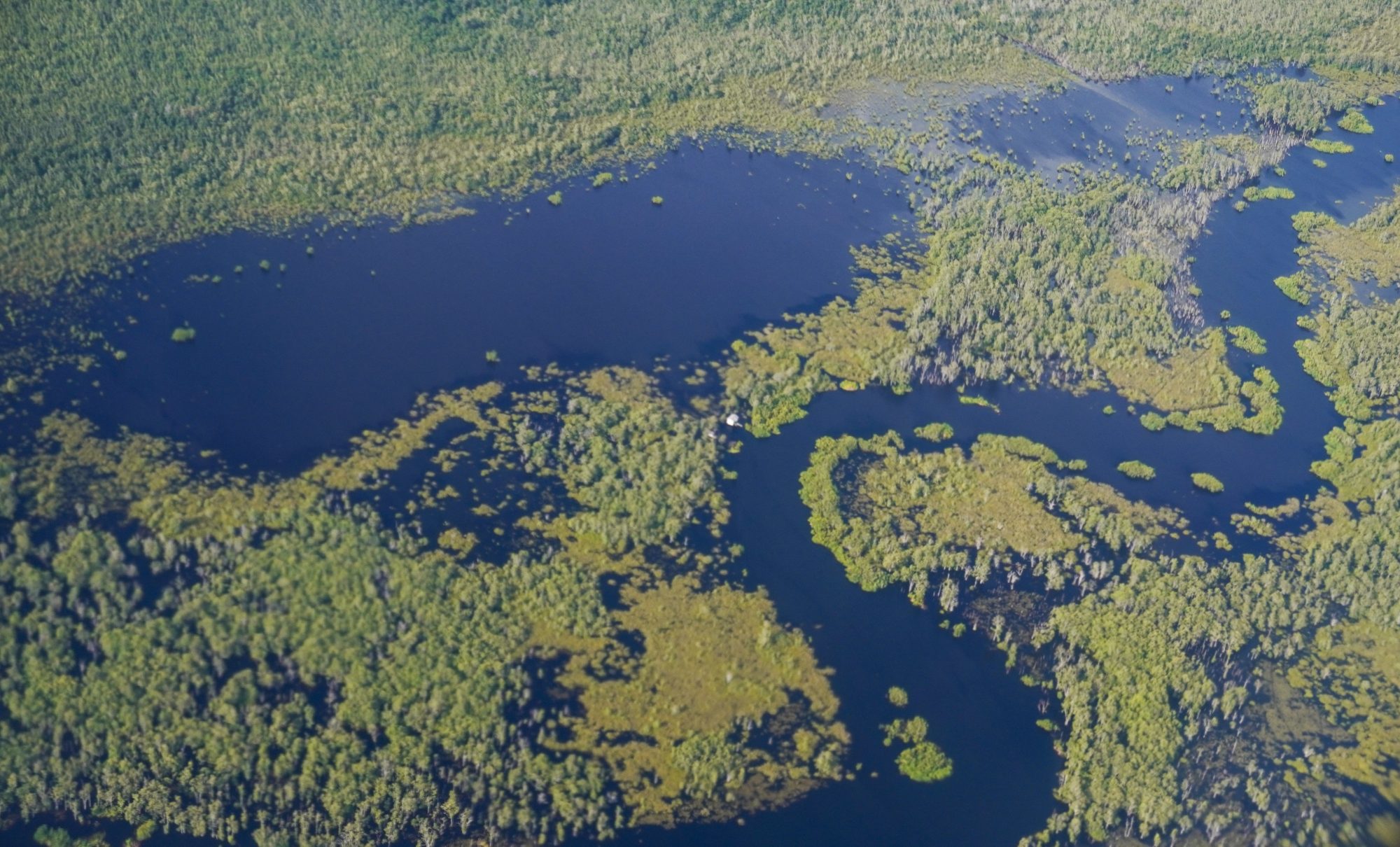
This trend is not isolated to these three firms; other leaders in corporate due diligence, such as Google, have also pivoted toward these high-impact, lower-risk projects. However, these leaders have not abandoned forest conservation. Despite recent scrutiny regarding over-crediting in the forestry sector, these firms argue that, when managed under strict protocols, forest protection remains a vital tool. Both EY and Salesforce have directed capital toward protecting high-value ecosystems, such as Indonesia’s peat swamp forests and Malaysian tropical forests, even while acknowledging that these assets carry higher inherent risk ratings than refrigerant destruction projects.
Official Responses and Due Diligence Methodologies
For companies like Salesforce and Autodesk, carbon credit procurement is an extension of their broader ESG (Environmental, Social, and Governance) strategy. Both firms emphasize that credits are not a "get out of jail free" card but rather a tool to address residual emissions that cannot yet be eliminated through direct operational decarbonization.
"We know that we can’t offset our way to 1.5 degrees Celsius," notes a representative from Salesforce. "That’s why we don’t count our carbon credit retirements towards our core emissions reduction targets."
Lou Mark, senior manager for sustainable operations and ESG at Autodesk, highlights the concept of "additionality" as the cornerstone of their due diligence. A project fails the additionality test if the emissions reductions would have occurred even without the investment—a common pitfall in past market failures. To combat this, Autodesk and Salesforce employ multi-layered due diligence, including:
- Independent Verification: Utilizing third-party auditors to validate project claims beyond the initial registry certifications.
- Internal Carbon Pricing: Using an internal fee on carbon to fund a dedicated "Carbon Fund," which creates a predictable budget for high-quality, long-term procurement.
- Portfolio Diversification: Balancing "guaranteed" reduction projects (like methane destruction) with more complex, nature-based removals.
The Implications for the Future of the VCM
The implications of these findings are profound for the broader business community. First, the data suggests that transparency is the new baseline. With the California disclosure mandates now in effect, companies can no longer rely on opaque, low-quality credit portfolios. The disclosures released by Salesforce, Autodesk, and EY provide a template for how corporations should communicate their climate strategy to stakeholders and regulators alike.
Second, the market is signaling a clear move toward specialization. As companies become more sophisticated, the "blended" portfolio—combining quick-win superpollutant mitigation with long-term, nature-based sequestration—is emerging as the gold standard.
Finally, the reliance on internal carbon pricing is a critical development. By decoupling the carbon procurement budget from discretionary operational spending, firms like Salesforce ensure that their commitment to the VCM remains resilient to market volatility. This allows them to invest in high-quality projects even when prices fluctuate, maintaining their standards rather than chasing the cheapest available credits.
As the VCM continues to evolve, the "leaderboard" approach demonstrated by Calyx Global serves as a vital reminder: in an unregulated market, quality is not found in the registries themselves, but in the rigor, skepticism, and strategic intent of the buyer. For corporations, the path to net-zero is no longer about the number of credits purchased, but the integrity of every ton claimed.


 Raul Delapena Setiawan
 Laily UPN
 Reynand Wu
 Sagoh
Sagoh

 Azzam Bilal Chamdy
 Ali Ikhwan