
 Siti Muinah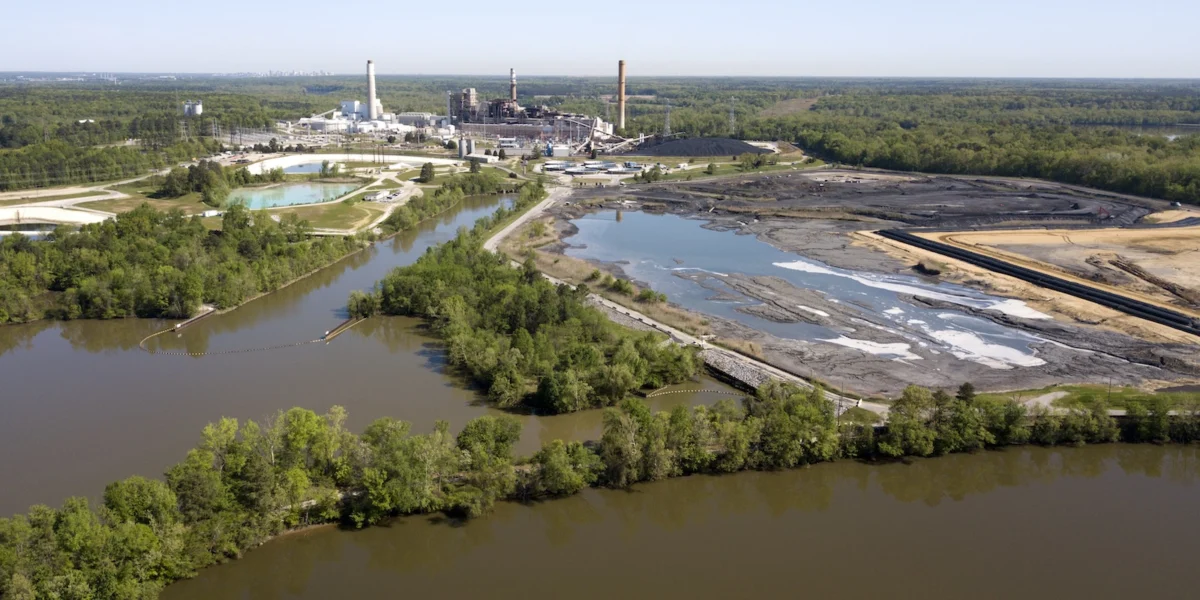
Across the American landscape, a quiet, toxic crisis is unfolding along the banks of the nation’s rivers. From the Coosa and Chattahoochee in Georgia to the waterways of the industrial heartland, massive, often unlined lagoons sit filled with coal ash—the hazardous byproduct of decades of coal-fired electricity generation. These impoundments hold millions of tons of a "toxic stew" laced with heavy metals like arsenic, mercury, and lead. As these containment systems age, they increasingly leach contaminants into the groundwater and the ecosystems that millions of Americans rely on for drinking and recreation.
Now, this environmental hazard has become the center of a high-stakes ideological struggle over the role of government. As the Trump administration moves to shift regulatory authority from the federal government to the states, critics fear that the shift will prioritize industrial interests over public health, creating a patchwork of weak enforcement that could leave the most vulnerable communities exposed to irreversible pollution.
The Toxic Legacy: A National Concern
There are more than 670 coal ash ponds scattered across the United States. These lagoons, ranging from a few acres to over a thousand, have historically been managed with minimal oversight. When containment dikes fail, the results are catastrophic. The 2008 disaster in Kingston, Tennessee, remains a cautionary tale: a dike failure at a Tennessee Valley Authority facility released over a billion gallons of coal ash, burying homes and poisoning the local environment. Similar disasters on North Carolina’s Dan River and in Kentucky have underscored the persistent, life-altering risks posed by these sites.
The 2015 federal rules established under the Obama administration marked the first time the Environmental Protection Agency (EPA) asserted comprehensive oversight over these sites. The regulations mandated that utilities monitor groundwater for contamination and required new ponds to be lined to prevent leaching. In cases where pollution was detected, companies were obligated to close the ponds, either by draining them or excavating the hazardous material and relocating it to safe, contained landfills.
However, the 2015 rules were riddled with loopholes. Crucially, they failed to cover "legacy ponds"—inactive sites at retired power plants—and ignored "dump sites" where ash was collected before being processed. Utilities frequently exploited these exemptions, arguing that groundwater pollution originated from these unregulated areas rather than the monitored lagoons, thereby avoiding cleanup responsibilities.
Chronology: From Federal Oversight to "Cooperative Federalism"
The trajectory of coal ash management has been defined by a tug-of-war between federal mandates and state-led deregulation.
- 2015: The Obama-era EPA implements the first national coal ash rule, establishing a regulatory floor for pond management and groundwater monitoring.
- 2019: Georgia becomes one of the first states to receive EPA approval to manage its own coal ash permitting program. The state’s Environmental Protection Division (EPD) immediately grants a permit allowing Georgia Power to leave coal ash submerged in groundwater at Plant Hammond—a move critics call a "bellwether" for future deregulation.
- 2020–2024: The shift toward state authority accelerates. Oklahoma, Texas, North Dakota, and Wyoming receive program approval. Meanwhile, in 2024, the Biden-era EPA attempts to close the loopholes of 2015 by finalizing a rule that mandates the cleanup of legacy ponds.
- 2025–Present: The Trump administration signals a swift reversal. EPA Administrator Lee Zeldin pushes to "advance cooperative federalism," seeking to hand over more permitting authority to states and provide exemptions for older or inactive disposal sites. Virginia is currently in the queue for state-level oversight.
Supporting Data: The Cost of Underfunded Oversight
The push to move regulatory power to the states arrives at a moment when state environmental agencies are facing unprecedented financial strain. An analysis by the Environmental Integrity Project—a nonprofit founded by former EPA enforcement officials—reveals that more than half of U.S. states have significantly cut funding for their environmental agencies over the last 15 years.
In Mississippi, the environmental budget has plummeted by over 70%, while South Dakota has seen a 61% reduction. The states currently overseeing their own coal ash programs are not immune to this trend: Texas, Georgia, and Wyoming have all sustained budget cuts of at least 20% in the last decade and a half. Georgia, specifically, has seen its staffing levels shrink by roughly 16%.
These figures paint a bleak picture for enforcement. As Nick Torrey, a senior attorney with the Southern Environmental Law Center, points out, state agencies are often "underfunded and underresourced," making them ill-equipped to stand up to the powerful utility companies that operate the ash ponds.
"We have seen that they have not been rigorous in enforcing standards," Torrey said. "The utilities are often the most powerful entity in the state and call the shots. When you combine the retreat of the EPA with the weakening of state agencies, it means that people are getting dramatically less protection from pollution."
The reality of this lack of protection is felt on the ground. In Monroe County, Georgia, the Altamaha Riverkeeper nonprofit found groundwater contamination near Plant Scherer. While the county eventually extended water lines to some, Fletcher Sams, executive director of the organization, notes that many low-income residents still cannot afford the hookup fees or monthly costs, forcing them to rely on water-filling stations at local churches. In a community with a median household income of $30,000, these costs are a significant barrier to basic safety.
Official Responses and the "Cooperative Federalism" Doctrine
The current EPA leadership defends the shift toward state-led management as a return to "cooperative federalism." In official communications regarding the proposed exemptions for inactive coal ash sites, Administrator Lee Zeldin has maintained that the agency’s goal is to allow states to "lead the charge on local issues, with federal support."
The administration’s strategy is not limited to coal ash. During Trump’s first term, the EPA handed over wetlands permitting in Florida to state regulators, the first time such authority had been delegated in 25 years. More recently, the administration has moved to accept "Good Neighbor Plans" from eight states—plans previously rejected by the Biden administration for failing to prevent ozone pollution from crossing state borders. Additionally, the EPA has granted West Virginia, Arizona, and Texas primary authority over underground carbon sequestration wells.
Neither the EPA nor the Georgia Environmental Protection Division responded to requests for comment regarding the concerns raised by environmental groups.
Implications: A Future of Regulatory Risk
The implications of this shift are profound. While the EPA rejected Alabama’s application for coal ash authority in 2024—citing the state’s failure to adequately address groundwater contamination—critics fear the current administration will prioritize the approval of state programs over rigorous scientific and health-based standards.
By "rubber-stamping" state requests, the federal government is effectively stripping itself of its primary enforcement tool. When a state agency is underfunded and beholden to political pressures from utility lobbyists, the local residents become the collateral damage.
The battle over coal ash is emblematic of a broader national trend. As the federal government retreats from its role as the ultimate arbiter of environmental safety, the responsibility falls onto under-resourced state regulators who are increasingly pressured to prioritize business interests. For the residents living near the banks of the Coosa, the Chattahoochee, and the hundreds of other sites across the country, the result is a precarious future where the water they drink and the land they live on may be subjected to the lowest common denominator of regulatory protection.
As Torrey aptly summarizes, "There’s a real retreat from the EPA doing the job it was created to do. We are witnessing the dismantling of the safety net that was designed to protect the American public from industrial waste." As the policy landscape continues to shift, the long-term health consequences for communities near these sites remain the most significant, and perhaps the most ignored, variable in the equation.


 Muslim
 Basiran
 Rifan Muazin
 Nana
Nana
 Asep Darmawan
 Asro
Asro
 Nila Kartika Wati