
 Iffa Jayyana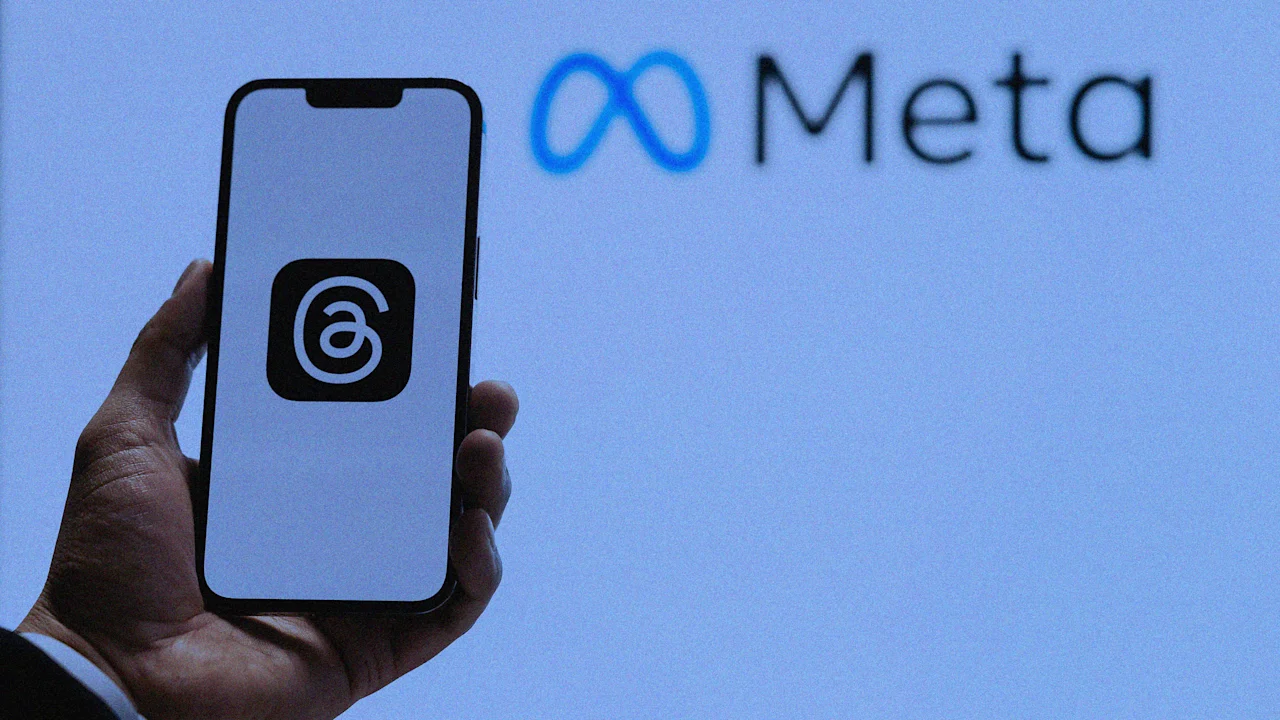
Meta has officially entered the next phase of its aggressive artificial intelligence rollout, embedding its proprietary Meta AI directly into the fabric of its microblogging platform, Threads. By allowing users to tag the @meta.ai account within posts and replies to generate real-time summaries, fact-checks, or creative content, the company is attempting to transform Threads from a passive scrolling feed into an interactive, AI-augmented information hub. However, as the rollout begins, the feature has been met with both curiosity and significant user resistance.
The Core Innovation: Context on Demand
The feature, announced on Tuesday by Connor Hayes, the head of product at Threads, is designed to address the unique velocity of the platform. In an era where digital conversations shift by the second, users often find themselves struggling to keep pace with breaking news or niche trends.
“Conversations here move fast,” Hayes noted in his announcement post. “A lot of people want to look things up before jumping in. We want to make that easier. Ask Meta AI to get real-time context about a trend, breaking story, or get recommendations right in the conversation.”
By tagging @meta.ai, users can effectively pull the AI into a thread, requesting that it synthesize information, provide historical context, or even inject humor into a conversation. The mechanism is simple: the AI analyzes the surrounding text of the conversation and generates a response that appears as a reply within the public thread, visible to all participants.
A Chronology of the Rollout
The deployment of Meta AI on Threads is part of a broader, company-wide integration strategy that has seen Meta push its AI assistant into WhatsApp, Instagram, and Facebook over the past eighteen months.
- Initial Development: Following the successful, albeit controversial, integration of Meta AI into the search bars and direct message interfaces of its other apps, Meta’s engineering teams focused on the "social graph" potential of Threads.
- The Soft Launch: On Tuesday, Connor Hayes confirmed the testing phase. The feature was not rolled out globally at once, signaling a cautious approach to server load and sentiment analysis.
- Regional Testing: The feature is currently live in a select group of countries: Argentina, Malaysia, Mexico, Saudi Arabia, and Singapore. These markets serve as the testing ground for language processing efficacy and user interaction patterns.
- The Future Timeline: While Meta has remained tight-lipped regarding specific dates for a global rollout, the infrastructure is designed for rapid expansion. The company intends to scale the feature to all regions where Meta AI is currently supported, pending feedback from the initial testing group.
Supporting Data: Why Meta is Doubling Down
Meta’s push into AI is not merely a feature enhancement; it is a defensive and offensive business maneuver. Recent data suggests that "conversational search"—the act of asking an AI for information rather than using a traditional search engine—is becoming a dominant user behavior among Gen Z and Millennial demographics.
According to internal Meta metrics and third-party industry reports, users who engage with Meta AI across the company’s ecosystem show a 20% increase in time spent on the platform. By bringing this capability into the "public square" of Threads, Meta is attempting to capture the market share currently held by Google’s Search Generative Experience and OpenAI’s ChatGPT.
Furthermore, the "context" feature aims to solve the "doomscrolling" fatigue. By providing a synthesis of a heated or complex thread, Meta hopes to keep users on the app rather than having them navigate to a browser to verify claims or look up context for a trending hashtag.
Official Responses and Corporate Silence
The rollout has been characterized by a stark contrast between internal enthusiasm and external silence. While Connor Hayes has been vocal about the product’s intended benefits, the broader corporate communications team at Meta has been notably reserved.
When approached for comment by Fast Company regarding the specific safety protocols, data privacy implications, or the criteria for selecting the initial test countries, Meta’s press office did not provide a response. This silence has fueled speculation among tech analysts, who suggest that the company is currently in a "wait-and-see" mode, prioritizing the collection of user data and sentiment over public relations campaigns.
The Backlash: Concerns Over Hallucinations and Agency
Despite the technical sophistication of the feature, the reaction on Threads has been immediate and, in some corners, intensely critical. The primary point of contention is the inherent limitation of Large Language Models (LLMs): the propensity for "hallucinations," or the generation of confident but inaccurate information.
In an unprecedented move, a "community note"—a feature modeled after X’s (formerly Twitter) crowdsourced fact-checking system—appeared on the very first post regarding the rollout. The note explicitly warned users that Meta AI has been flagged by independent reviewers as having the potential to provide "extremely harmful, including inaccurate information."
This has sparked a heated debate regarding "AI spam." Users have expressed concern that the feature will be abused, leading to threads being flooded with automated, unnecessary, or biased AI responses. The phrase "You can’t block me on Threads right now" has begun circulating as a rallying cry among users who fear that Meta is forcing an unwanted, "always-on" AI presence into their social experiences.
Implications for the Future of Social Media
The integration of Meta AI into Threads carries profound implications for the future of digital discourse.
1. The Death of the "Human-Only" Feed
If Meta succeeds in normalizing AI participation in conversations, the definition of a "social network" will fundamentally change. Threads would transition from a network of people talking to people into a hybrid ecosystem of humans and agents. This raises questions about authenticity: how will users distinguish between a genuine human opinion and a synthetic response curated by a company’s algorithm?
2. The Algorithmic Bias Problem
When an AI provides "context" on a breaking story, whose perspective is it prioritizing? Meta’s AI is trained on vast datasets that inherently contain political, cultural, and linguistic biases. By centralizing the "truth" through a single AI portal within the app, Meta may inadvertently be acting as an arbiter of information, a role that tech platforms have historically sought to avoid due to the regulatory and ethical firestorms it invites.
3. Monetization Potential
While not yet implemented, the infrastructure for AI-assisted conversations provides a clear roadmap for monetization. Meta could eventually allow brands to "sponsor" context, where an AI’s answer to a query about a product includes a direct link or promotional material. This would transform the AI from a utility into a powerful marketing tool, further blurring the lines between content and advertisement.
4. Regulatory Scrutiny
Meta is already under intense scrutiny from the European Union under the Digital Markets Act and the AI Act. Introducing an AI that generates real-time information in a public forum will likely draw the attention of regulators concerned with the spread of misinformation, the protection of data privacy, and the potential for anti-competitive behavior.
Conclusion: A High-Stakes Gamble
The rollout of Meta AI on Threads is a high-stakes gamble. On one hand, Meta is providing a legitimately useful tool that could help users navigate the noise of a chaotic social media landscape. On the other, the company is risking the erosion of trust. Users on Threads have consistently prioritized a more "intimate" and "human" experience compared to the chaotic environment of X. By forcing AI into the center of these conversations, Meta may be inadvertently alienating the very user base it worked so hard to attract.
As the test expands from Argentina, Malaysia, Mexico, Saudi Arabia, and Singapore to the rest of the world, the success of the project will hinge on two factors: the accuracy of the AI and the company’s willingness to listen to its users. If the "community notes" and user backlash continue to grow, Meta may be forced to rethink its strategy, perhaps opting for an "opt-in" model rather than a pervasive integration. For now, however, the digital frontier is moving forward, and Threads is at the epicenter of a massive, live experiment in human-AI interaction.


 Reynand Wu
 Sagoh
Sagoh
 Raul Delapena Setiawan

 Azzam Bilal Chamdy
 Ali Ikhwan