
 Ali Ikhwan
For over two decades, Google has been at the vanguard of machine learning and artificial intelligence, transitioning from a search-based utility to a foundational architect of the modern digital landscape. As we reflect on the developments of April 2026, it is clear that the industry has entered a definitive new chapter: the "agentic era." This period marks a shift from passive AI assistants that simply retrieve information to proactive, autonomous agents capable of managing complex, multi-step workflows.
From the high-stakes environment of Cloud Next ’26 to advancements in open-model accessibility and global health initiatives, Google’s April updates represent a holistic approach to integrating intelligence into the fabric of daily life. This report synthesizes the primary technological milestones, the infrastructure supporting them, and the broader implications for the global economy.
The Main Facts: Defining the Agentic Era
The core theme of April 2026 was the operationalization of "agentic AI." Unlike the generative models of the past two years, which excelled at drafting text or generating images upon command, these new agents are designed for utility. They can reason through tasks, utilize software tools, and manage end-to-end business processes.

The Gemini Enterprise Agent Platform
The centerpiece of this announcement was the Gemini Enterprise Agent Platform. This suite allows organizations to build, deploy, and govern autonomous agents. These agents do not merely answer questions; they interact with enterprise systems to perform actions—such as reconciling financial reports, managing complex supply chain logistics, or automating multi-departmental administrative tasks—with minimal human intervention.
Eighth-Generation TPUs
To power this massive increase in computational complexity, Google unveiled its eighth-generation Tensor Processing Units (TPUs). Engineered specifically for the "agentic era," these chips focus on high-performance supercomputing while significantly improving energy efficiency. By co-designing the hardware with the software models, Google has managed to deliver higher throughput, ensuring that the latency issues associated with complex AI reasoning are mitigated at the infrastructure layer.
Chronology of April 2026 Announcements
The month of April was characterized by a rapid succession of product launches and strategic pivots.

- Early April: The Cloud Next ’26 Summit: The month kicked off with the industry’s most significant cloud event. Over 32,000 attendees witnessed more than 260 product announcements, setting the tone for the rest of the quarter.
- Mid-April: Democratizing Creativity: Google announced that Google Vids, its AI-powered video editing and generation suite, would be available to all Google account holders at no cost (up to 10 videos per month). This move effectively lowered the barrier to entry for professional-grade video production.
- Late April: Developer Ecosystem Growth: Google focused heavily on the developer community. The release of Gemma 4—the most capable open-model iteration to date—occurred alongside the launch of "Learn Mode" in Google Colab, a personalized AI coding tutor.
- End of Month: Celebrating 20 Years of Translation: Google Translate marked its 20th anniversary. To commemorate, the company rolled out a new "pronunciation practice" tool, showcasing the evolution of its AI from basic phrase-matching to real-time, interactive linguistic coaching.
Supporting Data and Technical Milestones
The scale of Google’s AI adoption is perhaps best illustrated by the usage statistics shared during the month.
Enterprise Adoption at Scale
During his keynote, CEO Sundar Pichai noted that nearly 75% of Google Cloud customers are now actively integrating Google Cloud AI into their operations. Even more staggering is the volume of data being processed: 330 organizations have each processed over a trillion tokens using Google’s AI infrastructure in the past year alone. This figure highlights a massive shift from experimental usage to high-volume production.
The Gemma Phenomenon
Gemma 4 continues to demonstrate the success of Google’s open-model strategy. Since the inception of the Gemma series, the models have been downloaded over 500 million times. The latest iteration, Gemma 4, achieves unprecedented "intelligence-per-parameter," allowing developers to run sophisticated agentic workflows on more constrained hardware than previously possible.

Official Responses and Strategic Vision
Google’s leadership has been vocal about the ethical and practical imperatives of this new era. Sundar Pichai’s address at Cloud Next emphasized the company’s commitment to "helpful AI."
"We are moving beyond the chatbot," Pichai stated. "The goal of the agentic era is to liberate humans from the ‘grunt work’ of complex data synthesis and repetitive administrative tasks. By providing the infrastructure and the governance tools, we are enabling businesses to focus on strategy and creativity rather than manual execution."
The sentiment was echoed by Google’s research teams, who have emphasized that the focus is not just on raw power, but on "reliability." The introduction of governance features within the Gemini Enterprise Agent Platform is a direct response to enterprise concerns regarding the risks of autonomous systems. These tools allow companies to set "guardrails" that ensure agents operate within defined parameters, maintaining both data security and procedural integrity.

Implications for the Future
The implications of the April 2026 announcements are far-reaching, affecting everything from global labor markets to rural accessibility.
Transforming the Workspace
The introduction of Google Vids at no cost is a clear signal that Google intends to make AI-assisted media creation a standard workplace skill. As students and small business owners gain access to tools previously reserved for high-end production studios, we can expect a surge in multimedia-driven communication in both education and commerce.
Bridging the Global Health Gap
One of the most impactful, if less-publicized, announcements was the $10 million initiative launched by Google.org and the Johnson & Johnson Foundation. By bringing AI training to rural healthcare workers, Google is attempting to solve a chronic issue: the disparity in medical diagnostic capabilities between urban centers and rural clinics. If successful, this pilot could serve as a blueprint for using AI to democratize specialized healthcare access globally.

Redefining Education and Coding
The launch of the "AI Agents Vibe Coding" course on Kaggle and the integration of "Learn Mode" in Colab indicate a shift in how programming is taught. Rather than memorizing syntax, the next generation of software developers is being trained to act as "architects" of AI systems. By teaching users how to guide AI to write and refine code, Google is effectively expanding the developer pool, lowering the technical threshold required to build functional, software-based solutions.
Conclusion: The Path Ahead
As April 2026 concludes, it is evident that the "agentic era" is not a distant vision—it is the current reality. Google’s strategy of balancing massive infrastructure investments (like the eighth-generation TPUs) with accessible consumer and developer tools (like Gemma 4 and Google Vids) creates a comprehensive ecosystem.
The challenges remain significant, particularly regarding the security of autonomous agents and the energy demands of high-performance computing. However, with nearly three-quarters of its cloud customers already invested in the platform, Google has achieved the critical mass necessary to shape the trajectory of AI for the remainder of the decade. The focus now shifts to refinement, safety, and the real-world impact of these autonomous systems on the global workforce. As we look toward the next quarter, the question for organizations will no longer be whether to adopt AI, but how to best leverage these new agents to drive sustainable growth and innovation.


 Nana
Nana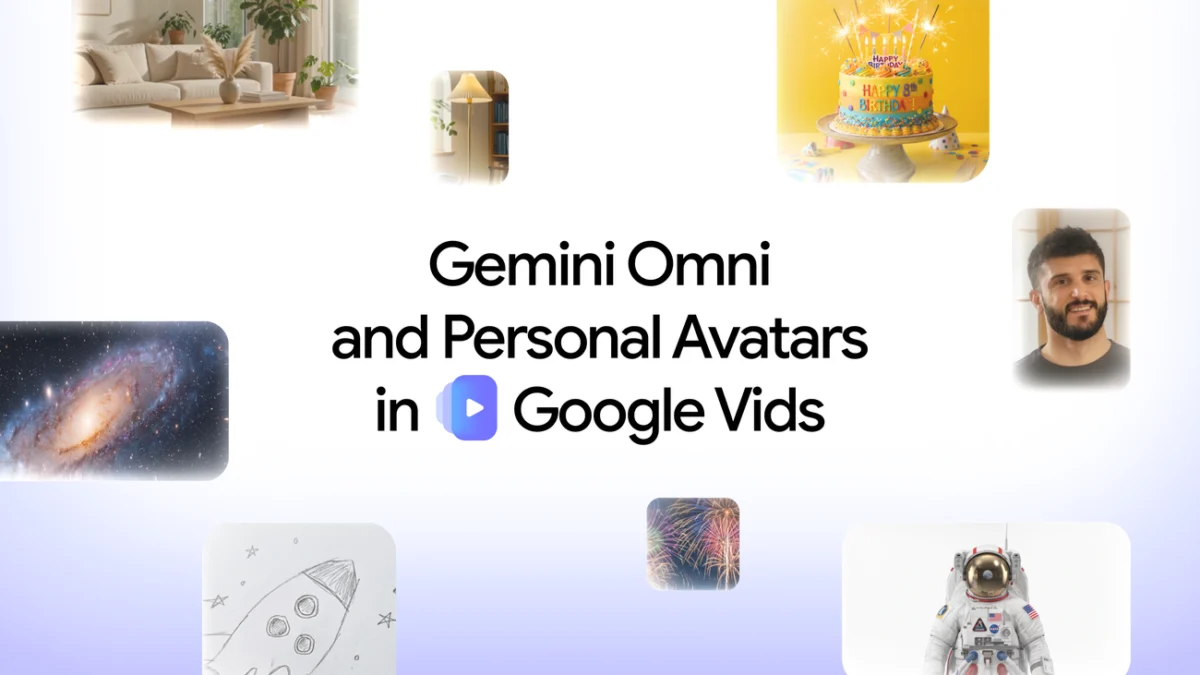
 Siti Muinah
 Raul Delapena Setiawan
 Reynand Wu
 Sagoh
Sagoh

 Azzam Bilal Chamdy
