
 Basiran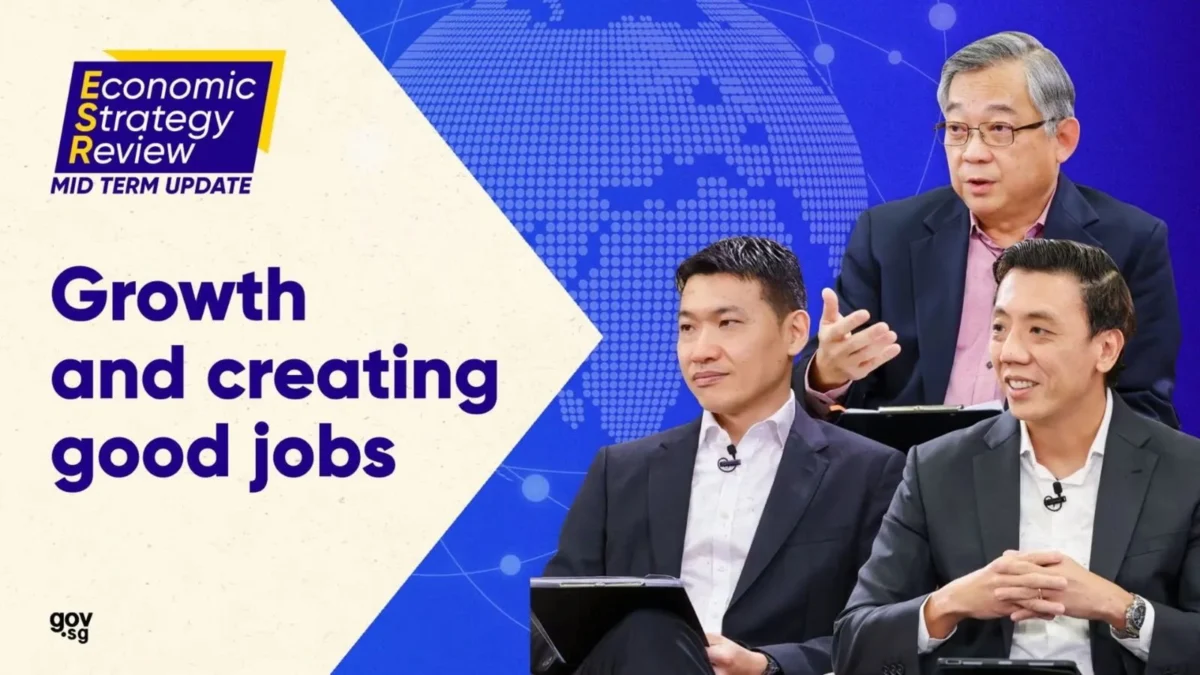
SINGAPORE – In a comprehensive mid-term update to the nation’s Economic Strategy Review (ESR), the Singapore Economic Resilience Taskforce (SERT) has unveiled a strategic roadmap designed to fortify the Republic’s position in an increasingly fractured and tech-driven global economy. Released on Wednesday, May 13, 2026, the report outlines seven pivotal recommendations aimed at ensuring Singapore remains a trusted, competitive, and highly connected global hub, while simultaneously safeguarding the livelihoods of its workforce amidst rapid restructuring.
The update signals a paradigm shift in Singapore’s economic philosophy. Acknowledging that the "easy wins" of previous decades are over, the taskforce warned that Singapore is entering a "new phase" where growth is harder to secure and the link between economic expansion and job creation is no longer guaranteed.
Main Facts: A Strategy for a New Economic Era
The SERT mid-term update serves as a precursor to the full ESR final report, providing a glimpse into the government’s high-level priorities. At the heart of the recommendations is the pervasive influence of Artificial Intelligence (AI) and the necessity of "intentional" economic management.
The seven recommendations proposed by the taskforce include:
- Establishing Singapore as a global leader in key growth sectors.
- Pursuing emerging opportunities to create new growth engines.
- Establishing Singapore as a global AI leader.
- Helping firms internationalize and connect globally.
- Broadening the range of "good jobs" across the entire economy.
- Empowering every worker to take charge of their career development.
- Enabling businesses to proactively navigate economic transitions.
These recommendations are underpinned by the work of five specialized committees, each tasked with addressing specific vulnerabilities and opportunities within the local ecosystem. From human capital to global competitiveness, the committees emphasize that Singapore’s future success depends on its ability to be more than just a gateway for trade; it must become a center for innovation, trust, and resilient talent.
Chronology of the ESR and the Path to 2026
The Economic Strategy Review was initiated as a response to the "polycrisis" of the early 2020s—a period marked by the aftermath of the COVID-19 pandemic, heightened geopolitical rivalries between major powers, and the sudden, disruptive arrival of generative AI.
Launched by Deputy Prime Minister Gan Kim Yong, the ESR sought to chart a "new economic blueprint." The SERT was formed to synthesize inputs from industry leaders, academics, and labor unions. Since its inception, the taskforce has been analyzing global trends, including the shift toward protectionism and the global race for semiconductor and green technology dominance.
The mid-term update released on May 13, 2026, represents a critical milestone in this multi-year process. It follows a series of closed-door consultations and sectoral deep dives. With the release of this update, the government has signaled that it is moving from the "diagnostic" phase to the "implementation" phase. The full ESR final report, which will contain granular policy details and fiscal allocations, is expected to be released in the coming months.
Supporting Data: The Five Committees Driving Transformation
To provide a structured response to global headwinds, the ESR was divided into five distinct committees. Their findings provide the data-driven backbone for the seven recommendations.
1. Committee on Global Competitiveness
This committee addressed the existential threat posed by the erosion of free trade. As traditional advantages like geographic location become less decisive in a digital world, the committee argued that Singapore must double down on "trust."
- Focus: Strengthening Singapore’s status as a neutral, reliable hub for tech giants and homegrown "future MNCs."
- Data Point: The committee highlighted that while foreign direct investment (FDI) remains strong, the quality of investment must shift toward high-value R&D and regional headquarters that anchor complex supply chains.
2. Committee on Technology & Innovation
With AI reshaping the very nature of work, this committee focused on adoption and literacy.
- Focus: Scaling AI application across SMEs (Small and Medium Enterprises), not just large corporations.
- Objective: Building "AI Literacy" as a foundational skill for all age groups, ensuring that technology acts as a productivity multiplier rather than a replacement for human labor.
3. Committee on Entrepreneurship
Recognizing that Singapore’s future growth engines must come from within, this committee examined the startup ecosystem.
- Focus: Cultivating a culture where failure is viewed as a prerequisite for success.
- Strategy: Improving the recycling of capital and talent, ensuring that successful entrepreneurs reinvest their expertise and wealth into the next generation of local startups.
4. Committee on Human Capital
This committee tackled the most sensitive aspect of the review: the readiness of the workforce.
- Focus: Moving education away from "information gathering" (which AI does better) toward "creative problem-solving."
- Mandate: Ensuring that companies do not leave workers behind as they automate, emphasizing "dual transformation" where business models and workforce skills evolve in tandem.
5. Committee on Managing Impact of Restructuring
Chaired by NTUC Deputy Secretary-General Desmond Choo, this committee focused on the "safety nets" and "career bridges" required for a volatile era.
- Focus: Developing transition support for workers in "at-risk" industries.
- Metric: Success is measured by the speed and quality of re-employment for displaced workers, utilizing enhanced career guidance and skills mapping.
Official Responses: The Labor Movement’s Stance
The National Trades Union Congress (NTUC) has been a vocal participant in the ESR process, ensuring that the interests of workers are not overshadowed by macroeconomic goals. Following the release of the mid-term update, NTUC issued a strong statement backing the recommendations while emphasizing that "growth must translate into better jobs."
Desmond Choo, NTUC Deputy Secretary-General and co-chair of the Committee on Managing the Impact of Restructuring, emphasized the human element of the report. "As AI reshapes work, workers will need the right skills to benefit from these changes and access better job prospects," Choo stated. He noted that the labor movement supports the ESR’s emphasis on creating a "broader range of good jobs," suggesting that the definition of success must include career security and progression pathways for all, not just those in high-tech sectors.
NTUC also highlighted the necessity of "Tripartism"—the unique collaboration between the government, employers, and unions. The labor movement argued that the implementation of these recommendations would be impossible without a shared commitment to "bringing workers along" during periods of painful restructuring.
Implications: What This Means for Singapore’s Future
The SERT mid-term update carries profound implications for various stakeholders within the Singaporean economy.
For Businesses:
The era of passive growth is over. Firms are being signaled to move away from low-cost labor models and toward tech-intensive, high-productivity operations. The focus on "internationalization" suggests that the government will provide more support for local firms to expand into ASEAN and beyond, but this support will likely be contingent on their willingness to adopt AI and invest in their workforce.
For the Workforce:
The recommendation to "empower every worker to take charge of their career" suggests a shift toward individual accountability in lifelong learning, supported by more robust state-led career guidance. The "career bridges" mentioned by the Committee on Managing the Impact of Restructuring imply that the government may introduce more targeted financial and training support for those whose roles are displaced by AI or the green transition.
For the Global Community:
Singapore is doubling down on its identity as a "Trusted Hub." In a world where supply chains are "friend-shoring" and "near-shoring," Singapore is positioning itself as the ultimate neutral ground—a place where intellectual property is safe, the rule of law is absolute, and the workforce is AI-ready.
For the Economy at Large:
The report identifies three broad imperatives for the next phase of development:
- Resilience in a Fragmented World: Building buffers against external shocks.
- Productivity through Innovation: Using AI to overcome the constraints of a slowing workforce growth.
- Inclusivity in Growth: Ensuring the benefits of the "new economy" are distributed across the society.
Conclusion: A More "Intentional" Economic Strategy
The ESR mid-term update is more than a list of policy suggestions; it is a declaration of intent. The Singapore Economic Resilience Taskforce has made it clear that the city-state will not be a passive observer of global change. By focusing on AI leadership, human capital, and proactive restructuring, Singapore aims to turn the "complex global environment" into a competitive advantage.
As the government moves to study these recommendations and translate them into "concrete action," the focus now shifts to the final report. For Singaporeans, the message is clear: the economy is changing, and while the path forward is more difficult, the strategy is being laid out to ensure that no one is left behind in the pursuit of the next era of growth.
The full ESR final report is anticipated to be released later this year, providing the specific legislative and budgetary frameworks that will bring these seven recommendations to life.
Reporting by [Journalist Name/Agency]. Lead image courtesy of Gov.sg.


 Nana
Nana
 Siti Muinah
 Raul Delapena Setiawan
 Reynand Wu
 Sagoh
Sagoh

 Azzam Bilal Chamdy
 Ali Ikhwan