
 Ali Ikhwan
Taking over from a company’s founder is often framed by executive recruiters and board members as the ultimate "plug-and-play" leadership opportunity. On the surface, the narrative is compelling: the infrastructure is built, the product-market fit is established, revenue streams are flowing, and the organizational culture is already entrenched. For an incoming executive, it can feel like stepping into a vehicle that is already traveling at highway speeds—you simply take the wheel.
However, veteran executives who have navigated these transitions know the reality is far more complex. Inheriting a founder-led organization is less like taking the wheel of a moving car and more like performing a mid-flight engine overhaul. When the founder departs, the "center of gravity" of the company shifts instantly, creating a vacuum that the successor must fill with both precision and patience.
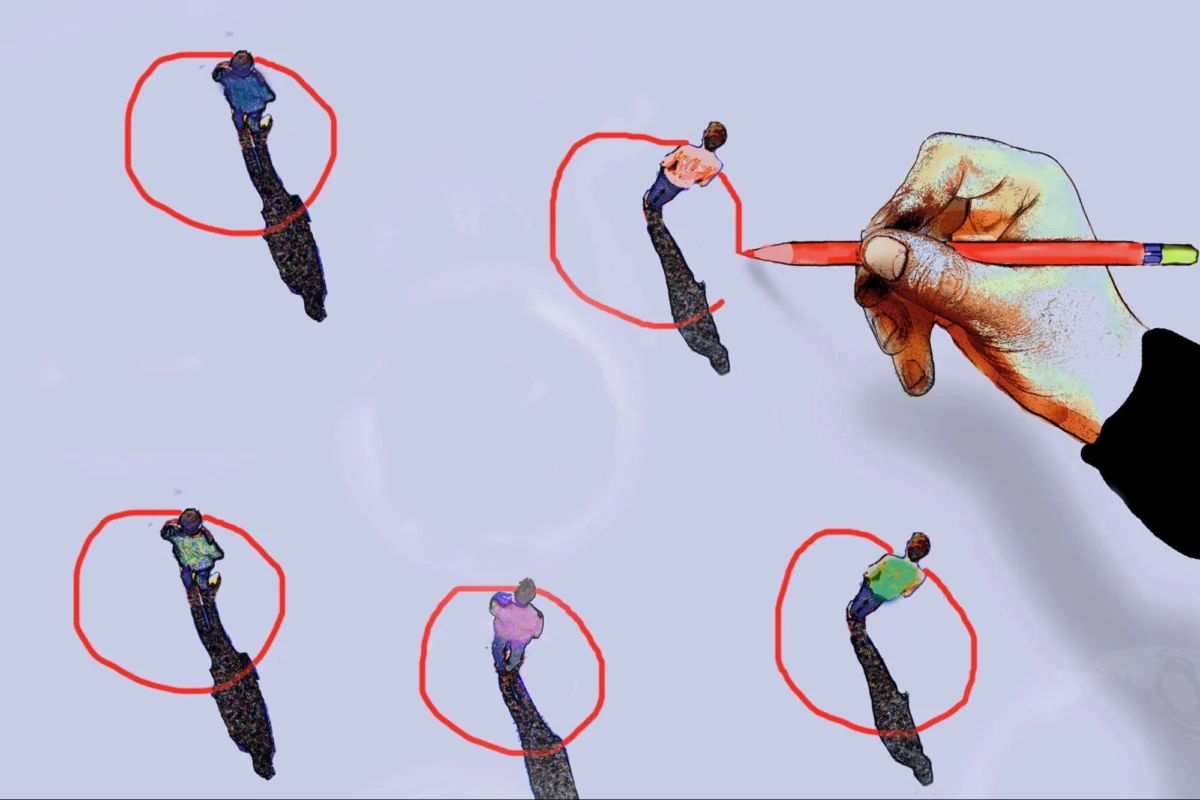
The Invisible Architecture: Understanding the Founder’s Shadow
To lead effectively after a founder, one must first recognize that the company is a reflection of that individual’s instincts, communication style, and decision-making patterns. Even in the absence of a formal "company handbook," every employee knows the unspoken rules: what the founder rewards, what they ignore, and what they accelerate.
The Weight of Accumulated Context
Founders operate with a massive advantage that successors lack: deep, accumulated context. Employees have spent years observing the founder navigate crises, correct errors, and reinforce core priorities. This creates a foundation of trust built on repetition. When a new leader arrives, they bring none of this historical capital.
Consequently, many incoming executives fall into the trap of over-correction. Driven by an urge to prove their competence, they often make symbolic structural changes or push for "urgency" before they have earned the necessary political capital to do so. This approach is frequently met with internal resistance, as the organization—sensitive to even minor imbalances—perceives the change as a threat to the established order.
Chronology of a Transition: The First 90 Days
The first three months of a succession are disproportionately influential. During this window, employees are not merely waiting for strategy; they are evaluating the leader’s tone, consistency, and intent.
Phase 1: The Listening Tour (Days 1–30)
The most successful leaders resist the temptation to "fix" things immediately. Instead, this period must be dedicated to a comprehensive inventory of the company’s internal and external realities. In large organizations, there is often a stark disconnect between the "conference room reality" (the metrics and reports) and the "frontline reality" (the daily challenges faced by staff). Listening to these frontline signals is critical for identifying what truly drives the business.
Phase 2: Identifying Operational Friction (Days 31–60)
By the second month, the focus shifts to resolving minor, lingering operational bottlenecks. The goal here is not to enact a massive overhaul, but to demonstrate that the new leadership is capable of clearing hurdles and improving workflows. By clarifying ownership and resolving long-standing, low-stakes decisions, the successor builds "quick wins" that generate confidence without inciting the fear of radical change.
Phase 3: Setting the New Rhythm (Days 61–90)
As the 90-day mark approaches, the leader should begin establishing a decision-making framework that provides clarity. Because founder-led companies often rely on the founder’s instinct, they can be fluid but chaotic. A professionalized, consistent framework allows employees to understand the "why" behind decisions, which is essential for maintaining morale during the uncertainty of a leadership shift.
Supporting Data: Why Relationships Rewire Quietly
One of the most misunderstood aspects of succession is the inevitable reorganization of internal power dynamics. Founder-led companies operate through a mixture of formal organizational charts and informal influence.
- The Power Shift: When the founder exits, the informal power structures—often built on personal loyalty or proximity to the founder—begin to dissolve.
- Alliance Re-alignment: Long-standing alliances are tested, and new cliques form. If a successor is not paying attention to these shifts, they may find themselves isolated from the very people who hold the keys to the company’s operational success.
- The Trust Deficit: According to leadership research, employees are more likely to stay during a transition if they perceive that the new leader is seeking "alignment" rather than "dominance." The goal is to evolve the culture without dismantling the foundation that made the company successful in the first place.
The Reality of Decision-Making: Heavy but Necessary
In the immediate post-founder era, the burden of accountability consolidates rapidly. Because the founder is no longer there to act as the final arbiter of "gut-feel" decisions, the successor must provide a new level of objective clarity.
Employees in these environments often feel a sense of loss—even if the founder’s departure was amicable. They look to the new leader to provide stability. If the leader acts too slowly, momentum stalls. If they act without adequate context, they erode trust. The key is to make decisions that are "understandable." When the process behind a decision is transparent, teams are far more willing to accept difficult outcomes.
Official Perspectives: Lessons from the Field
Leadership experts often point to the distinction between "recreating" the founder and "evolving" the business.
"The most effective successors are those who understand that they aren’t the founder, and they shouldn’t try to be," notes one organizational psychologist. "The company will eventually stop asking ‘What would the founder do?’ and start asking ‘Is this new strategy working?’"
This is best exemplified by the case of Ray Kroc and McDonald’s. Kroc did not invent the burger stand, but he recognized the latent potential in the operational model. He didn’t try to be the McDonald brothers; he focused on scaling their system with a level of rigor and professionalization that turned a local operation into a global powerhouse. His name wasn’t on the sign, but the business became his through execution and evolution.
Implications for Future Leadership
The ultimate implication for any leader taking over from a founder is that credibility is a compound interest. It cannot be bought, and it cannot be forced through executive mandates. It is earned through:
- Consistency: Maintaining standards even when the company is under extreme pressure.
- Humility: Acknowledging the institutional knowledge held by the team and incorporating it into the new strategy.
- Decisiveness: Avoiding the trap of excessive deference. Humility is not the same as passivity; the team still needs a captain who can make the hard calls.
The Long-Term View
For the successor, the transition period concludes when the organization stops looking backward. This happens when the leader has effectively translated the founder’s original vision into a modern, scalable, and sustainable framework.
Succession is not about replacing a personality; it is about stewarding an ecosystem. The companies that thrive in the post-founder era are those where the leader focuses on clarity, consistency, and the empowerment of the team. By moving from a culture defined by a single person’s instinct to one defined by a collective commitment to the mission, the successor secures their own legacy—not by being the founder, but by being the catalyst for the company’s next stage of growth.
In summary, the transition is a test of patience and perception. Those who rush to rewrite the history of the company fail; those who study the history and build upon it with steady, thoughtful action become the architects of the company’s future.


 Lina Irawan

 Suro Senen

 Dwi Wanna

 Asep Darmawan

 Iffa Jayyana

 Basiran
