
 Rifan Muazin
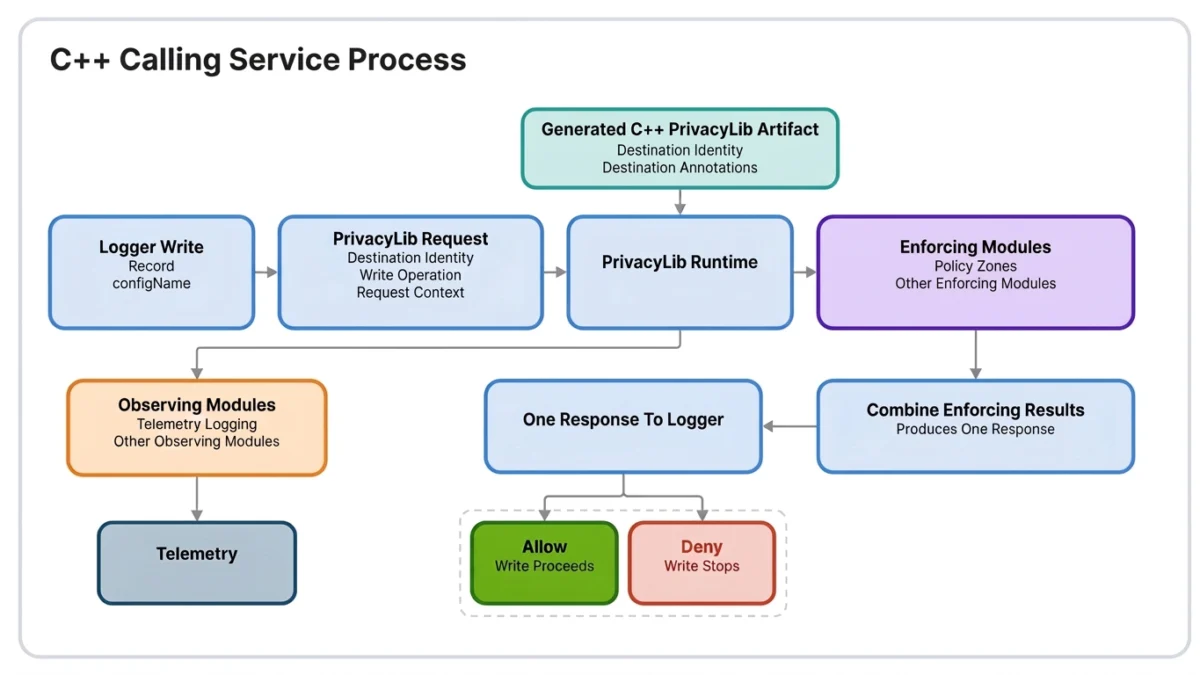
In the hyper-scale world of Meta, where billions of interactions occur every second, traditional manual privacy audits have become a relic of the past. As data architectures grow in complexity and AI agents increasingly mediate how information is accessed, the challenge of proving that a piece of data goes only where it is permitted has evolved from a compliance task into a fundamental engineering problem. To meet this challenge, Meta has developed "Privacy Aware Infrastructure" (PAI), a revolutionary framework that embeds privacy logic directly into the foundation of its systems. At the heart of this initiative lies PrivacyLib, a common library that serves as the universal enforcement mechanism for Meta’s data ecosystem.
The Evolution of Privacy Enforcement
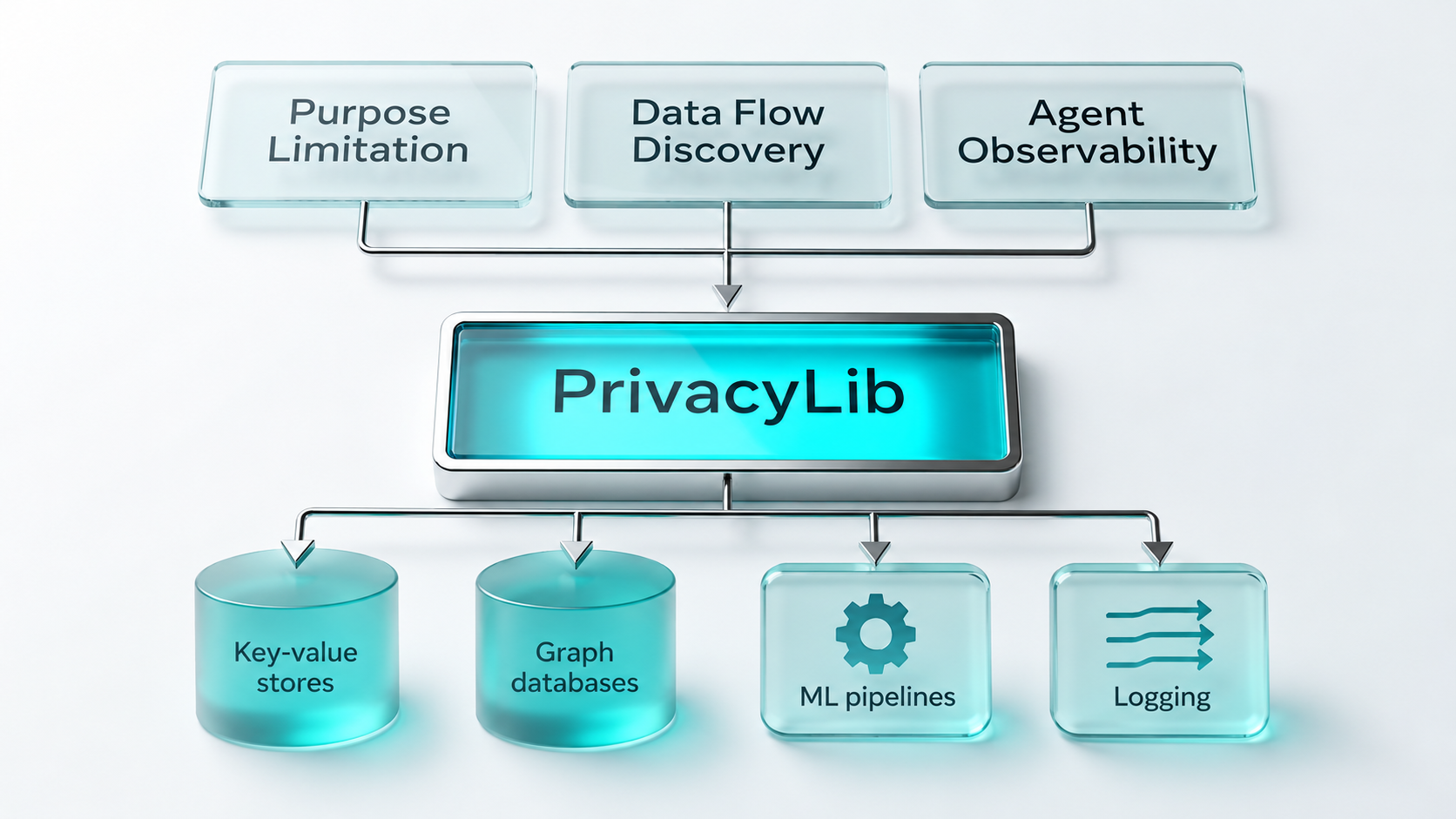
Historically, Meta—like many large-scale technology firms—approached privacy enforcement by integrating security requirements separately into the clients of each data and processing system. If a new privacy regulation emerged or a new data-flow policy was defined, engineers had to manually implement these requirements across hundreds of disparate systems. This "bespoke" approach was inherently fragile; it could take months to roll out a single change, and as systems evolved, the risk of configurations falling out of sync grew exponentially.
A Chronology of Change
- The Manual Era: Privacy controls were scattered across individual call sites. Each new requirement necessitated a bespoke development project across the fleet, creating massive technical debt and operational risk.
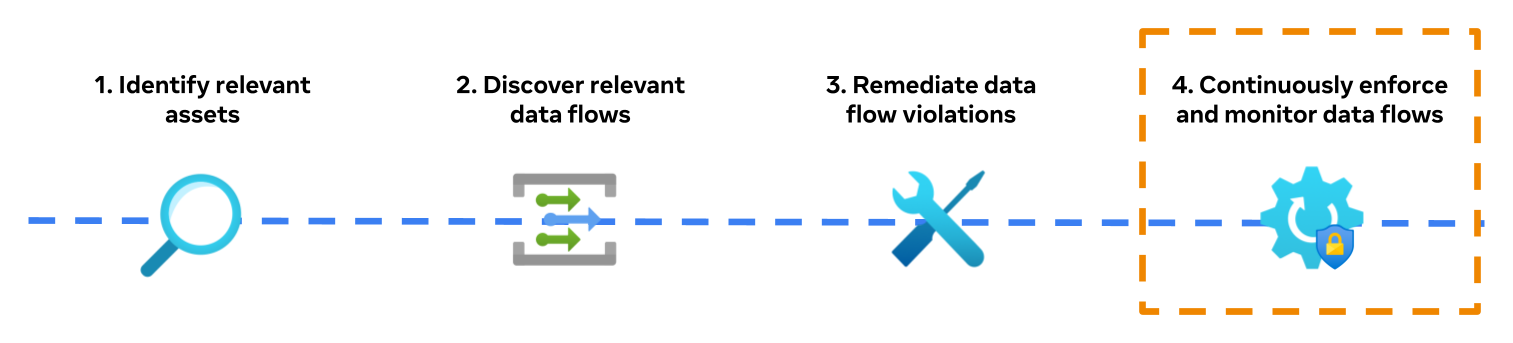
- The PAI Shift: Meta pivoted toward Privacy Aware Infrastructure, aiming to standardize how systems "understand" data. Key components like data lineage (tracking how data moves) and Policy Zones (information flow control) were developed to provide a unified language for data governance.
- The PrivacyLib Era: The company moved to separate system integration from requirement implementation. By integrating each system into PrivacyLib once, new privacy requirements could be pushed as lightweight modules rather than entire, system-specific projects.
- The AI Integration: With the advent of internal AI agents, Meta expanded this framework to include AgentLib, ensuring that the same robust privacy safeguards governing traditional services also apply to the dynamic, unpredictable access patterns of AI.
PrivacyLib: The Engine of Enforcement
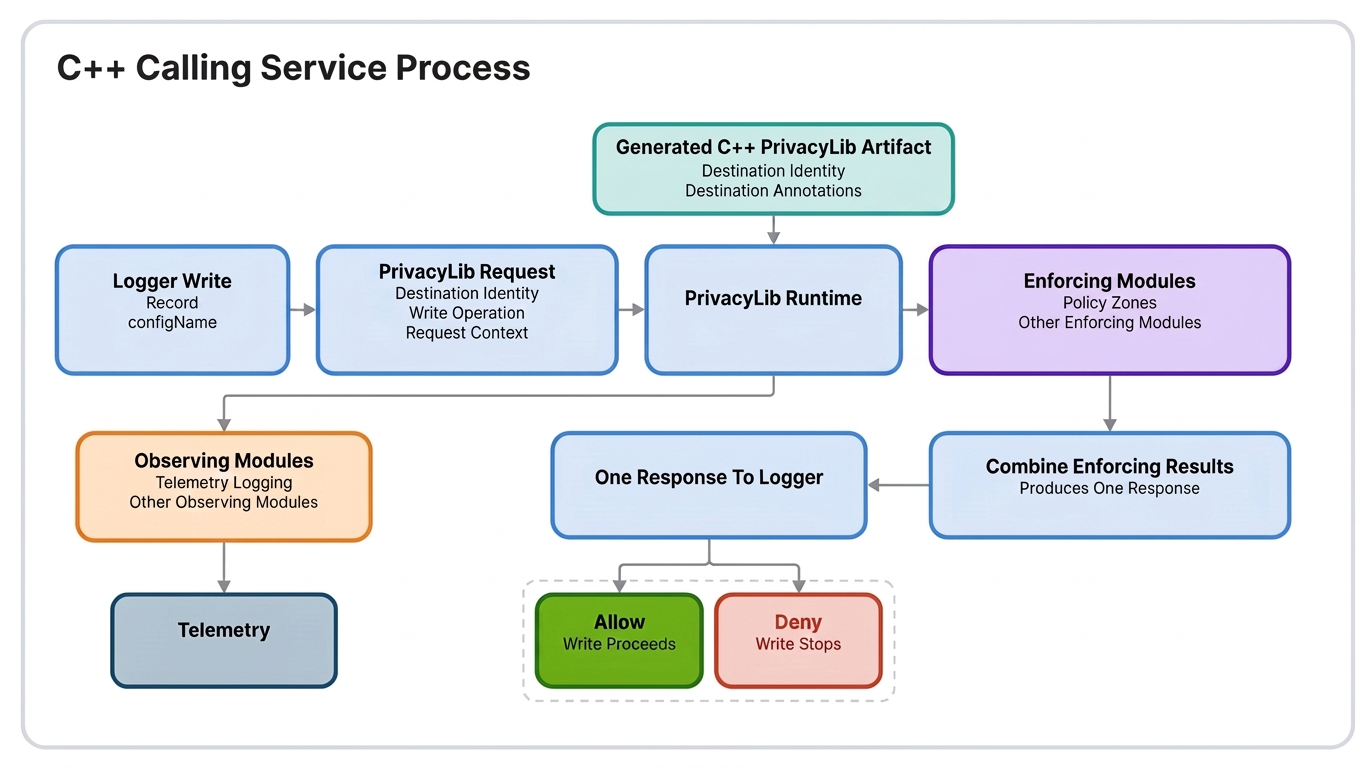
PrivacyLib is designed to run inside the clients of hundreds of data and processing systems at the exact point of data access. This design choice is deliberate: by operating in the process where the data is being requested, the library possesses the full request context—such as user intent, destination identity, and data sensitivity—without needing to perform expensive cross-process network calls.
The Modular Framework
PrivacyLib functions through two primary categories of modules: those that enforce policy (such as Policy Zones) and those that provide observability (such as the Telemetry Logging module). By decoupling the integration of the system from the implementation of the requirement, Meta has slashed the time required to enable new privacy capabilities from months to mere days. When a new privacy feature is needed, engineers simply enable a new module across the already-integrated systems.
Engineering Challenges at Scale
Operating at Meta’s scale presents three distinct hurdles:
- Coverage: With a mix of legacy integrations, direct database access, and network-level calls, ensuring 100% coverage is difficult. Meta addresses this by integrating at both the high-level typed client libraries and the lower-level network boundaries (via ServiceRouter), ensuring that even "raw" RPC calls are subject to cryptographic validation.
- Performance: With billions of checks per second, even a microsecond of overhead is unacceptable. Meta solves this by compiling privacy requirements into their simplest form at build time and utilizing in-process caches, ensuring the "hot path" remains performant.
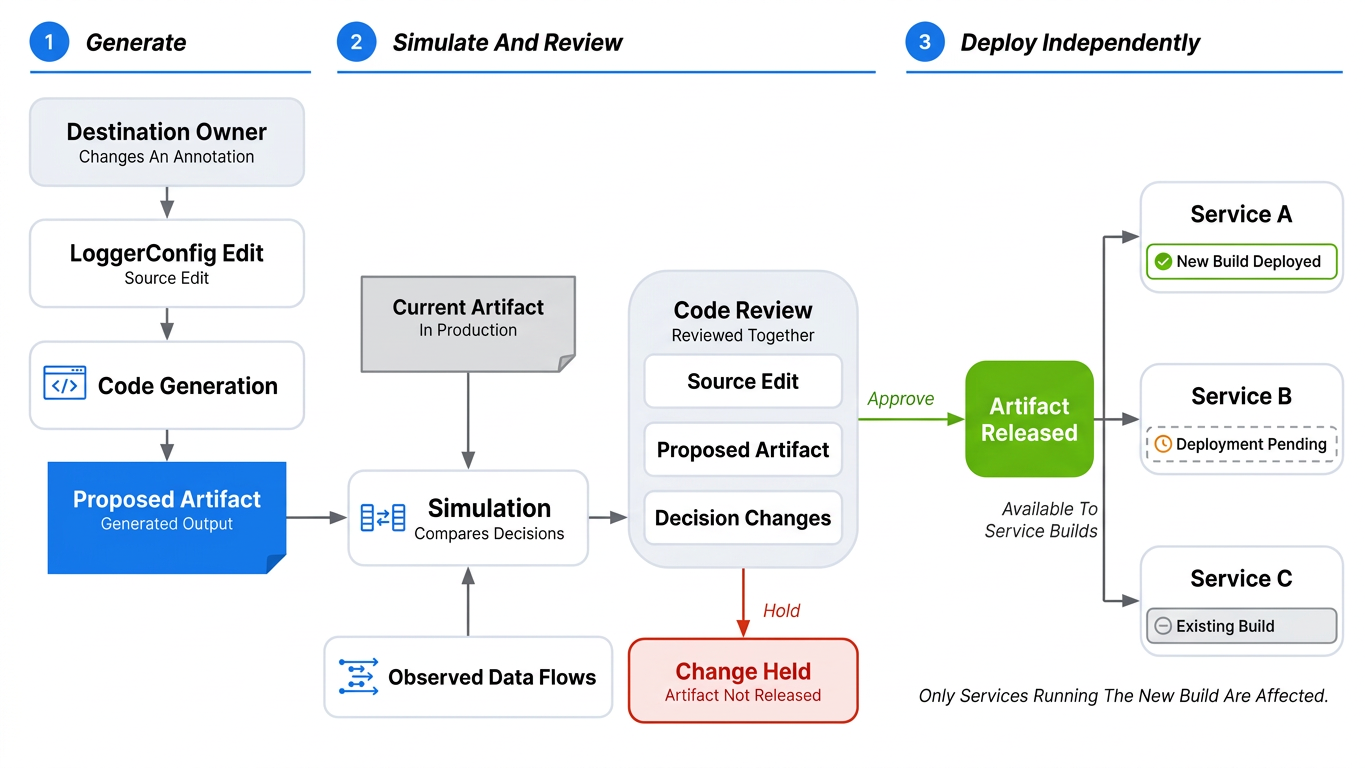
- Reliability: Because privacy logic resides in critical systems, a faulty update could theoretically disrupt the entire platform. Meta prevents this by ensuring that enforcement changes reach production through individual service deployment pipelines rather than global configuration pushes. This allows for isolated testing and granular rollbacks.
Walkthrough: Protecting Messaging Metadata
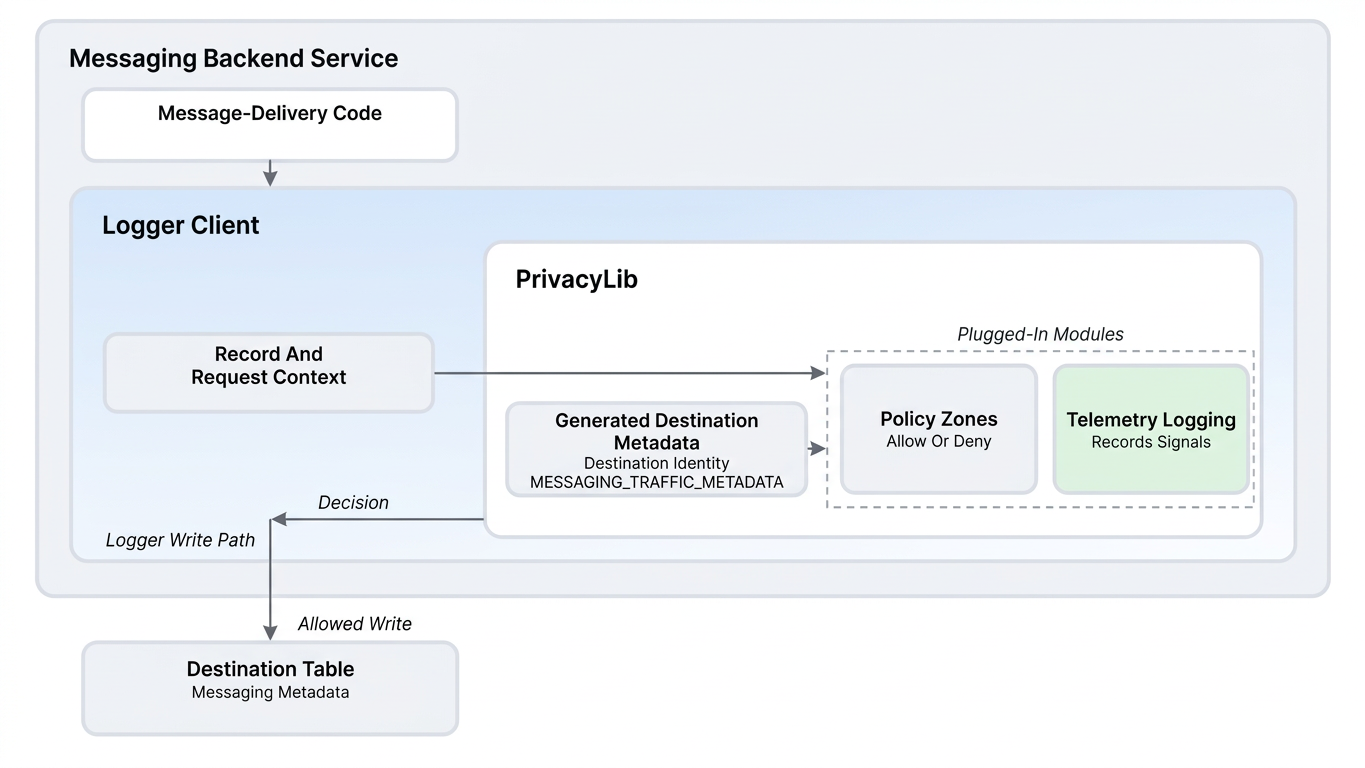
To understand the practical application of this infrastructure, consider the handling of non-content messaging metadata in services like Messenger. While the content of these messages may be end-to-end encrypted, the backend systems must still process metadata (such as delivery timestamps) to detect abuse and maintain performance.
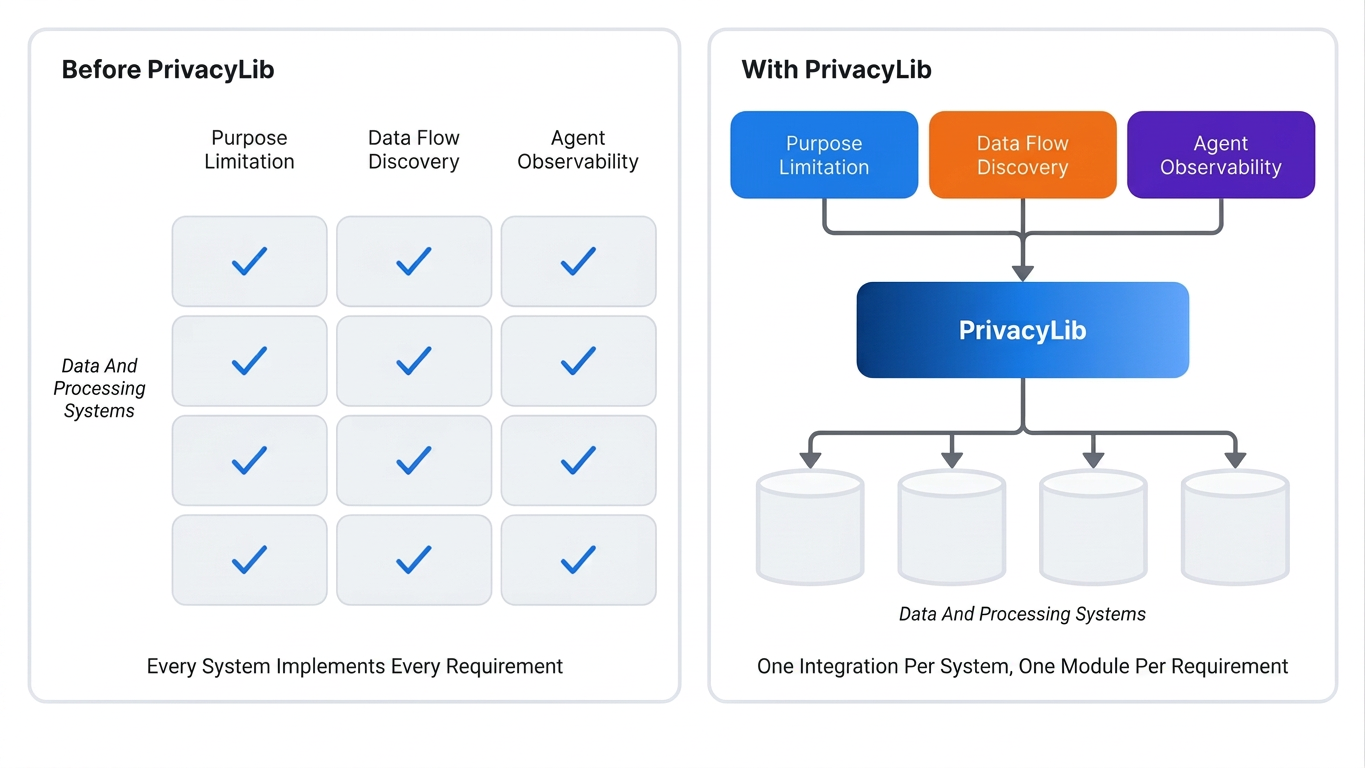
When a service attempts to log this metadata, the PrivacyLib integration within the "Logger" library acts as a gatekeeper. It invokes the Policy Zones module to evaluate two critical conditions:
- Purpose Limitation: Does the destination table have the correct authorization to receive this type of metadata?
- Compliance Check: Is the current processing context compliant with established data flow policies?
If either condition fails, the write operation is denied at the source, preventing the data from ever reaching the downstream warehouse. This happens in real-time, within the application process, ensuring that unauthorized data movement is stopped before it begins.
Implications for AI Safety
Perhaps the most significant implication of the PrivacyLib architecture is its utility in governing AI agents. Unlike traditional software, AI agents are dynamic; their data access needs are determined at runtime by the model’s reasoning process. This makes it impossible to define static access lists.
By utilizing AgentLib, Meta associates tool calls with specific agent sessions. This context is propagated through the service chain until it reaches a PrivacyLib-integrated system. At that point, the system treats the AI’s tool call exactly like any other data access request. The existing Policy Zones module is then applied to the request, regardless of whether the developer of the agent anticipated that specific access path. This provides a "safety net" that is agnostic to the agent’s internal logic, ensuring that even if an AI agent attempts to access restricted data, the infrastructure will block the operation.
Official Stance and Strategic Lessons
Meta’s engineering leadership emphasizes that the success of this infrastructure is rooted in three core lessons:
- Design for Evolution: Privacy requirements are not static. By anchoring privacy to the data access boundary rather than the application logic, the infrastructure can adapt to new regulatory or technical demands without requiring a total overhaul of existing services.
- Trust Through Reliability: The adoption of PrivacyLib by product teams was not guaranteed. It had to be earned. By providing tools that allow engineers to simulate the impact of privacy changes before deployment, Meta reduced the "fear factor" associated with updating sensitive enforcement code.
- Deployment is Part of Coverage: A privacy policy is only as effective as the version of the code enforcing it. Meta’s emphasis on inventory and tracking ensures that all services are brought up to the latest privacy standard, closing the "gap" that often exists between policy and execution.
The Future: Novel Environments and Beyond
Looking ahead, Meta is continuing to expand the scope of PrivacyLib. As data access moves into increasingly novel environments—such as federated learning pipelines and decentralized storage systems—the challenge will be maintaining this same level of visibility and control.
Two areas of future development are currently being prioritized:
- Automated Policy Synthesis: Moving toward systems that can automatically suggest or generate privacy annotations based on the data’s lifecycle and usage patterns, further reducing the manual burden on engineers.
- Deepened Agent Governance: Enhancing the "Agent Observability" modules to provide even greater insight into the reasoning chains of AI agents, allowing for more granular, context-aware policy enforcement that can differentiate between benign data exploration and potential privacy risks.
In conclusion, Meta’s transition to Privacy Aware Infrastructure represents a significant shift in the tech industry’s approach to data security. By moving privacy enforcement from a reactive, audit-based process to a proactive, infrastructure-embedded capability, Meta is not only safeguarding user data against modern threats like AI-driven access but is also setting a new benchmark for how massive, distributed organizations can maintain compliance at scale. The success of PrivacyLib underscores a fundamental truth of modern engineering: privacy is not an overlay—it is a core component of the stack.


 Jia Lissa
 Nana

 Neng Nana

 Pevita Pearce

 Nana Muazin
 Iffa Jayyana

 Lina Hope
