
 Nana
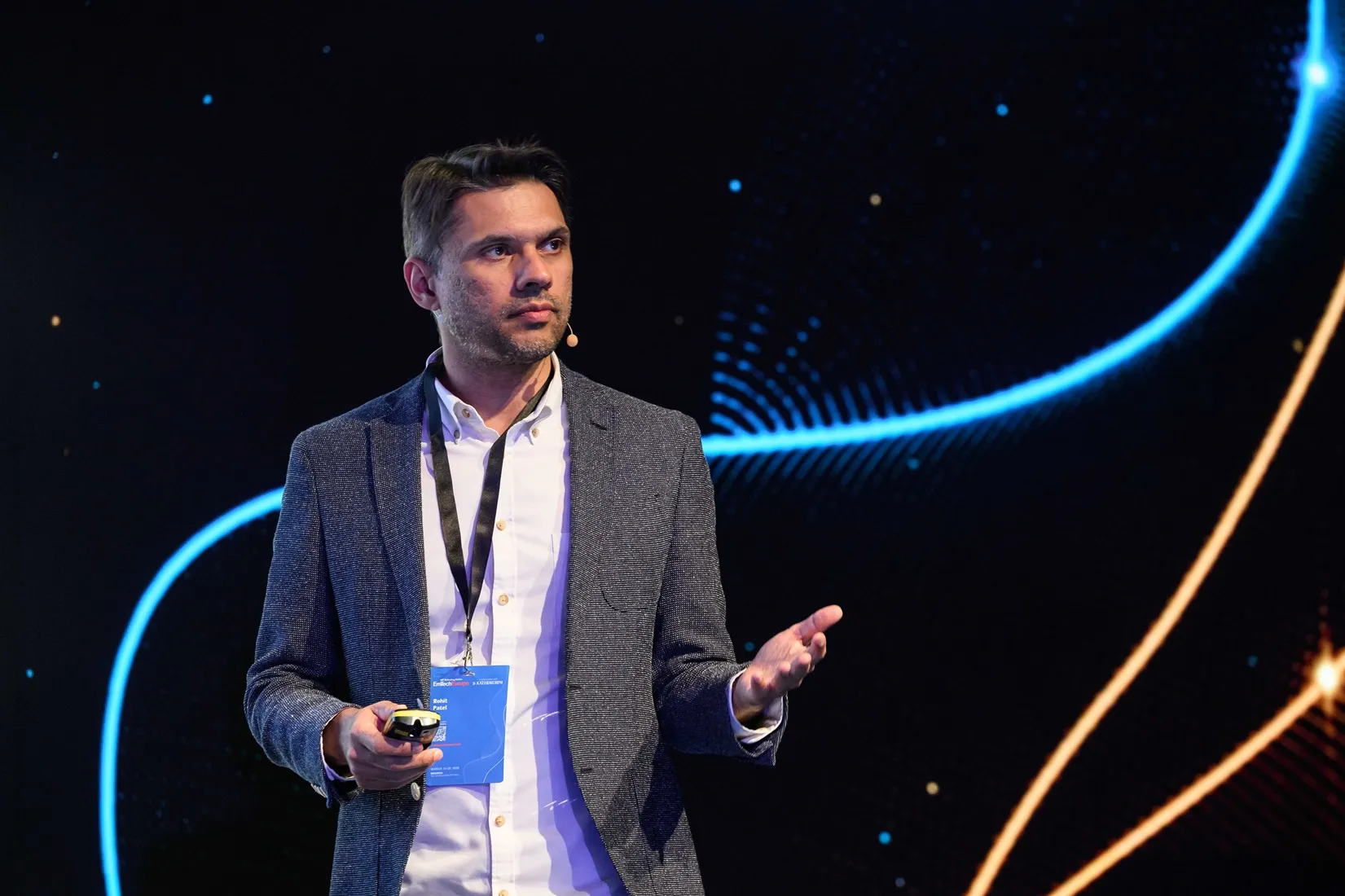
After an eight-year tenure at the bleeding edge of artificial intelligence development at Meta, Rohit Patel has stepped away from the tech giant. A former director at Meta Superintelligence Labs, Patel’s departure marks a significant shift in his career, as he pivots from corporate research to the high-stakes world of startup entrepreneurship.
Patel has launched Ndoc, an AI-native platform designed with an ambitious, disruptive goal: to serve as a comprehensive replacement for the entrenched Microsoft Office suite and Google Workspace. By moving beyond simple AI "layering," Patel hopes to fundamentally restructure how modern enterprises handle data, analysis, and presentation.
The State of Play: Why the Modern Workflow is Broken
The modern enterprise ecosystem is currently characterized by fragmentation. Employees typically navigate a disjointed landscape consisting of Excel spreadsheets, Word documents, PowerPoint presentations, Tableau dashboards, and Replit environments, often stitched together by the ubiquitous and inefficient practice of “ChatGPT copy-pasting.”
Patel argues that this fragmented workflow is not merely an inconvenience—it is a bottleneck to human potential. Ndoc seeks to unify these silos into a single, cohesive workspace. The platform is structured around three primary pillars:
- The Stage: A visual environment for presentations, including slide decks, dashboards, and interactive simulations.
- The Narrative: A text-heavy workspace for detailed analysis, featuring automated citations and generated figures that explain the “why” behind the raw data.
- The Model: The foundational layer where underlying datasets and Python scripts are housed, ensuring full transparency.
Unlike traditional office suites, Ndoc aims for accessibility; the platform is designed to be shared with colleagues, even those who do not maintain an Ndoc subscription, effectively challenging the “walled garden” approach of industry incumbents.
A Chronology of Change: Meta’s Brain Drain
Patel’s exit is part of a broader, ongoing trend of high-profile departures from Meta’s AI and executive divisions. Over the past year, the company has seen several key figures move on, signaling a shifting tide in the tech sector’s competitive landscape:
- June 2026: Emily Dalton Smith, the Head of Product for AI-for-Work, departed the company, leaving a gap in Meta’s enterprise transformation strategy.
- October 2026: Joel Kaplan, the Chief Global Affairs Officer, stepped down after a 15-year career at the company, marking the end of a long-standing era of policy leadership.
- Late 2026: Prominent AI researcher Andrew Tulloch left Meta, further thinning the ranks of the company’s internal AI brain trust.
These departures occur at a time when Meta—and its competitors—are racing to define the role of enterprise AI. While Meta continues to invest heavily in its own AI agent ecosystem, the exodus of talent suggests that some of the industry’s brightest minds are increasingly drawn to the agility of the startup ecosystem, where they can build outside the constraints of massive, consensus-driven corporate structures.
Technical Philosophy: Trust, Transparency, and "The Curtain"
Patel’s vision for Ndoc is deeply rooted in his work at Meta, particularly in the field of reinforcement learning. During his time at the company, Patel specialized in evaluating AI trustworthiness—the critical process of ensuring that machine-generated outputs are not only accurate but verifiable.
"There’s nothing hidden behind the curtain here," Patel stated in an exclusive interview. He believes that the current generation of AI tools, which often present polished results without revealing the underlying logic, are insufficient for high-stakes business decision-making.
Ndoc solves this by exposing the mechanics of the AI’s labor. If an AI generates a financial forecast or a market analysis, a user can query the system: “What does this script do? Which line has my formula?” The platform allows users to inspect the Python scripts and datasets that drive the final output. Even for users without a background in programming, the system acts as an educational interface, stripping away the "black box" nature of typical AI interactions.
Furthermore, Ndoc incorporates a persistent "memory" feature. The AI is designed to maintain context across a user’s personal preferences, specific document history, team dynamics, and overarching company goals. This enables a level of personalization that standard, generic LLMs struggle to achieve.
The "Tractor" Argument: Why Current AI Tools Miss the Mark
The industry at large has taken a different approach to enterprise AI. Giants like OpenAI, Anthropic, Google, and even Meta have largely focused on integrating AI as a “copilot” within existing software. For instance, Google Gemini and Microsoft Copilot are designed to populate cells in a spreadsheet or summarize a document within the familiar UI of the incumbent apps.
Patel is sharply critical of this trend. "Companies are basically attaching AI to spreadsheets and it fills your cells for you," he remarked. "It just sort of kills my soul. This is like if you just figured out electricity, and then you decided the best use case is to put lights on my bulls that till my soil. No. Get a tractor."
Patel’s philosophy is that the office suite itself is a legacy product designed for a pre-AI world. By simply augmenting these tools, companies are maintaining the inefficiencies of the past. Ndoc is his "tractor"—a complete rethink of the file format itself.
His vision includes a proprietary, yet open-sourceable, .ndoc.html file format. This format can be opened in any modern browser, theoretically breaking the vendor lock-in that has characterized the enterprise software market for decades. By making this format open, Patel hopes to foster an ecosystem where other developers can build compatible tools, preventing a repeat of the monopolistic cycles seen with Microsoft and Google.
Financial and Operational Implications
Building a competitor to the most well-funded tech companies in history is an arduous task, particularly for a lean team of three with no external funding. Patel is currently prioritizing "proof of love" over capital acquisition.
"I didn’t want to take money until I had some proof that people love the product," he explained. By bootstrapping the development, he retains control over the roadmap, a necessity for a project that requires a fundamental departure from established industry norms.
Operationally, Ndoc leverages a mixture of open-source models. Because the platform was built from the ground up to be efficient, Patel claims it is significantly cheaper to operate than platforms relying on massive, proprietary frontier models. While he initially thought this cost efficiency would be the primary selling point for users, he found that customers are far more interested in the product’s "end-to-end" utility—the ability to see the entire project lifecycle in one unified, seamless view.
The Road Ahead: Pilot Programs and Future Milestones
As of this week, Ndoc is officially entering an enterprise pilot phase. An alpha version is available to a limited waitlist, and while the sign-up is free, the platform will utilize a usage-based token model for enterprise customers.
Patel’s strategy is built on the principle of extreme velocity. He believes that in the current AI landscape, speed is the only real competitive advantage. "Execution is extremely cheap," Patel said. "So go execute on a suboptimal plan and worry about it later. By the time you make the best plan, the execution will be done by somebody else."
The company plans to release a beta version in the coming weeks, with a full-scale public launch slated for next year. Whether Ndoc can successfully convince a skeptical enterprise market to abandon the comfort of Microsoft and Google in favor of a new, AI-native paradigm remains to be seen. However, in an industry obsessed with incremental improvements, Patel’s attempt to rebuild the "file" from the ground up offers a rare, radical alternative to the status quo.
By betting on transparency, technical modularity, and a unified user experience, Patel is positioning Ndoc not just as a tool, but as a potential successor to the way we have worked for the last thirty years. Whether he succeeds or joins the "graveyard of tools" he alluded to, his journey highlights the growing tension between legacy enterprise software and the rapidly evolving, agent-driven future of work.


 Layla Zulfa

 Ammar Sabilarrohman
 Rifan Muazin

 Siti Muinah
 Muslim
