Nana
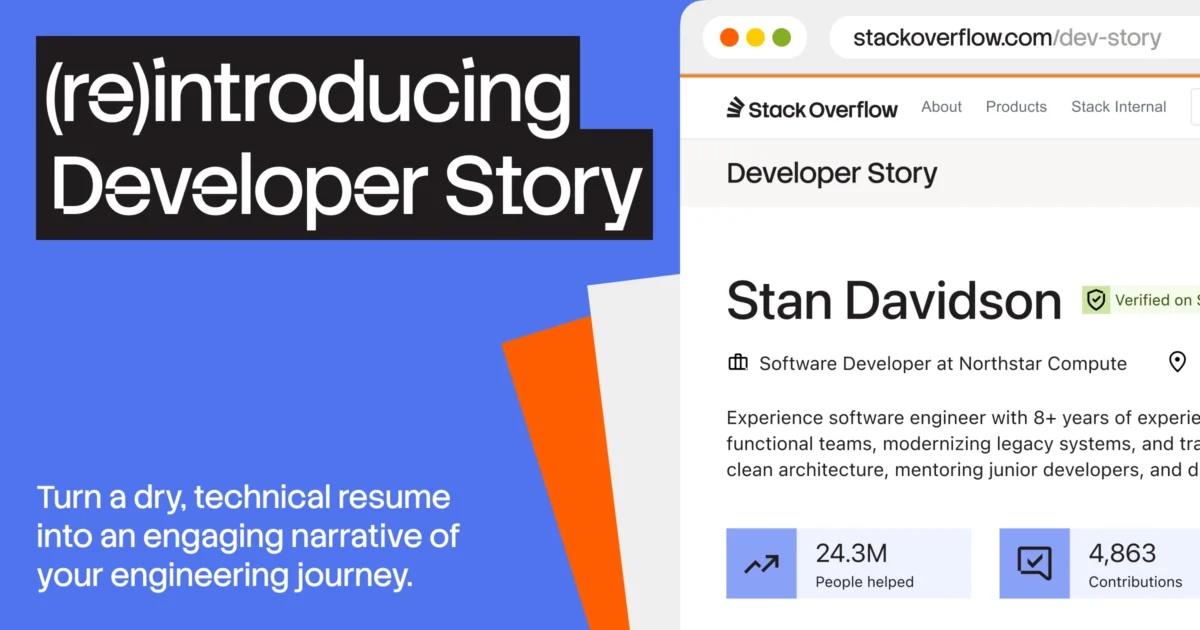
For over a decade, the recruitment landscape in the technology sector has undergone a seismic shift. What was once a dialogue between human recruiters and aspiring developers has morphed into a high-stakes, algorithmically mediated arms race. At the center of this transformation is Stack Overflow, a platform that has served as the backbone of the global developer community for nearly two decades.
After spending years in the trenches of talent acquisition—first during the rise of the platform’s "Careers" product in 2015 and returning in 2021 to scale teams for Overflow AI and Stack Internal—it has become clear that the traditional resume is no longer fit for purpose. As the hiring process becomes increasingly convoluted, strained by AI-generated applications and deep-seated mutual distrust, the industry finds itself at a crossroads. In response, Stack Overflow is resurrecting a legacy concept: the "Developer Story."
The State of the Market: A System in Flux
To understand why the hiring process is currently broken, one must look at the evolution of the market. Over the last eleven years, the pendulum has swung violently from a candidate-led market—where developers were courted with lavish perks and aggressive signing bonuses—to an employer-led landscape characterized by mass layoffs, cautious hiring, and an overabundance of applicants for every open seat.
The Rise of New Archetypes
The complexity of hiring has been compounded by the emergence of roles that did not exist a decade ago. The meteoric rise of machine learning, generative AI, and advanced data science has pulled talent into new niches, making the traditional job title or set of skills on a resume an increasingly poor proxy for actual competency.
The Volume Problem
When a company as reputable as Stack Overflow posts a vacancy—such as a recent listing for a Staff Data Scientist—the results are immediate and overwhelming. Receiving over a thousand applications within 24 hours is no longer an outlier; it is the new standard. However, the volume is not the primary issue. The challenge lies in the "sameness" of the applications. As candidates turn to AI tools to polish, format, and generate their resumes, the individual personality and the authentic trajectory of a developer’s career are being scrubbed away, leaving recruiters with a sea of homogenous, AI-optimized documents.
Chronology of a Crisis: From Human Connection to Algorithmic Distrust
The degradation of the hiring process has been a slow-motion collision between technology and human psychology.
- 2015–2018 (The Era of Growth): Hiring was largely driven by networking and portfolio-based assessment. Resumes were viewed as entry points to a conversation, and recruiters had the bandwidth to engage deeply with candidates.
- 2019–2021 (The Digital Pivot): The pandemic accelerated the move to fully remote hiring, forcing companies to rely on automated screening tools to manage the influx of applications. This was the infancy of the "AI-in-recruiting" era.
- 2022–2024 (The Era of Distrust): The proliferation of Large Language Models (LLMs) enabled candidates to mass-produce cover letters and resumes. Simultaneously, employers began using increasingly complex AI filters to scan these documents.
- The Present: A state of mutual suspicion. Candidates fear their resumes are being discarded by "black box" algorithms, while recruiters harbor deep skepticism regarding the authenticity of the resumes they receive.
Supporting Data: The Impact on Talent Teams
Talent acquisition teams, often under-resourced, are currently being asked to do more with less. When one recruiter is tasked with sorting through a thousand applications, the margin for error is razor-thin.
Current metrics indicate that recruiters spend, on average, less than ten seconds on an initial resume review. In an environment where applications are generated by bots, that ten-second window is no longer sufficient to discern whether a candidate is a genuine fit. This leads to two critical failures:
- False Negatives: Highly qualified developers who do not "game" the system with the right keywords are filtered out.
- Inflated Process: To compensate for the lack of trust, companies add more stages to the interview process—take-home tests, multiple technical rounds, and behavioral assessments—creating a "convoluted hiring journey" that discourages top-tier talent from even applying.
Official Response: The Return of the "Developer Story"
Stack Overflow’s product team has identified this disconnect as an existential threat to the health of the industry. The decision to bring back the "Developer Story" is a strategic move to restore human-centric assessment to the hiring process.
"We know what we’d love to see in a resume to help us make a decision," the internal product team notes. "If we can take that instinct and combine it with nearly 20 years of experience helping technologists learn, we can make a real difference."
What is the Developer Story?
The Developer Story is designed to be more than a static list of jobs and skills. It is intended as a dynamic, evolving portfolio that highlights:
- Proof of Work: Real-world examples of projects, whether they are professional contributions or personal "weekend apps."
- Problem-Solving Narratives: Instead of a bullet point saying "fixed bugs," the Story encourages developers to explain the technical hurdles they overcame, such as resolving a production-halting error at the eleventh hour.
- Objective Verification: By linking to community activity and verified technical contributions, the platform aims to provide recruiters with a clearer picture of a candidate’s actual capabilities.
Implications for the Industry
The shift toward a more transparent, narrative-driven hiring model has significant implications for both job seekers and organizations.
For the Developer
The Developer Story shifts the power dynamic back to the individual. By maintaining a living record of their journey, developers are no longer reliant on a static document that needs to be "re-hacked" for every application. It provides a space to curate one’s professional identity—showcasing not just what they have done, but what they have learned. It turns the hiring process from a "guessing game" into an exercise in storytelling.
For the Employer
For recruiters and hiring managers, this approach offers a way to move beyond the superficiality of the AI-generated resume. By accessing a verifiable trail of a candidate’s work, employers can make more informed, data-backed decisions about who to invite for an interview. It reduces the reliance on complex, automated filters and encourages a more direct, human-to-human connection earlier in the cycle.
Breaking the Cycle of Distrust
Perhaps the most important implication is the restoration of trust. By moving away from opaque, automated systems and toward a platform that values context and history, the industry may be able to lower the wall of suspicion that currently divides employers and job seekers.
Conclusion: A Path Forward
The hiring crisis is not merely a technical problem; it is a human one. The industry has spent years trying to optimize for efficiency, only to find that in doing so, it has stripped the humanity from the process. The resurrection of the Developer Story is an admission that the resume is an archaic tool for the modern developer.
By prioritizing verifiable impact over keyword-stuffed PDFs, and by fostering a platform where developers can showcase their actual work, Stack Overflow is attempting to bridge the gap between intent and reality. Whether this move will be enough to reform the industry remains to be seen, but it marks a critical pivot toward a more authentic, transparent, and human-centered approach to finding the right person for the right job at the right time.
For those in the tech community, the message is clear: stop trying to beat the algorithm, and start telling your story. To explore this new framework, developers can visit the Developer Story page and begin curating the professional identity that will define their next career move.

 Iffa Jayyana
 Raul Delapena Setiawan

 Lina Irawan

 Pevita Pearce

 Suro Senen

 Muslim

 Ammar Sabilarrohman