
 Ali Ikhwan
Introduction
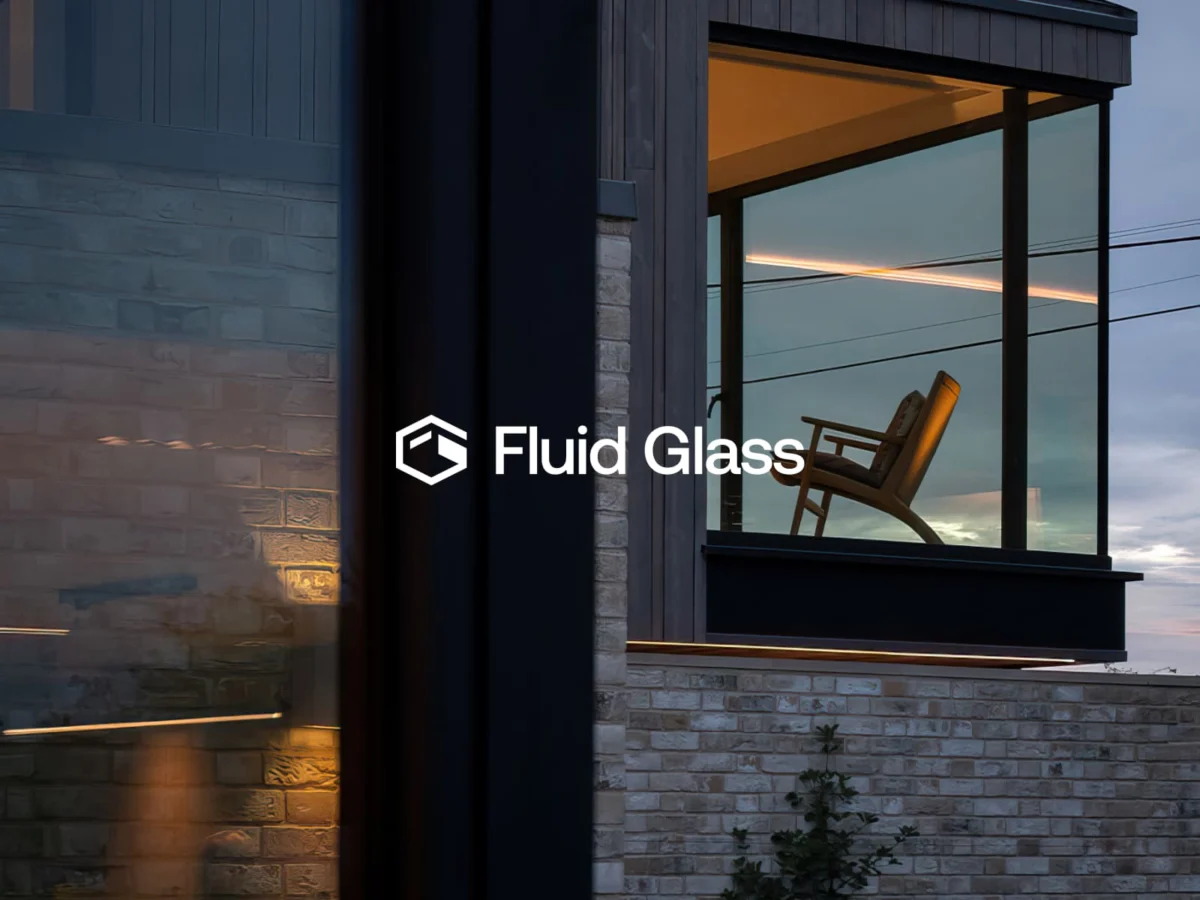
In the high-stakes world of luxury architecture, the difference between a good project and a masterpiece often lies in the invisible—the precision of a sightline, the seamlessness of a transition, and the structural integrity that allows glass to disappear into its environment. Fluid Glass, a premier UK-based specialist in structural and architectural glazing, has long operated on these principles of "effortless execution." However, a challenge persisted: their digital presence did not match the sophistication of their physical craft.
To bridge this gap, Fluid Glass partnered with the Roermond-based digital design studio Exo Ape. The resulting collaboration is not merely a website redesign; it is a digital manifesto on how to present technical mastery in an age of aesthetic saturation. By moving away from the traditional, catalogue-heavy approach typical of construction-related industries, the new digital platform serves as a narrative-driven showcase of process, collaboration, and architectural precision.
The Chronology of Transformation
Phase I: Identifying the Disconnect
The initial audit conducted by the teams revealed a fundamental misalignment. Most glazing websites fall into one of two traps: they are either cold, technical repositories of data sheets or overly stylized portfolios that lack substance. For a company like Fluid Glass, which relies on close, bespoke collaboration with architects and developers, neither approach worked. The "how" was missing. The client needed a platform that articulated the care behind their installations, transforming the website from a brochure into a journey.
Phase II: Conceptualizing the Digital Architecture
The design team at Exo Ape opted for a "minimalist but not empty" philosophy. The objective was to prioritize whitespace, typography, and motion as architectural elements. By shifting the focus from "what we sell" to "how we create," the team began building a site that mirrored the clarity of the glass itself.
Phase III: Rigorous Prototyping and Motion Studies
Development was not linear; it was experimental. The team utilized motion studies to determine how the user would feel when navigating the site. They moved beyond theoretical design, testing specific easing functions, scroll behaviors, and hover states to ensure that the interface felt as intentional and responsive as a high-end glass installation.
Phase IV: Launch and Integration
The final deployment, powered by a robust headless stack (Nuxt.js and Storyblok), ensured that the site was not only beautiful but performant. The integration of a streamlined "Get a Quote" flow and a dedicated showroom video module served to bridge the final gap between digital discovery and physical engagement.
Supporting Data: The Technical Underpinnings
The technical success of the project is rooted in a modern, scalable infrastructure. The choice of Nuxt.js for the frontend, paired with Storyblok as a headless Content Management System (CMS), allows the Fluid Glass team to manage their complex project database with ease.
- Content Strategy: By linking product data directly to project case studies, the site provides context to the technology. A visitor doesn’t just see a pane of glass; they see how that specific engineering solution was applied in a complex residential setting.
- Performance: Hosted on Vercel, the site maintains high-speed performance, critical for rendering high-resolution project imagery and video modules without latency.
- Interaction Design: The use of GSAP’s ScrollTrigger creates a cohesive narrative flow. Unlike standard web transitions that feel jarring, the site utilizes "navigation islands" that adapt based on the user’s position, ensuring that the interface remains fluid—a literal and figurative nod to the brand’s name.
Official Perspectives: The Philosophy of "Digital Hospitality"
The collaboration between Fluid Glass and Exo Ape was driven by a shared belief in "Digital Hospitality." Ronald Gijezen, Creative Director at Exo Ape, emphasized that in a sea of digital noise, human touch remains the ultimate luxury.
"We wanted to remove the friction," says the design team. This is best observed in the "smart navigation" feature implemented at the footer of each project page. As a user reaches the end of a case study, the menu expands automatically, anticipating the user’s next move without requiring a deliberate click. It is a quiet, thoughtful, and highly functional design choice that reflects the same level of care Fluid Glass brings to their physical installations.
Regarding the "Premium Loader"—a small, animated logo transition upon entering the site—the team notes: "It isn’t just about showing off; it’s about setting a tone. It signals to the visitor that this is a space where time is taken and details are respected."
Implications: The Future of Digital Showcasing for Architectural Firms
The success of the Fluid Glass website offers a template for other firms in the construction and design sector. The implications are three-fold:
1. The Death of the Product Catalogue
The project proves that for B2B firms operating in luxury sectors, the "catalogue" is dead. Clients today are looking for evidence of process, communication, and problem-solving. By showcasing the "behind the scenes"—the coordination, the site visits, and the complex engineering—Fluid Glass has established itself as a partner rather than a vendor.
2. The Role of Motion as Brand Identity
Exo Ape’s work demonstrates that interaction design (UX/UI) is no longer a luxury but a branding tool. The way a page loads or a menu expands communicates a company’s attention to detail. If a company’s website feels clunky, clients assume their physical work is equally imprecise. The Fluid Glass site proves that digital fluidity is the best proxy for physical precision.
3. Bridging Digital and Physical
The implementation of the showroom video module is a masterclass in conversion optimization. By providing a cinematic, high-quality look at the showroom, the site lowers the barrier to entry for prospective clients. It converts a "cold" digital lead into a warm physical lead, encouraging site visitors to take the step from browsing to visiting.
Final Reflections: The Human Touch
In an era where AI-generated content and generic website templates dominate, the work produced by Exo Ape for Fluid Glass stands out as a testament to the power of human-centric design. It is not a site that tries to be everything to everyone; it is a site that deeply understands its audience—architects, designers, and high-end developers who value craft above all else.
By treating the screen as a gallery space and the user’s journey as an architectural experience, the collaboration has succeeded in translating physical sophistication into the digital realm. The result is a platform that feels, like the glass itself, transparent, strong, and undeniably precise.
Credits and Contributors
- Creative Direction: Ronald Gijezen
- Creative Development: Rob Smittenaar
- Digital Design: Robbert Schefman
- Agency: Exo Ape (Roermond, The Netherlands)
- Client: Fluid Glass (United Kingdom)
This project remains a definitive case study in how technical expertise, when coupled with narrative-led design, can fundamentally elevate a brand’s market position. It is, quite simply, a reflection of the work itself: clear, considered, and built to last.

 Iffa Jayyana
 Nana Muazin

 Suro Senen
 Azzam Bilal Chamdy
 Asep Darmawan

 Nana Wu

 Nana
 Muslim
