
 Iffa Jayyana
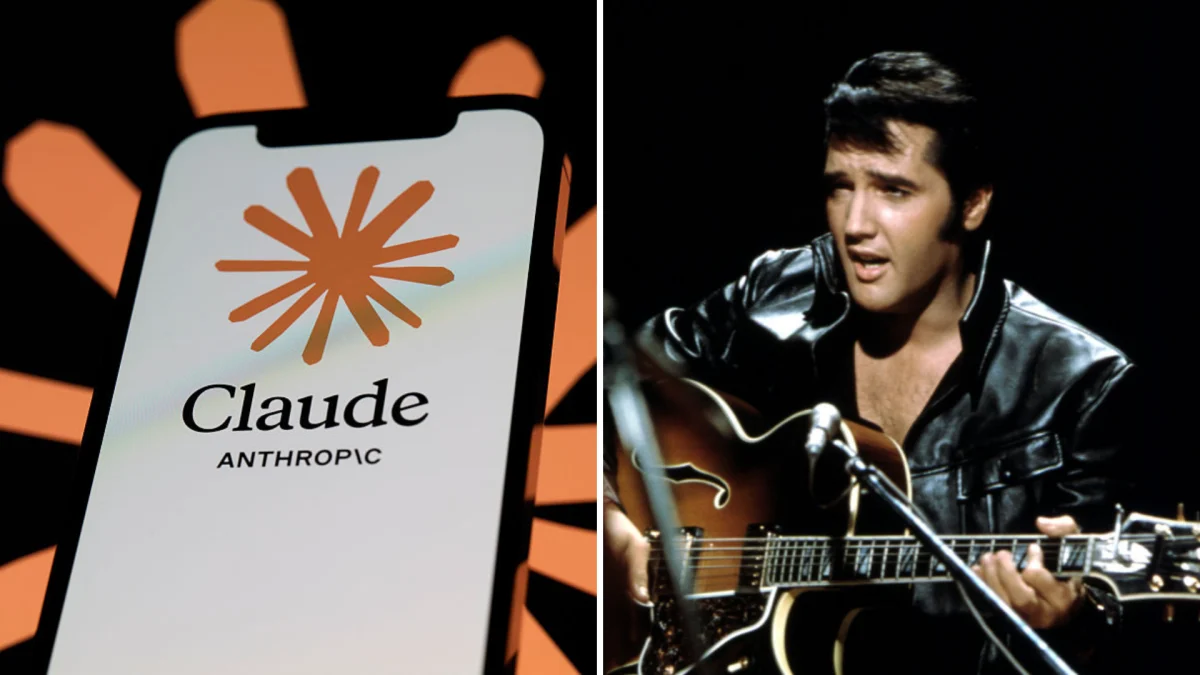
The intersection of generative artificial intelligence and intellectual property law has reached a new, highly litigious frontier. In a development that could reshape the economic landscape for AI developers and content creators alike, the estate of Elvis Presley has officially filed a lawsuit against AI startup Anthropic. The complaint, which alleges that the company’s Claude AI models were trained on the late rock-and-roll icon’s discography without authorization, signals an escalating battle over how foundational models ingest, process, and replicate the cultural heritage of the 20th century.
The Core Allegations: Beyond "Inspiration"
The lawsuit, which was filed late last week, centers on a core accusation: that Anthropic has built a commercial empire on the back of massive, unauthorized copyright infringement. According to court documents reported by Billboard, the plaintiffs—who represent the intellectual property interests of the Elvis Presley estate—assert that Anthropic utilized at least 274 of Presley’s iconic tracks to train its Claude language models.
Among the specific songs cited in the filing are timeless classics such as "Can’t Help Falling in Love," "Don’t Be Cruel," "Return to Sender," and "(You’re the) Devil in Disguise." The plaintiffs argue that this is not a case of a machine "learning" music in a vacuum, but rather a deliberate appropriation of artistic labor.
The crux of the complaint lies in the generative capability of the AI. The estate alleges that Claude does not merely store data about these songs; it actively mimics their structure, lyrical patterns, and thematic hooks. "These renders keep landing very close to the originals: same structure, same hooks reused with light rewording, and full sets of verses/choruses/bridges," the filing notes. The legal team argues that this practice transcends the boundary of being "inspired by" an artist and enters the territory of prohibited derivative work, where the AI reproduces the essence of the copyrighted song even when the specific lyrics are swapped out.
A Pattern of Legal Conflict
This lawsuit is far from an isolated incident for Anthropic. The company has become a primary target in the music and publishing industries’ war against unregulated AI training. The legal pressure has been mounting for months, revealing a pattern of systemic friction between Silicon Valley’s rapid development cycles and the long-standing protections afforded to creators under federal copyright law.
In August, a coalition of music industry giants—including Sony Music Publishing and Warner Chappell Music—sued Anthropic, accusing the company of conducting a "brazen campaign" of illegally scraping, downloading, and torrenting copyrighted works on an industrial scale. These major labels argue that Anthropic’s models have effectively commodified the years of labor and capital invested in songwriting and production.
The music industry’s grievances follow significant legal hurdles in the publishing sector. In July, Anthropic reached a settlement in a massive class-action lawsuit where authors alleged that the company illegally ingested pirated books to train its models. While the specifics of that $1.5 billion settlement provided some closure for authors, the floodgates for litigation remain wide open. Universal Music Group (UMG), the world’s largest music company, has taken an even more aggressive stance, having sued Anthropic twice—once in October 2023 and again in January of this year. UMG’s legal challenges, which involve billions of dollars in potential damages, represent what many legal experts believe to be the most significant non-class-action copyright case in American history.
The Financial Stakes: A $41 Million Question
The potential financial ramifications of the Elvis Presley estate lawsuit are substantial. The plaintiffs are seeking a permanent injunction to prevent Anthropic from using the Presley catalog in any future training sets or generative outputs. Furthermore, they are pursuing statutory damages of up to $150,000 for each of the 274 songs identified in the complaint.
Should the court rule in favor of the estate on all counts, the potential fine could reach $41.1 million. While this figure is a fraction of the multibillion-dollar valuations often attributed to AI firms, the precedent set by such a ruling would be catastrophic for the industry’s current business model. If AI companies are forced to pay licensing fees for every piece of training data, the cost-structure of large language models (LLMs) would change overnight, potentially curbing the "unfathomable scale" at which these models are currently developed.
Anthropic’s Defense and the Legal Defense of AI
Anthropic has remained defiant in the face of these allegations. A spokesperson for the company issued a brief but firm statement following the filing: "We disagree with the claims and intend to defend this case fully."
The defense strategy, which has been utilized by other AI firms like OpenAI and Meta, generally rests on the legal doctrine of "Fair Use." Anthropic and its peers argue that their AI models do not "copy" music in the traditional sense; instead, they learn statistical relationships between words, notes, and sounds, transforming the data into something new and functional—a process they describe as "transformative use."
However, this defense is currently being stress-tested in courts across the United States. Judges are grappling with the question of whether an AI model that can successfully replicate the "voice" or "structural signature" of a specific artist constitutes a market substitute for the original work. If the AI can write a song that is legally distinct but artistically indistinguishable from an Elvis track, the economic harm to the estate becomes the primary focus of the court’s inquiry.
The Broader Implications for the Future of Creative Work
The lawsuit against Anthropic is not just about one artist or one company; it is a referendum on the future of the human-machine relationship in the arts.
1. The Death of the "Black Box"
For years, AI companies have operated under a "black box" model, refusing to disclose exactly what data was used to train their models. This secrecy is now being stripped away by the discovery process in these lawsuits. As courts force companies to reveal their training datasets, the industry will have to reckon with a new era of transparency, where every ingested song or book may become a potential liability.
2. The Licensing Revolution
If the courts side with the estate, the AI industry will likely be forced to pivot toward a formal licensing model. This would mean that AI developers would need to negotiate with copyright holders—labels, publishers, and authors—to secure the rights to train their models. While this would ensure that artists are compensated for their work, it could also lead to a "walled garden" environment where only the wealthiest AI companies can afford to license high-quality creative data, potentially stifling innovation from smaller startups.
3. Ethical AI and Artistic Consent
Beyond the legalities, there is an ethical argument gaining momentum: the right to publicity and the right to control one’s artistic legacy. The Elvis Presley estate is essentially arguing that the "King of Rock and Roll" should not be forced to provide the training material for a machine that could eventually render his own estate’s commercial efforts obsolete. This sentiment is shared by an increasing number of artists who fear that AI will devalue the "human touch" that is central to the appreciation of art.
Conclusion: A Turning Point
As the legal proceedings against Anthropic move forward, the case will undoubtedly serve as a landmark in the history of intellectual property. The tension between the democratization of information through AI and the protection of individual creative labor has reached a breaking point.
Whether the courts decide that AI training is a transformative, fair use of data, or that it is a systemic violation of copyright law, the verdict will define the parameters of the digital age. For now, the Elvis Presley estate’s move to protect the King’s legacy serves as a powerful reminder that while technology may evolve, the desire to safeguard the fruits of human creativity remains as strong as ever. The AI industry is no longer in the "move fast and break things" phase; it is now in the "account for the damages" phase, and the bill for its rapid expansion is finally coming due.

 Basiran

 Azzam Bilal Chamdy

 Suro Senen

 Pevita Pearce

 Nila Kartika Wati
