
 Asep Darmawan
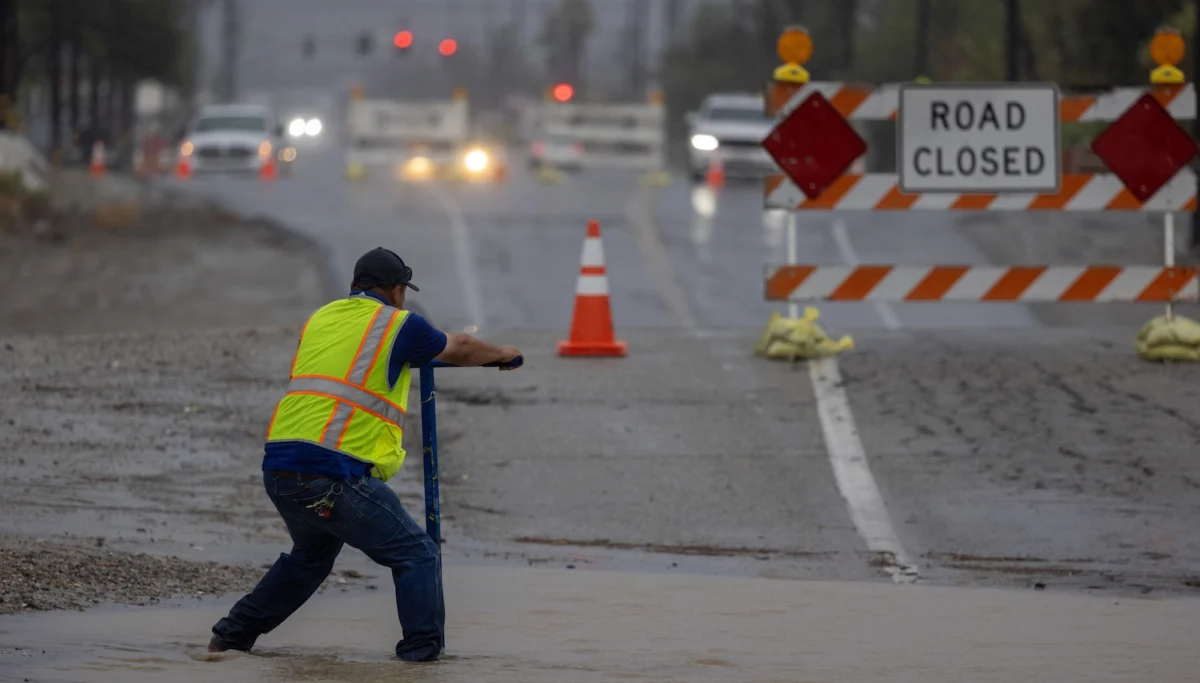
In California, the arrival of rain—usually a cause for celebration in a state defined by its Mediterranean climate—has recently taken on a more ominous tone. As the strongest El Niño on record grips the Pacific, the Golden State finds itself trapped in a cycle of "weather whiplash," oscillating violently between catastrophic, multi-year droughts and intense, atmospheric-river-fueled deluges. For a state accustomed to treating water as a scarce commodity to be piped in from hundreds of miles away, the current reality is forcing a fundamental, and perhaps permanent, renegotiation of its relationship with the sky.
The Reality of Risk: A New Era of Precipitation
The historic fear surrounding El Niño is well-founded. The monster El Niños of 1997 and 1998 remain etched in the collective memory of Californians, serving as a grim blueprint of what happens when the Pacific’s thermal energy translates into sustained, heavy rainfall. During those years, the state witnessed widespread flooding and lethal debris flows—turgid mixtures of water, mud, and gargantuan boulders that scoured hillsides and destroyed residential neighborhoods.
Today, the threat has evolved. It is no longer just about the volume of water, but the cadence of its arrival. Climate change has fundamentally altered the state’s hydrological patterns. A warmer atmosphere holds more moisture, leading to "wetter" storms that arrive in rapid-fire succession. As Steven Springhorn, a supervising engineering geologist with the California Department of Water Resources, notes, the danger lies in saturation. “Even one storm can be very big and impactful,” Springhorn explains. “But if they start to come in a series, the soil reaches its capacity to absorb. That’s when you transition from a manageable rain event to a situation where you have massive, dangerous amounts of excess water.”
Chronology of a Crisis: From Concrete Canals to Subterranean Storage
For most of the 20th century, California’s approach to water was dictated by a philosophy of rapid conveyance: capture it, dam it, and move it through concrete channels as quickly as possible to prevent urban flooding. This "gray infrastructure" served the state well during a period of relative climatic stability, but it is woefully ill-equipped for the current era.
The 20th Century Legacy
Historically, California relied on an intricate network of nearly 1,500 reservoirs to bridge the gap between wet winters and parched summers. However, these systems are constrained by space and safety. When reservoirs reach capacity, managers are forced to release water to prevent structural failure—a scenario that, as seen in the Oroville Dam crisis of 2017, can threaten downstream communities. Furthermore, these dams have exacted a heavy toll on the state’s ecology, effectively severing migratory routes for native fish populations and destroying riparian habitats.
The Turning Point: The 2014 Sustainable Groundwater Management Act (SGMA)
The realization that the state’s reliance on imported water and surface storage was unsustainable led to a policy shift in 2014. With the passage of the Sustainable Groundwater Management Act (SGMA), the state government mandated that local agencies finally address the depletion of the state’s aquifers. For decades, particularly in the agricultural heartland of the Central Valley, groundwater had been pumped at such a frantic rate that the land itself began to collapse. In some areas of the San Joaquin Valley, the ground has subsided by as much as 30 feet, permanently shrinking the storage capacity of the aquifers beneath.
Data and Logistics: The Immensity of the Underground
The shift toward "managed aquifer recharge" represents a massive strategic pivot. While California’s surface reservoirs hold a combined capacity of approximately 21 million acre-feet of water, experts believe the state’s vast, porous underground basins have the potential to store nearly a billion acre-feet.
"The potential room for storage is immense," says Michael Kiparsky, director of the Wheeler Water Institute at UC Berkeley. "The enticing question is: Is there a way to grab those flood flows before they flow out to sea, and hold them underground, and therefore expand our capacity?"
The Mechanics of Recharge
The state is now actively "rewilding" the water cycle by:
- Spreading Grounds: Diverting floodwaters into large, unpaved basins where the water can slowly permeate the soil, replenishing the water table rather than rushing toward the ocean.
- Agricultural Managed Aquifer Recharge (Ag-MAR): Partnering with farmers to flood agricultural fields during wet seasons, allowing water to percolate into the underlying aquifers. This dual-use strategy provides a secondary benefit: it prevents evaporation losses that plague open-air reservoirs and ensures a supply that can be pumped back up during the inevitable lean years.
- Restorative Flooding: Initiatives like "BirdReturns," managed by the Nature Conservancy, pay farmers to flood their acreage to create temporary wetlands. This not only recharges the groundwater but provides critical habitat for migratory birds, helping to restore some of the 95 percent of wetlands lost to development over the last century.
Official Responses and Urban Adaptation
Government agencies are under immense pressure to reconcile the need for safety with the imperative of conservation. A spokesperson for the Los Angeles Department of Water and Power (LADWP) emphasized that while intense storms present immediate risks to infrastructure and public safety, they also represent a historic opportunity.
"Heavy storms can affect regional infrastructure, construction schedules, and areas vulnerable to debris flow or power disruptions," the LADWP stated. "However, these rain events also present a significant opportunity. Stormwater capture is a critical pillar of LADWP’s long-term plan to reduce reliance on purchased imported water."
The "Sponge City" Movement
In Los Angeles, the strategy is moving toward "spongier" urban design. In 2018, voters passed a local tax—a levy of 2.5 cents per square foot of impermeable surface—which generates nearly $300 million annually. This funding is dedicated to transforming concrete-heavy neighborhoods into absorbent landscapes. By retrofitting parks, building roadside bioswales, and creating massive spreading grounds, the city is effectively slowing the water down, allowing it to soak into the earth rather than overwhelming the sewer system.
The results are beginning to show. In the 2025-2026 water year alone, the LADWP reported capturing roughly 37 billion gallons of stormwater—a massive increase in local supply that reduces the need for energy-intensive water imports.
Implications: A More Resilient Future
The implications of this transition extend far beyond water security. As Edith de Guzman, a water equity and adaptation policy specialist at UCLA, points out, the "gray infrastructure" of the 20th century is a liability in a 21st-century climate.
"We can’t just engineer our way out of the problems—we need to actually kind of reverse-engineer a little bit and think about the way that nature does things," de Guzman says. The move toward green and brown infrastructure—parks, wetlands, and urban forests—offers a triple dividend. First, it mitigates flood risk by absorbing excess rainfall. Second, it cools urban heat islands, making neighborhoods more livable during the increasingly frequent heatwaves. Finally, it addresses the psychological and social needs of residents by providing green spaces that foster community connection.
As California looks toward the future, the message from the scientific and policy communities is clear: the era of fighting nature is over. By embracing the "sponge" model, the state is not only safeguarding its water supply for future droughts but is also redesigning its cities to be more resilient, equitable, and habitable. While the rain remains a source of dread during the height of an El Niño, it is increasingly becoming the very resource that will allow California to survive the hotter, drier, and more unpredictable climate of the decades to come.


 Suro Senen
 Pevita Pearce

 Iffa Jayyana

 Basiran

 Azzam Bilal Chamdy

 Nila Kartika Wati
