
 Laily UPN
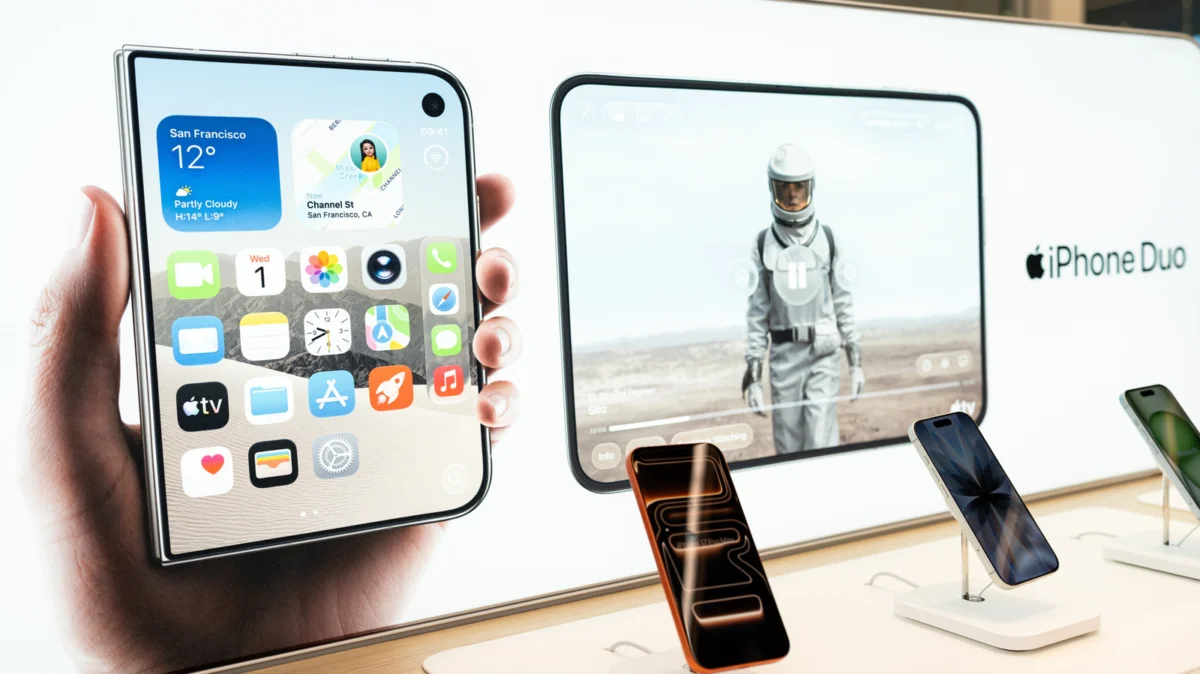
The landscape of modern mobile technology has shifted dramatically with the arrival of Apple’s long-awaited entry into the foldable market: the iPhone Duo. For years, Cupertino watched from the sidelines as Android pioneers experimented with flexible displays, hinges, and multitasking software. Now that Apple has officially joined the fray, consumers are left with a pressing question: Does the iPhone Duo represent a new standard, or is it simply catching up to a segment of the market already saturated with highly capable, book-style foldables?
Finding a perfect match for the iPhone Duo is a complex endeavor. While the device enters the market with the polished, premium aesthetic synonymous with Apple, it faces stiff competition from established titans like Samsung, Google, and Motorola. Navigating this ecosystem requires a granular look at the specs, the philosophy behind the hardware, and the realities of day-to-day usability.
The Evolution of the Book-Style Foldable
To understand the current market, one must acknowledge the chronology of the "passport-style" foldable. The category was popularized by the Samsung Galaxy Z Fold series, which effectively transformed the smartphone into a mini-tablet. This form factor has become the gold standard for power users—those who demand a device capable of seamless multitasking, immersive media consumption, and productive workflows on the go.
While Apple’s entry feels like a milestone, it is arguably a reactive move. Samsung has been refining its hardware for nearly a decade, with the Galaxy Z Fold 8 standing as the latest iteration of that journey. Meanwhile, Google’s Pixel foldables have prioritized software integration and AI-driven photography, and Motorola has pushed the boundaries of size and raw power with its Razr series. The iPhone Duo lands in a market that has already moved past the "gimmick" phase, entering a period of refinement where durability and software optimization are the primary battlegrounds.
Comparative Metrics: Display, Cameras, and Durability
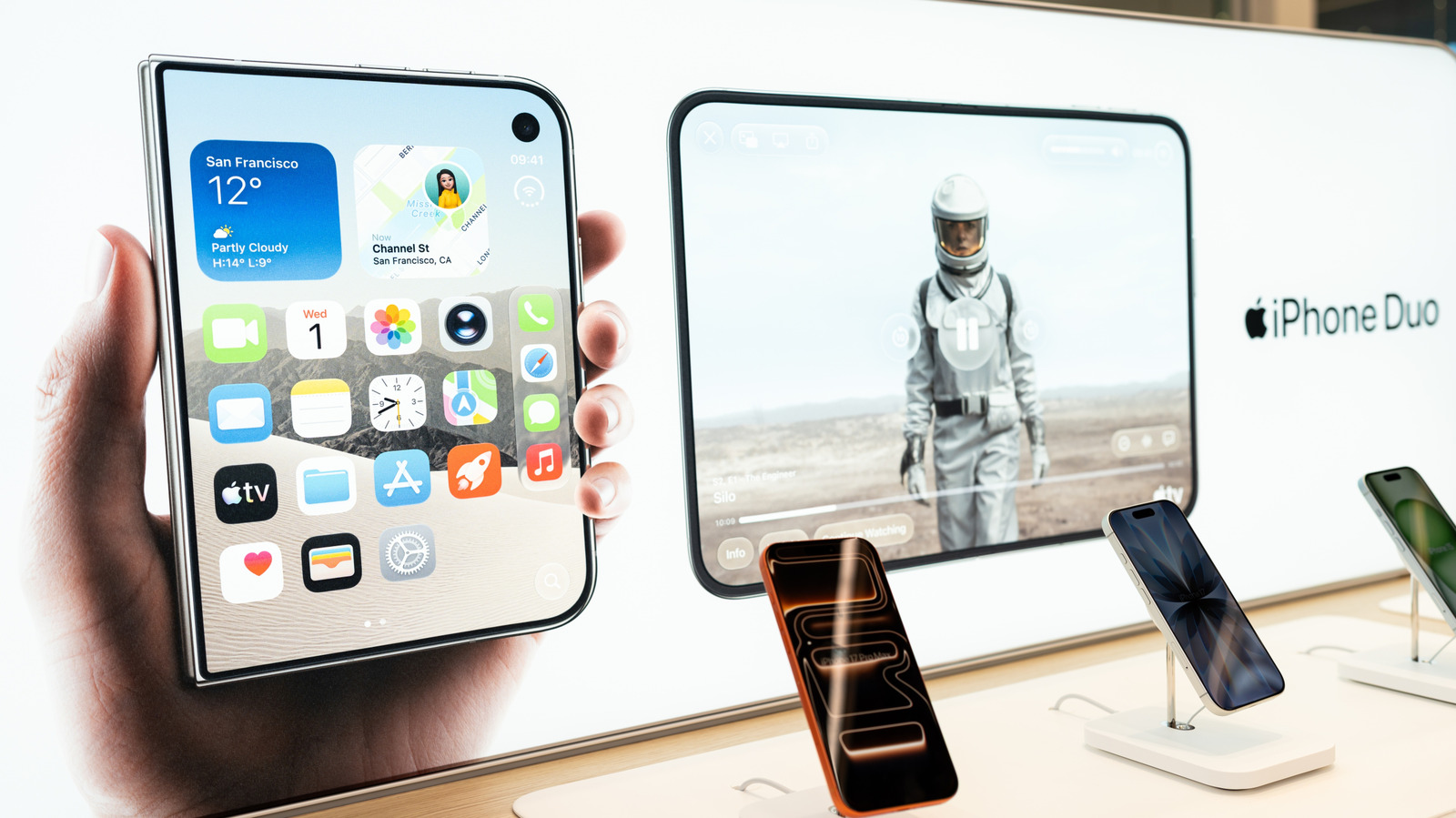
The most immediate comparison point for any foldable is the screen estate. The iPhone Duo features a 5.4-inch outer display and a 7.6-inch interior panel. These dimensions place it squarely in the "Goldilocks" zone—large enough for productivity, but compact enough to handle comfortably.
Display Dynamics
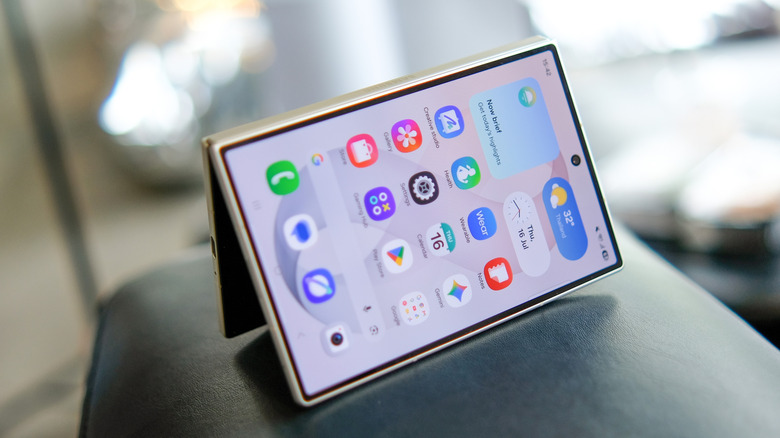
The Samsung Galaxy Z Fold 8 remains the most direct mirror to the Duo, mirroring the 7.6-inch interior display and utilizing a 5.5-inch cover screen. The similarity in footprint is striking, suggesting that Samsung and Apple have both arrived at a consensus regarding the ideal dimensions for a foldable device. In contrast, the Google Pixel 11 Pro Fold opts for a more expansive 8-inch inner display and a 6.5-inch cover screen, favoring a more tablet-like experience. Motorola’s Razr Fold takes the "bigger is better" approach to the extreme, sporting a massive 8.1-inch inner display, which, while impressive, may feel cumbersome to some users.
The Durability Factor
For a device priced at $1,999.99, durability is not merely a feature; it is an absolute necessity. Apple has leaned into its reputation for hardware longevity, but it faces stiff competition. The Google Pixel 11 Pro Fold currently holds the crown in this specific comparison, as it is the only device in this group to match the iPhone Duo’s IP68 rating for dust and water resistance. The Samsung Galaxy Z Fold 8 and the Motorola Razr Fold lag slightly behind with IP48/IP49 ratings, leaving them more susceptible to fine particle intrusion. This discrepancy is a critical consideration for users living in environments where dust or moisture exposure is a daily reality.
Optical Performance
Camera systems in foldables are notoriously difficult to engineer due to the limited internal space. The iPhone Duo features a 12MP Center Stage front camera and a dual-48MP rear setup. While Apple’s computational photography is industry-leading, it lacks a dedicated telephoto lens.
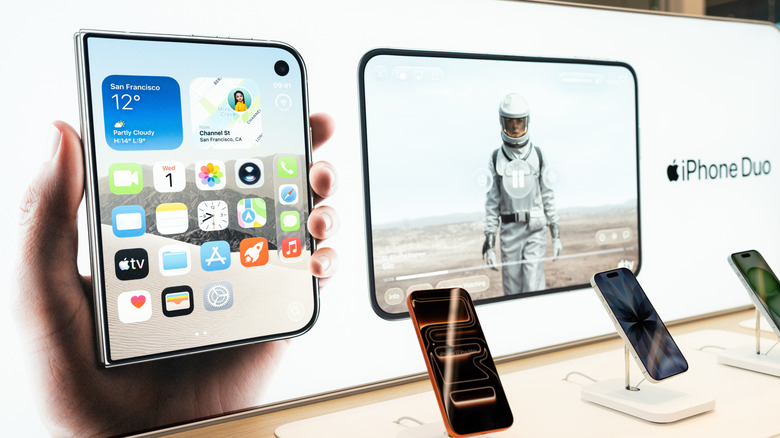
In this department, the competition is fierce. The Galaxy Z Fold 8 upgrades the internal sensors to 50MP, though its selfie camera is a more modest 10MP. The Pixel 11 Pro Fold is perhaps the closest in spirit, pairing a 48MP main shooter with a 10.8MP telephoto lens, providing the optical zoom versatility that the Duo lacks. Motorola’s Razr Fold, meanwhile, takes a "kitchen sink" approach, utilizing 50MP sensors across the main, ultrawide, and telephoto lenses, supported by a 20MP cover selfie camera. On paper, Motorola offers the most hardware, but real-world results often favor the refined image processing pipelines found in Apple and Google devices.
The Financial and Operational Landscape
Battery life is the perennial Achilles’ heel of foldable technology. Because of the large, power-hungry inner displays, efficiency is paramount. Apple claims the iPhone Duo can survive up to 24 hours of "mixed use," a metric that is notoriously difficult to verify outside of lab conditions.
The Android competition is more transparent regarding capacity. The Pixel 11 Pro Fold and Galaxy Z Fold 8 utilize 4,806mAh and 4,800mAh batteries, respectively. The standout here is the Motorola Razr Fold, which packs a massive 6,000mAh battery. Whether this translates to superior real-world longevity depends heavily on the optimization of the underlying operating system.
Pricing and Storage
The entry point for all these devices is strikingly similar. The iPhone Duo starts at $1,999.99 for 256GB of storage. The Galaxy Z Fold 8 and Pixel 11 Pro Fold match this $1,899.99 starting price, though they often provide more flexibility in base configurations. Apple’s storage ceiling is high, but it notably lacks a 2TB configuration that some power users might expect at this price point, whereas Samsung and Google offer 1TB tiers that remain highly competitive.
Global Context and the "Hidden" Competition
It is important to acknowledge that the market for foldables is not strictly limited to the major US-based brands. The recent announcement of the Xiaomi 18 Fold serves as a reminder of the global nature of this technology. With a 7.68-inch display, the 18 Fold is nearly identical in form factor to the iPhone Duo and the Z Fold 8. However, because it is not distributed in the United States, it remains a "what if" for many American consumers. This regional fragmentation is a significant barrier to true market competition and highlights the dominance of the Big Three in the Western hemisphere.
Implications for the Future of Mobile Hardware
The arrival of the iPhone Duo signals that the foldable form factor has reached a level of maturity that even the most conservative hardware manufacturers can no longer ignore. However, the decision to choose one over the other is no longer about which device can "fold." It is about which ecosystem provides the better value proposition.
For the user deeply entrenched in the Apple ecosystem, the iPhone Duo is an obvious, if expensive, choice. Its integration with iCloud, iMessage, and the wider Apple hardware suite creates a seamless experience that no Android device can replicate. However, for the user who prioritizes hardware specs, optical zoom, or battery capacity, the Android alternatives offer compelling arguments.
The competition is now focused on solving the remaining "foldable" problems:
- The Crease: While all manufacturers have improved hinge technology, the visibility and tactile feel of the crease remains a point of contention.
- App Optimization: A foldable screen is only as good as the software that runs on it. Apple’s control over its app ecosystem gives it a distinct advantage in ensuring that apps look and behave correctly when transitioned between screens.
- Durability vs. Weight: As seen in the comparison of the 9-ounce iPhone Duo versus the lighter 7.09-ounce Z Fold 8, there is a constant tug-of-war between packing in more technology and maintaining a device that doesn’t feel like a brick in one’s pocket.
Conclusion: Which is the Right Choice?
If you are looking for the "closest" equivalent to the iPhone Duo, the Samsung Galaxy Z Fold 8 is the logical answer. It mimics the size, the intent, and the premium feel that Apple has spent years cultivating. If your priority is photography, the Google Pixel 11 Pro Fold offers a more versatile lens setup. If you demand the largest battery and the most aggressive specs, the Motorola Razr Fold is the clear winner.
Ultimately, the "Duo" era of mobile phones is just beginning. As Apple and its competitors continue to iterate, we can expect the gap in features to narrow. For the consumer, this is the best possible outcome: a market where innovation is driven not by necessity, but by the relentless pursuit of the perfect mobile experience. Whether that experience comes from Cupertino, Seoul, or Mountain View, the future of the phone is undeniably foldable.

 Sagoh

 Dwi Wanna



 Evan Lee Salim

 Iffa Jayyana
