
 Siti Muinah
In the high-stakes world of global consumer packaged goods (CPG), few brands possess the ubiquity of The Coca-Cola Company. Yet, by the dawn of 2020, the beverage titan—an icon of American marketing prowess—found itself facing a quiet, existential crisis. Despite its historical dominance, the company was grappling with a stagnant consumer base, a fragmented operational structure that had ballooned into inefficiency, and a lethargic shift toward the digital-first reality of modern advertising.
Today, under the stewardship of Global Chief Marketing Officer Manolo Arroyo, the company has emerged from a sweeping, multi-year organizational overhaul. By ruthlessly pruning its portfolio, centralizing its agency partnerships, and pivoting from the abstract concept of “brand love” to the quantifiable bedrock of “total consumer base,” Coca-Cola has engineered a turnaround that has added 160 million new consumers to its roster. As the company finalizes its latest global marketing operating system review, the industry is witnessing the maturation of a new blueprint for multinational brand management.
Chronology of a Corporate Pivot
The journey began in early 2020, when Arroyo stepped into the CMO role. He inherited a marketing engine that, while prestigious, was functionally oversized. At the time, Coca-Cola was managing roughly 2,000 disparate marketing programs, launching 3,000 new products annually, and coordinating with a sprawling, disconnected web of over 6,000 agencies globally.
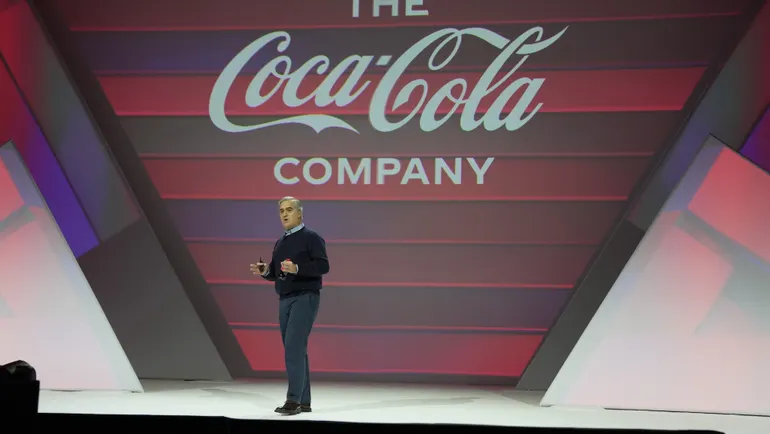
“It was a time to stop for a minute, in the view of the game, and rethink the future of our market,” Arroyo noted during his keynote at the Association of National Advertisers (ANA) Masters of Marketing conference in Orlando on October 21, 2026.
This realization sparked a phased, systematic dismantling and rebuilding of the company’s marketing infrastructure:
- 2020–2021: The company initiated a drastic portfolio rationalization, cutting its brand count from over 400 to roughly 170 to focus on high-impact, billion-dollar labels. Simultaneously, the company launched "Studio X," a globally connected network designed to unify creative and media efforts under a shared data and technology stack.
- 2022–2024: The focus shifted toward digital transformation. Coca-Cola aggressively reallocated its media budget, moving from a TV-centric model—where digital spend was less than 30% in 2019—to an ecosystem where digital now accounts for 70% of total media investment.
- 2025–2026: The transformation entered its final phase with a comprehensive review of its global marketing operating system. This culminated on October 22, 2026, with the announcement of a streamlined, high-level agency ecosystem intended to drive efficiency and creative consistency on a global scale.
Supporting Data: Moving Beyond "Brand Love"
For decades, the standard metric for Coca-Cola’s marketing efficacy was “brand love.” It was an emotional, qualitative goal that resonated with marketers but often failed to correlate directly with the bottom line. Under Arroyo’s tenure, the company initiated a paradigm shift.
“We decided to shift to total consumer base, which is a behavioral-driven metric, as the primary correlation and causation of growth in our P&L,” Arroyo explained. By prioritizing behavioral data over sentiment, the company began to map out which “equity drivers” actually triggered purchases across specific demographics.
The results have been statistically significant:
- Portfolio Efficiency: By reducing the brand count to 170, the company streamlined its supply chain and marketing focus. Today, 32 of these brands are "billion-dollar" entities, including mainstays like Sprite, Fanta, and Powerade, as well as newer growth pillars like Bodyarmor.
- Digital Adoption: The rapid pivot to a 70% digital media mix allowed for more agile, data-backed interventions in the market, such as the company’s recent Halloween-focused Fanta campaigns and high-profile World Cup activations.
- Growth Metrics: The company has reported consistent top-line growth, margin expansion, and a stronger return on invested capital. Most notably, the firm has reversed two decades of stagnation, successfully onboarding 160 million new consumers to its ecosystem.
Official Responses and the New Agency Ecosystem
The announcement on October 22 regarding the completion of its global marketing operating system review signifies a move toward extreme consolidation and collaboration. Coca-Cola has opted for a strategic, region-specific partnership model designed to balance global scale with local market nuance.
In North America, the company has selected Omnicom to manage a unified, connected ecosystem that integrates media, data, CRM, loyalty, and creator-led content. Meanwhile, WPP Open X will remain the bedrock of the company’s global creative and media operations outside of North America, with Dentsu retaining its hold on the key Japanese and South Korean markets.
“Our review was about designing the future of our marketing organization,” Arroyo stated in a press release. “The best marketing systems are built when you combine the best marketing talent with the right partnerships. We are confident that this combination of global scale, local expertise, innovation, and collaboration gives us exactly that.”
The agency landscape for Coca-Cola remains dynamic; notably, Publicis Groupe, which had won the North American media account just last year, withdrew from the latest review following its acquisition of global media duties for competitor PepsiCo. This shuffle underscores the fierce competition for CPG budgets, where agencies are increasingly expected to act as integrated business partners rather than mere creative vendors.
Implications for the Future of Marketing
The Coca-Cola case study carries profound implications for the wider marketing industry, particularly for legacy brands struggling to maintain relevance in an AI-driven, digital-first era.
1. Memory Structures as Economic Value
Arroyo’s philosophy posits that a brand is fundamentally a “promise” delivered through experiences that forge long-lasting memory structures. By identifying that half of all memory generation occurs during the initial moment of consumer interaction—whether at a physical shelf or via a digital interface—Coca-Cola has elevated the importance of the retail experience. In an era where AI and algorithmic feeds dominate, the company’s focus on live, tangible experiences—such as sports, music, and food culture—serves as a crucial differentiator.
2. The End of Fragmented Marketing
The transformation proves that for multinational corporations, scale is a liability if it is not supported by a centralized “operating system.” By mandating that all agency partners work within a common data and tech framework (Studio X), Coca-Cola has ensured that creative output is not only localized but also measurable against the same core business objectives.
3. Behavior Over Sentiment
The shift from “brand love” to “total consumer base” is perhaps the most transferable lesson. While brand love is a desirable outcome, it is increasingly being viewed by analysts as a lagging indicator. By anchoring marketing strategy in behavioral change, Coca-Cola has successfully tied its advertising budget to tangible P&L results. As Arroyo aptly put it, “[Brand] love can be increased as well, but it follows the behavior, and that has translated immediately in our volume growth.”
As the company prepares to implement this new agency structure beginning December 1, 2026, it stands as a testament to the power of organizational discipline. Coca-Cola has demonstrated that even the most established legacy brands can achieve a “second act” by embracing digital agility, ruthlessly focusing on consumer behavior, and ensuring that their global partners are as integrated as the data they use to drive decisions.
With Q3 2026 earnings looming on October 27, investors and industry observers alike will be watching to see if this operational maturity continues to deliver the growth trajectory the company has established over the last six years. For now, the message from Atlanta is clear: the future of marketing is not just about the message—it is about the system behind it.


 Asep Darmawan
 Suro Senen

 Muslim
 Evan Lee Salim
 Basiran
 Reynand Wu

 Layla Zulfa

 Nana
