Neng Nana
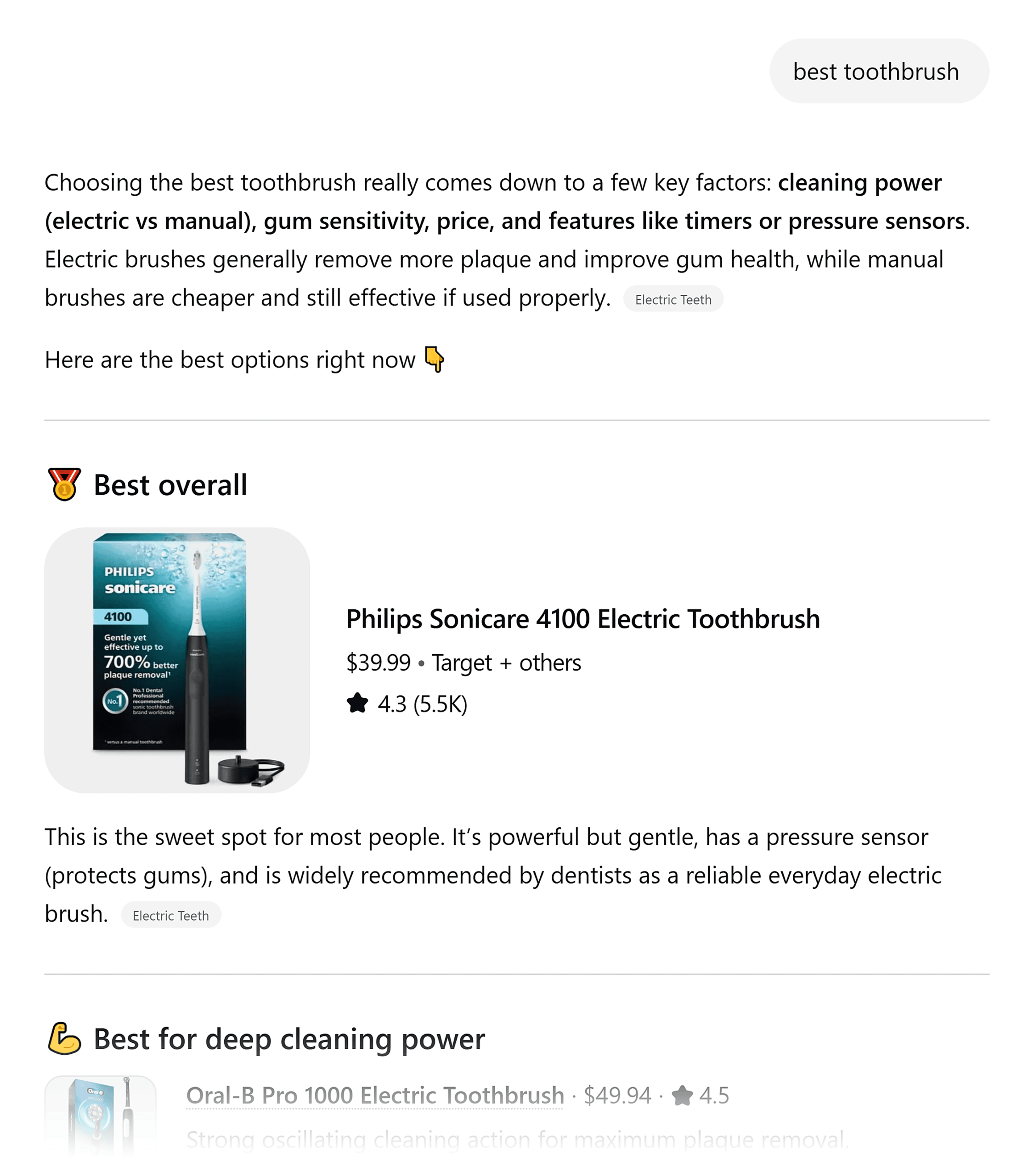
In the evolving landscape of digital search, a quiet, seismic shift has taken place. For over two decades, the "holy grail" of SEO has been the number one spot on Google. However, the rise of Large Language Models (LLMs) like ChatGPT, Perplexity, and Google’s own AI-powered search features has rendered the traditional "ten blue links" model secondary.

Today, your content can rank on the first page of Google and still never be cited, mentioned, or even acknowledged by an AI system. The reason lies in a backend process known as query fan-out. Understanding this mechanism is no longer optional for marketers—it is the new fundamental requirement for survival in an AI-first internet.
What Is Query Fan-Out?
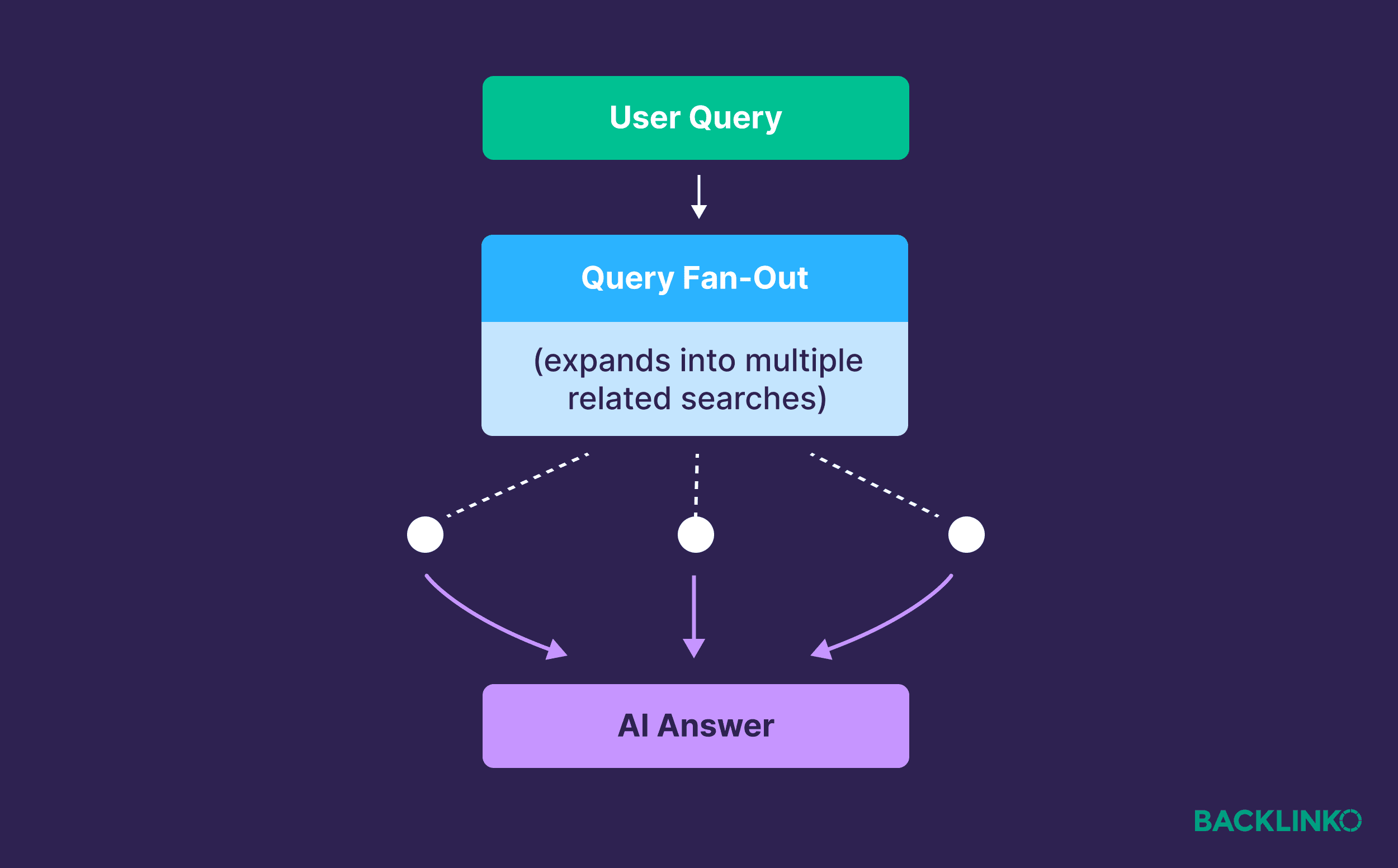
Query fan-out is a background process used by AI systems to decompose a single, often ambiguous user query into a series of highly specific sub-queries. The goal is to build a comprehensive, synthesized answer that anticipates what the user actually needs, rather than just returning a list of links that match the keywords.
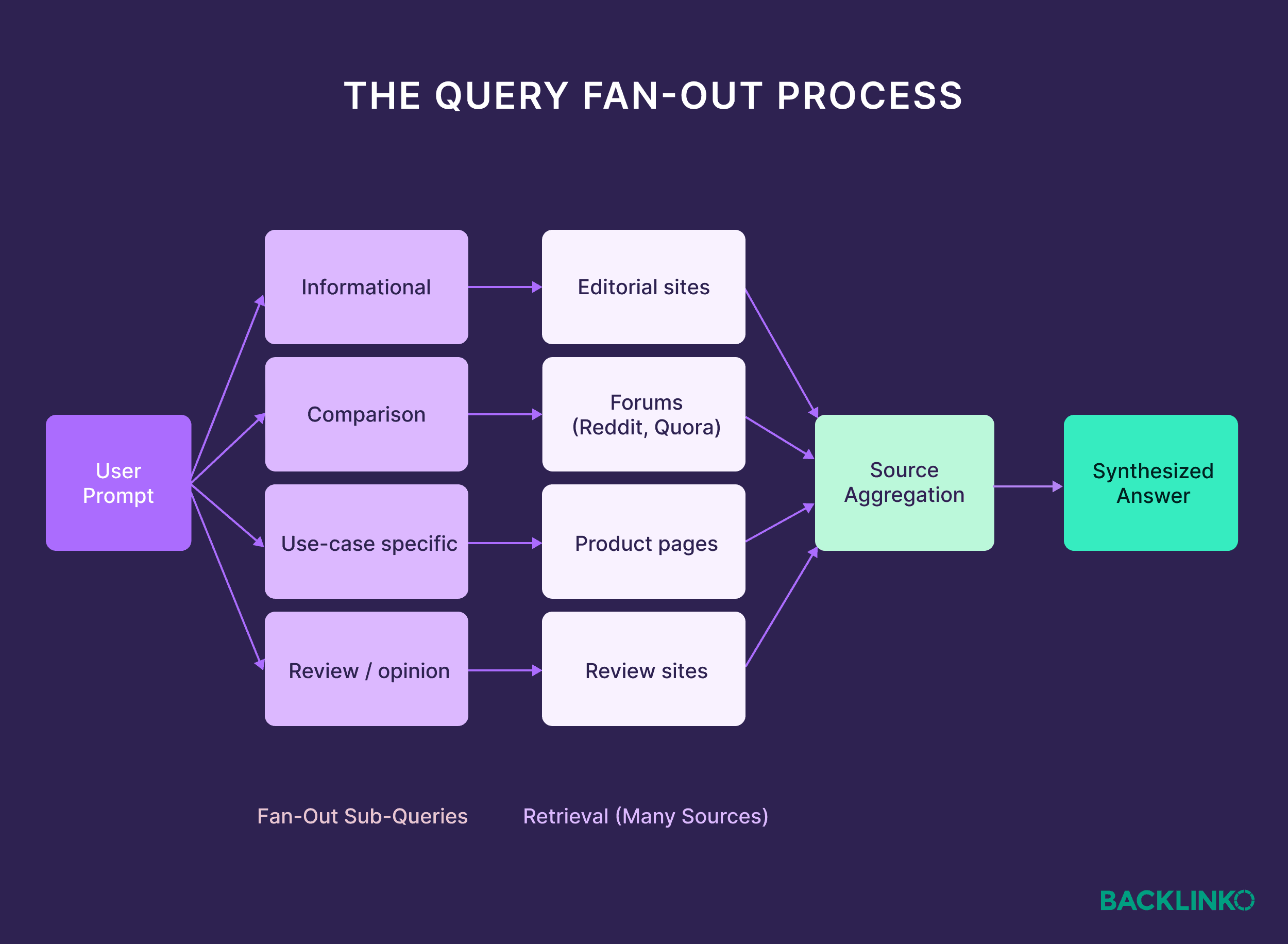
When a user types a prompt into an LLM, the system doesn’t default to the top-ranking page in a search index. Instead, it "fans out" the query, effectively performing multiple related searches behind the scenes. It aggregates data from various sources—editorial sites, Reddit threads, niche forums, and product pages—and weaves that information into a single, cohesive narrative.
The Anatomy of a Fan-Out
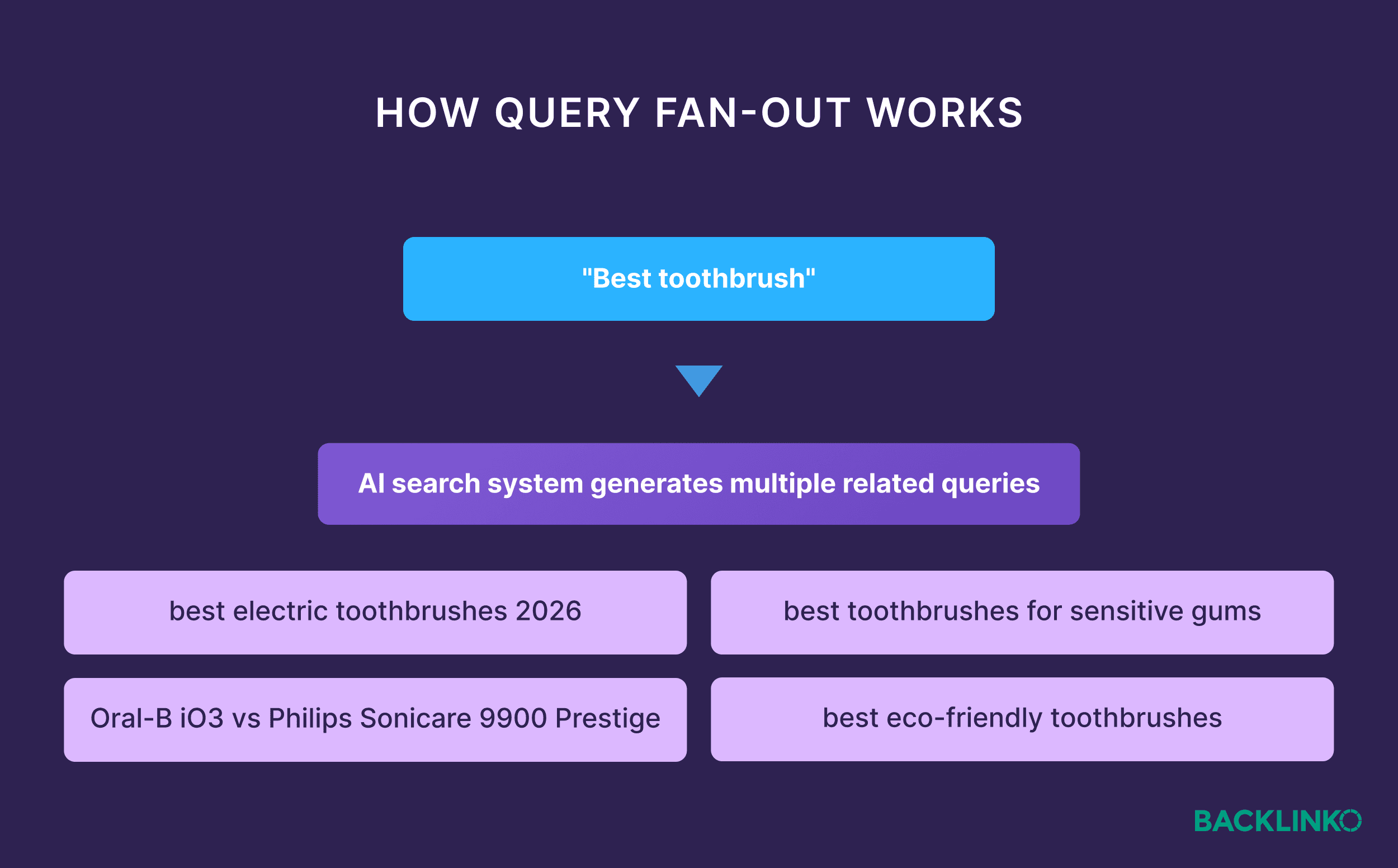
Consider a simple query like "best toothbrush." A legacy search engine might return a list of best-of listicles. An AI, however, uses query fan-out to ask:
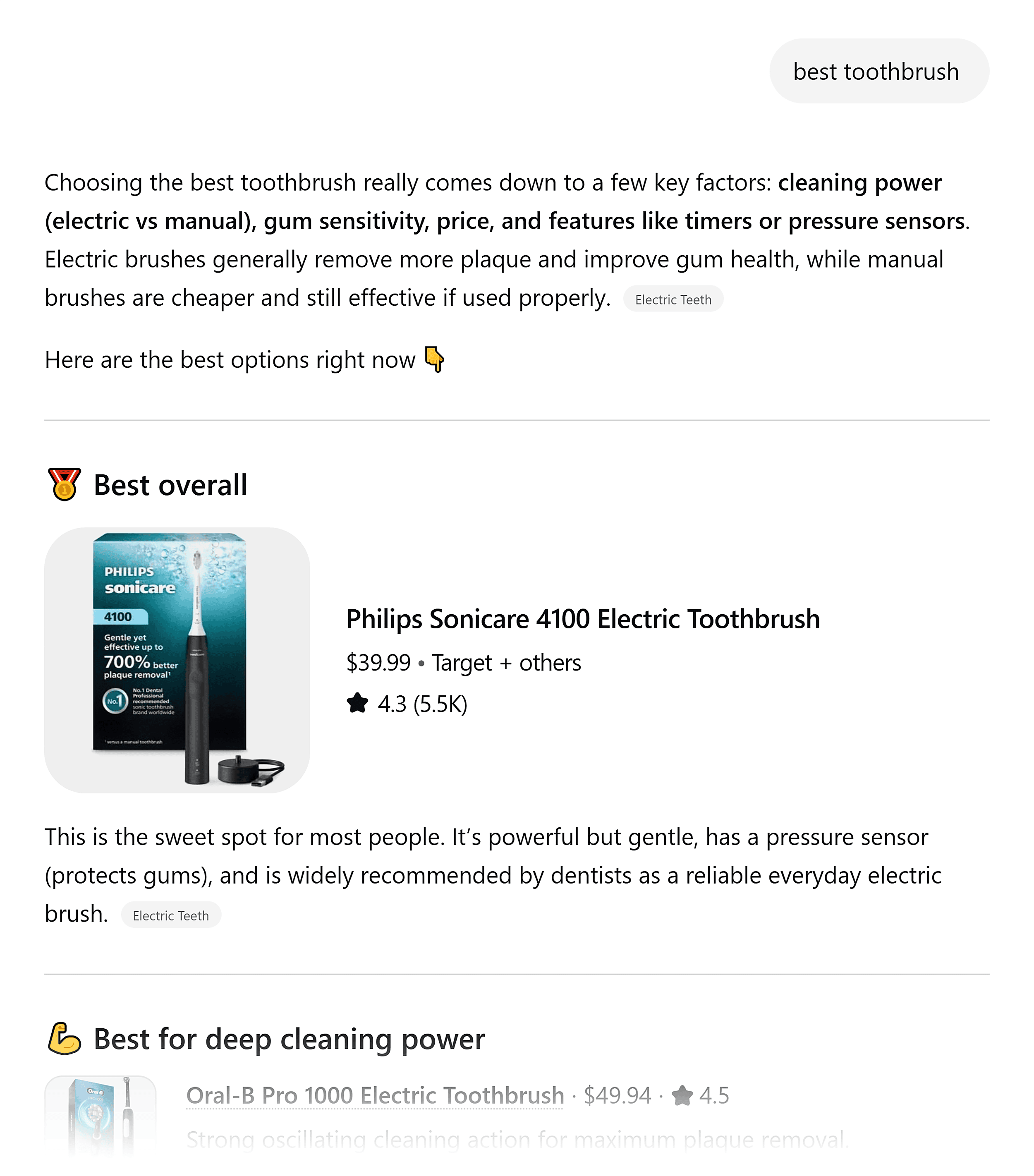
- "Best electric toothbrushes [Current Year]"
- "Best toothbrushes for sensitive gums"
- "Oral-B vs. Philips Sonicare comparison"
- "Eco-friendly toothbrush alternatives"
By addressing these sub-queries, the AI provides a multi-dimensional answer that covers top-rated picks, specialized use-cases, and head-to-head comparisons. The AI anticipates the user’s intent, even if the initial prompt was just two words.
Why Rankings Are No Longer King
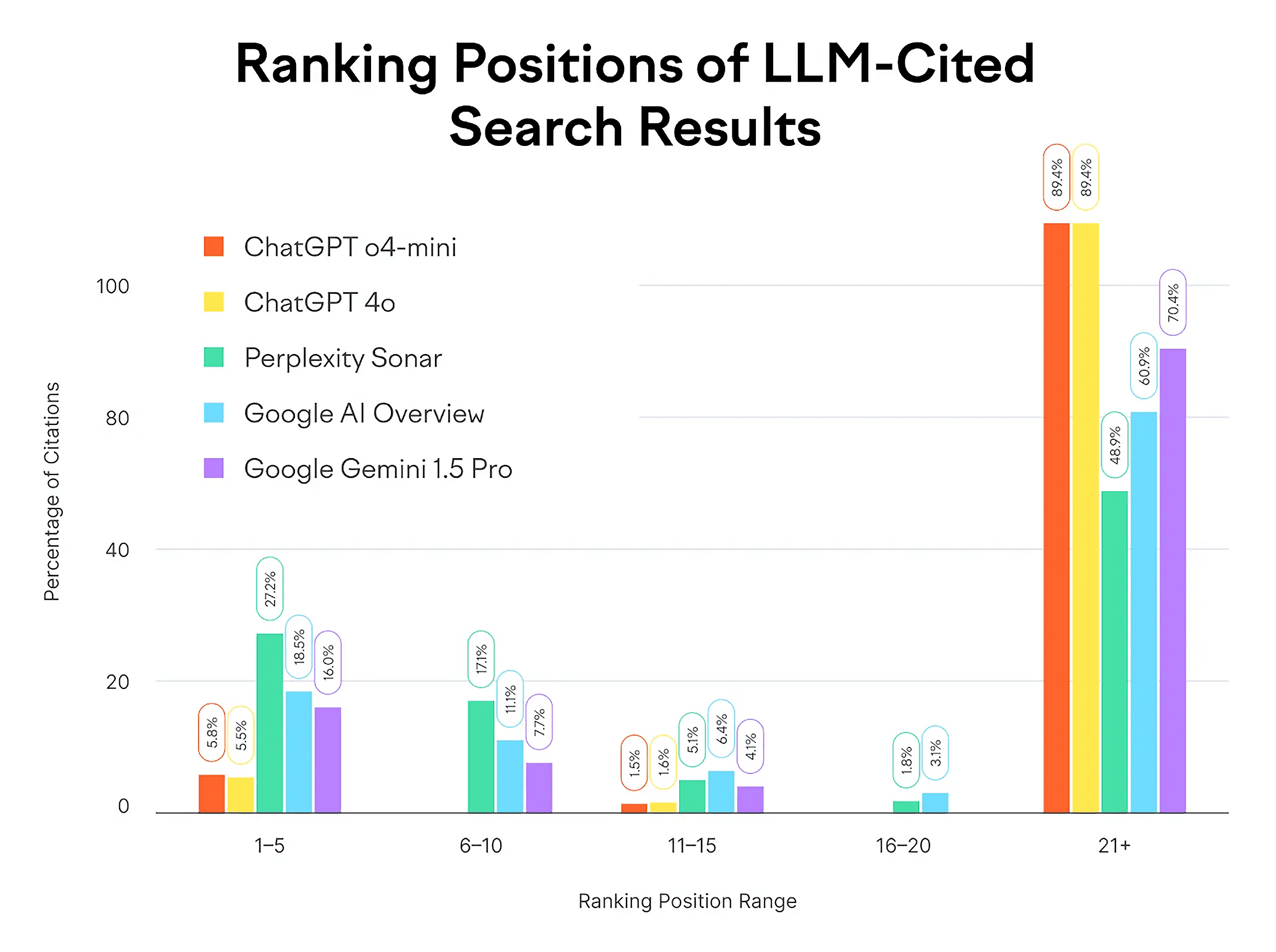
If high rankings don’t guarantee AI citations, what does? In the world of AI search, coverage and retrievability are the new measures of success.
Recent data underscores this paradigm shift. A study conducted by Semrush revealed that ChatGPT cites pages in the 21st position or lower nearly 90% of the time. This suggests that LLMs prioritize the relevance and depth of a specific passage over the overall domain authority or ranking position of a page.
The Death of the Linear Funnel
Marketing teams have long operated under the assumption that the customer journey is linear: Awareness, Consideration, and Decision. Content was mapped to these stages accordingly. Query fan-out has effectively collapsed this funnel.
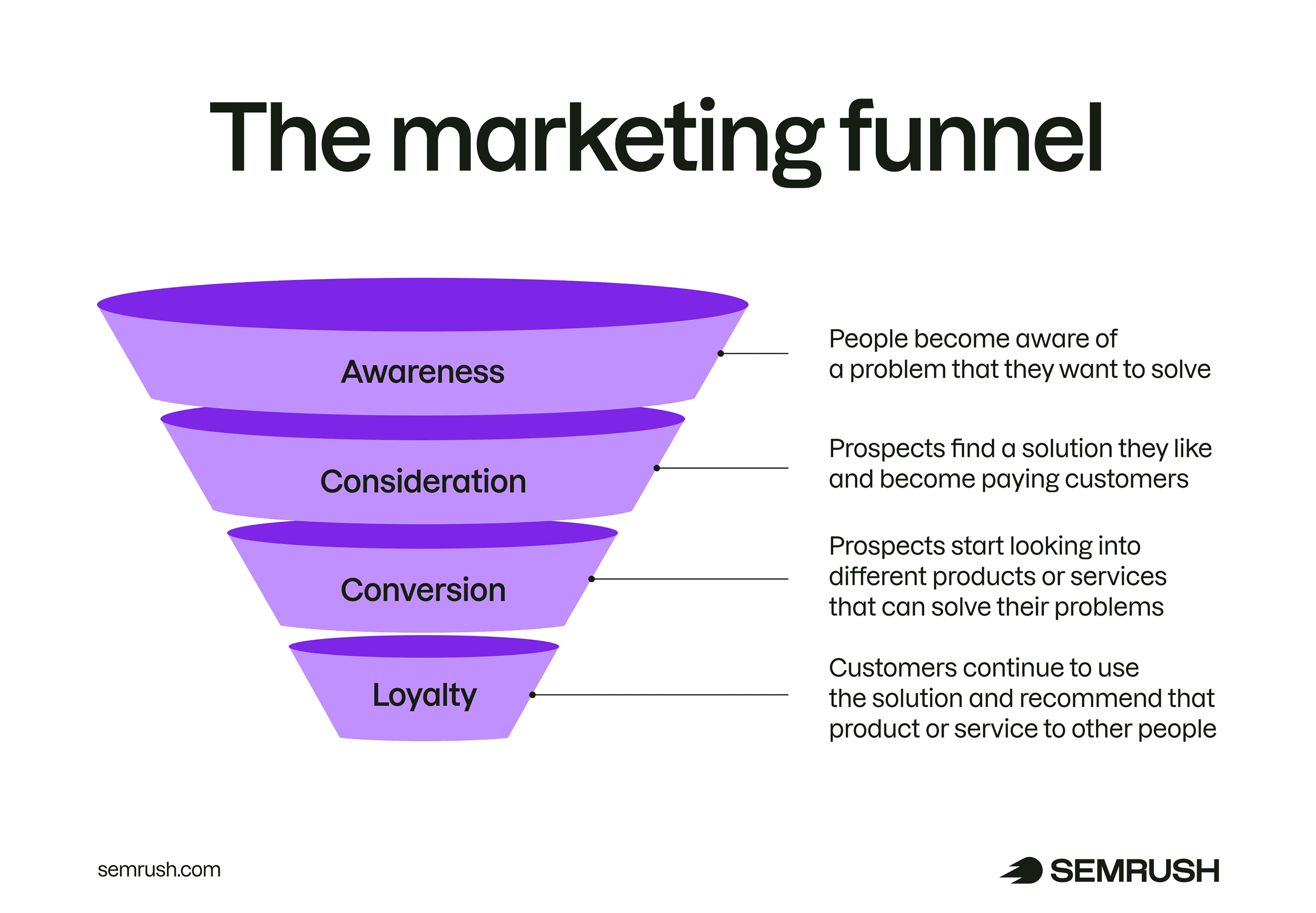
A single high-intent question now triggers an AI response that covers the entire journey in one go. The AI retrieves awareness-level context, consideration-level comparisons, and decision-level specifics, all within a single interaction. Consequently, your content must now serve the full funnel, regardless of where it lives on your site.
The 6-Step Workflow to Earning AI Citations
To secure your place in the AI-generated future, you must transition from keyword-centric SEO to "prompt-centric" content strategy.
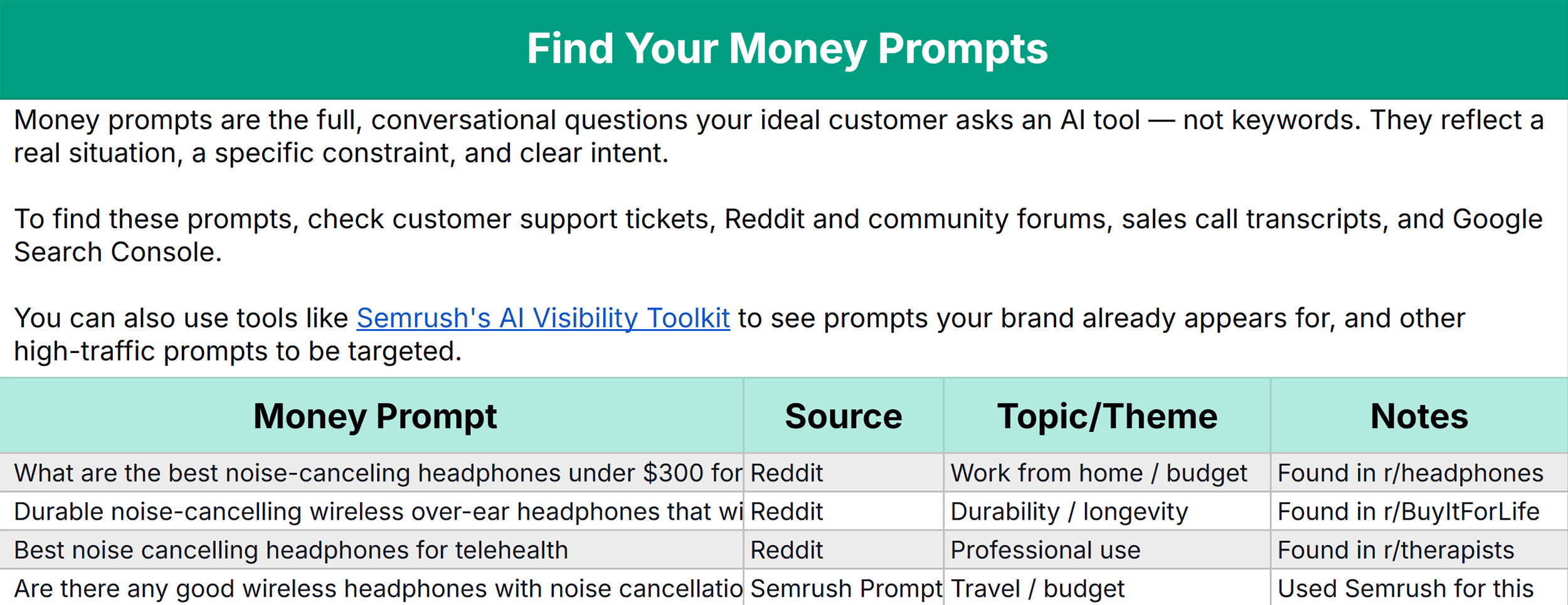
1. Identify Your "Money Prompts"
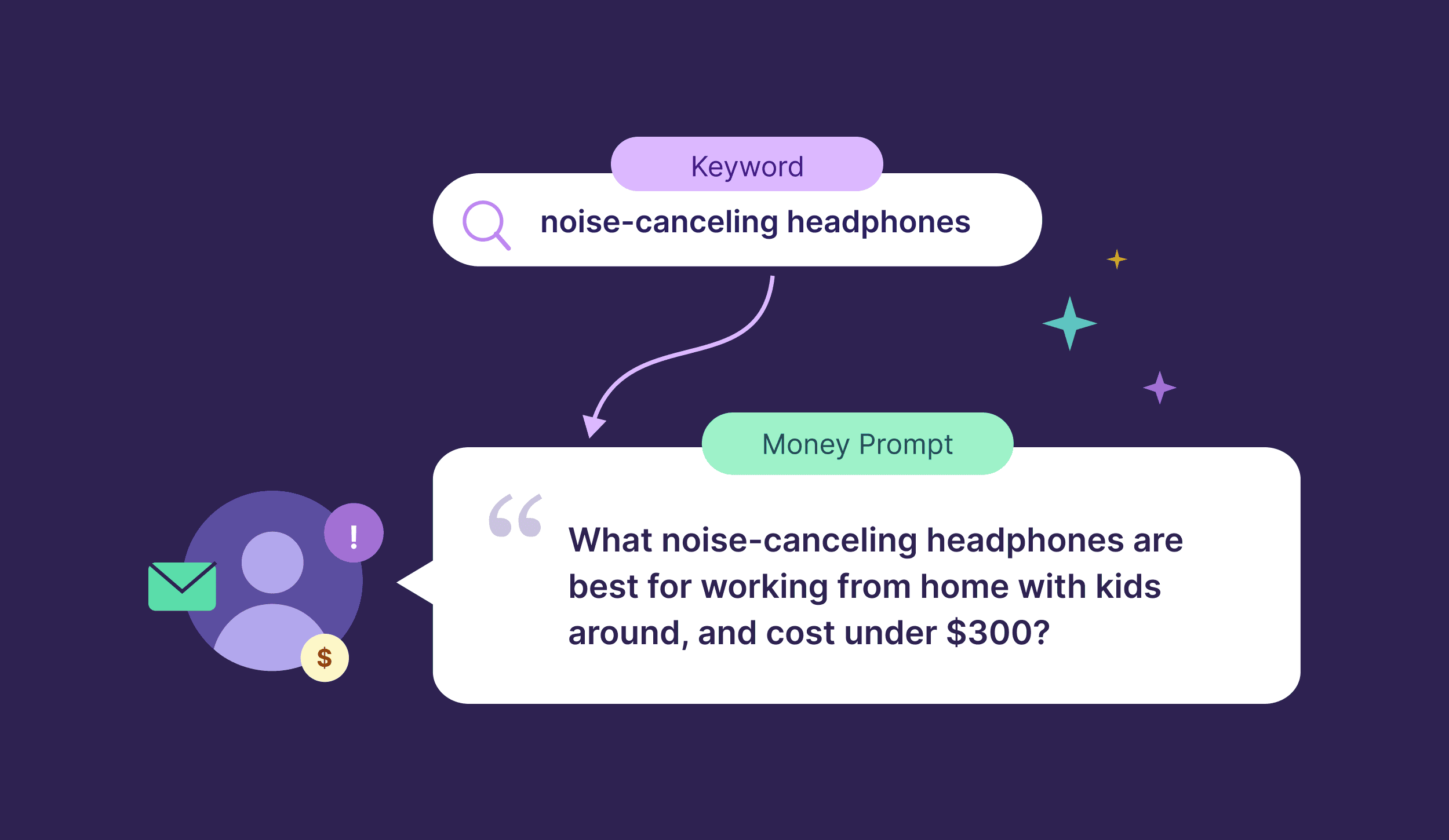
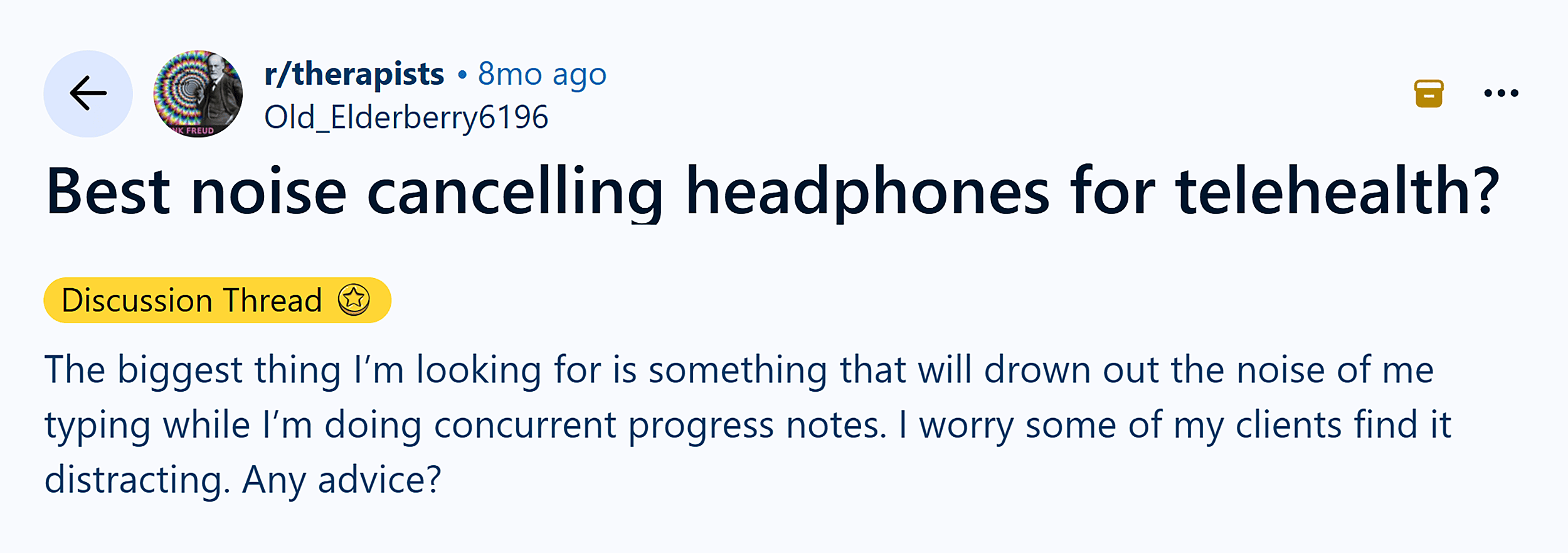
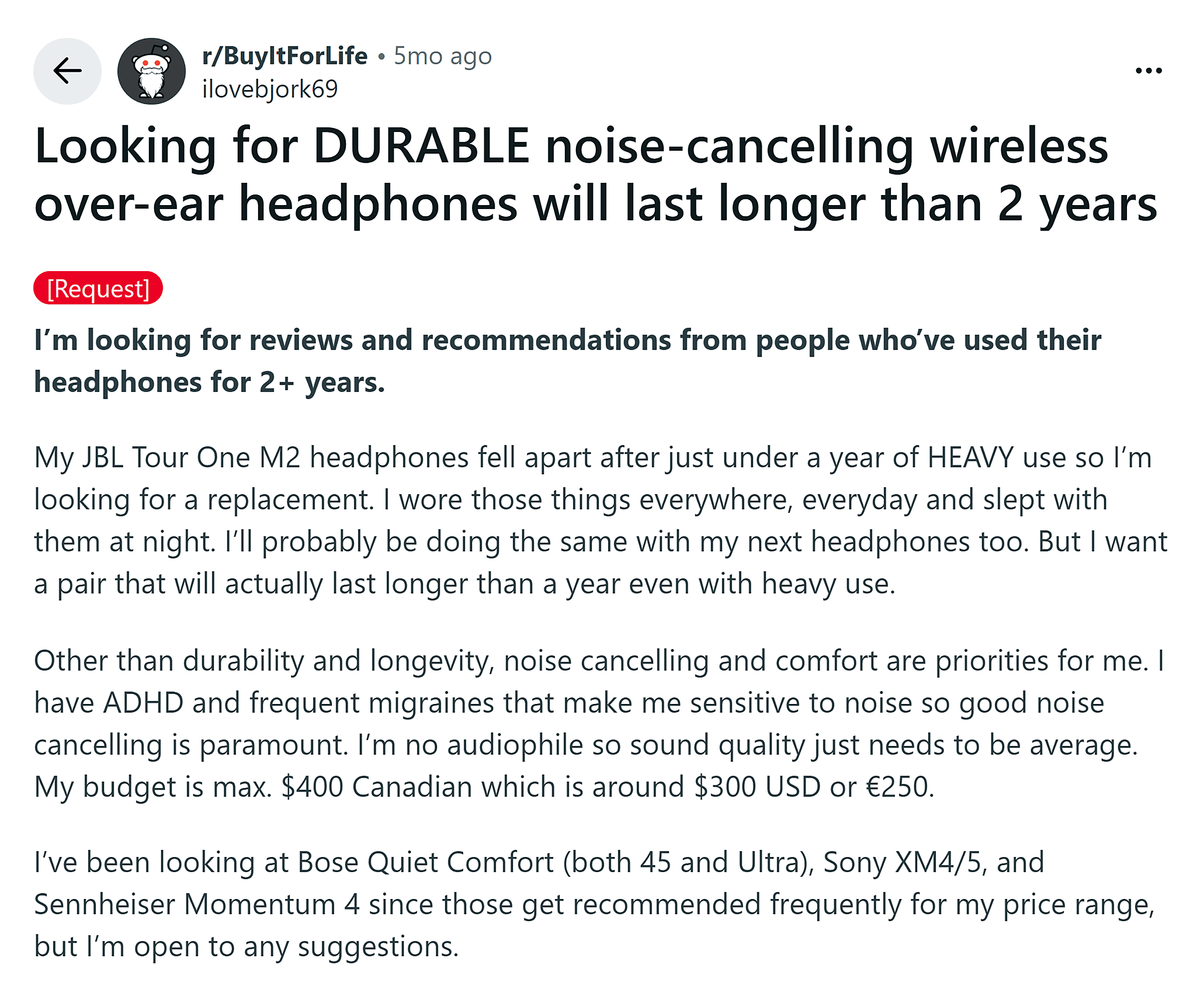
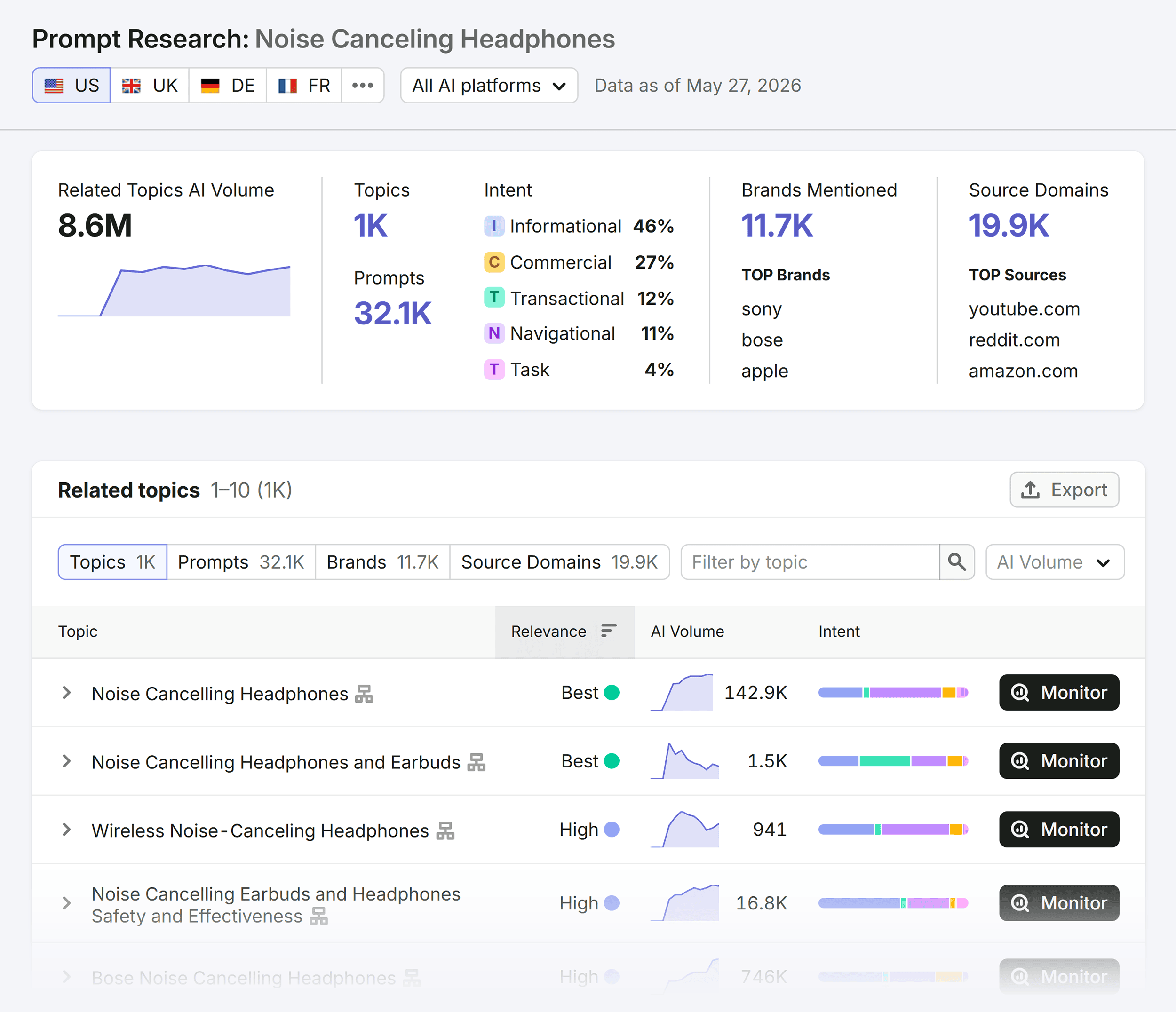
"Money prompts" are the conversational queries your ideal customers use when interacting with an AI tool to solve the problems your product addresses. Unlike traditional keywords, these are long-tail and high-intent.
- Keyword: "Noise-canceling headphones"
- Money Prompt: "What noise-canceling headphones are best for working from home with kids, and cost under $300?"
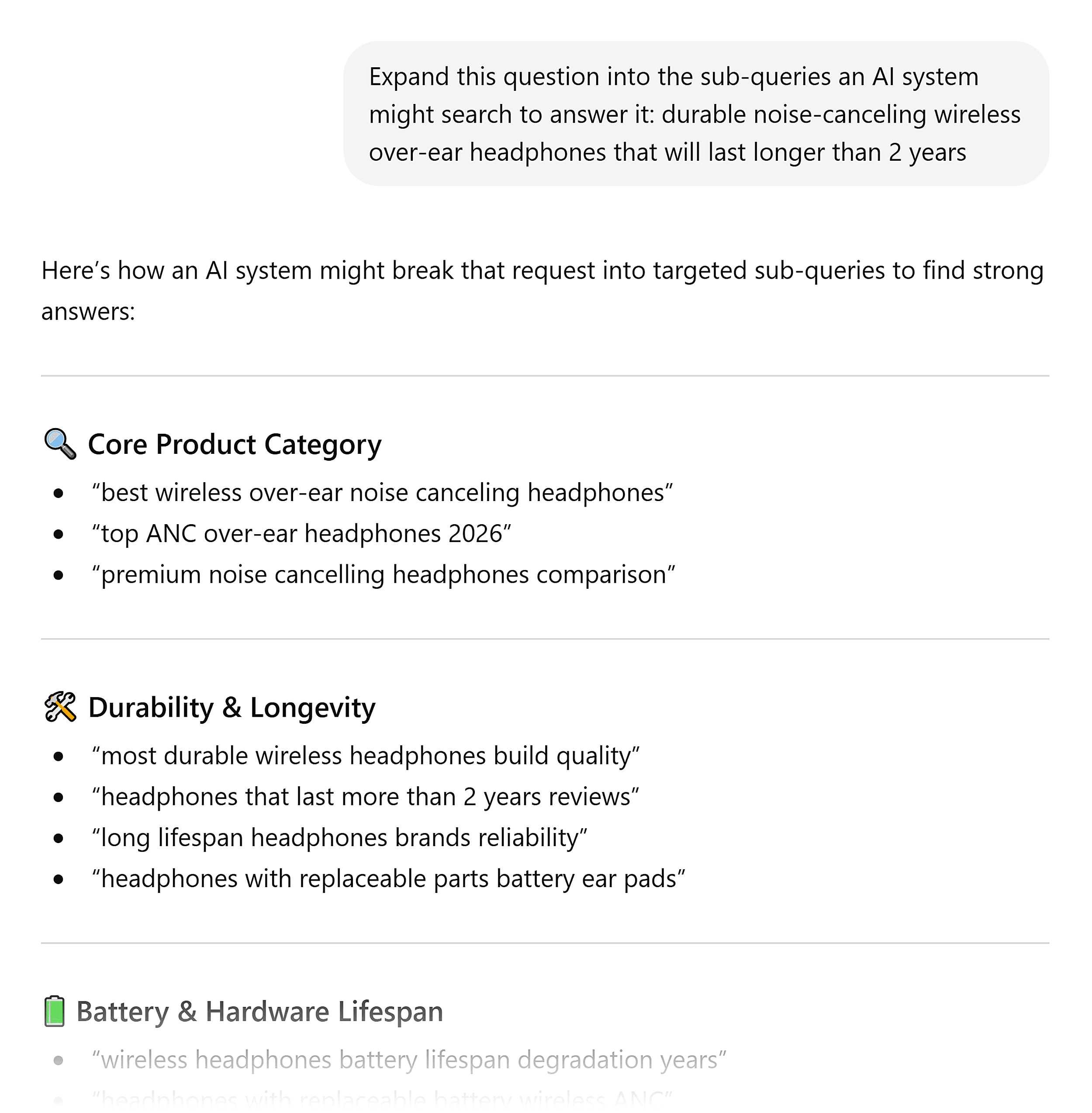
2. Generate Your Fan-Out Set
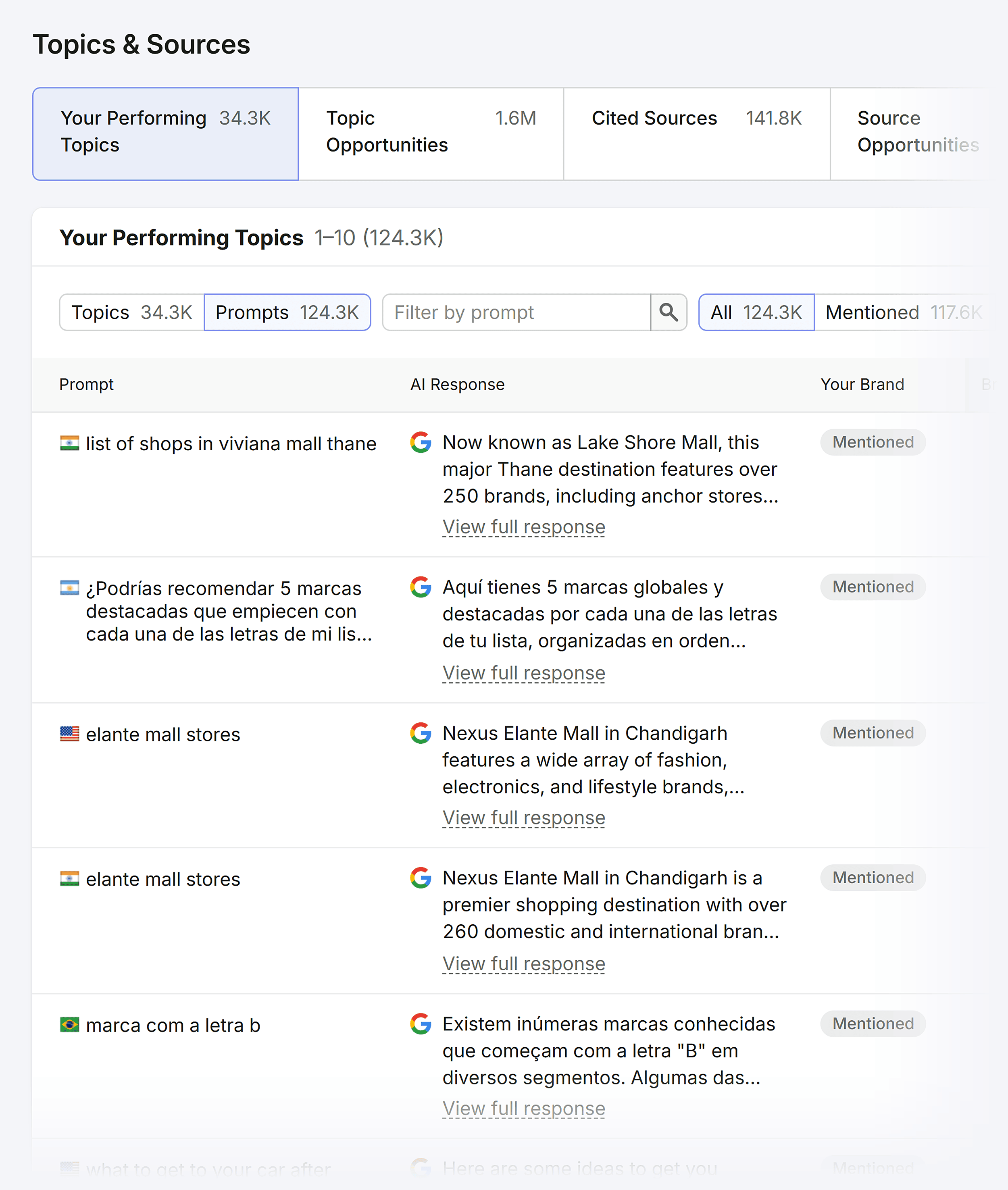
Use an AI tool to break your money prompt down. You can do this manually by asking ChatGPT or Claude to "Break this prompt down into 10 sub-queries that would help you answer it comprehensively." Alternatively, use browser-based tools or extensions designed to capture the specific queries an AI uses when it retrieves data from the web.
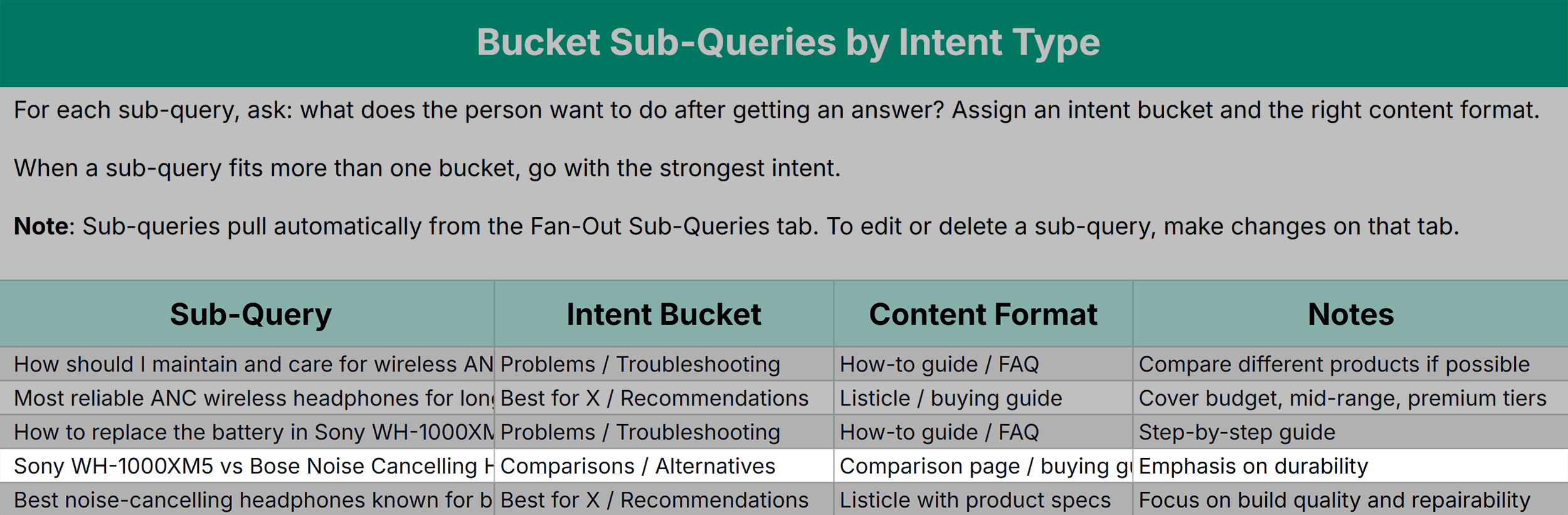
3. Categorize by Intent
Not all sub-queries are created equal. You must bucket your findings into intent categories:
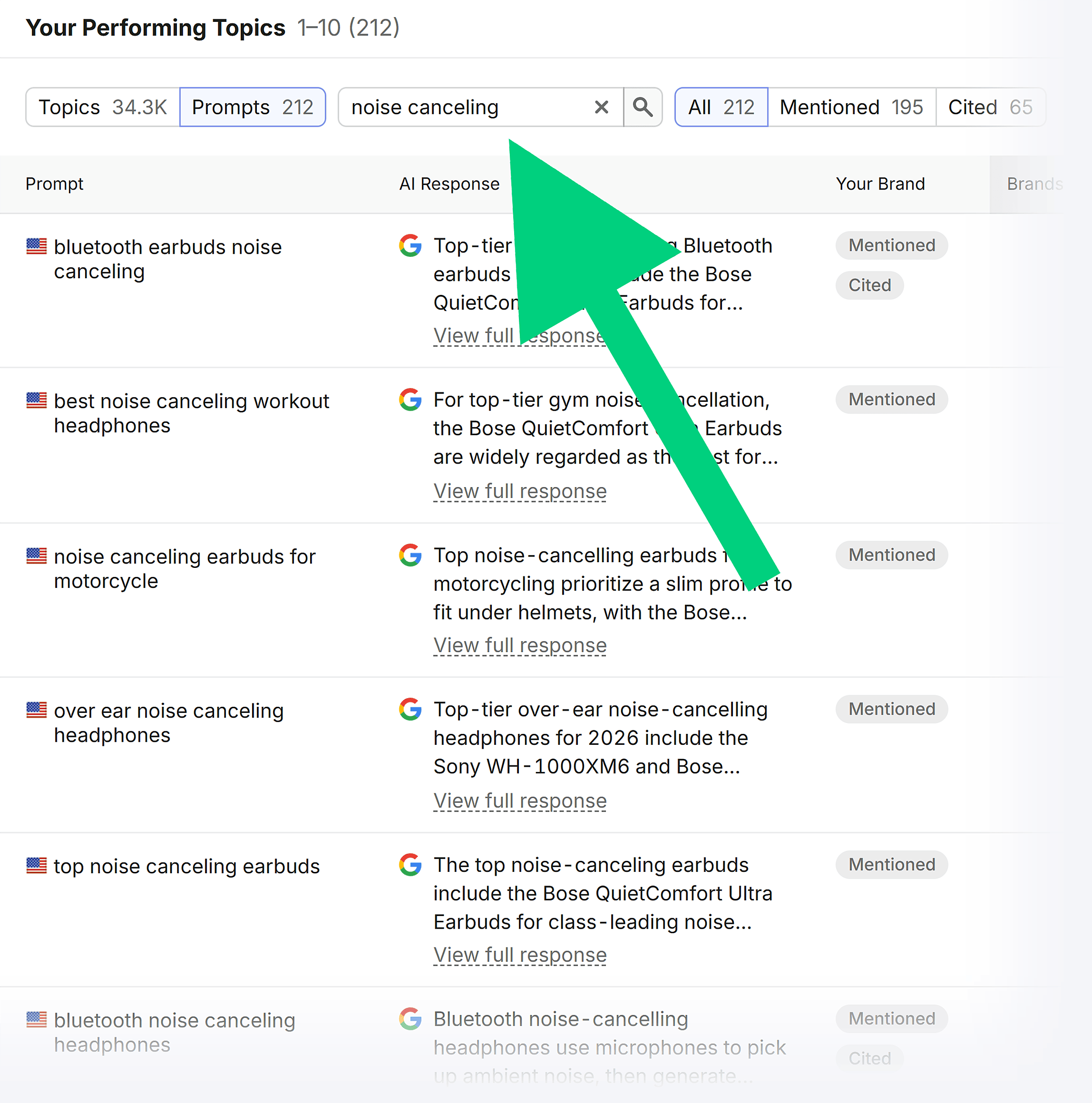
- Definition/Basics: Informational content.
- Comparative: Head-to-head analysis.
- Problem/Troubleshooting: How-to guides.
- Social Proof: Reviews and community discussions.
Matching your content format to the specific intent of the sub-query is critical for extraction.
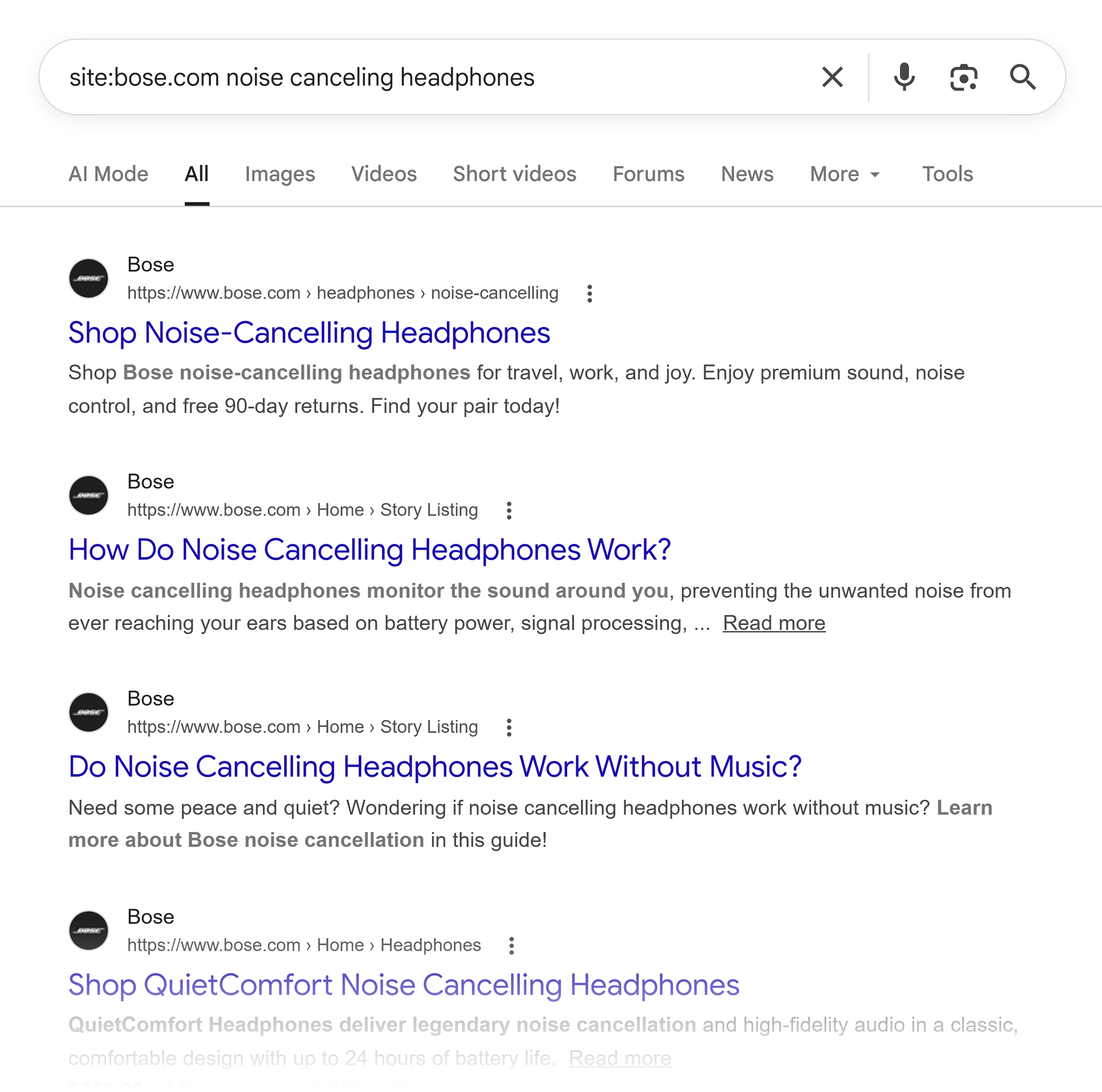
4. Audit Your Content Gaps
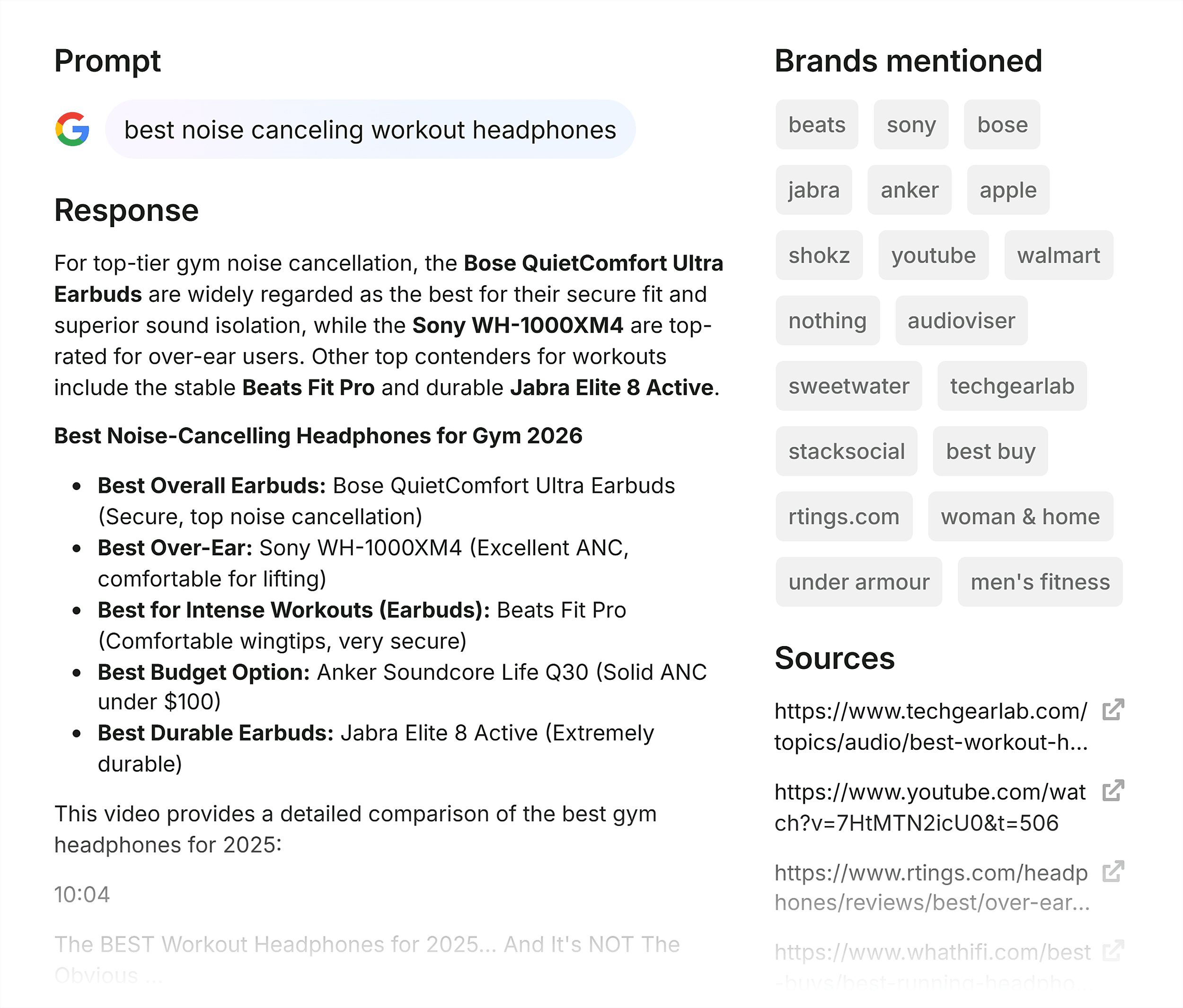
Perform a site search (e.g., site:yourdomain.com [topic]) to see if you have existing content that resolves these sub-queries.
- Not covered: You need new content.
- Partially covered: You need to add a dedicated section to an existing page.
- Fully covered: You are in a strong position; keep it updated and relevant.
5. Optimize for Extraction
AI systems prefer content that is easy to parse. Structure your pages with:
- Clear, question-based headings (H2s and H3s).
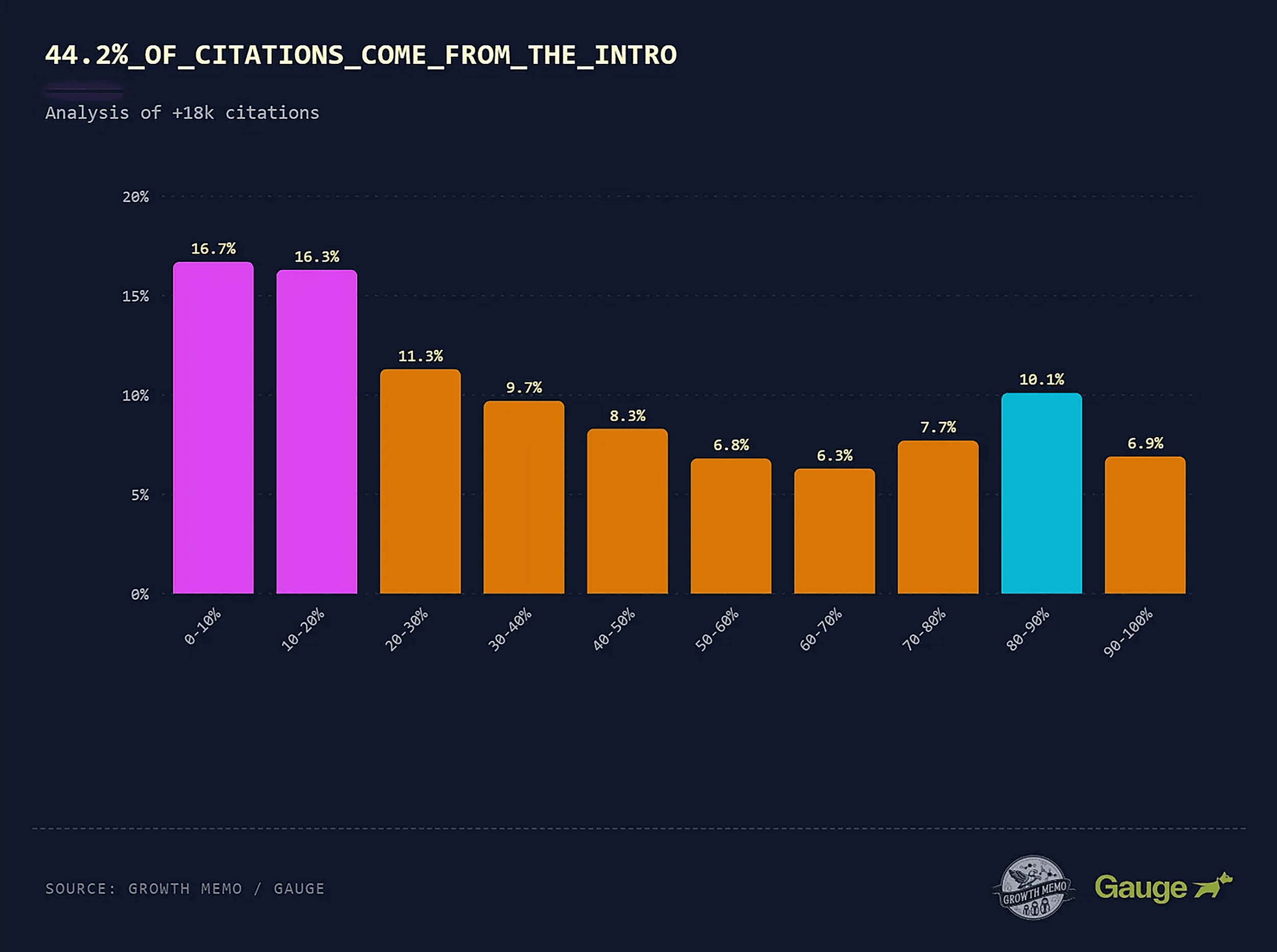
- Concise answers located in the first 30% of the page.
- Structured data and tables that allow the AI to extract specs or comparisons without deciphering paragraph text.
6. Measure and Refine
Track your "AI visibility" by regularly running your money prompts through various LLMs. Monitor not just whether you appear, but how you appear. Are you being cited as a primary source, or are you mentioned alongside competitors? Use sentiment analysis tools to see if the AI describes your brand favorably.
Implications for the Future of Search
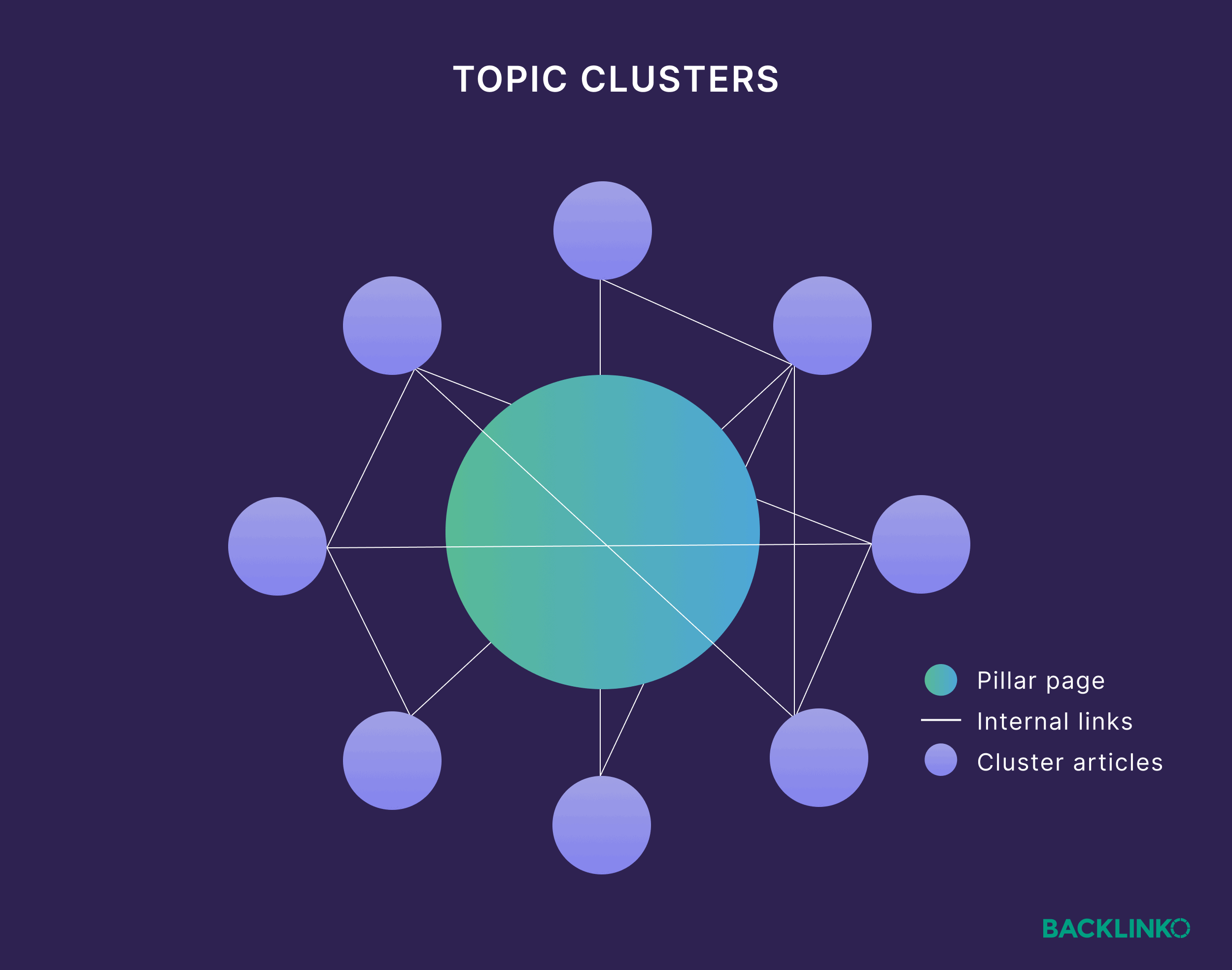
The transition to query fan-out is not a temporary trend; it is the natural evolution of how information is accessed and synthesized. Brands that succeed in this environment will be those that view their content as a modular library of answers rather than a static collection of blog posts.
As AI platforms continue to refine their internal reasoning, they will likely become even more efficient at filtering out "fluff" content. They will prioritize pages that provide definitive, structured, and highly relevant information.
Ultimately, the goal is to become an indispensable source of truth for the AI. By focusing on comprehensive topic coverage and clean, extractable formatting, you ensure that when an AI "fans out" to build its response, your brand is one of the pillars it chooses to build upon.

 Reynand Wu


 Sagoh
 Siti Muinah