Neng Nana
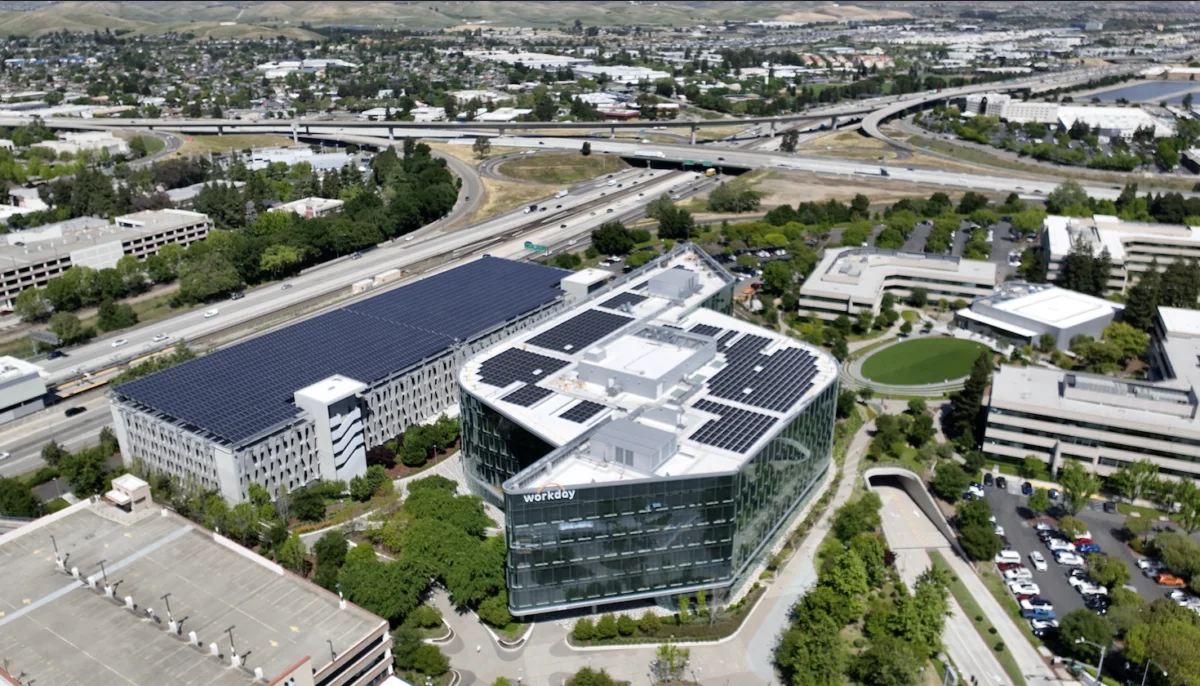
In an era where corporate climate commitments are increasingly scrutinized for "greenwashing," enterprise software giant Workday is charting a more pragmatic, data-driven path toward net-zero. Having recently concluded a five-year cycle of science-based targets, the company has unveiled an ambitious suite of new greenhouse gas (GHG) reduction pledges. These commitments, validated by the Science Based Targets initiative (SBTi), signal a transition from broad, aspirational goals to hyper-focused, efficiency-driven operational strategies.
The new roadmap, extending to the company’s 2031 fiscal year, highlights both the triumphs of corporate climate action and the stubborn realities of global supply chain dependencies. By leveraging internal carbon pricing, software optimization, and strategic partnerships, Workday is attempting to prove that sustainability is not a peripheral concern, but a core component of fiscal and operational health.
The Strategic Shift: New Targets for 2031
Workday’s new decarbonization strategy is built on a foundation of measurable, near-term accountability. The company has pledged to slash absolute Scope 1 (direct) and Scope 2 (indirect electricity-related) GHG emissions by 42 percent by fiscal year 2031, using a 2025 baseline.
Beyond operational emissions, the company is tackling the complex landscape of Scope 3 emissions—those generated across its value chain. Workday has committed to a 52 percent reduction in the emissions intensity (per dollar spent) for its purchased goods and services, capital expenditures, and business travel by 2031. To maintain its record of renewable energy utilization, the company will continue to match 100 percent of the power consumption at its global offices and data centers with renewable energy sources through the end of the decade.
A Chronology of Climate Ambition
To understand Workday’s current trajectory, one must look back at its inaugural foray into formal climate targets set in 2020.
2020–2021: Setting the Baseline
Workday entered the last five-year cycle with three primary pillars: matching electricity consumption with renewables, reducing business travel emissions, and mobilizing its supply chain to adopt independent climate targets. At the time, these goals were considered leading-edge in the software-as-a-service (SaaS) sector.
2022–2024: The Lessons of Implementation
During this period, the company successfully hit two of its three targets. It achieved six consecutive years of matching renewable energy to its office and data center footprint. Simultaneously, it outperformed its business travel reduction goal, slashing emissions by 31 percent—well ahead of the 25 percent target. This was achieved through a combination of strict "essential travel only" policies and strategic investments in Sustainable Aviation Fuel (SAF) certificates, a move made in partnership with a coalition of corporate buyers.
2025: The Pivot Point
As the 2026 fiscal year concluded, Workday faced a sobering reality regarding its supply chain goal. The company had aimed to have 70 percent of its suppliers set their own emissions reduction targets. However, the final tally reached only 24 percent. This shortfall served as the primary catalyst for the company’s "refresh" of its sustainability strategy, forcing leadership to reconsider how to influence partners who are not yet equipped to prioritize decarbonization.
Supporting Data and Operational Metrics
The transition from the previous cycle to the current one is backed by rigorous internal data collection. In its 2026 Global Impact Report, Workday disclosed total emissions of 335,490 metric tons of carbon dioxide equivalent (MT CO2e). Notably, roughly one-third of this footprint is tied directly to the cloud and data center infrastructure that powers its enterprise platform.
The Power of "Rightsizing"
Workday’s recent success in carbon reduction is largely attributed to "rightsizing"—a process of aligning cloud infrastructure capacity with actual demand. By auditing its usage of cloud services, the company discovered significant redundancies. Through the optimization of application code—ensuring software processes data more efficiently—Workday reduced its reliance on heavy computing power.
In 2025 alone, these efficiency measures yielded a reduction of 5,000 MT CO2e and saved the company millions of dollars in infrastructure overhead. This demonstrates a vital tenet of modern ESG: the alignment of environmental efficiency with bottom-line profitability.
Official Responses: Lessons from the C-Suite
Erik Hansen, Workday’s Chief Sustainability Officer, has been transparent about the hurdles the company faced. When discussing the failure to meet the supplier engagement goal, Hansen noted that the barrier was rarely a lack of intent, but rather a lack of capacity. "Some organizations aren’t ready, and they were clear with us about that," Hansen stated.
This admission underscores a broader shift in the corporate sustainability narrative: moving from "demanding" compliance to "enabling" it. Workday is now embedding sustainability requirements directly into procurement contracts, using them as a "linchpin" for identifying where footprints can be minimized.
Regarding the broader mission, the company emphasized that sustainability is an cross-departmental mandate. In its impact report, Workday stated: "This first cycle of science-based targets taught us that true corporate sustainability cannot exist in a silo. Achieving ambitious targets requires continuous deep stakeholder buy-in across every department—from global real estate and procurement to product engineering and finance."
The AI Ecosystem and the "Carbon-Conscious" Future
Perhaps the most significant challenge on the horizon is the explosive growth of artificial intelligence. AI requires massive computational power, which inherently drives up the energy consumption of data centers.
Workday is addressing this by adopting a "carbon-conscious" approach to its AI stack. Rather than adopting any and all models, the company is prioritizing foundational models that run on high-efficiency data architectures. A primary example is the use of Google’s Gemini as the default AI model for Workday’s "Sana" platform. This decision was largely driven by Google’s commitment to 24/7 carbon-free energy.
"We need to engage with the AI ecosystem more fulsomely," Hansen remarked. The company is now actively teaming up with other software peers to demand greater transparency from AI model developers. By holding cloud providers like Google and AWS accountable for the carbon intensity of their AI offerings, Workday is using its market influence to drive systemic change.
Implications: The Future of Enterprise Sustainability
1. Internal Carbon Pricing as a Financial Tool
Workday’s decision to implement and scale an internal price on carbon is a bellwether for the software industry. By attaching a monetary value to every ton of carbon produced, the company ensures that sustainability is factored into every project’s P&L. As this price increases over the coming years, it will provide a built-in incentive for departments to innovate away from high-carbon activities.
2. The Move Toward Intensity-Based Metrics
The transition from absolute targets to intensity-based targets (emissions per dollar) for Scope 3 reflects the reality of a growing business. As Workday scales, its absolute footprint might fluctuate, but by focusing on efficiency per dollar spent, the company ensures it is decoupling growth from pollution.
3. The End of the "Siloed" ESG Strategy
The most lasting implication of Workday’s recent report is the integration of sustainability into product engineering. By optimizing code and eliminating "computing overhead," sustainability is no longer just about buying carbon credits or switching to wind power; it is about writing better software.
Conclusion
Workday’s journey reflects the maturation of the corporate climate movement. The company has moved beyond the "low-hanging fruit" of renewable energy credits and is now tackling the more difficult, granular work of supply chain engagement and AI-driven efficiency. While the path to 2031 will undoubtedly present new hurdles, Workday’s reliance on data, accountability, and cross-functional integration provides a replicable blueprint for the enterprise sector. As the company continues to refine its internal carbon pricing and engage its AI partners, it is setting a standard that suggests the future of software is not just faster or more intelligent, but significantly cleaner.


 Lina Irawan

 Pevita Pearce

 Reynand Wu

 Siti Muinah

 Raul Delapena Setiawan