
 Pevita Pearce
As delegates gather in Yerevan, Armenia, for the COP17 biodiversity summit, the atmosphere is heavy with the weight of unfulfilled promises. A new global stocktaking report, prepared by the UN Convention on Biological Diversity (UN CBD), has delivered a sobering verdict: the financial mechanisms designed to reverse the tide of nature loss are failing to gain the necessary traction.
The report confirms that the international community is nowhere near the scale of funding required to meet the goals of the Kunming-Montreal Global Biodiversity Framework (GBF), the historic deal struck in 2022 to halt and reverse biodiversity loss by 2030. With a staggering $200 billion "biodiversity finance gap" to close, the current reality of underfunded initiatives and sluggish private sector participation suggests that the 2030 vision is increasingly at risk.

The Anatomy of a Failed Target
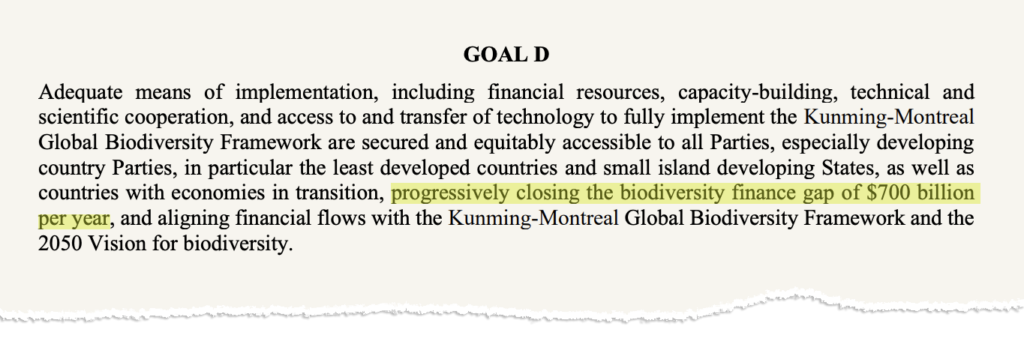
The Kunming-Montreal GBF was celebrated as the "Paris Agreement for Nature." Among its most critical components was "Goal D," which set out a clear, albeit ambitious, roadmap for closing a $700 billion-per-year funding gap by 2030. This strategy relies on two pillars: the elimination of harmful subsidies—which currently siphon $500 billion away from ecological health—and the mobilization of $200 billion in new financial resources.
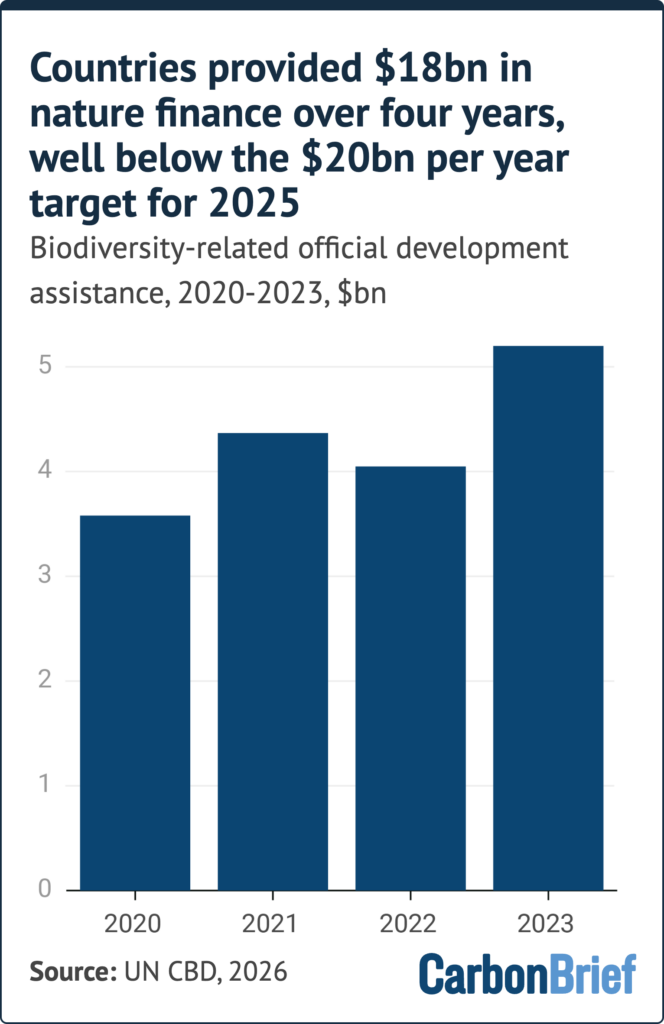
However, the 2025 milestone—a crucial checkpoint for public funding—has effectively been missed. The GBF stipulated that developed nations should provide at least $20 billion per year to developing countries by 2025, a figure set to rise to $30 billion by 2030. The latest data from the CBD suggests that international public funding for biodiversity between 2020 and 2023 averaged a meager $4.4 billion annually. Even when accounting for broader biodiversity-related finance, the total remains significantly below the expectations established in Montreal.
Chronology: From Montreal to Yerevan
To understand how the current crisis of confidence emerged, it is necessary to track the progression of these commitments:
- December 2022 (COP15, Montreal): 196 countries adopt the Kunming-Montreal Global Biodiversity Framework. The agreement introduces the "30×30" target and explicit financial pledges to bridge the $700 billion annual funding gap.
- August 2023: The Global Biodiversity Framework Fund (GBFF) is officially launched under the stewardship of the Global Environment Facility (GEF). It is hailed as the primary vehicle for channeling international public finance.
- October 2024 (COP16, Colombia): The "Cali Fund" is established, a groundbreaking initiative designed to capture benefits from digital sequence information (DSI) on genetic resources. It represents the first attempt to force private industry to pay for the biodiversity that fuels its research and development.
- September 2026: The UN CBD publishes its global stocktaking report. It reveals that the GBFF has secured less than $400 million in three years, and the Cali Fund has received a nominal $6,000 from the private sector.
- October 2026 (COP17, Yerevan): Negotiations commence in Armenia. Finance is slated to be the primary point of contention, with developing nations demanding accountability from developed economies.
Supporting Data: The Chasm Between Need and Reality
The data provided by the OECD and the UN CBD paints a stark picture of stagnation. While global biodiversity finance was estimated to be between $74.9 billion and $92.4 billion per year from 2023 to 2025, the majority of this funding is not "biodiversity-specific."
The OECD reports that only about $8 billion per year qualifies as strictly dedicated to biodiversity conservation. The remainder is classified as "secondary aim" funding, which, while beneficial, does not directly address the systemic drivers of species extinction.
The failure of the specialized funds is perhaps the most glaring evidence of the current impasse:
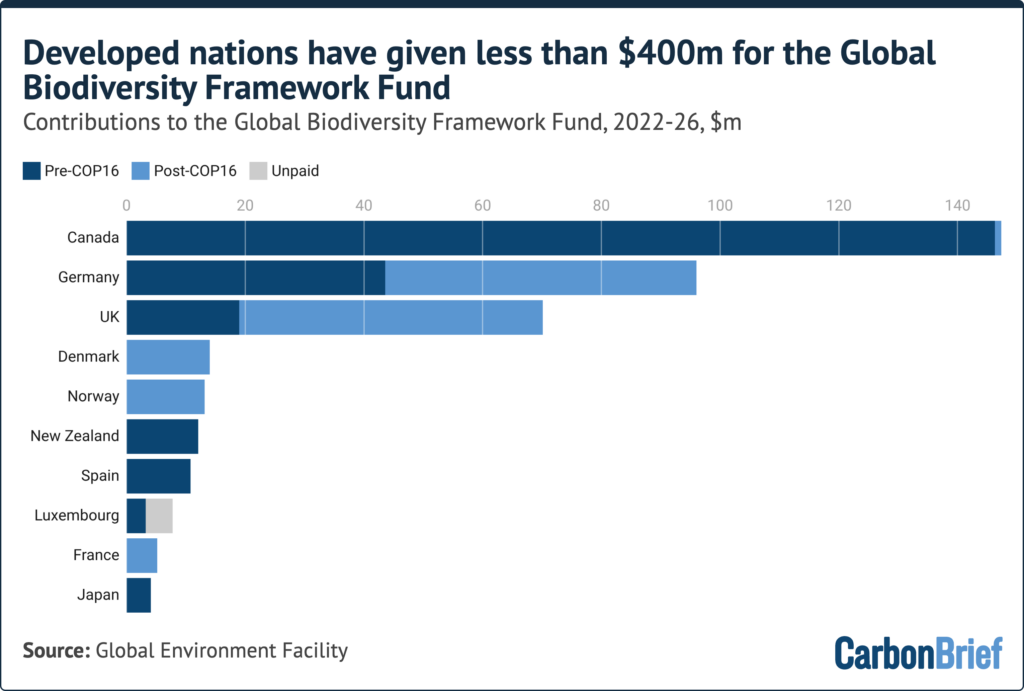
- The Global Biodiversity Framework Fund (GBFF): Despite the high stakes, developed nations have committed less than $400 million to this fund as of mid-2026. Contributions have effectively stalled following an initial wave of pledges, leaving the fund without the predictable, long-term capital required to support large-scale conservation projects in the Global South.
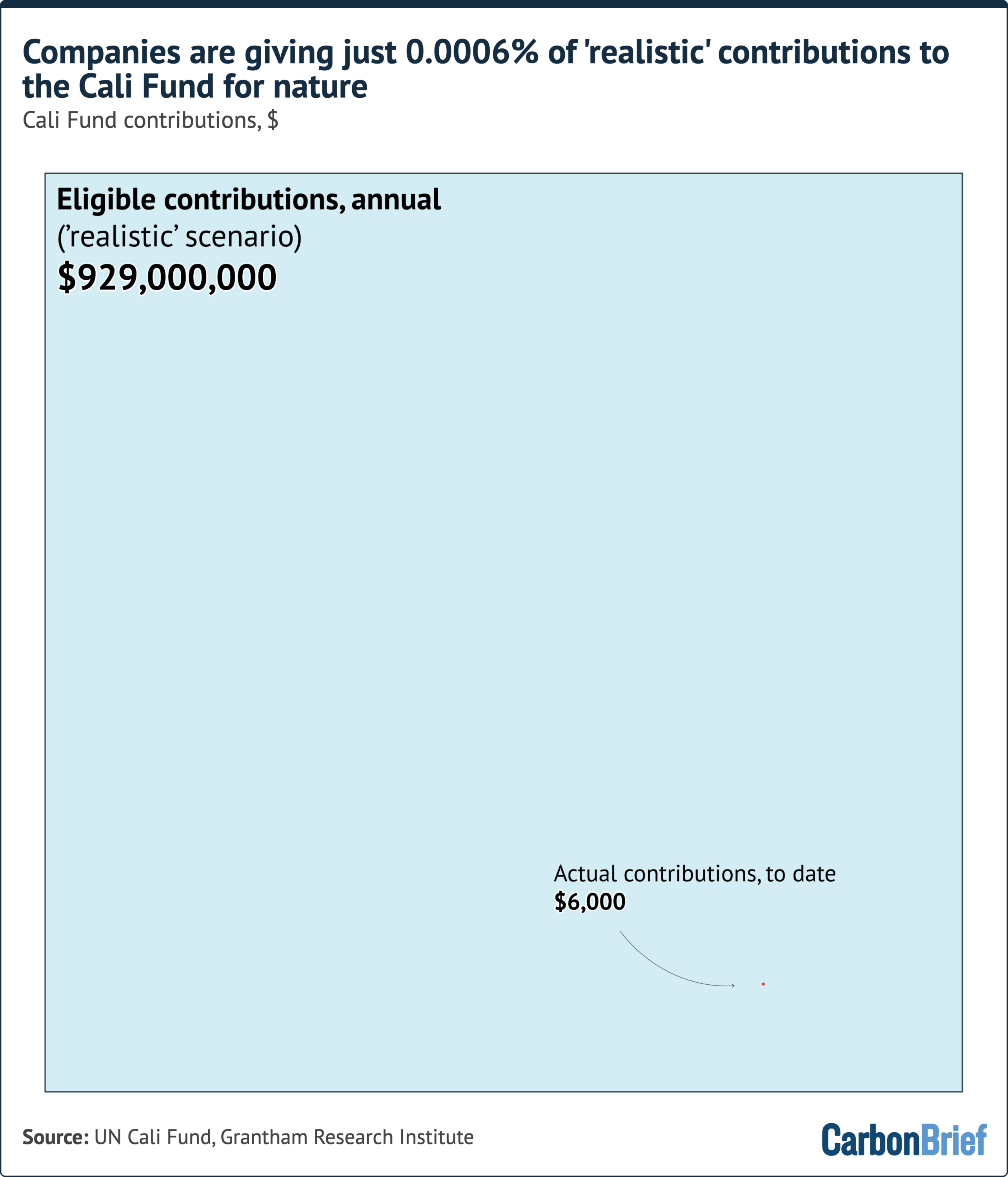
- The Cali Fund: The disparity here is even more extreme. Analysis by the Grantham Research Institute suggests that the fund could raise nearly $1 billion annually if companies complied with "realistic" uptake models. Instead, it has received a total of $6,000. Critics point out that "Cali Watch," an independent monitoring body, estimates that just eight major firms—should they pay their fair share—would owe $2 billion in "Cali debt."
Official Responses and The Burden of Implementation
The silence from the private sector regarding the Cali Fund has sparked outrage among policymakers and NGOs. Dr. Siva Thambisetty of the London School of Economics argues that the reliance on voluntary corporate participation is a fundamental design flaw. "The private sector is doing what it always does: minimizing outgoings and liability," she notes. "States with jurisdiction over these businesses need to stop relying on ‘corporate social responsibility’ and start enacting mandatory legal frameworks."
For developing nations, which are home to the vast majority of the world’s remaining biodiversity, the shortfall is not merely an accounting error; it is a profound breach of trust. Lim Li Ching of the Third World Network has been vocal in her criticism, warning that the failure of developed nations to meet their obligations should not be used as a pretext to pivot toward volatile market-based mechanisms.
"Developed countries have regrettably not met their legal obligations," says Lim. "This failure should not be used as an excuse to pivot to the private sector or market-based mechanisms, which struggle to raise finance at scale and often deepen social and ecological harm."
The Human Dimension: Indigenous and Local Communities
While the headlines focus on billions of dollars and international treaties, the most significant impact of this finance gap is felt at the local level. Dr. June Rubis, representing the Indigenous peoples and local communities (IPLCs) on the Cali Fund steering committee, emphasizes that the issue is not just about the amount of money, but the pathway it takes to reach those on the frontlines of conservation.
"Each part of the finance architecture needs to start sending credible signals at the same time," Dr. Rubis argues. "If one part moves while the others are repeatedly deferred, confidence in the wider biodiversity bargain becomes harder to sustain." For many Indigenous communities, access to finance is a prerequisite for survival, yet the bureaucratic hurdles inherent in current global funds often prevent that money from ever reaching the ground.
Implications for COP17 and Beyond
As the delegates in Yerevan begin the difficult work of untangling these financial knots, the implications of failure are severe. If the 2025 targets remain unmet, the 2030 goals of the GBF will become mathematically impossible to achieve.
The upcoming negotiations will likely revolve around three potential paths:
- Increased Public Pressure: A concerted effort by developing nations to force developed countries to increase their official development assistance (ODA) specifically for nature.
- Mandatory Regulation: Moving away from voluntary corporate contributions toward binding national legislation that enforces payments into funds like the Cali Fund.
- Alternative Mechanisms: A shift toward "innovative" finance, such as debt-for-nature swaps or biodiversity credits. However, these are highly controversial; critics argue that they often lack transparency and can lead to the "financialization" of nature, where the goal of conservation is replaced by the pursuit of carbon or biodiversity offsets.
The "biodiversity bargain" struck in Montreal was predicated on a sense of shared responsibility. If the developed world continues to prioritize its own domestic budgetary constraints over its international commitments, it risks not only the extinction of countless species but also the total collapse of the multilateral environmental governance system.
In Yerevan, the question is no longer whether there is enough money in the global economy to save nature. The data suggests there is. The question is whether there is the political will to bridge the gap between the wealth of the few and the survival of the many. As Dr. Rubis aptly put it, "Headline commitments matter, but so do the pathways through which money reaches people." Until those pathways are cleared of political inertia and corporate obstruction, the biodiversity crisis will continue to accelerate, leaving behind a legacy that future generations will struggle to reconcile.


 Lina Irawan

 Raul Delapena Setiawan



 Nana
