
 Sagoh
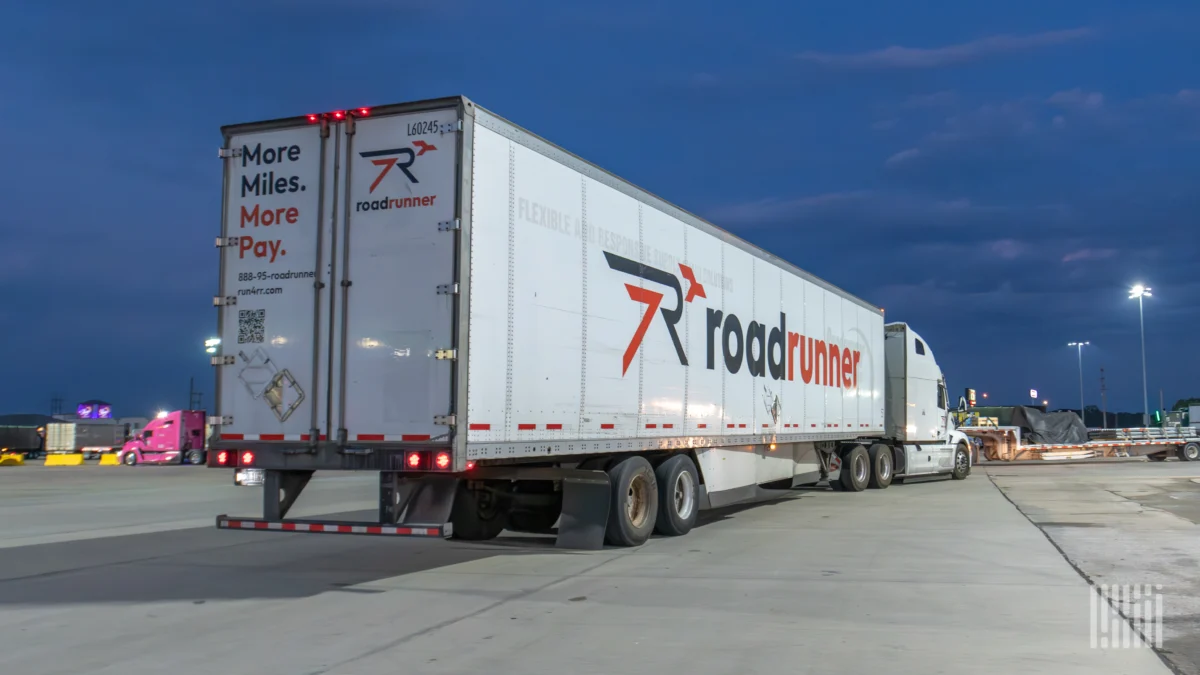
In a dual announcement that signals both aggressive network expansion and a strategic adjustment to the current macroeconomic environment, less-than-truckload (LTL) carrier Roadrunner (OTC: RRTS) has unveiled a new direct, outbound Canada-to-U.S. service. Simultaneously, the company confirmed a 5.9% general rate increase (GRI), set to take effect on November 2.
These developments represent a significant milestone for the carrier, which has spent the last several years refining its “Smart Network” to prioritize efficiency, speed, and real-time visibility in the long-haul, metro-to-metro LTL market.
The Strategic Expansion: Bridging the Border
Roadrunner’s new service offering is designed to connect shippers across Canada to approximately 40 major metropolitan markets throughout the United States. Unlike traditional cross-border logistics solutions that often rely on a combination of rail and truck transport, Roadrunner is positioning this as a strictly truck-based, direct linehaul service.
By keeping shipments on the road throughout the entire journey, Roadrunner aims to bypass the delays and complications often associated with intermodal transfers. In the LTL sector, every touchpoint—or "handing point"—serves as a potential source of delay, damage, or loss of shipment visibility. By removing rail from the equation, the company claims it can offer a more reliable, predictable, and transparent experience for shippers navigating the complexities of the U.S.-Canada trade corridor.
Leveraging the "Smart Network"
The expansion is an extension of the proprietary "Smart Network" that Roadrunner has been cultivating. Dave Black, vice president of strategic sales at Roadrunner, emphasized the technological and operational philosophy behind this rollout.
"We built a proprietary Smart Network for direct, long-haul, metro-to-metro service, delivering fewer handling points, faster transit, real-time visibility, and greater accountability with no unnecessary transfer points to delay shipments or compromise visibility," Black stated. "We have focused primarily on strengthening our U.S. network, and we are pleased to announce our next phase of expansion."
This move builds upon Roadrunner’s existing U.S.-outbound lanes into Canada, effectively creating a two-way flow that enhances the utility of its 40-plus terminal network and its reliance on independent drivers.
Chronology: A Trajectory of Transformation
Roadrunner’s current pivot toward long-haul, metro-to-metro efficiency did not happen overnight. To understand the significance of this Canadian expansion, one must look at the company’s recent history of structural realignment.
- Pre-2020: Roadrunner faced significant operational challenges and financial instability, necessitating a comprehensive restructuring effort.
- 2020–2022: The company underwent a major transformation, divesting non-core assets and focusing heavily on its LTL long-haul network. During this period, the company invested heavily in technology to enable real-time tracking and optimization of its routes.
- 2023: Roadrunner began rolling out new lanes within the U.S. to optimize its metro-to-metro footprint, moving away from traditional hub-and-spoke models that often resulted in slower transit times for long-haul freight.
- Early 2024: The company expanded its presence in the U.S.-to-Canada market, establishing the groundwork for the two-way trade corridor it now operates.
- November 2024: With the announcement of the Canada-to-U.S. service, Roadrunner completes a major phase of its North American network strategy, supported by the implementation of a 5.9% GRI to ensure long-term operational sustainability.
Financial Implications: The 5.9% Rate Adjustment
The announcement of a 5.9% GRI is a reflection of the broader inflationary pressures currently impacting the North American logistics sector. As labor costs, maintenance expenses, and insurance premiums continue to rise, LTL carriers are increasingly finding it necessary to adjust their pricing structures to protect their margins.
Nathalie de Champlain, chief transformational officer at Roadrunner, provided clarity on the decision. "To support expansion and further investment in better offerings, we’re introducing the GRI to sustain investment in our leading network," she explained. "The adjustment addresses increased costs driven by market conditions and supports continued investment in network efficiency and service quality."
While a 5.9% increase is substantial, it is consistent with the current trend in the industry where carriers are moving away from purely "annual" rate adjustments in favor of more frequent, data-driven modifications to tariff codes and lane-specific pricing.
Supporting Data and Market Context
The LTL market is currently undergoing a period of intense competition for speed and reliability. For shippers, the "total cost of ownership" of a shipment—which includes transit time, the risk of damage, and the administrative burden of tracking—is often more important than the base freight rate.
Efficiency Through Direct Linehaul
Roadrunner’s insistence on "truck-only" service is a direct challenge to the intermodal model. Historically, rail has been cheaper, but the volatility of rail service schedules has left many shippers frustrated in the post-pandemic era. By focusing on direct linehaul, Roadrunner is targeting the "mid-to-premium" segment of the market—shippers who are willing to pay for certainty.
Network Density
The reliance on over 40 terminals and a fleet of independent drivers provides Roadrunner with the agility to scale capacity up or down based on demand. Unlike asset-heavy carriers that struggle with high fixed costs when volume drops, Roadrunner’s model allows for a higher degree of flexibility. This is critical when operating across international borders, where customs delays and regulatory hurdles can quickly disrupt a rigid, legacy logistics network.
The Broader Industry Impact
Why does this matter to the average shipper? The LTL market is a bellwether for the broader economy. When a carrier like Roadrunner expands into new international lanes and increases rates, it suggests that there is sufficient demand in the cross-border market to justify the investment.
Furthermore, the shift toward "metro-to-metro" service highlights a permanent change in consumer and business expectations. The era of slow-moving freight is being replaced by expectations for "e-commerce-like" speed, even in the B2B sector. Roadrunner’s investment in visibility and speed is a direct response to this "Amazon-effect" on the supply chain.
Conclusion: Looking Ahead
As Roadrunner moves into the final quarter of the year, the combination of its expanded service offerings and the upcoming rate increase will test the market’s appetite for premium service. For Canadian shippers, the availability of a new, reliable, truck-only path into the U.S. provides a valuable alternative in a market often characterized by service bottlenecks.
While the 5.9% rate increase will undoubtedly be met with scrutiny by budget-conscious shippers, the company’s focus on long-term network investment suggests that Roadrunner is betting on its ability to provide superior value through speed and accountability. In a logistics landscape defined by uncertainty, the carrier’s commitment to a streamlined, tech-enabled network may prove to be its most significant competitive advantage.
As the industry gathers for upcoming events such as the Future of Freight Festival (F3) in Chattanooga, the discussions around carrier compliance, technological innovation, and sustainable pricing models will remain front and center. Roadrunner’s latest move serves as a case study for how mid-sized, specialized carriers can successfully navigate a complex, high-stakes market by focusing on core competencies and transparent communication with their client base.
For those interested in exploring the evolving landscape of logistics and technology, the industry will convene in late 2026 for the Future of Freight Festival in Chattanooga, Tennessee, to discuss the trends that will define the next decade of supply chain management.


 Ali Ikhwan

 Rifan Muazin

 Basiran

 Nana Muazin

 Iffa Jayyana
