
 Reynand Wu
In the rapidly shifting landscape of digital media, Meta’s Q3 2026 earnings report serves as more than just a financial disclosure; it is a definitive roadmap of the company’s technological trajectory. As Meta navigates the high costs associated with aggressive artificial intelligence development, the core platforms—Facebook, Instagram, and Threads—are undergoing a fundamental transformation. By leveraging advanced machine learning models and generative retrieval architectures, Meta is successfully arresting historical usage declines and setting new benchmarks for time spent across its ecosystem.
For marketers, creators, and industry observers, these developments offer a rare glimpse into the "under the hood" mechanics of how content is surfaced, prioritized, and consumed in the age of algorithmic ubiquity.
Main Facts: The New Era of Meta Engagement
The core takeaway from Meta’s Q3 2026 performance is the triumph of its recommendation systems. Across all three major platforms, the company has successfully moved away from static, interest-based feeds toward dynamic, AI-driven discovery engines.
On Instagram, global time spent per user has hit an all-time high. This surge is not merely a product of increased user acquisition but a reflection of deeper engagement with Reels and the Feed. Facebook, long considered a legacy platform by some, has seen a significant "rejuvenation" thanks to the aggressive integration of Reels and AI-powered content surfacing. Meanwhile, Threads continues its meteoric rise, officially surpassing X in monthly active users (MAU) and demonstrating that it is no longer just an alternative, but a primary social destination.
Chronology of Technological Evolution
Meta’s journey toward these Q3 milestones began with a pivot toward "discovery-based" feeds.
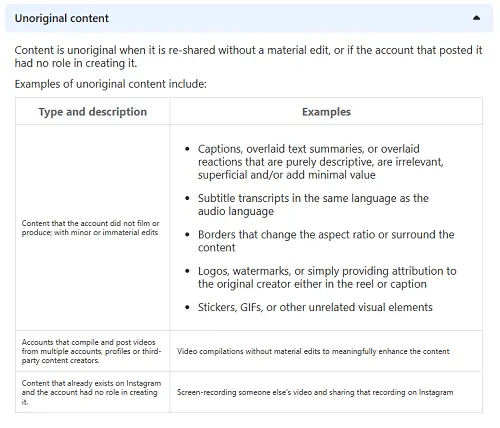
- Early 2026: Meta intensified its focus on "original content," launching algorithm updates designed to penalize aggregators and content "reposters." This was a strategic move to prioritize value-add creators over viral scrapers.
- Q2 2026: The company began testing "upgraded model architectures" that evaluate sequences of Reels rather than individual clips, laying the groundwork for the 4% increase in watch time seen in Q3.
- Q3 2026: The global rollout of a new "generative retrieval architecture" on Facebook marked the most significant shift. By using semantic representations of content—similar to how Large Language Models (LLMs) process text—Meta began surfacing content based on potential relevance rather than just historical engagement data. This allowed the system to identify "rising star" content before it had even achieved massive viral traction.
Supporting Data: The Power of the Algorithm
The numbers provided by Meta CFO Susan Li paint a picture of an engine firing on all cylinders.
Instagram’s Freshness Factor
The most striking statistic regarding Instagram is the "freshness" of content. Currently, nearly 45% of recommended Reels are less than 24 hours old—a staggering 11 percentage-point increase from the previous quarter. This indicates that Meta’s recommendation engine is now significantly more efficient at pushing high-quality, new content into the mainstream, effectively shortening the "virality window."
Facebook’s Architectural Shift
Facebook’s revitalization is backed by specific technical upgrades. The platform’s new generative retrieval architecture, currently serving roughly 25% of unconnected Feed views and 50% of Reels views, has driven a 1% increase in watch time. Additionally, by doubling the "look-back" window of its ranking models—the amount of user history the AI considers—the platform has seen a tangible 1% boost in US-based Reels watch time.
The Threads Milestone
Threads has crossed the 500 million monthly active user threshold. Perhaps more importantly, time spent per user on the platform grew by over 20% year-over-year. This growth is attributed to improved personalization and a more aggressive stance on surfacing "timely" content, which is essential for a real-time conversation platform.
Official Responses and Strategic Vision
Meta’s leadership has been vocal about the necessity of these AI investments. CFO Susan Li emphasized that the company is no longer just optimizing for likes or shares; they are optimizing for "semantic relevance."
"On Facebook Feed and Reels, we completed the global launch of a new generative retrieval architecture which, inspired by LLMs, labels pieces of content with semantic representations," Li stated during the earnings call. "This helps our systems surface relevant new posts before they’ve accumulated significant engagement."
This sentiment is echoed by the broader executive team, who view the current infrastructure costs as a necessary "entry fee" for the next generation of social connectivity. By embedding AI at the infrastructure level, Meta is effectively insulating its platforms from the "decay" that often plagues aging social networks.
Implications for Marketers and Creators
1. The Death of the "Slow Burn"
The data makes it clear: for Reels, the majority of engagement now happens within the first 24 hours. Creators can no longer rely on content to "grow over time" on its own; they must optimize for immediate impact. The algorithm is now tuned to identify and distribute high-potential content almost instantly.
2. Originality as a Performance Metric
Meta’s crackdown on aggregators and copycats is not merely a policy decision; it is a functional requirement of the new ranking system. If your content is flagged as "unoriginal" by Meta’s updated guidelines, it will likely be suppressed by the same AI models that are designed to prioritize fresh, unique semantic representations.
3. The Meta AI Business Assistant
The integration of the Meta AI Business Assistant into the Creator Marketing Hub represents a massive opportunity for brands. With over 10 million creators now indexed, the challenge for marketers is no longer finding influencers, but filtering them. By allowing advertisers to "conversationally search" for creators, Meta is lowering the barrier to entry for influencer marketing, making it a data-driven science rather than a manual, relationship-heavy process.
4. The "Facebook Resurgence" Opportunity
For years, marketers have been skeptical of Facebook’s long-term viability, often shifting budgets entirely to TikTok. However, the data confirms that Facebook’s Reels-driven strategy is successfully retaining users. The platform is becoming a hybrid of a social network and a discovery engine. Brands that abandoned Facebook may find that the new, AI-boosted audience is more receptive to content than it has been in half a decade.
Conclusion: The Path Forward
Meta’s Q3 2026 report reveals a company that has successfully navigated the most dangerous phase of its transition: the shift from a platform of social connection to a platform of AI-mediated discovery.
By investing heavily in generative retrieval and sequence-based ranking, Meta has not only stabilized its user base but has fostered an environment where content discovery is more efficient than ever. As we move into 2027, the divide between those who understand these algorithmic shifts and those who continue to rely on legacy social media strategies will only widen. For marketers and creators, the mandate is clear: embrace the AI, prioritize originality, and prepare for a digital environment where the algorithm is the most important collaborator in the creative process.
As Meta continues to scale its AI infrastructure, the focus will likely shift from simple "watch time" to deeper, more qualitative engagement metrics. For now, the strategy of "more content, faster delivery, and smarter retrieval" remains the gold standard for social media dominance.


 Ammar Sabilarrohman
 Sagoh

 Raul Delapena Setiawan




 Azzam Bilal Chamdy

 Ali Ikhwan
